The Art of Deep Work: Mastering Focus in a Distracted World
Golden Hook & Introduction
SECTION
Nova: What if the very things we do every day to feel productive are actually holding us back from our best work? That quick email check, that peek at social media... they feel like tiny wins, but they're stealing something far more precious.
Atlas: Oh, I know that feeling. It’s like a constant low-level hum of anxiety, this need to be always on, always responsive. You think you're getting things done, but then the day ends, and you look back and wonder what you actually.
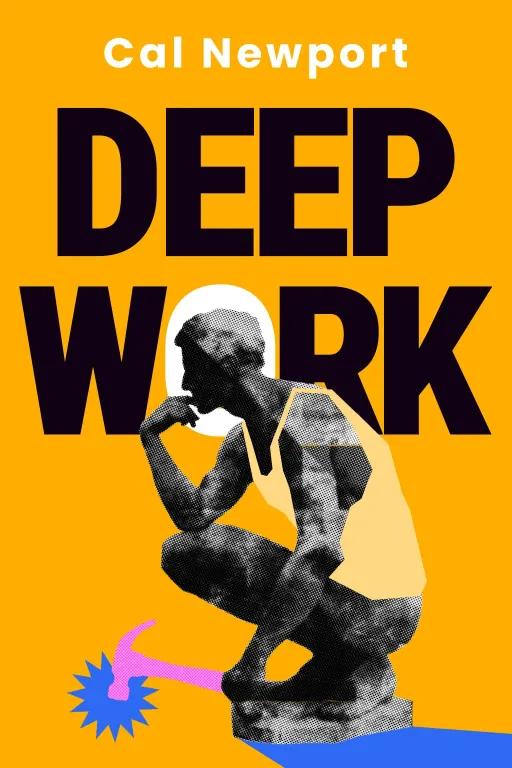
Nova: Exactly! It’s a paradox. We feel busy, yet often lack true impact. That’s why today, we’re diving into a concept that cuts through all that noise, from the brilliant mind of Cal Newport, and his seminal book, "The Art of Deep Work: Mastering Focus in a Distracted World."
Atlas: Hold on, Cal Newport... isn't he that computer science professor who's written multiple bestsellers and published countless academic papers, all while maintaining a full-time professorship, a single social media account? Like, how is that even possible in today's world?
Nova: He is! It’s a testament to the very principles he advocates. He doesn't just write about deep work; he lives it. And that, Atlas, is precisely what we’re exploring today: how to reclaim our creative focus in a world designed to fragment it.
The Power of Deep Work in a Distracted Age
SECTION
Nova: So, let's define our terms. Newport defines 'deep work' as focused, uninterrupted effort on a cognitively demanding task. It’s work that pushes your cognitive capabilities to their limit; work that creates new value, improves your skill, and is hard to replicate.
Atlas: What exactly makes it 'deep'? Is it just concentration, or something more? Because I can concentrate on scrolling through my feed for a while, but I don't think that counts!
Nova: That's a great distinction! It’s definitely not just concentration. The "cognitively demanding" part is crucial. Think of it like a master sculptor. They don't just stare at a block of marble. They engage with it, chipping away with intent, visualizing the form within, making intricate decisions that require sustained, high-level mental energy. That’s deep work. It’s transforming raw material into art, not just rearranging it.
Atlas: That makes me wonder about our listeners who are trying to compose a complex piece of music, or design an intricate soundscape. This isn't just about turning off notifications, it's about entering a different state of being, isn’t it? A different relationship with their craft.
Nova: Absolutely! And that's where the magic, and the impact, happens. Let me tell you about Elena, a rising music producer. She had incredible talent, a natural ear for melody, but her creative time was fragmented. She'd lay down a beat, check emails, tweak a synth, respond to a text. Her tracks felt... scattered. They had moments of brilliance, but lacked cohesion, that signature "soul" she knew she possessed.
Atlas: I can definitely relate to that. I imagine a lot of our listeners, especially those who pour their soul into their art, feel that endless pull, that fragmentation. You have this innate drive to create, but the world just keeps pulling you in a hundred different directions.
Nova: Exactly. Elena felt it too. But then she discovered deep work. She started scheduling 3-hour blocks, phone off, studio door closed, sometimes even putting a 'do not disturb' sign on the door. The first hour was painful, her mind racing, fighting the urge to check her phone, to "just quickly" look something up. But by the second hour, day after day, she'd enter a flow state. The music started flowing differently – more cohesive, more innovative, more. She was tapping into a deeper well of creativity.
Atlas: Wow, that's incredible. So it's not just about getting more done, but about the and of the creation itself. It’s about unlocking that authentic expression that creatives crave. But what’s the actual mechanism here? Why is that uninterrupted time so crucial?
Nova: It comes down to how our brains work. When you constantly context-switch – jumping from a creative task to an email to social media – you're forcing your brain to reset its focus. It leaves behind what scientists call 'attention residue.' It's like trying to make a perfect cup of coffee, but every few minutes you switch to brewing tea, then back to coffee. You never get the full flavor. Sustained focus allows your brain to build and strengthen the neural pathways associated with that task, leading to deeper understanding, more profound insights, and genuinely novel connections. Shallow work keeps the brain in a reactive, superficial mode.
Atlas: That makes sense. So, for someone who approaches their art holistically, through their body and emotions, this isn't just a mental hack. It's almost like a physical discipline, a meditative practice for their craft, to truly embody their creative process.
Nova: Absolutely. My take on this is that intentionally scheduling and protecting these blocks isn't just a productivity hack; it's a way to honor that innate drive to create, to connect to that profound expression, and to make your time in the studio, or with your instrument, or with your canvas, truly impactful and authentic. It's how you move from scattered ideas to a masterpiece.
The Tiny Step & Overcoming Distraction
SECTION
Nova: It sounds daunting, Atlas, to carve out these deep work blocks in our hyper-connected lives. But the beauty of Newport's concept is in its accessibility. He offers a powerful starting point, a tiny step that anyone can take.
Nova: The tiny step is this: identify one hour in your day tomorrow you can dedicate to uninterrupted deep work on a single creative task. And here’s the crucial part: turn off all notifications.
Atlas: That sounds simple on paper, but I imagine it's incredibly hard for most people. The pull of notifications, the fear of missing out, the ingrained habit of checking... it's a real addiction. How do you even begin to fight that, especially when your creative process might involve some digital tools?
Nova: It hard, and that's why it's a superpower. Think of it like retraining a muscle. If you haven't lifted weights in years, your first session will be challenging, even painful. Your mind will race, you'll feel the urge to check your phone, to do anything the deep work. That's the attention residue trying to assert itself. But consistency builds the capacity. It's about creating a ritual, a sacred space for creation, even if it's just for an hour.
Atlas: So, for someone whose artistic journey is deeply embodied and emotional, this isn't just a mental exercise. It's almost like a physical discipline, a meditative practice for their craft. It's about aligning their physical space and mental state with their deepest creative intentions.
Nova: Exactly! It's an act of respect for your own creative spirit. It's saying, "This matters enough for me to protect it." It's about cultivating that intuitive wisdom you possess, and giving your art the lead, unburdened by the constant demands of the shallow world. It's not about being anti-technology; it's about being pro-focus.
Synthesis & Takeaways
SECTION
Nova: So, what we've discovered today is that deep work isn't about working more; it's about working smarter and deeper. It's about making a deliberate choice to prioritize focused concentration over constant distraction, allowing for the kind of profound connection to expression that truly innovative, authentic work demands.
Atlas: It sounds like a fundamental shift, almost a rebellion against the constant noise. For anyone who feels their creative output is scattered, or that they're not quite reaching the depth they aspire to, this isn't just advice, it's a lifeline to their authentic self and their best work.
Nova: It truly is. It's about remembering why you started creating in the first place, that innate drive, and giving that inspiration the sacred space it needs to flourish. It’s about trusting your inner artist to lead the way, rather than letting external notifications dictate your creative flow.
Atlas: For our listeners who are trying to understand their own artistic process, to unlock new ideas, this seems like the foundational first step. It's about creating the fertile ground for creativity to truly blossom, and to ensure that the art they create has the impact and authenticity they deeply desire.
Nova: Absolutely. So, the challenge for all of us this week: can you carve out just one sacred hour for your deepest work? What profound impact might that have on your creative journey and the art you bring into the world?
Nova: This is Aibrary. Congratulations on your growth!