Beyond the To-Do List: Mastering Deep Work for True Impact.
Golden Hook & Introduction
SECTION
Nova: Atlas, five words. Describe the modern professional's biggest struggle.
Atlas: Oh, man. Emails, meetings, notifications, constant, overwhelm.
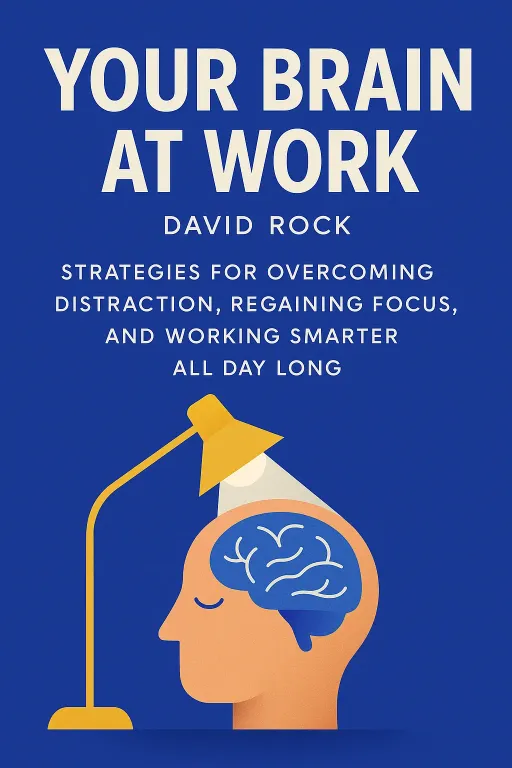
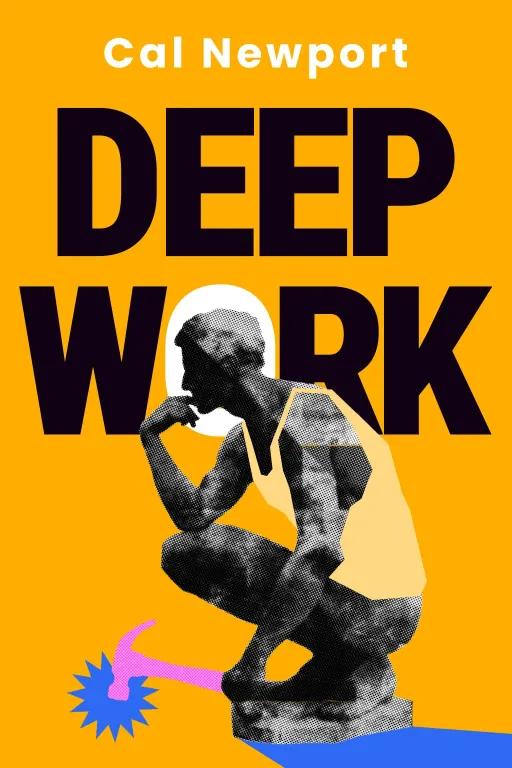
Nova: Nailed it. Absolutely nailed it. And today, we're here to fight back against that very thing. We're diving deep into two incredibly insightful books: Cal Newport's and Gary Keller and Jay Papasan's. What’s fascinating about Newport is that he's a computer science professor who famously doesn't use social media himself, offering a truly unique perspective on focus in our hyper-connected world. It’s like he built his own mental fortress before writing the manual for ours.
Atlas: That's a perfect detail, actually. It immediately gives him street cred because, let's be honest, for many of us, social media and constant digital chatter the enemy. But what exactly are we fighting against here? What’s the core problem these books are trying to solve?
The Existential Threat of Shallow Work
SECTION
Nova: The core problem, Atlas, is what Newport brilliantly terms "shallow work." Think of it as non-cognitively demanding, logistical tasks, often performed while distracted. Things that don't push your skills, don't create significant new value, and are easily replicated. And here's the insidious part: it's not just that shallow work is unproductive; it actively erodes your capacity for deep, focused thinking.
Atlas: Oh, I know that feeling. It's like my brain has been rewired to crave the next ping. But for someone who values direct impact and staying ahead, that sounds like an existential threat to growth. How does it, you know, you?
Nova: Exactly. Imagine a brilliant architect, someone who once designed breathtaking, innovative buildings. He's at the top of his game, celebrated for his visionary structures. But then, his firm starts emphasizing "collaboration" and "responsiveness." Now, he spends 80% of his day responding to trivial emails, managing an overflowing calendar, attending non-essential meetings where he's only half-present, and putting out tiny, urgent fires.
Atlas: Sounds like a typical Tuesday for a lot of our listeners who are trying to manage high-pressure teams.
Nova: Absolutely. His ability to conceptualize groundbreaking designs, to truly in three dimensions and innovate, it doesn't just stagnate. It actively diminishes. Not because he lost his skill, but because his attention was constantly fragmented, never given the sustained, uninterrupted time it needed to truly engage with complex problems.
Atlas: So he’s busy, but not productive. And the outcome?
Nova: The outcome is mediocre buildings, missed innovation opportunities, and a profound, gnawing sense of underachievement. He feels like he's constantly working, but never actually anything of true, lasting value. He’s stuck in a cycle of professional stagnation and personal frustration, all because shallow work crowded out the deep, focused effort required for mastery. It's a silent killer of potential.
Atlas: Wow, that’s actually really inspiring in a scary way. It’s like watching a high-performance engine slowly get gummed up with sludge. For a strategic seeker who wants concrete skills, that's a direct threat to their entire career trajectory. What happens when everyone is just doing shallow work? The whole field just… plateaus.
Nova: Precisely. And that's why these books are so critical. They offer us a way to reclaim that mental horsepower.
Architecting Deep Work: Strategies for Reclaiming Focus
SECTION
Atlas: Okay, so we're all drowning in digital quicksand. We understand the threat. How do we build a life raft, Nova? What are the actual strategies we can employ to fight back against this tide of distraction?
Nova: That's where Newport and Keller & Papasan become our guides. Newport outlines four "rules" or philosophies for cultivating deep work. Let's start with the idea of architecting your focus. He talks about approaches like the Monastic, the Bimodal, the Rhythmic, and the Journalistic.
Atlas: Hold on, "Monastic"? You're telling me I need to move to a monastery to get anything done? Because that sounds a bit out there for a practical innovator who needs to stay connected to industry trends.
Nova: That's the beauty of it, Atlas! The Monastic approach, like a writer retreating to a cabin for months, is one extreme. But the Bimodal is far more practical for most of us. It's about dedicating specific, intense blocks of time—say, a few days a week, or even just three hours each morning—solely to deep work. During these times, you are unreachable, notifications off, in a flow state. The rest of your day handles the 'shallow' but necessary tasks.
Atlas: So basically, build a mental fortress around those critical hours. And how does fit into this? Because for many of our listeners, everything feels like 'the one thing' that needs to get done.
Nova: That's where Gary Keller and Jay Papasan provide the perfect complement. They argue that extraordinary results come from narrowing your focus to the that matters most. It’s about asking: "What's the ONE Thing I can do such that by doing it everything else will be easier or unnecessary?"
Atlas: I can definitely relate to that. The sheer volume of tasks can be paralyzing. So, it's like a laser pointer for your deep work sessions?
Nova: Exactly! Imagine a startup founder, initially overwhelmed by a million brilliant ideas and tasks. She's juggling product development, investor relations, marketing, hiring—a constant whirlwind. She initially found herself scattered, constantly reacting, making slow progress on everything.
Atlas: Sounds like the architect again, just in a different industry.
Nova: Right. But then, she discovers these principles. She decides her "One Thing" for the next quarter is securing a critical patent for her core technology. She then adopts a 'bimodal' deep work approach. Every morning, for three uninterrupted hours, she's in deep work mode, exclusively focused on the patent application, legal research, and detailed technical writing. She's unreachable, phone on airplane mode, in a dedicated quiet space.
Atlas: So no pings, no emails, no "quick calls" from investors during that time?
Nova: None. The rest of her day is for those shallow but necessary tasks—emails, meetings, team check-ins. The result? Rapid, high-quality patent iterations. She files it ahead of schedule, securing her intellectual property, and quickly outperforming competitors who are constantly reacting to every notification and trying to do a little bit of everything. She achieves market leadership and sustainable growth, not through sheer hours, but through strategically applied, focused attention.
Atlas: That’s a perfect example. That makes me wonder, what about the 'Rhythmic' approach Newport mentions? Because for someone who wants to stay ahead, consistency feels like a key.
Nova: The Rhythmic approach is all about habit. It's about turning deep work into a regular, non-negotiable rhythm, almost like an exercise routine. You block out specific times each day or week, and you stick to it. It's about building a streak, making it non-negotiable. For a future-focused leader, consistency is king, because mastery is built brick by brick, one focused session at a time. It's not about heroic, one-off efforts, but about sustainable, consistent application.
Synthesis & Takeaways
SECTION
Nova: So, what we're really talking about here, Atlas, isn't just a productivity hack. It's a profound shift in how we value our attention and, ultimately, how we shape our impact. Shallow work, while seemingly innocuous, slowly starves our capacity for truly valuable creation. Deep work, on the other hand, is a skill—a muscle we can train—that allows us to master complex subjects faster and produce higher-quality work in less time.
Atlas: It’s about reclaiming agency over our most valuable asset: our attention. For anyone driven by advancement and looking to elevate their market analysis or master cutting-edge tools, this is the fundamental skill. It's not just about getting more done; it's about doing the things, profoundly well.
Nova: Exactly. It's about moving from simply being busy to being truly impactful. And the beauty is, you don't need to quit your job and move to a monastery. You just need to be intentional.
Atlas: So, for our listeners, what’s one tiny step they could take right now, or tomorrow, to start this journey into deep work?
Nova: Okay, here’s your challenge for tomorrow. Block out 90 minutes in your calendar. Just 90 minutes. Turn off notifications—phone, email, desktop pings. And during that time, tackle the single, most important task you have. The one that, if completed, would make everything else feel a little bit easier or unnecessary. Protect that time fiercely.
Atlas: Ninety minutes. Uninterrupted. On one thing. That sounds both terrifying and incredibly liberating. I think many of us will be surprised by what we can accomplish.
Nova: You absolutely will. It's a small step, but it's the first brick in building your mental fortress.
Atlas: Incredible. Thank you, Nova, for shedding light on this.
Nova: My pleasure, Atlas.
Nova: This is Aibrary. Congratulations on your growth!