Beyond the Daily Grind: Reclaiming Your Strategic Time for Visionary Leadership
Golden Hook & Introduction
SECTION
Nova: What if the very thing you think is making you productive is actually stealing your future?
Atlas: Whoa, that's a bold statement, Nova. I imagine a lot of our listeners building their empires feel like constant motion is the only way forward. Every email, every meeting, every notification feels like a step towards progress.
Nova: It absolutely does, Atlas. And that's the blind spot we're talking about today. It's easy to mistake busyness for actual productivity. We get caught in this whirlwind of reactive tasks, and before we know it, weeks turn into months, and our grand vision, our strategic thinking, it just gets pushed further and further down the priority list.
Atlas: That sounds like a familiar trap for anyone striving for expansion. You're so busy putting out fires, you never get to design the new blueprints.
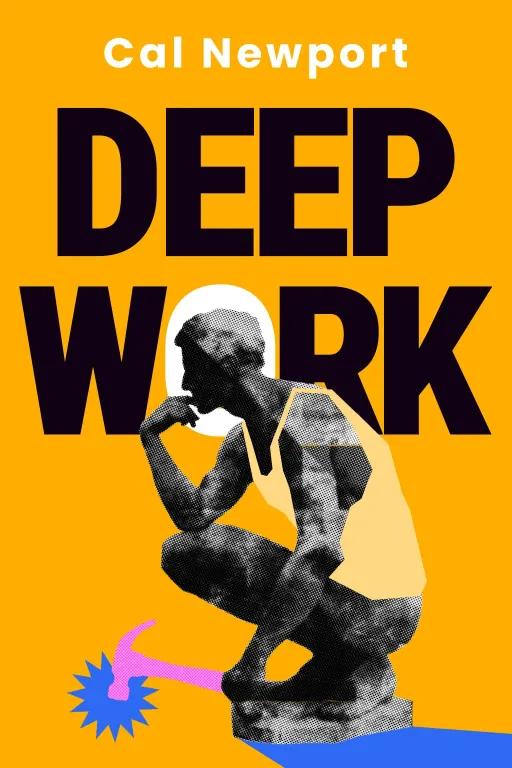
Nova: Exactly. And that's why we're diving into some incredibly powerful concepts today, drawn from two seminal books: Cal Newport's "Deep Work" and Greg McKeown's "Essentialism."
Atlas: Ah, Newport! Isn't he the guy who basically lives and breathes his own advice? I remember reading he writes his books in these hyper-focused, monastic retreats, completely unplugged.
Nova: He absolutely does. He's a living testament to the power of focused concentration. And McKeown's "Essentialism" comes from a place of pushing back against this pervasive "do-it-all" culture, especially in high-growth environments where ambition can often lead to overcommitment.
Atlas: So, it's about finding clarity amidst the chaos, especially when you're trying to scale with structure and build for the future. That directly speaks to the heart of what many visionary leaders are grappling with.
The Busyness Trap: Why We Mistake Activity for Progress
SECTION
Nova: Precisely. Let's start with this "blind spot." It's the idea that constant activity equals progress. Think of a founder, or any leader, who's constantly reacting. Their inbox dictates their day, their calendar is a battlefield of back-to-back meetings, and every new "urgent" request from a team member or client instantly reroutes their focus.
Atlas: Okay, but isn't staying busy a sign of dedication, especially when you're building something big? For someone focused on enterprise expansion or developing new franchising models, every task feels genuinely urgent. How do you differentiate?
Nova: That's the core question, isn't it? The key factor is recognizing the difference between urgent and important. Many tasks urgent – the email that just landed, the quick question from a colleague. These are what Newport calls "shallow work." They're logistical, non-cognitively demanding, and often performed while distracted.
Atlas: So, you're saying that frantic chef in the kitchen, constantly stirring pots and shouting orders, might actually be less effective than the one quietly planning tomorrow's menu?
Nova: That's a perfect analogy! The frantic chef might be moving a lot, but are they innovating? Are they designing a new, more efficient kitchen layout? Are they thinking about the long-term sustainability of the restaurant? Probably not. I remember a story of a tech startup founder, let's call her Sarah, who was brilliant but completely overwhelmed. Her days were a blur of replying to customer support emails, attending internal stand-ups, and approving minor budget requests.
Atlas: Oh, I know that feeling. It's like you're playing whack-a-mole all day, and by the end, you've hit a lot of moles, but the garden is still overgrown.
Nova: Exactly! Sarah’s cause was this constant stream of digital interruptions and a culture that rewarded immediate responses. The process was a reactive one, where she never had more than 20 minutes of uninterrupted time. The outcome? Her team was growing, but strategic initiatives like developing their next-generation product or securing critical partnerships languished. She was stuck in operational quicksand, unable to lift her head and see the horizon. It led to burnout and a feeling that despite all her effort, her enterprise wasn't truly moving forward in significant ways.
Atlas: That sounds rough, but… how do you even begin to break that cycle when the demands are legitimately high? You can't just ignore your team or your customers, right? For a strategist building foundational systems, every piece of the puzzle feels crucial.
Architecting Strategic Focus: The Dual Power of Deep Work and Essentialism
SECTION
Nova: That leads perfectly to our two powerful frameworks for breaking that cycle, Atlas. First, Cal Newport's concept of "Deep Work." Deep Work is the ability to focus without distraction on a cognitively demanding task. It's about concentrating your mental energy, usually for extended periods, on something that truly moves the needle for your business or your vision.
Atlas: So you're talking about carving out actual time for this, not just trying to squeeze it in between meetings? Like, actual dedicated blocks?
Nova: Absolutely. Think of it like a master craftsman in a quiet, focused workshop, meticulously creating a masterpiece, versus a general contractor juggling a dozen phone calls while trying to hammer a nail. The craftsman produces something of profound value. For an enterprise builder, this might mean scheduling a 3-hour "no-meeting, no-email" block every Monday morning. During this time, all notifications are off, the office door is closed, and they're focused solely on system design, market analysis, or crafting that leadership development program. No distractions, just pure, uninterrupted strategic thought.
Atlas: That sounds almost revolutionary in today's always-on culture. But how do you prevent that deep work block from being filled with just tasks? How do you ensure it's truly strategic?
Nova: That's where Greg McKeown's "Essentialism" steps in, beautifully complementing Deep Work. McKeown emphasizes the disciplined pursuit of less. It's about identifying the few things that are truly essential—the activities that will yield the maximum impact for your vision—and then ruthlessly eliminating everything else.
Atlas: Okay, so Deep Work gives you the focus, and Essentialism tells you what to focus on. That's a powerful one-two punch. It's like having a super-powered magnifying glass, but Essentialism points it at the right thing.
Nova: Exactly! It's not just about managing your time; it's about managing your energy and priorities. Think of it like a cluttered closet versus a minimalist wardrobe. You could spend hours organizing the cluttered closet, but an Essentialist would simply get rid of everything that isn't absolutely necessary, making it effortless to find and use what truly matters. For someone looking at franchising models or leadership development, this can be incredibly challenging. How do you decide what's "essential" when everything feels important for growth?
Atlas: Right? I mean, every potential growth channel, every new market, every team member's development feels like a non-negotiable. It's hard to say no. Can you give an example of a leader making that tough "essential" choice?
Nova: Absolutely. Consider a founder named David, whose enterprise was growing rapidly, leading to a flood of opportunities – new product lines, expanding into three different international markets simultaneously, and launching a new internal training academy. He felt obligated to pursue all of them. He was doing a little bit of deep work on everything, but nothing truly moved forward with speed or excellence.
Atlas: I can see how that would be... overwhelming. Like trying to build three houses at once, with the same limited crew.
Nova: Precisely. By applying Essentialism, David and his team went through a rigorous process of questioning each initiative: "If we could only do thing exceptionally well this year, what would it be?" They ruthlessly cut two of the international market expansions and one of the new product lines. This freed up massive resources—time, capital, and mental energy. He then dedicated his deep work blocks to thoroughly developing the single chosen international market and refining one new product, rather than spreading himself thin.
Atlas: So, by saying no to good opportunities, he created space for one opportunity. And that space allowed him to apply his deep work effectively.
Nova: Exactly. That intentional elimination created the space for deep work on the chosen essential path, which then scaled successfully. It’s about being deliberate, not just busy. It's about designing your focus, not just managing your calendar.
Atlas: That's actually really inspiring. It's not just about doing more, it's about doing the things more effectively. It’s moving from being a firefighter to being an architect.
Synthesis & Takeaways
SECTION
Nova: That's a perfect way to put it, Atlas. It's not just managing time; it's about intentionally designing your environment and habits to prioritize what truly matters for your vision. It's about moving from frantic activity to profound impact.
Atlas: So, the deep question from "Beyond the Daily Grind" asks where in your week you can carve out that dedicated, uninterrupted block for deep, strategic thinking, free from operational distractions. It feels like the answer is, you it. You don't wait for it to appear; you build it into your enterprise's operating system.
Nova: Precisely. For our listeners building enterprises, the challenge isn't just finding that time; it's protecting it fiercely. It’s the difference between merely operating an enterprise and truly building a sustainable legacy. The most impactful leaders aren't the busiest; they're the most intentional.
Atlas: That gives me chills, Nova. So, for anyone listening, think about one non-essential task—one piece of "shallow work"—you can eliminate this week. And then, identify one 60-minute block you can claim for truly deep, strategic work. What will you build in that reclaimed time?
Nova: Fantastic challenge. That's how visionary leadership truly takes shape.
Atlas: This is Aibrary. Congratulations on your growth!