Balancing Intellectual Depth with Relational Influence
Golden Hook & Introduction
SECTION
Nova: In a world screaming for your attention, deep, focused thought is the ultimate superpower. But what happens when your brilliant insights hit a wall of distraction or simply fall on deaf ears? Today, we're unlocking the twin keys to both profound intellectual depth AND real-world influence.
Atlas: Oh, I love that. Because honestly, Nova, it feels like we're all constantly trying to juggle doing the actual work, the thinking, with the endless demands for collaboration and communication. It’s a tension most of our listeners live with every single day.
Nova: Absolutely, Atlas. And it’s a tension that two brilliant minds have tackled head-on. We're diving into the powerful ideas from and Newport, a computer science professor from Georgetown, champions a deliberate, almost monastic approach to concentration, challenging the always-on, hyper-connected culture of modern knowledge work. Patterson, on the other hand, comes from a background of extensive research into organizational behavior, providing a practical, research-backed framework for effective dialogue when the stakes are highest.
Atlas: That makes perfect sense. So often, we get stuck either producing incredible ideas in isolation, or we’re constantly in meetings, but those conversations feel… well, not very productive. It's like two halves of a very important whole that somehow never quite connect.
The Art and Urgency of Deep Work
SECTION
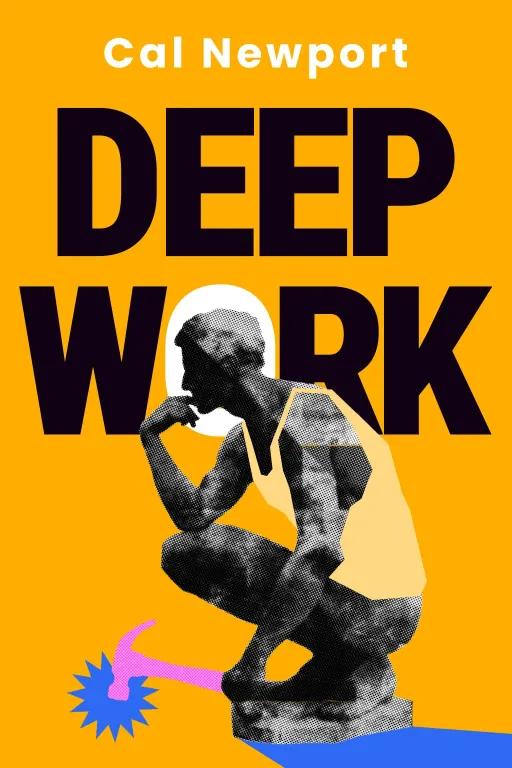
Nova: Precisely. Let's start with Newport's concept of 'deep work.' He defines it as professional activities performed in a state of distraction-free concentration that push your cognitive capabilities to their limit. These efforts create new value, improve your skill, and are hard to replicate. Think about it: how much of your day is spent truly pushing your mental edge, versus responding to emails or jumping between tabs?
Atlas: But wait, isn't it just about being productive? What makes 'deep work' different from just, you know, getting stuff done? Because I'm sure many of our listeners feel like they're productive all day, every day, just churning through tasks.
Nova: That's a great question, and it's where Newport really shines. He argues that 'shallow work' — the administrative, reactive tasks that don't require much cognitive effort — can productive, but it rarely creates significant value. Deep work, however, is where innovation happens. It's the software engineer architecting a complex system, the writer crafting a groundbreaking chapter, the strategist devising a new market entry plan. These tasks demand sustained, uninterrupted focus. It's about going from being a busy signal to being a creator.
Atlas: I can see that. So, for our listeners who are constantly pulled into meetings or Slack, how do you actually carve out that sacred time? Especially in the mornings, which feel like prime time for – emails, quick check-ins, urgent requests. It feels like a luxury most can't afford.
Nova: Newport would argue it's not a luxury; it's a necessity, and you have to treat it as such. He suggests creating specific 'deep work' blocks, almost like a ritual. You schedule it, protect it, and remove all distractions. Imagine blocking out two hours every morning, from 8 to 10 AM, specifically for your most challenging research or creative task. During that time, your email is closed, your phone is on silent, and you're fully immersed. It’s about being deliberate, almost like a dedicated training session for your brain.
Atlas: I guess that makes sense. I mean, I’ve been there, feeling like my best ideas get chipped away by notifications, or I'm constantly context-switching and never really diving in. It feels like a proactive defense against the digital onslaught.
Nova: Exactly. He’s not saying don't do shallow work; he's saying compartmentalize it. Schedule your deep work first, when your brain is freshest, and then tackle the reactive stuff later. The key insight here is that in an increasingly complex and information-rich economy, the ability to produce at an elite level through deep work is becoming both increasingly rare and incredibly valuable. It’s a competitive advantage that sets you apart.
Navigating High-Stakes Conversations for Impact
SECTION
Nova: Now, it's one thing to the deep work, to unearth those profound insights, those strategic breakthroughs. But what happens when you need to those insights, especially when they might challenge the status quo, or go against deeply held beliefs within your team or organization? This is where Kerry Patterson’s "Crucial Conversations" becomes indispensable.
Atlas: Honestly, that sounds like every other Tuesday for some of our listeners. What's the biggest mistake people make in these situations? Because often, we we're communicating, but it's just not landing. The research is there, the data is clear, but it just… evaporates into thin air.
Nova: That's the core problem Patterson and his co-authors identify. When stakes are high, opinions differ, and emotions run strong, our natural tendency is to either resort to 'silence' — meaning we avoid the conversation altogether, hoping the problem goes away — or 'violence' — where we try to force our opinion through aggression, sarcasm, or manipulation. Both lead to disastrous outcomes, leaving insights unheard and relationships strained.
Atlas: So, silence or violence. I’ve definitely seen both of those play out in countless meetings, and neither ever seems to get to a good place. What’s the alternative? Because often, people feel like those are their only two options when the pressure is on.
Nova: Their framework is built around creating a "pool of shared meaning." It's about ensuring that everyone involved feels safe enough to contribute their ideas, even the unpopular ones, without fear of retribution. The most crucial step they highlight is "starting with heart" – getting clear on what really want, not just for yourself, but for the relationship and for the organization. And then, crucially, making the other person feel safe.
Atlas: Okay, 'safety' sounds a bit soft for a high-stakes corporate environment. How does building safety actually help you get your point across, especially if your deep work research contradicts a senior leader's long-held assumption? That feels like a career risk, not a soft skill.
Nova: It's not about being soft; it's about being strategically brilliant. When people feel unsafe, they shut down. They become defensive, they stop listening. Patterson explains that safety is built by establishing "mutual purpose" – convincing the other person that you genuinely care about their goals and the overall objective – and "mutual respect" – showing that you value them as a person, even if you disagree with their ideas. When those two conditions are met, people are far more likely to listen to challenging information. It’s about inviting dialogue, not declaring war.
Atlas: That’s a great way to put it. So, instead of going in with guns blazing, you're building a bridge first. You're essentially saying, "We're on the same team, trying to solve the same problem, and I respect your perspective, even if my data tells a different story."
Nova: Exactly. It’s about mastering your emotions, telling your own story, and then inviting the other person to share theirs. This allows for a genuine exchange of ideas, where your meticulously researched insights from your deep work can actually be heard, understood, and ultimately, acted upon. It's the difference between merely speaking and truly influencing.
Synthesis & Takeaways
SECTION
Nova: So, putting these two brilliant frameworks together, we see a powerful synergy. Deep work is where you forge your intellectual weaponry – your insights, your solutions, your strategic breakthroughs. Crucial Conversations is the arena where you skillfully deploy that weaponry, ensuring your hard-won knowledge doesn't just collect dust, but actually shapes decisions and drives impact.
Atlas: That’s such a powerful image, Nova. It's not just about being smart or being a good communicator. It's about strategically deploying both at the right time. For our focused achievers out there, this means optimizing their entire day for both creation and connection.
Nova: And that brings us to the ultimate takeaway from these two powerful books: Schedule your 'Deep Work' blocks in the morning. That’s when your cognitive energy is highest, allowing you to tackle your most difficult research and creative tasks. Then, save your 'Crucial Conversations' or collaborative meetings for the afternoon. By then, you’ve done your heavy lifting, and you can bring your best, most prepared self to those high-stakes interactions, ensuring both your focus and your professional influence are maintained.
Atlas: What a game-changer. So, for anyone listening right now, what’s one immediate action they can take to start implementing this? Because the pragmatic learner in me wants to hit the ground running.
Nova: My recommendation: tomorrow morning, block out 90 minutes on your calendar. Close everything, silence notifications, and dedicate that time to one truly challenging task that requires your deep focus. Then, in the afternoon, identify one conversation you've been avoiding or struggling with, and mentally prepare to approach it with mutual purpose and respect.
Atlas: It’s about being intentional with our most valuable resources: our time and our voice. I truly believe that shift can unlock so much potential for impact.
Nova: Absolutely. It’s about building a life and career where your intellectual depth isn't just appreciated, but actively leveraged for profound impact.
Atlas: That’s actually really inspiring. Thank you, Nova.
Nova: My pleasure, Atlas. And thank you to all our listeners for joining us on this journey of insight and growth.
Atlas: This is Aibrary. Congratulations on your growth!