Social Debugging: An Engineer's Guide to Dangerous Personalities
Golden Hook & Introduction
SECTION
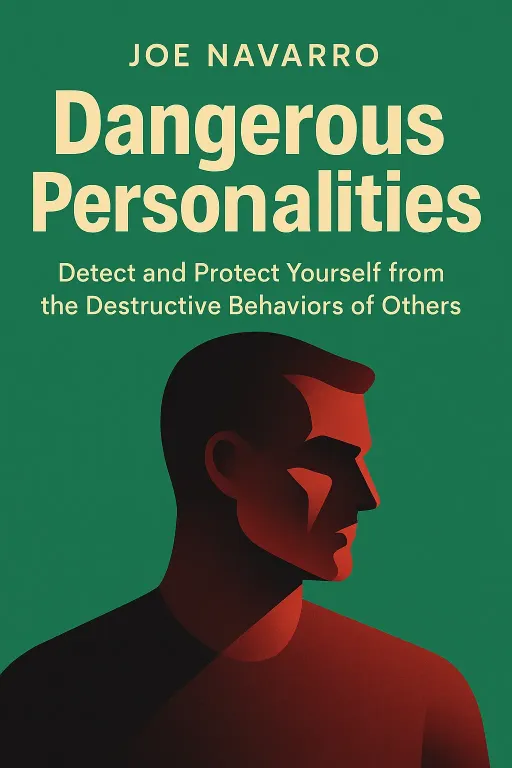
Nova: What if I told you that the biggest security vulnerability in your life isn't a weak password, a phishing email, or an unpatched server, but the actual people you let into your inner circle? Today, we are looking at human behavior through a debugger's lens. We are diving into former FBI profiler Joe Navarro's groundbreaking book,. Today, we're going to tackle this book from two different angles. First, we'll explore the System Overloads—the narcissists and emotionally unstable personalities who drain our emotional bandwidth and disrupt our daily operations. Then, we'll shift to Threat Detection—unmasking the paranoids and predators who actively exploit our social systems. Joining me is software engineer morebadly, who brings a brilliant, analytical mind to this behavioral diagnostic. Welcome to the show!
morebadly: Thanks, Nova. It is great to be here. You know, as a software engineer, I spend a lot of my time looking at code, trying to find bugs, and predicting how systems might fail under stress. When I read Navarro's book, I couldn't help but see these dangerous personalities as legacy code or malicious scripts running in our social environments. They are essentially human system bugs that bypass our normal firewalls because we aren't trained to recognize their signatures.
Nova: Oh, I love that analogy! Human system bugs. That is exactly what they are. And Joe Navarro spent decades at the FBI analyzing these exact signatures. He actually starts the book with a deeply personal story that set him on this path. Back in 1975, when he was a rookie police officer, a fifteen-year-old girl named Susan Curtis disappeared from the Brigham Young University campus. She went back to her room to clean her braces and just vanished. Her toothbrush was dry. Navarro investigated, but the case went cold. Years later, when he was in the FBI, he found out that the notorious serial killer Ted Bundy had confessed to her murder. That sense of failure, of not knowing how to spot the predator hiding in plain sight, is what drove him to study these dangerous personalities. He realized that safety isn't something we can outsource. We have to run our own diagnostics.
morebadly: That is a heavy story, but it perfectly illustrates the cost of a system failure. In cybersecurity, we talk about threat modeling—identifying potential threats to plan defensive strategies before an attack happens. Navarro is basically giving us a behavioral threat model. He emphasizes that we shouldn't focus on statistics or wait for a catastrophe to happen. We need to observe real-time behaviors. It is about logging the inputs and outputs of the people around us.
Deep Dive into Core Topic 1
SECTION
Nova: Exactly! So let's start logging those inputs. Our first core topic is what we are calling the System Resource Drains: the Narcissistic Personality and the Emotionally Unstable Personality. Let's start with the narcissist. Navarro says their core motto is, "It's all about me." Now, we all know people who are confident, but narcissism is a completely different operating system. It is characterized by an insatiable craving for attention, a total lack of empathy, and a belief that rules simply do not apply to them.
morebadly: Right, in engineering terms, a narcissist is like a process that suffers from a massive memory leak. It keeps demanding more and more system resources—attention, praise, validation—but it never releases anything back to the system. It is a one-way street. They overvalue themselves and completely devalue everyone else.
Nova: Yes! And that devaluation can have massive real-world consequences. Navarro shares the story of Tony Hayward, the CEO of BP during the devastating Deepwater Horizon oil spill in 2010. Eleven people died, and the Gulf of Mexico suffered the worst environmental disaster in history. And what did Hayward say to a reporter? He said, "I'd like my life back." It was an incredibly self-centered remark that showed a complete lack of empathy for the victims and the community. He was only processing his own inconvenience.
morebadly: That is a classic example of a boundary violation and a failure to process external data. A narcissist's API, so to speak, is hardcoded to only accept inputs that flatter them. If you send them an input that contains criticism or even just a different perspective, the system throws a critical error. They will bend rules, take shortcuts, and exploit others because they genuinely believe their goals are the only ones that matter. They treat people as conditional assets. It is a pure transaction.
Nova: It really is. And when they don't get their way, or when their control is threatened, they can turn incredibly toxic. This ties directly into the second type of resource drain: the Emotionally Unstable Personality. Navarro describes them as a roller coaster ride. One minute they are showering you with over-the-top affection, and the next, they are raging at you over a perceived slight.
morebadly: This sounds like an unstable API that has no error handling. It is highly volatile. You send the exact same request twice, and you get two completely different, unpredictable responses. One day it is a successful connection, and the next day it crashes your entire server.
Nova: Oh, absolutely! Navarro tells this story of a father who recounted a family vacation that was completely ruined by his emotionally unstable wife. Why? Because she realized she had forgotten her favorite brand of suntan lotion. She escalated this minor issue into a massive, screaming tantrum, and she actually threatened to throw herself out of the moving car on the highway, right in front of their terrified children. The kids were traumatized, and the vacation was over. It is that extreme, irrational reaction to a tiny system glitch.
morebadly: That is a massive system crash over a minor input anomaly. From an analytical perspective, what is happening there is a total lack of emotional regulation. They have a childlike need for constant affirmation, but they also stockpile grievances. They remember every single perceived slight and use them as ammunition later. It is like they are running a background process that is constantly logging errors, even when the system is running fine, just waiting to trigger a crash.
Nova: Yes, they are constantly testing your loyalty, and the parameters for passing that test are always changing! It is exhausting for the people around them. Navarro quotes a psychologist who said, "They don't always kill you, but they always seem to have a finger in your eye." The constant stress of walking on eggshells around them drains your emotional battery until you are running on empty.
morebadly: It is a classic denial-of-service attack on your own mental health. You spend so much processing power trying to predict and prevent their next outburst that you have no resources left for your own life, your work, or your well-being. And if you try to set a boundary or end the relationship, they often escalate to extreme manipulation, like threatening self-harm or making false accusations, just to regain control of the connection.
Nova: It is incredibly dangerous, especially for children raised in those environments. They learn to stifle their own emotions and constantly scan the room, asking, "How is she today?" or "What mood is he in?" It creates a state of chronic hypervigilance. So, how do we debug this? Navarro says we have to stop trying to "fix" them or "talk it out." Traditional advice fails here because these personalities do not have the self-awareness to change. We have to patch our own systems by setting strict boundaries and, if necessary, cutting the connection entirely.
morebadly: Exactly. You can't patch someone else's broken code. You can only secure your own network. You have to implement a firewall, limit their access to your resources, and protect your data.
Deep Dive into Core Topic 2
SECTION
Nova: That is a perfect transition to our second core topic: Threat Modeling the Paranoid and the Predator. These are the personalities that move from being resource drains to being active, high-risk security threats. Let's start with the Paranoid Personality. Their operating system is run on one core belief: "Trust no one and you'll never get hurt."
morebadly: In cybersecurity, we have a concept called "Zero Trust." It means you verify every user and device, and you trust nothing by default. But the paranoid personality takes Zero Trust to an irrational, pathological extreme. They don't just verify; they actively manufacture conspiracies. They assume everyone has malicious intent. It is like a security system that flags every single normal user as a hacker and locks down the entire network twenty-four seven.
Nova: Yes! They are hyper-suspicious and hypersensitive. Navarro uses the character of Colonel Frank Fitts from the movie as a great example. He is this rigid, moralistic retired Marine who constantly interrogates his family, locks everything up, and reacts with defensive anger to any neighbor who asks too many questions. There is no joy or laughter in his house because everyone is frozen in fear of triggering his suspicion.
morebadly: It sounds incredibly isolating. Because they cannot trust anyone, they end up isolating themselves and their families. And when they look for validation, they don't look for objective data. They look for a pliant audience or extremist groups that feed their fears. They find comfort in echo chambers that confirm their worst suspicions, which can lead to rapid radicalization.
Nova: It really can. Navarro points out that when a paranoid personality gets access to power, or when they join forces with other like-minded individuals, the results can be catastrophic. Think of historical figures like Stalin, who was so consumed by paranoia that he executed up to a quarter of his own top military staff because he feared a coup. Or look at modern domestic terrorists like Timothy McVeigh, who bombed the Oklahoma City federal building because of his rigid, paranoid anti-government beliefs. Their irrational fear drives them to preemptive strikes. They attack because they genuinely believe they are about to be attacked.
morebadly: It is a tragic feedback loop. Their internal threat model is so warped that they see defensive actions as offensive threats, justifying extreme violence in their own minds. It is a complete system failure. And then we have the ultimate predator, which Navarro describes in Chapter Four. If the paranoid is driven by fear, the predator is driven by pure exploitation. Their motto is, "What's mine is mine, and what's yours is mine."
Nova: The predator is truly chilling. They have a complete disregard for laws, rules, ethics, and human suffering. They don't feel remorse, and they are incredibly skilled at deception. They can be charming, polite, and seemingly helpful, but it is all just social engineering to get past your defenses.
morebadly: Yes, a predator is a classic Trojan horse. They don't look like malware. They look like a useful, friendly application. They use superficial charm to gain your trust, and once they are inside your system, they execute their payload—whether that is financial ruin, physical abuse, or emotional manipulation.
Nova: That is such a powerful way to put it. A Trojan horse. Navarro shares the story of Kelly Therese Warren, who worked as a cheerful, welcoming clerk in Georgia. She actually assisted the FBI for nearly a year, providing leads about a Soviet-bloc spy. But it turned out she was lying the entire time. She was actually a spy herself, who had sold highly classified US war plans to the Soviet bloc during the Cold War. She put the entire nation at risk while smiling and playing the helpful citizen.
morebadly: That is a textbook social engineering attack. She bypassed the FBI's security protocols by exploiting their trust and presenting a harmless, cooperative interface. It shows how dangerous it is to rely on "niceness" as a metric for safety. As Gavin de Becker famously said, "Niceness is not goodness." Niceness is a decision, a tool that can be used to manipulate. Goodness is a character trait.
Nova: Wow, "Niceness is not goodness." We need to write that down and paste it on our monitors! Another devastating example of a predator is Bernard Madoff. He ran the largest Ponzi scheme in history, stealing billions of dollars from charities, elderly retirees, and even his own close friends and family. He didn't care about the lives he ruined. He just saw them as resources to be harvested.
morebadly: He was running a malicious script that exploited the trust of his immediate network. And because he was a respected figure in the financial world, people didn't run the proper due diligence. They didn't audit the code, so to speak. They just assumed the system was secure because of his reputation. It is a reminder that predators don't just live in dark alleys. They sit in boardrooms, they lead churches, and they live next door.
Nova: They really do. Think of Ariel Castro, who held three young women captive in his Cleveland home for over a decade. His neighbors knew him as a sunny, friendly guy who was good with kids and played music. They had a form of social blindness—they didn't want to meddle in his business, so they ignored the small anomalies, like the locked doors and the covered windows. We often choose comfort over curiosity, and predators rely on that social blindness to operate in secrecy.
morebadly: That is a critical vulnerability. In software, if you ignore a minor error log because "it's probably fine," you leave the door open for a major breach. We have to train ourselves to pay attention to those anomalies. If something feels off, we need to investigate it, not ignore it to avoid social awkwardness. Your gut feeling is often your subconscious processing threat signatures that your conscious mind hasn't fully categorized yet.
Synthesis & Takeaways
SECTION
Nova: Absolutely. Trust your instincts! They are your built-in intrusion detection system. Now, as we wrap up, let's talk about how we can synthesize all of this into practical, daily self-defense. Navarro's book isn't just about identifying these personalities; it is about empowering us to protect ourselves. He provides detailed checklists for each personality type, and he emphasizes that we should focus on the frequency and intensity of these behaviors.
morebadly: I love the checklist approach. It is highly structured and objective. It takes the emotion out of the assessment. If you are dealing with someone who is causing you constant stress, you don't have to guess if they are toxic. You can run them through the checklist. If they score high, you have your data. And as we say in engineering, the best predictor of future performance is past performance. If their historical logs show a pattern of boundary violations, manipulation, and lack of empathy, you have to assume that is how they will continue to operate.
Nova: Yes! "The best predictor of future behavior is past behavior." We cannot naively hope that a dangerous personality will suddenly get better on their own. They rarely do. And Navarro gives us some great, practical tools for daily life. One of my favorite stories in the book is about his time stationed in Puerto Rico. He had a boss who was incredibly verbally abusive, screaming and yelling at everyone. So, what did Navarro do? He started bringing a personal journal to every single meeting. Every time the boss started yelling, Navarro would look down and meticulously write down every single word the boss said.
morebadly: That is brilliant! He was logging the system errors in real-time, right in front of the source.
Nova: Exactly! And when the boss asked him what he was doing, Navarro just calmly said, "I'm keeping a record of our meetings." The boss immediately stopped yelling. He realized his toxic inputs were being documented, and that created a paper trail he couldn't control. It completely changed the dynamic.
morebadly: That is a perfect security patch. By documenting the behavior, Navarro changed the cost-benefit analysis for the abuser. Predators and abusers rely on secrecy and lack of accountability. When you shine a light on their actions and create an immutable log, you neutralize their power. It is about taking control of your space and time.
Nova: It really is. And Navarro's final, most powerful message is this: "No one has a social obligation to be victimized. Ever." You do not owe anyone your sanity, your safety, or your financial security. If a relationship is draining your cup, if it is constantly throwing errors and crashing your system, you have the right to walk away.
morebadly: That is the ultimate system override. You don't have to keep running a broken program. You can terminate the process, uninstall the application, and secure your network. This book is a fantastic manual for anyone who wants to build better behavioral firewalls.
Nova: Well said, morebadly! Thank you so much for bringing your analytical, debugging perspective to this conversation. It has been incredibly eye-opening.
morebadly: Thanks for having me, Nova. It was a pleasure to run these diagnostics with you.
Nova: And to our listeners, we leave you with this question to ponder: Are there any unpatched vulnerabilities in your social network right now? It might be time to run a security audit. Until next time, stay safe, keep observing, and remember—your safety is your own responsibility. We'll see you in the next episode!