Unlocking Confident Conversations in English
Golden Hook & Introduction
SECTION
Nova: You know, Atlas, I was talking to a friend the other day, and they were telling me about a recent meeting where they just couldn't get their point across, felt completely unheard. It made me think about that universal struggle.
Atlas: Oh, I totally know that feeling. It’s like you’re speaking a different language, even when you’re both supposedly speaking the same one. That’s actually really frustrating.
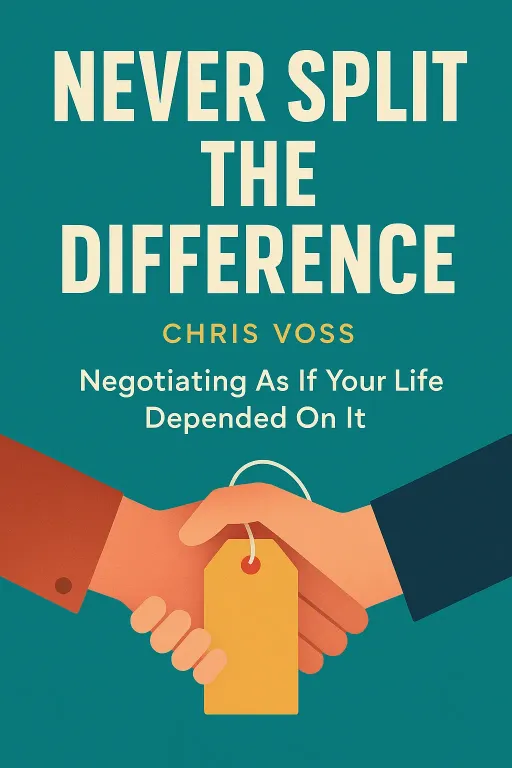
Nova: Exactly! And that's why today we're diving into the art of truly productive dialogue, especially when the stakes are high, and how to unlock confident conversations in English. We’re pulling insights from two absolute titans in the field: "Crucial Conversations Tools for Talking When Stakes Are High" by Kerry Patterson, Joseph Grenny, Ron McMillan, and Al Switzler, and "Never Split the Difference Negotiating As If Your Life Depended On It" by the incredible Chris Voss.
Atlas: Chris Voss! The former FBI hostage negotiator. That book was a game-changer for me. It’s fascinating how his high-stakes, life-or-death scenarios translate directly into everyday interactions. And "Crucial Conversations" is the classic for a reason. What’s wild is that all these authors aren't just academics; they're practitioners who’ve been in the trenches.
Nova: Absolutely. And what’s particularly interesting about "Crucial Conversations" is that the authors, originally from the business world, distilled decades of observing successful and unsuccessful communication into a framework. They basically mapped out what people do right when things are on the line. It's not just theory; it's a playbook. And Voss, of course, brings that almost cinematic, real-world pressure. It’s like he’s inviting you into the situation room.
Atlas: So you're saying these aren’t just books about talking, but about how to talk when it matters? That’s going to resonate with anyone who’s ever felt misunderstood or powerless in a conversation.
The Power of Productive Dialogue
SECTION
Nova: Precisely. And let's start with "Crucial Conversations." The core idea here is that every organization and every relationship has pivotal moments—crucial conversations—where the outcome can literally make or break success. These aren’t just casual chats; they’re discussions where opinions vary, stakes are high, and emotions run strong. Think about giving difficult feedback, discussing a promotion, or even talking to a loved one about a sensitive topic.
Atlas: I can definitely relate to that. It feels like walking on eggshells sometimes. But wait, what makes a conversation "crucial" according to them? Is it just the topic, or is there more to it?
Nova: It’s definitely more than just the topic. It’s the combination of three elements: high stakes, differing opinions, and strong emotions. When all three are present, you have a crucial conversation. The authors found that most people either avoid these conversations, or they handle them poorly, leading to either silence or violence—meaning withdrawal or aggression.
Atlas: Wow, silence or violence. That’s a stark way to put it. So, if we’re usually doing one of those two, what’s the alternative they suggest? How do you even begin to approach something like that without making it worse?
Nova: Their breakthrough insight is that the most effective communicators find a way to maintain "dialogue"—a free flow of meaning in a shared pool. They create a safe space where everyone feels comfortable contributing their ideas, even if those ideas are controversial or unpopular. It's about ensuring all relevant information gets into the "pool of shared meaning."
Atlas: Okay, so it's about safety. But how do you create safety when emotions are high and opinions are clashing? That sounds like trying to build a sandcastle in a hurricane.
Nova: That’s where their tools come in. One of the foundational tools is to "Start with Heart." This means getting clear on what you really want for yourself, for the other person, and for the relationship, before you even open your mouth. It shifts your mindset from "winning" to "learning" and "achieving mutual respect."
Atlas: That’s a great way to put it. It’s like, check your internal compass before you navigate the stormy waters. But let’s say you’ve checked your heart, you know what you want, but the other person is still shutting down or getting defensive. What then?
Nova: That's when you need to "Make it Safe." They identify two conditions for safety: Mutual Purpose and Mutual Respect. If either of those feels threatened, people clam up or lash out. So, if someone feels disrespected, you might need to apologize, or if they doubt your motives, you might have to clarify your mutual purpose. For example, if you're discussing a project deadline, and someone feels you're blaming them, you might say, "My goal here isn't to point fingers, it's to find a way we can all succeed in delivering this on time."
Atlas: That’s actually really inspiring. So, it's about proactively managing the emotional climate, not just the words. It reminds me a bit of Voss’s tactical empathy, but coming from a different angle.
Your Daily Dialogue Toolkit
SECTION
Nova: It’s a fantastic segue, because while "Crucial Conversations" gives you the framework for high-stakes discussions, Chris Voss's "Never Split the Difference" gives you the precise, almost surgical tools for building rapport and influencing outcomes in conversation, even if it's just trying to get a better deal on your internet bill. Voss, a former FBI chief international hostage negotiator, literally wrote the book on getting people to cooperate when their lives, or certainly their freedom, were on the line.
Atlas: Oh, I love that. He turns negotiation into a kind of psychological chess game, but one where everyone can win. It’s not about tricking people; it’s about understanding them so deeply they feel heard.
Nova: Exactly. And his primary tool is "Tactical Empathy." It’s not about sympathizing with someone, but about understanding their perspective, their feelings, and their worldview, even if you don’t agree with it. It’s about demonstrating that understanding to them.
Atlas: So, it’s not just feeling what they feel, but showing them you get they feel it. How does he suggest you do that in a practical sense? Because "be empathetic" sounds easy, but doing it in a tense conversation is really hard.
Nova: Two incredibly powerful techniques he champions are "Mirroring" and "Labeling." Mirroring is simply repeating the last one to three words someone said. It encourages them to elaborate without feeling interrogated. For example, if someone says, "I'm just so frustrated with this project," you might say, "Frustrated with this project?"
Atlas: Whoa, that sounds almost too simple. Does that really work?
Nova: It's surprisingly effective because it triggers a natural human instinct to expand on what you just said. It makes them feel heard and understood, which is the foundation of building trust. And then there's Labeling: identifying and verbalizing the other person's emotions. "It sounds like you're feeling frustrated," or "It seems like you're concerned about the deadline."
Atlas: That’s a bit more direct than mirroring. What’s the magic behind labeling?
Nova: The magic is two-fold. First, it shows you’re paying attention not just to their words, but to their underlying feelings. Second, it often defuses negative emotions. When someone hears their emotion accurately labeled, it's like a pressure valve releasing. They might say, "Yes, that's exactly it!" and then they're more open to dialogue. Voss found that acknowledging emotions, even negative ones, is the fastest way to get to a calmer, more rational discussion.
Atlas: That’s a game-changer. So, if I’m in an English conversation and struggling to connect, instead of trying to find the perfect rebuttal, I should just try mirroring their last few words or labeling what I think they’re feeling?
Nova: Precisely. It shifts the focus from what want to say, to what are trying to communicate. And this is particularly powerful for aspiring communicators because it provides concrete steps. You don’t need a massive vocabulary; you need active listening and a willingness to understand. Voss’s journey from a rough-and-tumble New Yorker to an FBI negotiator really underscores the idea that these are learned skills, not innate talents. His whole approach is built on the premise that you can train yourself to be a master communicator, no matter your background.
Atlas: That gives me so much hope. It’s about skill, not just inherent charisma. And it aligns so well with the "Crucial Conversations" idea of creating safety. Voss gives you the micro-tools to build that safety, one phrase at a time. It's like the blueprints are there, and Voss provides the specialized tools to lay the bricks.
Synthesis & Takeaways
SECTION
Nova: Exactly! So, if we bring these two powerful perspectives together, what we see is a clear path to unlocking confident conversations. "Crucial Conversations" teaches us to approach high-stakes dialogue with intention, to "Start with Heart" and "Make it Safe" by ensuring mutual purpose and respect. It's the strategic overview.
Atlas: And then "Never Split the Difference" comes in with the tactical details. It gives us those invaluable tools like mirroring and labeling to truly hear and acknowledge the other person, creating that feeling of being understood. It’s about building rapport and influence, even in seemingly impossible situations.
Nova: The beauty is, you can apply these in any language, but especially in English, where cultural nuances might sometimes make direct communication feel tricky. By focusing on understanding and actively listening, you cut through potential misunderstandings. It’s not just about words; it’s about understanding intentions and building bridges.
Atlas: That’s a powerful takeaway. So, for our listeners who are looking to improve their English communication, it’s not just about grammar and vocabulary. It’s about mastering the human element of conversation. It's about being present, being empathetic, and being clear about your intentions.
Nova: Absolutely. And the tiny step we recommend is to practice one active listening technique from 'Never Split the Difference' in your next English conversation. Just try mirroring or labeling emotions. You'll be amazed at how quickly it changes the dynamic. It's a small action with profound results for your personal growth.
Atlas: That’s a challenge I can definitely get behind. It’s about making every conversation a win-win, truly.
Nova: This is Aibrary. Congratulations on your growth!