The Silent Language of Influence: Mastering Communication Beyond Words for Impactful Leadership
Golden Hook & Introduction
SECTION
Nova: Alright Atlas, five words. Give me your five-word review of today's books on influence.
Atlas: Influence: connect, understand, lead, ethically, impact.
Nova: Ooh, I like that. Mine would be: "Silence speaks, listen, then lead."
Atlas: That’s a great way to put it. It captures the essence without giving everything away.
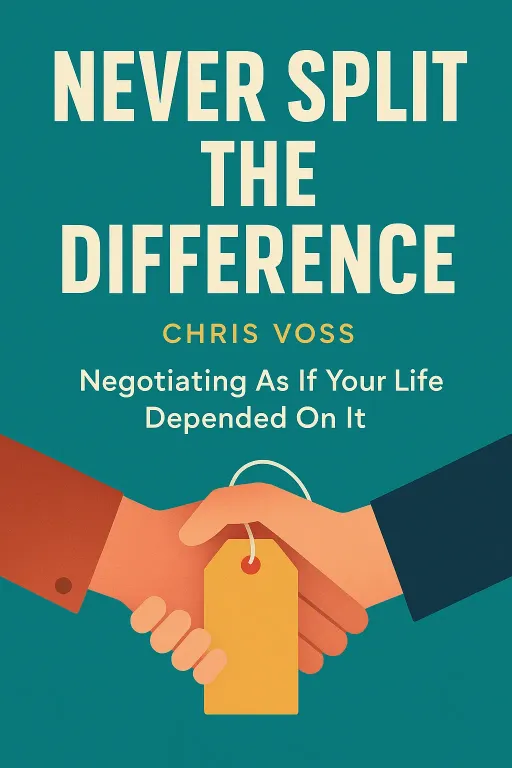
Nova: Exactly. Today, we're unpacking some profound insights from two giants in communication: by Kerry Patterson, Joseph Grenny, Ron McMillan, and Al Switzler, and by Chris Voss.
Atlas: Oh, I'm familiar with Voss. That's the former FBI hostage negotiator, right?
Nova: That's the one. It's fascinating how Voss brings such a high-stakes, real-world perspective to building rapport and influencing outcomes. Meanwhile, the authors, all seasoned consultants, distill decades of organizational psychology into actionable frameworks for handling disagreements. Both, in their own ways, challenge the conventional wisdom about what it means to be a powerful communicator.
Atlas: And for leaders navigating complex, human-centric challenges, that shift from 'power' to 'understanding' is everything. I mean, we're constantly trying to build bridges between technical solutions and human needs. So, where do we even begin to untangle this tapestry of influence?
The Art of Psychological Safety: Navigating High-Stakes Dialogue
SECTION
Nova: We begin with the foundation, which calls creating 'psychological safety.' Think of it like a pressure cooker. In high-stakes conversations, emotions boil, and people often retreat into silence or aggression. Psychological safety isn't about avoiding conflict; it's about creating a safe space where people feel secure enough to express their true thoughts and feelings, even when they’re difficult.
Atlas: But wait, for strategic integrators dealing with high-stakes technical implementations or ethical AI dilemmas, 'safety' can feel like a luxury. It's a competitive environment. How do you create that space when everyone's protecting their turf or their data?
Nova: That’s a crucial question. The authors introduce the concept of the "pool of shared meaning." Imagine every person's perspective, their data, their feelings, their opinions, as a unique contribution to a communal pool. The richer and deeper that pool of shared meaning, the better the decisions you make. When people feel unsafe, they withhold information, they don't contribute their best ideas, and the pool stagnates.
Atlas: So it’s about getting all the data into the 'pool' even if it's messy data from different sources. I can see that. But how do you prevent it from becoming a free-for-all?
Nova: It’s not about unregulated input. It’s about skilled dialogue. When safety is at risk, you need to step out of the content of the argument and address the conditions of safety. Are people feeling disrespected? Do they mistrust your motives? You might need to apologize sincerely if you've contributed to the breakdown, or clarify your mutual purpose.
Atlas: Okay, can you give us a scenario? Like, a project manager trying to get two warring technical teams to collaborate on a critical system integration – how does this 'pool of shared meaning' play out there?
Nova: Absolutely. Picture this: Team A, the "speed demons," wants to push a new feature live ASAP. Team B, the "security architects," is concerned about potential vulnerabilities and wants more testing. They’re clashing in every meeting. The project manager, instead of forcing a decision, notices the tension. They might say, "It feels like we're both passionate about this launch, but we're approaching it from different angles. My goal, and I believe ours collectively, is to deliver a robust, secure product that delights our users. Is that something we can all agree on?"
Atlas: I like that. That’s clarifying mutual purpose. It connects their individual goals to a shared, higher objective.
Nova: Exactly. Then, they might address the safety issue directly: "I sense some frustration, perhaps even a feeling that one team's priorities are being undervalued. I want to assure you that both speed and security are paramount, and we need both your expertise to succeed. Can we agree to hear each other out, truly, before we jump to solutions?"
Atlas: So it's not about being 'nice,' it's about making sure everyone feels heard and their perspective is to contribute, even if it's uncomfortable. It’s about getting all the data into the 'pool' even if it's messy data. That's powerful for navigating the human element in complex systems.
Tactical Empathy: Influencing Outcomes by Understanding What's Unsaid
SECTION
Nova: And that idea of truly understanding, not just being understood, leads us perfectly to Chris Voss and his concept of 'tactical empathy' from. It’s about understanding the other side's worldview, their fears, their pain points, their desires – not necessarily agreeing with it, but deeply acknowledging it.
Atlas: Wait, 'tactical empathy'? That sounds almost manipulative. For an ethical innovator, how do you balance understanding deeply with ensuring you're not just playing mind games?
Nova: That's a vital distinction. Voss isn't advocating manipulation. He argues that by understanding the other person's perspective, you gain crucial information that allows you to find a solution – one that addresses their underlying needs while also achieving your objectives. It's about disarming their defensiveness so you can both move forward. It’s about identifying their "Black Swans"—the hidden, often emotional, motivators that are driving their behavior.
Atlas: So it’s like, you’re not just hearing their words, you’re trying to decode the entire operating system of their decision-making. That makes sense. But how does a leader actually that? Voss talks about mirroring and labeling. Can you break those down? How does a leader use 'mirroring' in a difficult budget negotiation without just repeating everything verbatim?
Nova: Absolutely. Mirroring is deceptively simple: you just repeat the last one to three words the other person said. It encourages them to elaborate without feeling interrogated. So, if your team member says, "I'm worried this budget cut will cripple our project," you might just say, "Cripple your project?"
Atlas: "Cripple your project?" Hmm. That’s incredibly subtle. It's almost like you’re inviting them to fill in the blank.
Nova: Exactly. And labeling is verbally recognizing their emotions. "It sounds like you're feeling frustrated about this." "It seems like you're concerned about the long-term impact." You're giving voice to their internal state, which often makes them feel heard and understood, reducing their emotional load.
Atlas: So it's not about agreeing, it's about acknowledging. "It sounds like you're feeling frustrated about the timeline." That's powerful because it validates their emotion, which often opens them up to listen. I can see how that helps build rapport, even in a negotiation. It makes it human.
Nova: It’s the ultimate human-centric approach to influence. It's building bridges by first walking across to their side and understanding their landscape. It's about seeing the person, not just the position. This is especially critical for ethical innovators who need to build trust when discussing sensitive data or AI systems.
Synthesis & Takeaways
SECTION
Nova: So, when you bring these two powerful ideas together – the psychological safety of and the tactical empathy of – you get a truly holistic approach to impactful leadership. Psychological safety creates the space for honest dialogue, and tactical empathy fills that space with genuine understanding, allowing you to influence outcomes not by dominating, but by deeply connecting.
Atlas: So for leaders who want to elevate their strategic influence and guide responsible data use, it sounds like the blueprint isn't about having all the answers, but about mastering the art of asking the right questions and truly to the answers, even the ones unsaid. It's about seeing the full picture, both the technical and the emotional.
Nova: Precisely. And that brings us back to a powerful "Healing Moment" from our content today: Before your next important meeting, take a moment to identify not just what you want to say, but also what emotion you want to convey. Are you trying to convey urgency? Empathy? Confidence?
Atlas: That’s a powerful micro-practice. It forces you to be intentional about the element of communication, not just the logical argument. It’s like, you’re not just building a data pipeline, you’re building a bridge of trust. You're thinking about the emotional impact, not just the informational one.
Nova: And that, my friend, is where true, impactful leadership happens. Not just beyond words, but through the silent language woven into every interaction, every connection you forge. That’s how you move from just leading to truly influencing.
Atlas: Absolutely. This has been a masterclass in seeing communication as a strategic tool for human connection. For all our listeners aspiring to lead with more impact, especially those integrating complex systems with human experiences, we hope this gives you a new lens through which to view your next crucial conversation.
Nova: We'd love to hear how these insights resonate with your own leadership challenges. Share your thoughts on social media using #AibraryInfluence. We're always eager to engage with your experiences and learn from your real-world applications.
Nova: This is Aibrary. Congratulations on your growth!