The Silent Language: Mastering Social Skills Beyond Just Talking.
Golden Hook & Introduction
SECTION
Nova: What if I told you that the most important conversations of your life aren't about what you say, but what you say, and what you hear?
Atlas: Oh, I like that. That's a pretty bold claim, Nova. My initial thought is always that clarity and articulation are king in good communication.
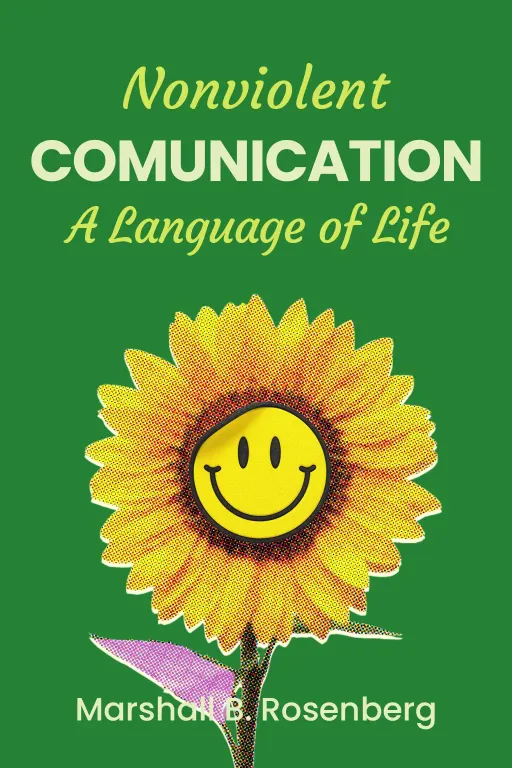
Nova: Absolutely, Atlas. But today, we're diving into what we're calling "The Silent Language: Mastering Social Skills Beyond Just Talking." It's inspired by powerful insights from texts like "Crucial Conversations" by Kerry Patterson and his co-authors, and Marshall B. Rosenberg's groundbreaking "Nonviolent Communication." What's fascinating about Rosenberg’s work, for instance, is that it didn't come from a quiet academic ivory tower. He developed these ideas mediating in war zones and between rival gangs. This wasn't theory; it was survival.
Atlas: Wow. So, these aren't just polite suggestions for a book club. These are frameworks forged in the fires of actual conflict. That definitely shifts my perspective from polite conversation to something with real stakes.
Nova: Exactly. And that's where we hit our first blind spot. Most of us think social skills are about verbal dexterity, about having the right words at the right time. But true connection often lies in understanding the unspoken cues, the underlying emotions, the needs that aren't articulated. Overlooking these is like trying to drive with blinders on.
Deep Dive into Core Topic 1: The Unspoken Language & The Blind Spot
SECTION
Atlas: Okay, so the "blind spot." I can definitely relate to conversations that just feel… off. But how do you even begin to see what’s not being said, especially when you’re in the thick of it, trying to get your own point across? For someone in a fast-paced environment, or someone who tends to be more analytical, it feels like an extra layer of complexity.
Nova: It is. Let me paint a picture. Imagine a manager giving feedback to an employee. The manager has meticulously prepared their points, delivering them clearly, logically. But as they speak, they miss the employee's slightly slumped shoulders, the averted gaze, the subtle sighs. Those aren't just random gestures; they're broadcasting defensiveness, maybe even resentment.
Atlas: Oh, I know that feeling. As the person receiving feedback, sometimes it feels like the words are one thing, but the energy in the room, the other person's posture, it’s saying something entirely different.
Nova: Precisely. And from the employee's side, they might be hearing the words, but they're the manager's slightly impatient tone, sensing their stiff posture as dismissiveness. So, what was meant as constructive criticism spirals into a breakdown of trust, not just a misunderstanding of the feedback itself. The manager thinks they’ve communicated; the employee feels unheard and devalued.
Atlas: That’s actually really powerful. It makes me wonder, how do you even begin to differentiate between genuine emotional signals and just, you know, someone having a bad day or being tired? It sounds a bit like mind-reading, which feels impossible.
Nova: That’s a great question. It’s not about mind-reading, Atlas. It's about cultivating genuine presence and practicing observation without judgment. It’s about noticing, "Hmm, their shoulders just slumped," rather than jumping to, "They hate my idea!" It’s about curiosity. What might that slump mean? It could be tiredness, sure. But it could also be a signal that they feel defeated or misunderstood. The key is to notice, then perhaps gently inquire, "I'm noticing a change in your expression. Is everything okay?"
Atlas: Okay, I see. So it's less about immediately interpreting and more about recognizing a signal, and then using that as an invitation to explore more deeply. That makes sense, but it also feels like it requires a massive shift in how we approach interaction. We're so conditioned to just deliver our message.
Nova: We are. And that’s why these insights are so crucial. Because when the stakes are high, when emotions are running hot, that blind spot becomes a canyon. And that naturally leads us to the second key idea we need to talk about, which often acts as a counterpoint to just delivering a message. How do we navigate those high-stakes conversations where emotions are already frayed?
Deep Dive into Core Topic 2: Mastering High-Stakes Dialogue & Frameworks
SECTION
Atlas: That makes me wonder. If we're missing so much of the unspoken, how do we ever get through a truly difficult conversation, whether it's at work, at home, or even in a community setting? It feels like we're walking through a minefield.
Nova: Absolutely. And that’s where the frameworks from books like "Crucial Conversations" and "Nonviolent Communication" become invaluable. "Crucial Conversations" teaches us that when opinions vary, stakes are high, and emotions run strong, we need to create what they call "psychological safety" for dialogue.
Atlas: Psychological safety. That sounds a bit academic. What does it actually look like in practice? Let's say, a team is struggling to meet a critical deadline, and there are wildly different ideas on how to proceed, and people are getting defensive.
Nova: A perfect example. Instead of everyone digging in their heels, trying to prove their solution is superior, "Crucial Conversations" suggests focusing on finding a "mutual purpose" and maintaining "mutual respect." So, in your team scenario, it’s not about "My plan vs. your plan," it’s about "How do we ensure we meet this deadline successfully?" It’s about creating a shared pool of meaning where everyone feels safe to contribute.
Atlas: That’s a great way to put it. So, it's about reframing the goal from "winning the argument" to "solving the problem together."
Nova: Exactly. Now, Marshall Rosenberg’s "Nonviolent Communication" offers a powerful, almost surgical approach to this, by focusing on four key components: Observations, Feelings, Needs, and Requests. Imagine that same scenario, but instead of "You never help out around the house!" which is an accusation, an NVC approach would be: "When I see dirty dishes in the sink for the third morning in a row, I feel overwhelmed and a bit unsupported, because I need more partnership in managing our home. Would you be willing to help with the dishes tonight so we can tackle it together?."
Atlas: Wow. That’s a huge shift. I can definitely see how that de-escalates things immediately. It’s not about blaming; it’s about expressing your inner experience. But wait, how does this "soft" approach work in, say, a cutthroat corporate environment, or when you're dealing with someone who's just being aggressive? It sounds almost too gentle.
Nova: That’s a common misconception, Atlas. NVC isn't soft; it's incredibly powerful because it disarms. When you express your feelings and needs without judgment, it’s much harder for the other person to feel attacked. It shifts the dynamic from conflict to connection. And it complements "Crucial Conversations" beautifully. Crucial Conversations gives you the framework for setting up the dialogue, and NVC gives you the precise language to navigate the emotional content within that dialogue.
Atlas: I’m curious, then, for our listeners who are "Curious Explorers" or "Creative Innovators"—how could they apply this practically, say, in a brainstorming session or when giving feedback on a new project idea?
Nova: A perfect example! In a brainstorming session, instead of saying, "That idea is terrible," which shuts down creativity, you could use NVC: "When I hear that particular approach, I feel a bit concerned, because I need to ensure we stay within budget. Could we explore other options that might achieve the same goal while being more cost-effective?." It keeps the innovation flowing while addressing real concerns.
Synthesis & Takeaways
SECTION
Atlas: That’s actually really inspiring. It feels like these aren't just communication techniques; they're tools for building deeper understanding and connection. It really shifts the focus from simply performing well in a conversation to genuinely being present and compassionate.
Nova: Absolutely. Both "Crucial Conversations" and "Nonviolent Communication" are about shifting from a reactive stance to an intentional one, from focusing on performance to cultivating genuine presence. It’s about recognizing that every single interaction, no matter how small, is an opportunity to practice empathy and understanding. Mastering these skills isn't just about having better conversations; it's about building a better world, one genuine connection at a time. It’s about seeing the humanity in every interaction.
Atlas: I love that. It’s a profound shift in perspective. It means we have far more agency in our interactions than we often realize. And it’s not just about what we say, but how we listen, how we observe, and how we choose to articulate our deepest needs.
Nova: Exactly. So, think about that "off" conversation you had recently. What unspoken emotion, what unarticulated need, might have truly been at play for yourself or the other person? A little curiosity can open up a whole new world of understanding.
Atlas: That’s a powerful question to leave with.
Nova: This is Aibrary. Congratulations on your growth!