The Silent Language: Mastering Conflict Without the Chaos.
Golden Hook & Introduction
SECTION
Nova: If you think avoiding conflict keeps the peace, you're not just wrong, you're actively eroding trust and sabotaging your team's potential. Silence isn't golden; it's a slow poison.
Atlas: Whoa, Nova, that's quite an opener! "Slow poison"? I mean, I can relate to the instinct to just… sidestep anything that feels like a confrontation. Isn't that just being diplomatic?
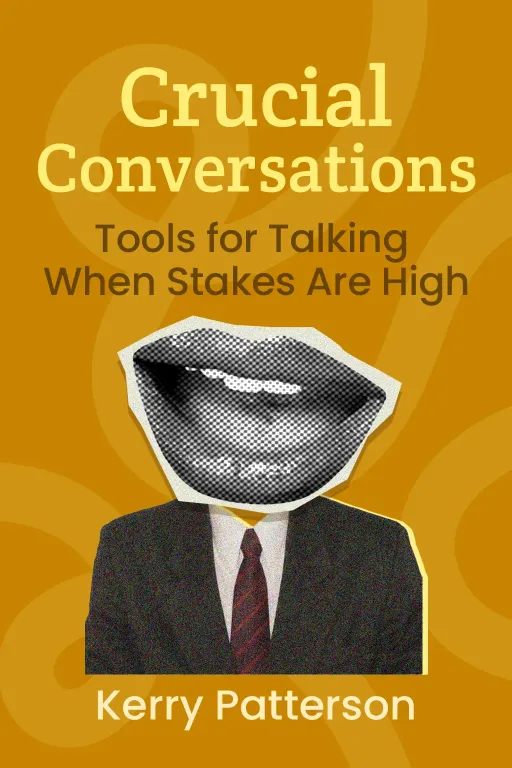
Nova: Diplomatic, perhaps, Atlas, but often at a profound cost. Think about it: every unspoken concern, every buried resentment, it all festers. Today, we're cracking open "The Silent Language: Mastering Conflict Without the Chaos," a powerful synthesis of insights from foundational works like "Crucial Conversations" by Kerry Patterson, Joseph Grenny, Ron McMillan, and Al Switzler, and "Difficult Conversations" by Douglas Stone, Bruce Patton, and Sheila Heen. What's fascinating about "Crucial Conversations" is that it emerged from 30 years of research by the authors. They studied over 20,000 people to identify what high-performing individuals and teams do differently when stakes are high. It's not just theory; it's distilled wisdom from the trenches of real human interaction.
Atlas: Twenty thousand people? That’s a serious deep dive. So, what did these researchers find about the real cost of sidestepping those tough talks?
Nova: They found that avoiding conflict doesn't build peace; it systematically dismantles trust and psychological safety. And that brings us to our first core idea: the counter-intuitive power of creating psychological safety, even when you're knee-deep in disagreement.
The Counter-Intuitive Power of Psychological Safety in Conflict
SECTION
Atlas: The counter-intuitive power of psychological safety. I guess that makes sense. We all want our teams to feel safe. But how does that actually play out when the stakes are high, and opinions are clashing? Because in a high-pressure environment, where deadlines are tight and results are everything, isn't "creating safety" just... slowing things down? Isn't it a luxury we can't afford?
Nova: It’s the exact opposite, Atlas. It's an accelerator. Think of a project team. Let’s say they’re working on a complex software build, and a junior developer, let’s call her Maya, spots a critical flaw in the architecture. She knows it could derail the entire project, but she also knows the lead architect, David, is notoriously defensive about his designs.
Atlas: Oh, I know that feeling. The pit in your stomach when you have to deliver bad news to someone who might shoot the messenger.
Nova: Exactly. Maya fears looking incompetent, or worse, embarrassing David. So, she stays silent. The flaw remains. The project moves forward, accumulating more code on top of that shaky foundation. Weeks later, the system crashes during a crucial test. The cause: Maya's unaddressed flaw. The outcome: massive delays, budget overruns, and a complete erosion of trust within the team. David feels betrayed, Maya feels guilty, and the company suffers a huge financial hit.
Atlas: Wow, that’s kind of heartbreaking. And it definitely doesn’t sound like a luxury. So how do you prevent that kind of silent disaster? How do you create that safe space so Maya speaks up?
Nova: The "Crucial Conversations" framework emphasizes starting with "Heart" – clarifying your own intentions and focusing on what you genuinely want for parties involved, not just yourself. It's about establishing "Mutual Purpose" and "Mutual Respect." For Maya's team, it means David cultivating an environment where he genuinely wants to hear challenges, not just praise. He needs to signal, through his actions, that the is a mutual purpose, and that Maya's input, even critical, is a sign of respect for that purpose.
Atlas: Okay, so it’s not about being soft, it’s about being smart. It’s about building a foundation where problems are illuminated early, not buried until they explode. But what if someone just being difficult? What if they're not genuinely interested in mutual purpose?
Nova: That’s a crucial distinction. We’re not talking about enabling unproductive behavior. We’re talking about creating the conditions where productive, even difficult, conversations happen. If someone consistently refuses to engage in a safe, respectful dialogue, that becomes a different kind of conversation. But the starting point is always the same: ensuring the environment is safe enough for honest input. It’s about making sure that the problem isn't the, but the to engage in a healthy way.
Deconstructing Conflict: Beyond the Surface-Level 'What Happened'
SECTION
Nova: Speaking of hidden costs and unspoken truths, sometimes the real problem isn't what's being said at all. That brings us to another powerful layer of understanding conflict, drawing from "Difficult Conversations." This framework helps us deconstruct conflict by looking beyond the surface-level "what happened."
Atlas: Beyond "what happened"? In other words, you’re saying there’s more to it than just the facts? I imagine a lot of our listeners, especially those in leadership roles, often get stuck right there, trying to pinpoint the facts.
Nova: Exactly. Stone, Patton, and Heen argue that every difficult conversation actually involves conversations happening simultaneously. There's the "what happened" conversation, which is about facts, who said what, who did what. But beneath that, there's the "feelings" conversation—all the emotions involved, acknowledged or unacknowledged. And even deeper, there's the "identity" conversation—how the situation affects our self-image, our sense of competence, or our future.
Atlas: That’s a great way to put it. So basically you're saying it's like an iceberg, where "what happened" is just the tip, and the feelings and identity are the massive, submerged parts that can sink the ship?
Nova: A perfect analogy, Atlas! Let's take your example of two department heads disagreeing on resource allocation. On the surface, it's the "what happened" conversation: "My team needs X budget for project A, your team is asking for Y, and there isn't enough for both." It's about numbers and deliverables.
Atlas: Right. And an efficient leader would immediately try to mediate, looking at data, trying to find a compromise on the numbers.
Nova: Precisely. But if you only focus on the numbers, you might miss the real drivers of the conflict. Let's say one department head, Sarah, feels her department is consistently undervalued and gets less support. That's a "feelings" conversation: "I feel frustrated and unheard." And perhaps the other department head, Mark, feels that if he doesn't secure this budget, his leadership will be questioned by his team, threatening his "identity" as an effective manager.
Atlas: Whoa. That gives me chills. I mean, people aren't just going to blurt out, "I feel my identity is threatened!" How does an "Efficient Leader" actually these hidden layers? How do you get past the "what happened"?
Nova: It starts with curiosity and active listening. Instead of just debating the facts, you ask open-ended questions like, "How has this situation impacted you personally?" or "What are your biggest concerns about how this might reflect on your team?" You create space for people to express their feelings without judgment, and you help them articulate what’s at stake for them on a deeper, identity level. It's about shifting from trying to who's right, to trying to what's truly going on for everyone involved.
Atlas: That makes sense, but what if someone just being difficult or unreasonable? Isn't there a point where you just need to make a decision and move on?
Nova: Absolutely. Understanding these layers isn't about endlessly dissecting emotions or excusing unproductive behavior. It's about choosing the most effective path to resolution. If you understand the underlying feelings and identity concerns, you can address them directly, often finding solutions that satisfy those deeper needs, even if the surface-level "what happened" doesn't change entirely. It’s a strategic understanding that allows for more robust, sustainable solutions, rather than just temporary truces.
Synthesis & Takeaways
SECTION
Nova: So, bringing these two powerful ideas together: psychological safety creates the container, the environment where these difficult, multi-layered conversations can even begin. And understanding the "what happened," "feelings," and "identity" conversations gives us the tools to navigate the complex human content within that container.
Atlas: I can see that. It's not about avoiding the mess; it's about building a better system to clean it up and even prevent it. It transforms conflict from a destructive force into something constructive.
Nova: Exactly. Mastering conflict isn't about eliminating disagreement; it's about transforming it into an engine for growth, innovation, and deeper trust within teams. Research consistently shows that unresolved conflict costs companies billions annually in lost productivity, turnover, and damaged morale. By learning to engage with these silent languages, leaders can turn potential breakdowns into breakthroughs. It's about fostering an environment where candor and vulnerability are seen as strengths, not weaknesses.
Atlas: That’s actually really inspiring. So, for our listeners, the next time you feel that instinct to avoid a difficult conversation, pause. Consider what might be the unspoken feelings or identity concerns at play, and how creating a little more safety could unlock a truly transformative dialogue. What’s one conversation you’ve been avoiding that, if handled with these insights, could change everything?
Nova: This is Aibrary. Congratulations on your growth!