The 'Say-Do' Gap is a Trap: Why You Need Radical Candor for Strategic Communication.
Golden Hook & Introduction
SECTION
Nova: Atlas, quick, what's the worst feedback you've ever received, or worse, to give?
Atlas: Oh, Nova, that's like asking me to choose my favorite existential crisis. Probably the time a manager told me "keep doing what you're doing," right before I was laid off. The irony was not lost on me.
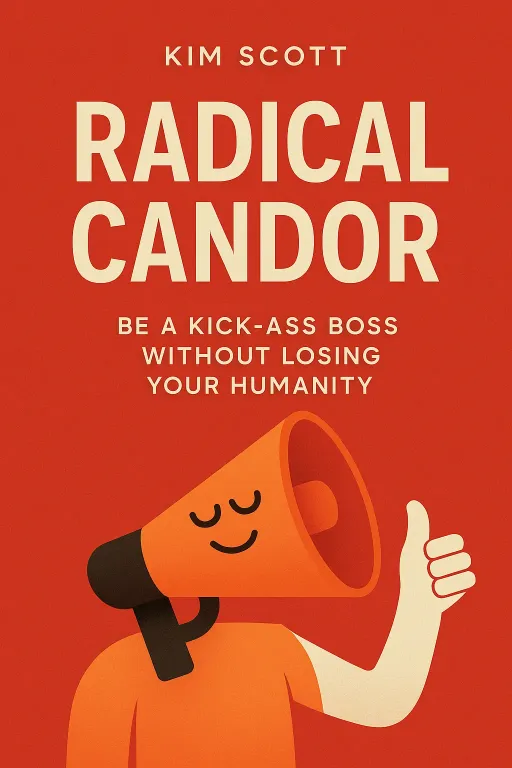
Nova: Oof. That's a classic, isn't it? The feedback that isn't really feedback, just a precursor to something far more painful. It perfectly illustrates what we're diving into today—the 'say-do' gap—and how to bridge it with insights from "Radical Candor" by Kim Scott and "Crucial Conversations" by Kerry Patterson, Joseph Grenny, Ron McMillan, and Al Switzler. What's fascinating about Kim Scott's work is that it didn't come from an ivory tower. It sprang directly from her extensive experience leading high-performing teams at places like Google and Apple. She saw firsthand how genuinely honest feedback, delivered correctly, was the secret sauce for both individual growth and team success. It’s battle-tested wisdom, not just theory.
Atlas: Right? That's what I love about her approach. It feels grounded. But even with that kind of pedigree, the idea of "radical candor" can sound a bit... well, to some. Especially if you're like my old manager, trying to navigate those tricky conversations.
Nova: Exactly. And that's where the insidious 'say-do' gap creeps in. Before we even talk about solutions, we have to understand this problem that silently sabotages so many leaders and teams.
The 'Say-Do' Gap: The Silent Killer of Trust and Performance
SECTION
Nova: So, imagine a leader, let's call her Sarah. Sarah is genuinely a good person. She believes in transparency, in open communication, in empowering her team. She'll tell everyone in meetings, "My door is always open! I want to foster a culture of psychological safety!"
Atlas: Sounds like a dream manager on paper.
Nova: On paper, yes. But in practice, when it comes to specific, difficult feedback, Sarah hesitates. She sees Mark, a promising team member, consistently missing small deadlines and overlooking details. Instead of addressing it directly, she might give vague praise, or worse, just "handle" the missed details herself. She's operating from what Kim Scott calls "ruinous empathy"—she cares personally, but she fails to challenge directly. She thinks she's being kind.
Atlas: Oh, I know that feeling. It’s that internal voice saying, "Don't rock the boat, don't hurt their feelings." But what's so bad about avoiding conflict if it keeps the peace? Isn't it just easier to be "nice"?
Nova: It’s a false peace, Atlas. A very, very expensive false peace. Because while Sarah is being "nice," Mark isn't improving. He's not getting the vital information he needs to grow. Then, when a big promotion comes up, Mark gets passed over. He's genuinely shocked, maybe even feels betrayed. He thinks, "But Sarah said I was doing great!" And Sarah, in turn, struggles to explain why, because she hasn't built the foundation of honest communication.
Atlas: So, the "say-do" gap isn’t just about a leader saying one thing and doing another, it’s about the creating a chasm of misunderstanding. That’s actually really insidious, because the leader often they are doing the right thing by being empathetic.
Nova: Precisely. It erodes trust, not with a bang, but with a slow, quiet drip. Performance stagnates, because people aren't getting the precise feedback they need to improve. And for aspiring leaders, for those driven by meaningful impact, this gap is a trap. It means your vision, your strategic insights, can't translate into real-world results if your team doesn't have a clear, honest picture of where they stand and where they need to go. It hinders their ability to inspire others because the foundation of trust is wobbly.
Atlas: That makes sense. It’s like, you can't build a resilient team if everyone's walking on eggshells, unsure if what they're being told is the whole truth.
Radical Candor: The Courageous Path to Bridging the Gap
SECTION
Atlas: So, if avoiding conflict is a trap, what's the alternative? How do we actually that tough feedback without becoming, well, obnoxious or just plain mean?
Nova: That's where "Radical Candor" shines. Scott's framework is elegantly simple: you have two axes. One is "Caring Personally," and the other is "Challenging Directly." The sweet spot, the radical candor zone, is where those two intersect. Most leaders, like our hypothetical Sarah, fall into "ruinous empathy" – high care, low challenge. Then there's "obnoxious aggression" – high challenge, low care, which is just being a jerk. And the worst is "manipulative insincerity" – low care, low challenge, which is passive-aggressive and utterly destructive.
Atlas: Oh, I like that. It gives you a compass. But how do you really when you're delivering tough news? Doesn't it feel disingenuous to say "I care about you" right before you tell someone they're messing up?
Nova: It’s about genuine intent, Atlas. It's about demonstrating that you genuinely want the other person to succeed, that you're on their side, even when the message is hard. Let's revisit Mark. His new manager, David, also notices the missed deadlines. But David genuinely believes in Mark's potential. So, he schedules a 1-on-1. He starts by saying, "Mark, I really value your contribution to the team, and I see a ton of potential in you. I want to see you thrive here." That’s the "caring personally."
Atlas: Okay, so he establishes the good faith first. Then what?
Nova: Then comes the "challenging directly." David says, "And because I want you to succeed, I need to be honest. Lately, I've noticed a pattern of missed deadlines on X, Y, and Z projects, and some quality issues in reports A and B. This impacts our team's ability to deliver on time and reflects poorly on your work." He's specific, factual, and explains the impact. He then offers, "Let's work together to figure out why this is happening and how we can get you back on track."
Atlas: That’s a completely different conversation than Sarah had. It’s not just "brutally honest," it's... constructive. It’s framed within a desire for the other person’s growth.
Nova: Exactly. It's about being clear and courageous, not cruel. It's the conscious leadership that aspiring leaders need to practice. It helps build those resilient teams because people know where they stand. They trust that even when the feedback is tough, it comes from a place of genuine support. It allows for strategic communication to actually be and, rather than just being polite noise.
Crucial Conversations: Mastering High-Stakes Dialogue for Strategic Alignment
SECTION
Atlas: That's a fantastic question, Atlas, because "Radical Candor" gives us the framework, but "Crucial Conversations" provides the playbook for to actually execute those tough discussions, especially when emotions are running high. Because let's be honest, even if you care personally and challenge directly, the other person might not always react with grace.
Nova: Absolutely. That's where the work of Patterson, Grenny, McMillan, and Switzler becomes invaluable. "Crucial Conversations" defines these as high-stakes discussions where opinions differ and emotions run strong. Their core insight is that when these conversations go poorly, it's usually because one or both parties feel unsafe.
Atlas: So, it's not just about what you say, but creating the right environment to say it in?
Nova: Precisely. Their techniques are all about making it safe to talk. They teach you to "start with heart," meaning you enter the conversation with a clear goal of what you want for yourself, for the other person, and for the relationship. Not to win an argument, but to achieve a positive outcome. Then, you "make it safe" by focusing on shared goals and mutual respect. Let’s go back to David and Mark.
Atlas: Okay. Mark's heard the tough feedback. He's probably feeling a bit defensive, maybe embarrassed.
Nova: Exactly. If Mark gets defensive, David, using "Crucial Conversations" techniques, wouldn't back down from the feedback, but he would make it safe. He might say, "Mark, I can see this is tough to hear, and I want to assure you, my goal here isn't to punish you. It's to help you consistently hit your stride, because I believe you have a lot to offer this team. We both want you to succeed, right?" He reaffirms the shared goal and respect.
Atlas: That’s smart. It de-escalates the emotional response and brings the focus back to the objective. So, it’s not just about delivering the message, but how you manage the around the message.
Nova: And that's key for strategic alignment. Leaders, aspiring leaders, strategic thinkers—you're constantly trying to articulate your vision, build resilient teams, and make a meaningful impact. If you can't navigate these crucial conversations, if you can't create that safe space for honest dialogue, your strategic communication falls flat. The "say-do" gap widens. Mastering these tools transforms difficult moments into profound breakthroughs, because you're turning potential conflict into shared understanding and commitment.
Atlas: So, if I'm an aspiring leader, listening right now, how do I even begin to prepare for one of these "crucial conversations"? It sounds like a lot to juggle in the moment.
Nova: That's why the "Tiny Step" from the book content is so powerful. Prepare for your next 1-on-1 by identifying just piece of 'radical candor' feedback you need to give. Frame it with both care and direct challenge. Practice that balance. It’s about conscious leadership, leading by example, and trusting your inner voice to guide you towards that courageous honesty. It’s the foundational step to articulating your vision clearly and truly building resilient teams.
Synthesis & Takeaways
SECTION
Nova: This journey from the 'say-do' gap to mastering crucial conversations is about far more than just better management techniques. It’s about fundamentally rethinking what it means to lead with integrity and impact. It’s about understanding that true care isn't always comfortable, and that challenging directly, when done with genuine empathy, is the greatest gift you can give someone for their growth. It's the difference between a team that just performs and one that truly thrives, innovating and trusting each other because they know the truth will always be spoken, with kindness and clarity.
Atlas: It’s a profound shift, really. It moves you from avoiding uncomfortable truths to embracing them as opportunities for deeper connection and stronger outcomes. For anyone who wants to make a difference, to inspire others, to truly lead with purpose, this isn't optional. This is the bedrock of meaningful impact.
Nova: Absolutely. So, for our listeners, try that tiny step. Pick one person, one piece of feedback, and practice that radical candor. Frame it with care, challenge directly, and see the shift. We’d love to hear how it goes; share your insights and experiences with the Aibrary community.
Atlas: Yeah, let’s get this conversation going. Because bridging that 'say-do' gap doesn't just improve your team; it transforms your leadership.
Nova: This is Aibrary. Congratulations on your growth!