The 'Influence' Imperative: Mastering Communication Beyond Words.
Golden Hook & Introduction
SECTION
Nova: What if the biggest mistake you're making in high-stakes conversations isn't what you say, but that you're having them at all, or worse, avoiding them entirely?
Atlas: Oh, I know that feeling. That gut-wrenching dread, the mental rehearsal that always goes sideways, the way your brain just screams 'run!' or 'fight!' when things get tough. It's like our primal instincts take over.
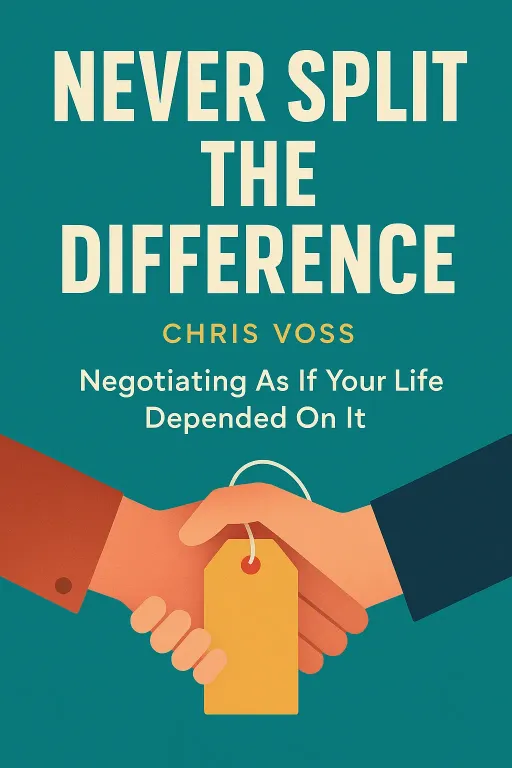
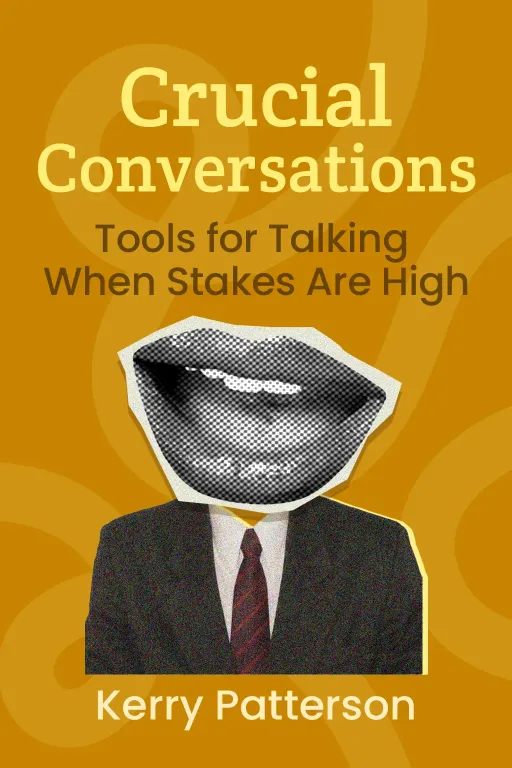
Nova: Exactly! And that's precisely what we're dissecting today, because for an aspiring entrepreneur, those "tough talks" aren't just uncomfortable; they're make-or-break moments. Today we're pulling insights from two absolute titans in the communication world: 'Crucial Conversations' by Kerry Patterson and Joseph Grenny, and 'Never Split the Difference' by former FBI hostage negotiator Chris Voss.
Atlas: That's quite the lineup. From diffusing heated workplace tension as organizational consultants, to actual hostage situations in the FBI. So, what's connecting these two powerhouses for us today, beyond just the general topic of 'talking better'?
Nova: They both fundamentally argue that true, effective communication isn't just about winning an argument or delivering a perfectly crafted speech; it's about mastering the unspoken currents, the emotional undercurrents beneath the words. For anyone looking to build their own venture, understanding how to navigate these hidden dynamics – whether it's with a co-founder, an investor, a difficult client, or even a team member – is absolutely crucial. We're talking about building trust and driving results when the stakes are sky-high, and the natural human tendency is to either clam up or lash out.
The Art of Psychological Safety: Turning Conflict into Connection
SECTION
Nova: Let's start with 'Crucial Conversations,' because it tackles that primal fear you just mentioned head-on. Patterson and Grenny aren't just talking about being 'nice' or avoiding conflict. They're talking about something much more strategic: creating 'psychological safety.' It’s an environment where people feel secure enough to discuss even the most contentious, emotionally charged issues honestly, without fear of reprisal, judgment, or damaging the relationship.
Atlas: Okay, but for someone trying to get a startup off the ground, or negotiating a critical deal, 'psychological safety' might sound a bit… soft. Like, how do you maintain that when you need to make tough decisions, or deliver hard feedback, or tell someone their idea isn't working, without sugarcoating it?
Nova: That’s a fantastic point, and it’s a common misinterpretation. It's not about avoiding conflict; it's about transforming it from a destructive force into a constructive one. They introduce two core pillars: 'mutual purpose' and 'mutual respect.' Imagine a scenario every entrepreneur faces: a crucial product launch is delayed. The engineering team blames marketing for unrealistic timelines, marketing blames engineering for missed deadlines. The natural human instinct is to retreat into defensiveness or launch into an attack.
Atlas: Right, and that's when things usually devolve into finger-pointing, passive aggression, or just a miserable, unproductive meeting where nothing gets solved and everyone leaves feeling worse.
Nova: Precisely. Instead, Patterson and Grenny would say, pause. Before you even dive into the problem, you explicitly re-establish mutual purpose: "We all want this product to launch successfully and on time, and we all want our company to thrive." Then, you re-establish mutual respect: "I know everyone here is working incredibly hard, is committed to our shared goals, and brings valuable expertise to the table." Only then, once you've truly created that safety, can you open up the dialogue to discuss the real, underlying issues – the miscommunications, the unforeseen technical challenges, the shifting market demands – without people shutting down, lashing out, or feeling personally attacked. It's about speaking persuasively, not abrasively, by focusing on what you both genuinely want for the future.
Atlas: I can see that. So, it's like setting the stage and lighting it correctly before the play even begins. You're not just diving into the problem; you're actively creating the conditions for a productive solution. That makes so much sense. It feels like it prevents a lot of those awkward, tense meetings that just go nowhere and leave lingering resentment. It's almost like a communication pre-flight check.
Nova: Exactly. It's about elevating the conversation from a battle of wills to a shared exploration of solutions, because you’ve ensured everyone feels heard and valued, even when opinions differ drastically. This approach is what allows you to tackle the truly difficult stuff without destroying relationships.
Unlocking 'Yes': The Power of Tactical Empathy and Active Listening
SECTION
Nova: And that naturally leads us to Chris Voss and 'Never Split the Difference,' which takes that idea of understanding to an entirely different, almost counter-intuitive level. Voss, a former FBI hostage negotiator, fundamentally argues that empathy and tactical listening are far more powerful than logical arguments, especially when you're facing extreme resistance. He’s not talking about being 'nice' or 'sympathetic' in the traditional sense; he's talking about understanding the other person's perspective so deeply, verbalizing it back to them, that you can predict their moves and disarm their resistance.
Atlas: That sounds a bit… manipulative, honestly. For someone who values connecting with people authentically, how do you use 'tactical empathy' without feeling like you're playing mind games or just trying to trick someone?
Nova: That's a crucial distinction. It's not about trickery; it's about profound understanding. Voss defines 'tactical empathy' as intentionally understanding the other person's feelings and perspective, and then verbalizing that understanding to them. It’s not about agreeing with them, but showing them you them. For example, imagine you're pitching an investor, and they say, "Your valuation is too high." Your natural, logical instinct might be to launch into a detailed defense of your numbers, your market, your projections.
Atlas: Which, in my experience, usually just makes them dig in their heels more, because now it feels like a debate they have to win.
Nova: Exactly. Voss would suggest, instead, using techniques like 'mirroring' – simply repeating the last few critical words they said, almost as a question: "Too high?" Or 'labeling' their emotion: "It sounds like you're concerned about the risk here," or "It seems like you're hesitant about the market timing." But perhaps his most radical and effective technique is the 'accusation audit.' This is where you voice all the negative things they might be thinking about or your proposal they can even say them.
Atlas: Whoa! That's completely counter-intuitive. So, instead of waiting for them to hit me with their objections, I'm supposed to say them for them? Like, "You're probably thinking I'm inexperienced, or that this market is too crowded, or that my projections are overly optimistic"?
Nova: Precisely! You're disarming a bomb before it even goes off. You're taking the wind out of their sails by acknowledging their potential objections or criticisms head-on. By voicing their negative thoughts, you create an immediate sense of trust and rapport. They think, "This person gets me. They're not trying to pull one over on me; they understand my concerns." And suddenly, they're more open to hearing your 'yes' because you've validated their perspective without necessarily agreeing with it.
Atlas: That's incredible. It shifts the dynamic entirely. It's like you're saying, 'I know what you're thinking, and it's okay.' It creates a pathway for them to actually engage, rather than defend. That’s going to resonate with anyone who struggles with pitching, negotiating, or even just having those tough conversations with a co-founder. It’s about uncovering their underlying needs and pivoting from a hard 'no' to an eventual 'yes' with finesse, not brute force.
Synthesis & Takeaways
SECTION
Nova: So, when you put these two powerful frameworks together – the psychological safety of 'Crucial Conversations' and the tactical empathy of 'Never Split the Difference' – you get a truly comprehensive and incredibly powerful toolkit for communication. It's about understanding that every interaction, especially the high-stakes ones, has a deep emotional undercurrent, and if you can learn to navigate that, you can achieve far more than through pure logic or argument alone.
Atlas: Yeah, it's not just about what you say, but creating the conditions for it to be heard effectively, and then truly hearing what's being said. For anyone building a business, or even just a high-performing team, that's priceless. The tiny step from our book content today, identifying one conversation you're dreading and applying that 'accusation audit' technique, feels incredibly practical and immediately actionable. I can already think of a few I need to try that on!
Nova: Absolutely. It's about turning potential clashes, disagreements, or seemingly insurmountable objections into opportunities for deeper understanding, alignment, and ultimately, stronger relationships. It's the profound difference between merely transacting and truly connecting. It’s what transforms a 'no' into a 'how can we make this work?'
Atlas: It makes me wonder, how many missed opportunities, how many broken relationships, how many stalled projects could have been salvaged or accelerated if we just approached those difficult moments with a little more strategic empathy and a focus on safety?
Nova: A lot, I imagine. And that's precisely why mastering these hidden dynamics isn't just a 'soft skill' to be nice; it's a hard imperative for anyone aiming to make a significant impact and build something meaningful.
Atlas: This is Aibrary. Congratulations on your growth!