The Empathy Advantage: How to Connect Deeply in Any Conversation
Golden Hook & Introduction
SECTION
Nova: Forget everything you think you know about 'tough conversations.' For too long, we've treated them like battles to be won. But what if the most crucial dialogues aren't about confrontation at all, but about something far more powerful: connection?
Atlas: Whoa, connection? That feels almost… counter-intuitive when you're bracing for a difficult chat. Most of us go in armed and ready for a fight, don't we?
Nova: Exactly. And that's exactly what we're dissecting today, pulling insights from a truly foundational work: "Crucial Conversations: Tools for Talking When Stakes Are High" by Kerry Patterson, Joseph Grenny, Ron McMillan, and Al Switzler. What's fascinating is that these four authors, originally academics and corporate consultants, spent decades researching what makes some people incredibly effective in high-stakes discussions while others consistently fail, observing thousands of real-life interactions to distill their groundbreaking methodology. Their findings redefine what 'crucial' truly means.
Atlas: I'm already intrigued. Redefine 'crucial'? How so?
Strategic Dialogue: Navigating High-Stakes Conversations
SECTION
Nova: Well, they found that 'crucial conversations' aren't just about the topic; they're about the stakes. When opinions differ, stakes are high, and emotions run strong. Think about a performance review, a project deadline dispute, or even a disagreement with a family member. The common mistake is to either avoid these conversations entirely or to approach them aggressively.
Atlas: Oh, I know that feeling. It's like you're walking on eggshells, or you're ready to put on your boxing gloves. So, what's the 'Crucial Conversations' secret sauce here?
Nova: Their core insight is that the most effective communicators don't focus on winning the argument. They focus on creating 'shared meaning' and maintaining 'safety' in the dialogue. Imagine a CEO, let's call her Sarah, who needs to tell her team that their flagship product is being delayed by six months due to unforeseen technical issues. The stakes are incredibly high: morale, investor confidence, potentially even jobs. Most leaders might deliver the bad news and brace for impact.
Atlas: And probably get a lot of defensive reactions, right? Or worse, silence, which isn't really agreement.
Nova: Precisely. Sarah, applying the 'Crucial Conversations' principles, doesn't just announce the delay. She starts by clarifying her positive intent: 'I'm sharing this difficult news because I value our transparency and your trust, and I need your collective intelligence to navigate this challenge.' She then states the facts objectively, without blame. Crucially, she continually observes the 'mood' of the conversation. If she sees people shutting down, she 'makes it safe' again by inviting dissent, saying things like, 'I know this is tough to hear, and I might be missing something. What are your concerns? What are your ideas?'
Atlas: So, it's about actively drawing people into the conversation, even if their initial reaction is negative, rather than just delivering a monologue. That makes sense for building trust, especially in a professional setting where people need to feel heard to buy into a solution.
Nova: Exactly. By creating psychological safety, Sarah transforms a potentially destructive announcement into a collective problem-solving session. The team feels respected, their input is valued, and they're more likely to commit to the new plan, even if it's not ideal. It's about speaking persuasively, not abrasively, and making sure everyone feels heard, not just spoken to.
Atlas: I'm curious, Nova, how does someone even begin to build that 'safety' if they're already in a tense situation? Is there a first step?
Nova: There absolutely is. The authors call it 'Start with Heart.' Before you even open your mouth, get clear on what you truly want for yourself, for the other person, and for the relationship. If you go in wanting to punish, or to prove you're right, safety will evaporate. If you genuinely want a positive outcome for all, your approach will naturally shift. It’s a foundational mindset.
Atlas: That's a great way to put it. It sounds like checking your own emotional baggage at the door before you even engage. I can see how that would prevent a lot of conversations from spiraling.
Nova: It's powerful. And it’s a skill that requires practice, like any other. It’s observing your own intentions as much as observing the other person’s reactions.
The Language of Empathy: Beyond Words to Unspoken Needs
SECTION
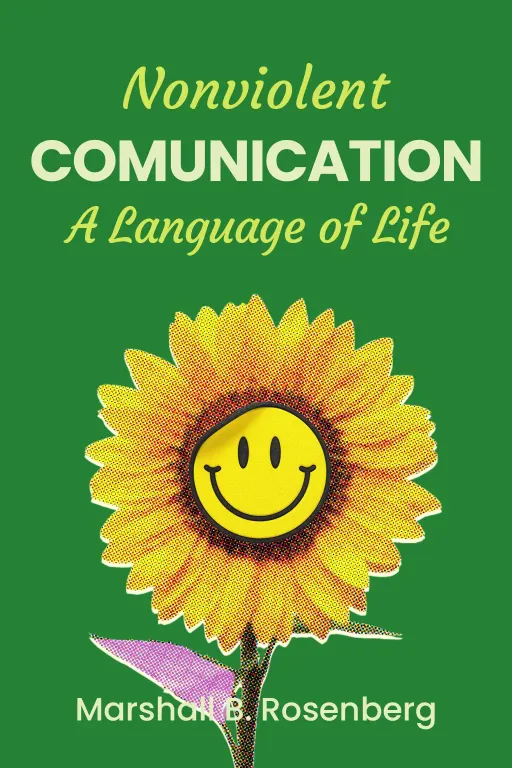
Nova: And that emphasis on 'making it safe' naturally leads us to our second key idea, which delves even deeper into the mechanics of understanding beyond words: 'Nonviolent Communication' by Marshall B. Rosenberg. While 'Crucial Conversations' gives us the strategic framework for high-stakes talks, Rosenberg gives us the linguistic toolkit for deep, empathetic connection in any conversation.
Atlas: Nonviolent Communication. That sounds like something you'd use to diffuse a hostage situation, not necessarily everyday work or personal chats. How does that translate to, say, someone trying to connect better while learning a new language, where misunderstanding is a daily occurrence?
Nova: That's a brilliant question, because it's precisely in those situations, where cultural and linguistic nuances abound, that NVC shines. Rosenberg's work emphasizes expressing four things: observations, feelings, needs, and requests. Most of us skip straight to judgment or blame. For example, instead of saying, 'You're always late for our study sessions!' which is a judgment, NVC would guide you to say, 'When I see you arrive thirty minutes after our agreed time for the study session, I feel frustrated and a little disrespected, because I need our time together to be productive and for my efforts to be valued. Would you be willing to try to arrive on time next week, or let me know in advance if you can't?.'"
Atlas: Wow. That's a complete shift. It takes the accusation out of it and puts it squarely on your own experience. It's like you're not attacking the other person, you're just explaining your internal world. That feels incredibly vulnerable, but also powerful.
Nova: It is. And that vulnerability is where the connection happens. Think about someone learning a new language, like many of our listeners aspiring to communicate better. They might feel misunderstood, or accidentally offend someone. Instead of retreating or getting defensive, NVC provides a framework. Imagine you're in a new country, practicing your new language, and you accidentally use a word that causes offense. Instead of just apologizing vaguely, NVC would encourage you to observe the reaction, acknowledge your feeling, identify your need, and then make a request.
Atlas: Okay, that's incredibly practical. It turns a potential communication breakdown into a learning opportunity, and it also puts the onus on understanding needs – both yours and theirs – rather than just surface-level words. It's like a deeper translation layer for human interaction.
Nova: Exactly! It helps you pinpoint the root cause of a reaction. Often, what appears to be anger is actually a masked need for security or understanding. By focusing on those universal human needs – connection, safety, autonomy, competence – you bypass the cultural and linguistic barriers and tap into something deeper.
Atlas: So, if someone says something that sounds aggressive, instead of reacting defensively, you try to understand what underlying need they're trying to meet, even if their words are clumsy?
Nova: Precisely. It allows you to depersonalize the attack, so to speak. Their aggressive words are often just a tragic expression of an unmet need. If you can hear that need, you can respond with empathy, which is far more effective than escalating the conflict. It's a skill that builds resilience and deepens connections, whether you're negotiating a business deal or navigating a new culture.
Atlas: That's fascinating. It really challenges the idea that communication is just about exchanging information. It's about exchanging understanding.
Synthesis & Takeaways
SECTION
Nova: Precisely, Atlas. Both 'Crucial Conversations' and 'Nonviolent Communication' fundamentally shift our focus from arguing to understanding. They equip us with the tools to navigate those tricky waters, not by avoiding them, but by approaching them with a strategy rooted in empathy and respect for shared meaning. It’s about building bridges, not just delivering messages. It helps us pause, reflect, and choose our words with intention, transforming potential battles into genuine connections. And this is particularly vital for anyone building a career or navigating new cultural landscapes, where every interaction is an opportunity for growth.
Atlas: That's a profound reframe. It makes me think about all the conversations I've walked away from feeling like I've failed, or like I just couldn't get through. The idea that simply shifting how I approach it, by focusing on safety and unspoken needs, can change everything... that's empowering. It's not about being 'naturally good' at communicating; it's about applying a learnable skill set.
Nova: Absolutely. And here's your 'tiny step' for tomorrow: In just one conversation, focus only on understanding the other person's feelings and underlying needs, not just their words or the 'rightness' of your own argument. Just listen with the intent to truly grasp their internal world. You might be surprised at the connection you forge.
Atlas: I'm going to try that. It feels like a small shift, but with potentially massive ripples, especially for someone who's constantly trying to bridge gaps in communication and culture. Thank you, Nova, for shedding light on these incredibly powerful approaches.
Nova: My pleasure, Atlas. It's a journey worth taking. This is Aibrary. Congratulations on your growth!