The Art of Persuasion: Influencing Without Authority.
Golden Hook & Introduction
SECTION
Nova: What if I told you that the most powerful leaders in the world rarely give orders? That true authority isn’t about your title, but about your ability to inspire a deep, unwavering commitment?
Atlas: Oh, I love that. Because honestly, the idea of just barking orders feels so… old-school. But then the reality hits: how do you actually get that deep commitment, especially when you’re trying to balance a thousand things and build something new?
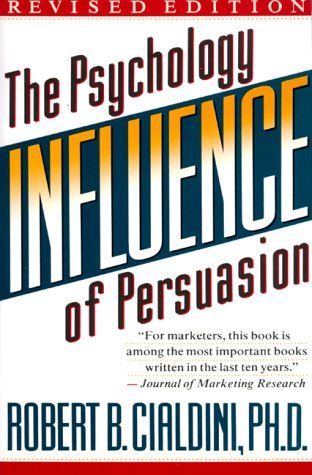
Nova: Exactly! Today, we're dissecting the art of persuasion, drawing rich insights from two seminal works: Robert Cialdini's groundbreaking book,, a text that’s been refined over decades based on his extensive social psychology research, and the equally impactful by Kerry Patterson, Joseph Grenny, Ron McMillan, and Al Switzler, a book born from years of observing real-world communication challenges in organizations. These aren't just academic theories; they're blueprints for fostering collaboration and driving alignment through understanding human psychology, not just relying on the power of your position.
Atlas: That makes sense. For anyone trying to build strong foundations and drive sustainable growth, relying solely on a title feels precarious. You need something more fundamental.
The Subtle Science of Ethical Influence
SECTION
Nova: Precisely. And that's where Cialdini's work really shines. He spent years embedding himself in sales organizations, fundraising groups, and advertising agencies, studying the masters of persuasion. What he uncovered were six universal principles that ethically guide decisions and build genuine consensus. Let's dive into a couple of them.
Atlas: Okay, so you’re saying there's a science to this? Not just a gut feeling?
Nova: Absolutely. Take the principle of Reciprocity. It’s simple: we feel compelled to return favors. If someone does something for us, we feel an innate, often subconscious, need to do something back. It’s a powerful social glue.
Atlas: That’s a great way to put it. I can definitely relate to that. It’s like when a colleague helps you out of a bind, you’re much more inclined to go the extra mile for them later.
Nova: Exactly. I remember a story about a project manager, let's call her Sarah, who was leading a complex software development team. They were facing a tight deadline, and one of her key developers, Mark, was really struggling with a critical module. Instead of pushing him harder or micromanaging, Sarah, unprompted, offered to stay late with him, not to code, but to help him break down the problem, listen to his frustrations, and even bring him coffee.
Atlas: Oh man, that's a classic move. A lot of leaders would just see it as his problem to solve.
Nova: Right? But Sarah wasn't just solving a problem; she was building a bond. She wasn't just offering help; she was investing in their relationship. Mark, feeling that genuine support and understanding, not only delivered the module on time but became Sarah's most loyal and proactive team member for future projects. He reciprocated that goodwill with unwavering commitment, going above and beyond without being asked. The cause was Sarah's unprompted gesture; the process was Mark's psychological need to return the favor; the outcome was enhanced loyalty and an even stronger team.
Atlas: Wow, that’s actually really inspiring. So it’s not about quid pro quo, but about genuine investment that then naturally fosters commitment. But wait, what about when you don't have that direct, personal connection? What if you're trying to influence a larger group, or even an industry?
Nova: That leads us to another potent principle: Social Proof. We tend to look to others, especially those similar to us, to determine appropriate behavior. If many people are doing something, we assume it's the right thing to do. Think about product reviews, or why a crowded restaurant seems more appealing than an empty one. For leaders, it means showcasing existing buy-in.
Atlas: That makes me wonder, how does a strategic leader leverage that without feeling manipulative? Because you’re trying to build something sustainable, not just a fleeting trend.
Nova: It's about transparency and authenticity. Let's say you're introducing a significant strategic shift within your organization. Instead of just announcing it from the top, you highlight a pilot team that has already embraced the change and is seeing positive results. You share their stories, their successes, their initial hesitations and how they overcame them. This isn't faking buy-in; it's amplifying existing, genuine adoption. When others see their peers succeeding with the new strategy, they're far more likely to embrace it themselves. It provides a tangible path forward, making the change feel less risky and more achievable.
Atlas: That gives me chills. That's such a hopeful way to look at it. It's about empowering the early adopters to become the evangelists, rather than forcing the issue. So it’s not about authority, it’s about making the path clear and appealing.
Mastering Crucial Conversations: Navigating High-Stakes Dialogue
SECTION
Nova: Exactly. And once you understand to influence, the next step is to apply it – often in those pivotal, tough conversations. This naturally leads us to the insights from. We've all been there: those moments when the stakes are high, opinions diverge, and emotions run wild. These aren't just uncomfortable; they're often the make-or-break moments for projects, teams, and careers.
Atlas: Oh, I've been there. Honestly, that sounds like my Monday mornings sometimes. For someone balancing many demands, these conversations can feel like a minefield. You know they're important, but the emotional energy they demand can be draining.
Nova: They absolutely can be. The authors define a crucial conversation as one where opinions vary, stakes are high, and emotions are strong. Their core insight is that the biggest mistake we make in these moments is believing we have to choose between candor and kindness. We either speak our mind and risk offending, or we stay silent and let problems fester.
Atlas: Right, like, you either get that critical information out, or you protect the relationship. It feels like an impossible choice.
Nova: But what if you didn't have to choose? argues that the key is to create a "safe space" for dialogue. This isn't about being soft; it's about establishing mutual respect and a mutual purpose. Before you even open your mouth, you need to ensure that everyone believes you genuinely care about their interests and that you're working towards a common goal.
Atlas: So basically you’re saying, it starts with the heart. You have to genuinely believe in a positive outcome for everyone involved, not just yourself.
Nova: Precisely. Let me give you an example. Imagine a situation where a product development team was deeply divided over the next iteration of a key feature. Half the team believed in a minimalist approach, the other half wanted to add more complex functionalities. The project manager, let's call him David, knew this was a crucial conversation. Emotions were high; everyone felt their idea was superior.
Atlas: That happened to me once. It can completely derail a project, especially when everyone feels invested.
Nova: David didn't just call a meeting to debate. He started by explicitly stating his mutual purpose: "Our goal here isn't to pick a winner between these two ideas. It's to build the absolute best product for our users, and I believe both perspectives hold valuable insights to get us there." He then made it safe by assuring everyone that their input was valued and that no one would be penalized for expressing dissenting opinions. He then asked each side to articulate not just they wanted, but —what user problem were they trying to solve?
Atlas: So, he shifted the focus from "my idea versus your idea" to "our problem, our solution." That's a clever reframing.
Nova: Absolutely. By focusing on the shared goal and ensuring psychological safety, the team was able to move past personal agendas. They eventually realized that elements of both approaches were necessary, leading to a hybrid solution that was far better than either original idea. The cause was the initial team division; the process was David creating a safe space and focusing on mutual purpose; the outcome was a superior product and a stronger, more aligned team. It's about making sure critical information flows freely and decisions are made effectively, even under pressure.
Atlas: That's incredible. It makes me realize that for someone trying to anchor a product's future or build an unstoppable team, these skills aren't just "nice-to-haves"; they're foundational. It's about ensuring those critical conversations actually move things forward, not just create more friction.
Synthesis & Takeaways
SECTION
Nova: You've hit on the core insight, Atlas. Ultimately, leading an unstoppable team isn't just about giving orders or having a title. It's about influence, understanding the subtle psychological triggers that inspire commitment, and then applying that understanding in the moments that matter most – those crucial conversations. It's about leading with profound empathy and strategic communication.
Atlas: And for the strategic mind, for the builder, it’s about trusting your discernment. It’s about recognizing that the deepest impact comes from enabling people, not just directing them. It builds truly sustainable growth. So, what's one tiny step our listeners can take to put this into action?
Nova: Here’s a simple challenge: Identify one upcoming conversation, big or small. Now, pick just one of Cialdini's principles – maybe Reciprocity, by thinking about a small, genuine gesture you can offer first, or Social Proof, by highlighting existing success. Prepare your approach for that discussion using that single principle. Observe what happens.
Atlas: I love that. Start tiny, but think big. It's about intentionality.
Nova: Exactly. This is Aibrary. Congratulations on your growth!