The Art of Listening: Why Deep Empathy Unlocks Better Outcomes.
Golden Hook & Introduction
SECTION
Nova: What if I told you that sometimes, being empathetic can actually make your most important conversations?
Atlas: Whoa, hold on. That sounds like fighting words for anyone who prides themselves on being an empathetic leader. My instinct is to say that's completely counterintuitive. How could more empathy possibly lead to worse outcomes?
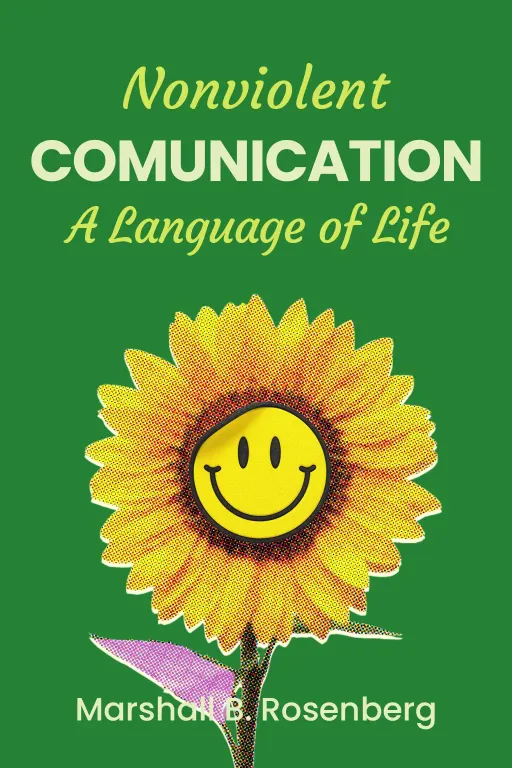
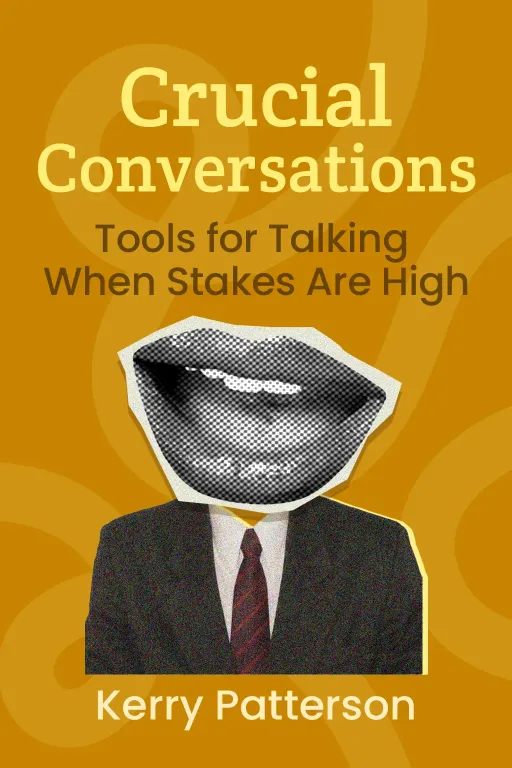
Nova: I know, right? It flies in the face of conventional wisdom. But the truth is, when we approach high-stakes conversations, that very empathy—that desire to avoid hurting feelings or creating tension—can lead us down a path of ambiguity, unspoken truths, and ultimately, missed opportunities. It's a fascinating paradox. And it's exactly what we're diving into today, drawing insights from two seminal works: "Crucial Conversations" by Kerry Patterson, Joseph Grenny, Ron McMillan, and Al Switzler, and "Nonviolent Communication" by Marshall B. Rosenberg.
Atlas: Okay, so you're really challenging the notion that empathy alone is enough. Tell us more about these books. "Crucial Conversations" is widely recognized, isn't it? What's its origin story?
Nova: Absolutely. "Crucial Conversations" emerged from decades of research into what makes top performers excel in high-stakes situations. Instead of just theorizing, the authors studied people who consistently found breakthroughs in difficult dialogues. They essentially reverse-engineered the communication patterns of those who could navigate conflict, deliver tough feedback, or discuss sensitive topics without blowing up relationships or careers. It's a roadmap born from observation, not just theory.
Atlas: That's incredibly practical. And what about Marshall Rosenberg's "Nonviolent Communication"? I know it's also highly acclaimed, but perhaps less universally known in the corporate world. What's his background?
Nova: Rosenberg, a clinical psychologist, developed Nonviolent Communication, or NVC, after years of working in conflict resolution, from individual therapy to international peace negotiations. His work is deeply humanistic, rooted in the belief that all human beings have the capacity for compassion and that violence, whether verbal or physical, is a tragic expression of unmet needs. He created a framework to help people connect at a deeper level, transforming potential conflicts into opportunities for compassionate understanding. It's been used everywhere from schools to war zones, which is incredible.
Atlas: Schools to war zones! That really puts the "high stakes" into perspective. So, if these books offer solutions, what's the core problem they're addressing that even empathetic leaders struggle with?
Navigating High-Stakes Conversations: The Empathy Gap
SECTION
Nova: Exactly. The core problem is what we call the "empathy gap" in crucial moments. Even as an empathetic leader, those high-stakes conversations can feel absolutely daunting. You know the ones: where you need to give critical feedback, address a performance issue, or negotiate a complex deal. There's this unspoken tension, this fear that if you say the wrong thing, you'll damage a relationship, demotivate a team member, or torpedo a negotiation.
Atlas: I know that feeling all too well. As someone who's constantly orchestrating strategies and trying to uplift teams, the last thing you want is for a necessary conversation to backfire. You want to connect, but fear takes over. So, how does this "empathy gap" manifest for leaders who genuinely care about their people and their outcomes?
Nova: It manifests in a few ways. Often, it's avoidance. You put off the conversation, hoping the problem will magically resolve itself, which it rarely does. Or, when you do engage, you might sugarcoat the message, making it so vague that the other person doesn't actually grasp the true issue. You're trying to be kind, but you end up being unclear, which is its own form of unkindness.
Atlas: That's spot on. It's like you're trying to prevent a bruise, but you end up creating a festering wound because no one ever addressed the underlying issue. Can you give us a concrete example of how this plays out in a work scenario?
Nova: Absolutely. Let's imagine a leader, let's call her Sarah, who has a brilliant but notoriously difficult team member, David. David consistently delivers exceptional results, but his communication style is abrasive, often alienating colleagues and even clients. Sarah, being an empathetic leader, genuinely values David's contributions and doesn't want to crush his spirit or lose his talent. So, in their one-on-one, instead of directly addressing his communication, she might say something like, "David, your work is outstanding, truly. We just need to ensure we're all rowing in the same direction, and sometimes, team cohesion is vital for that."
Atlas: Hmm. I can see Sarah's good intentions there. She's trying to be gentle, preserve the relationship. But what's the actual outcome of that kind of conversation?
Nova: The outcome is often that David hears, "You're doing great!" He might even interpret "team cohesion" as a vague corporate buzzword, not a direct critique of his behavior. He leaves the meeting feeling affirmed, while his colleagues continue to suffer, and the problem persists. Sarah, meanwhile, feels frustrated because she to address it, but nothing changed. Her fear of damaging the relationship led to an ambiguous conversation, which ultimately eroded trust and productivity in the team.
Atlas: But wait, looking at this from a strategic orchestrator's perspective, isn't the natural instinct to soften the blow to avoid immediate conflict, especially if David is a high performer? How does that make things than a direct, potentially confrontational approach?
Nova: It makes it worse because it creates a pattern of avoidance and a lack of psychological safety. When issues aren't addressed directly, people start to assume the leader either doesn't notice, doesn't care, or is afraid to act. This erodes credibility. For David, he misses a crucial opportunity for growth because Sarah's empathy, unchecked by directness, prevented the necessary feedback from landing. It's not about being confrontational; it's about being clear and courageous, transforming the conversation from a potential conflict into a productive dialogue.
The Frameworks for Breakthrough: Turning Conflict into Clarity
SECTION
Nova: So, if our natural empathetic instincts sometimes, paradoxically, get in the way of true clarity, what's the actual playbook for these moments? How do we turn that fear-driven ambiguity into productive dialogue? This is where the frameworks from "Crucial Conversations" and "Nonviolent Communication" truly shine.
Atlas: Okay, 'psychological safety' sounds great in theory, but when you've got a P&L to manage and a client demanding answers, how do you build that safety in the moment? It sounds like an extra step when you're already under pressure.
Nova: It's an extra step that you ten steps later, Atlas. "Crucial Conversations" emphasizes what they call "Start with Heart" and "Make it Safe." "Start with Heart" means getting clear on your own intentions you speak. What do you really want for yourself, for the other person, and for the relationship? If your honest answer is "I want to prove I'm right" or "I want to punish them," you're already off track.
Atlas: That's a powerful pre-flight check. It reminds me of the "trust your instincts" growth recommendation – getting clear on your vision before you act. So, once your heart's in the right place, how do you "Make it Safe" when the other person might already be defensive or disengaged?
Nova: You make it safe by establishing mutual respect and mutual purpose. This could be as simple as saying, "I want to discuss something important, and my goal isn't to blame, but to find a solution that works for both of us." Or, if you've contributed to the problem, you might start with an apology: "I realize my communication hasn't been clear, and I apologize for that. I want to clear the air so we can move forward effectively." It's about demonstrating that you genuinely care about their well-being and the shared outcome.
Atlas: That makes sense. It's about disarming the situation, showing you're on their side, even if you're delivering tough news. So, it's like a strategic move to secure a better deal, not just for the immediate issue, but for the long-term relationship. But what about when emotions are already high, and it feels like everyone's just blaming each other? That's where "Nonviolent Communication" comes in, right? It feels like it takes a deeper dive into the emotional landscape.
Nova: Exactly. NVC, Marshall Rosenberg's framework, provides an incredible structure for navigating those emotionally charged moments. It breaks down communication into four components: Observations, Feelings, Needs, and Requests. The idea is to move away from judgment and blame, and towards understanding the underlying human needs.
Atlas: Can you give an example? Because "observations, feelings, needs, requests" sounds a bit academic for someone who's just been told their project is behind schedule.
Nova: Let's use our earlier example of David, the brilliant but abrasive team member. Instead of Sarah saying, "David, you're always so rude to your colleagues," which is a judgment, she would start with an: "David, when you raise your voice in team meetings and interrupt others, specifically when you did so during Monday's project review..."
Atlas: Okay, specific observation, not a generalization. Got it. So, what's next?
Nova: Then, she expresses her about that observation: "I feel frustrated and concerned because..."
Atlas: Not "I feel you're rude," but "I feel frustrated." That's a key distinction.
Nova: Precisely. You own your feeling. Then, you state the that isn't being met: "... because I need our team environment to be respectful and collaborative, and I need everyone to feel heard and valued."
Atlas: That's powerful. It shifts from attacking David's character to expressing Sarah's own unmet needs. What's the final step?
Nova: The final step is a clear, actionable. Not a demand, but a request: "Would you be willing to try a different approach in meetings, perhaps letting others finish their thoughts before you jump in, so we can ensure everyone's contributions are fully considered?" This transforms a blaming statement into an empathetic request, opening the door for dialogue rather than defensiveness.
Atlas: Wow. That's actually really inspiring. Recalling a recent challenging conversation, I can immediately see how focusing on shared intent—which "Start with Heart" emphasizes—and then breaking down the communication into observations, feelings, needs, and requests could have completely changed the dynamics. It's not about being soft; it's about being incredibly clear and intentional, even in the midst of fear.
Synthesis & Takeaways
SECTION
Nova: That's the profound insight, Atlas. Deep empathy isn't about avoiding discomfort; it's about courageously navigating it with skill, using these frameworks as your compass. It's about understanding that every difficult conversation is an opportunity – an opportunity to build stronger relationships, to clarify expectations, and to achieve better outcomes than you thought possible. These aren't just "soft skills"; they are strategic superpowers.
Atlas: So, for the strategic orchestrators, the empathetic leaders, and the hospitality architects out there, this isn't just about being a "nice" leader. It’s about unlocking better deals in negotiations, shaping a more cohesive and productive future through strategic planning, and truly delighting guests by understanding and responding to their unspoken needs. It's about elevating every interaction.
Nova: Exactly. My challenge to our listeners this week is to pick just one difficult conversation you've been avoiding or dreading. Before you even open your mouth, take five minutes. First, "Start with Heart": get crystal clear on your genuine intentions for yourself, the other person, and the relationship. Then, consider how you can "Make it Safe" or frame your message using Observations, Feelings, Needs, and Requests. Just one conversation, applying these tools. You might be astounded by the clarity and connection you unlock.
Atlas: That's a fantastic, actionable step. It ties directly back to "practice active listening" and "seek diverse perspectives." So, take that leap, listeners. Share your experiences with us; we'd love to hear how these tools transform your dialogues.
Nova: Absolutely. This is Aibrary. Congratulations on your growth!