Stop Mind Reading, Start Connecting: The Guide to Real Communication.
Golden Hook & Introduction
SECTION
Nova: What if I told you that the reason your most important conversations go sideways isn't because of what you say, but because of what you say, and what you everyone else is thinking?
Atlas: Whoa. Hold on a second. That's a pretty bold claim, Nova. Are you saying all my communication breakdowns are actually my fault for not being a mind reader?
Nova: Not at all, Atlas! It's actually far more empowering than that. It's about recognizing that many of our daily frustrations, the misunderstandings, the walls we build instead of bridges, they often stem from unspoken needs and assumptions about what's going on beneath the surface for everyone involved.
Atlas: Ah, I see. So it's not about mind reading, it's about learning a new language, a hidden language of sorts. That makes me wonder, how do we even begin to decipher that?
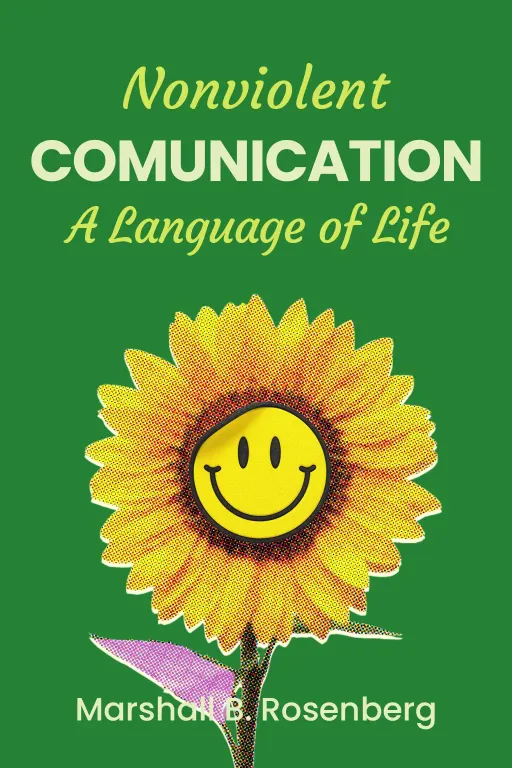
Nova: Exactly! And that's precisely what we're diving into today. We're exploring how we can move beyond those assumptions and unspoken needs to build genuine connection and understanding in even the most challenging interactions. We're going to look at two incredibly powerful frameworks. First, the transformative wisdom of "Nonviolent Communication" by Marshall B. Rosenberg.
Atlas: Marshall Rosenberg. I've heard that name before, but I don't know much about his work. What's his story?
Nova: Well, Rosenberg was a clinical psychologist, and what’s fascinating is that he developed NVC not just in a lab, but by mediating conflicts in incredibly high-stakes environments – from war zones to corporate boardrooms. His insights weren't just academic; they were forged in the fire of real human conflict, making them profoundly practical. He saw the universal patterns of miscommunication and developed a system to literally de-escalate tension and foster understanding.
The Hidden Language of Needs: Unlocking Nonviolent Communication
SECTION
Nova: So, let's start with the core of Nonviolent Communication, or NVC. It’s this incredibly elegant framework that helps us express our needs clearly without blame, and to listen to others with deep empathy. It helps you see beyond the words, to the feelings and needs beneath them.
Atlas: Okay, so it’s about peeling back the layers. But what does that actually look like in practice? Because often, when I'm in a disagreement, it feels less like peeling layers and more like an emotional wrestling match.
Nova: That's a great way to put it, Atlas. And that's where NVC offers a different kind of grapple. Imagine this classic scenario: a parent comes home, sees their child’s room in absolute chaos – clothes everywhere, books on the floor, toys spilling out. The parent’s immediate reaction might be, "You are so irresponsible! Why is your room always such a pigsty?"
Atlas: Oh man, I know that feeling. That’s a common script in many households, I’d wager. And usually, it just leads to yelling, defensiveness, and maybe a grudging, half-hearted clean-up.
Nova: Precisely. That traditional approach is full of judgment and blame. It focuses on what’s 'wrong' with the child. NVC, however, asks the parent to pause and identify four key components. First,: What specifically did I see without judgment? "I see your dirty clothes on the floor and books piled by your bed." Second,: How do I feel about that? "I feel frustrated and a bit overwhelmed." Notice, not "I feel irresponsible," but "I feel."
Atlas: That distinction is huge. It shifts the focus from accusing the other person to owning your own experience. But then what? You've got your observation and your feeling.
Nova: Then comes the third component:. What need of mine is not being met when I see this observation and feel this way? "I need order and a sense of calm in our shared living space." And finally,: What concrete action would I like the other person to take? "Would you be willing to pick up your clothes and put your books away before dinner?"
Atlas: Wow. So, instead of, "You're a slob!", it becomes, "When I see your clothes on the floor and books piled up, I feel frustrated and overwhelmed because I have a need for order and calm. Would you be willing to put your clothes away and clear your books before dinner?" That's a complete paradigm shift.
Nova: It is. The power here is that you're expressing yourself fully, transparently, and vulnerably, without attacking the other person's character. You're inviting cooperation, not demanding compliance. It's about building bridges, not walls.
Atlas: But wait, isn't that just about being 'nice'? What if I'm genuinely angry? Do I have to suppress that? And what if the other person isn't using NVC? Do I just lay myself bare and hope they respond in kind?
Nova: That's a really important question, Atlas. NVC isn't about being 'nice' or suppressing anger; it's about being and. Anger is often a signal that a deep need isn't being met. NVC helps you translate that anger into clarity about your unmet need. And no, the other person doesn't have to be fluent in NVC. The beauty is that by speaking this way, you're modeling a different kind of interaction. You're creating a space for empathy. When someone hears your vulnerability – your feelings and needs – it's much harder for them to remain defensive. It often disarms them and invites empathy.
Atlas: I can see how that would make a difference. It's about shifting the focus from blame to understanding what's truly at stake for everyone involved. That makes sense.
Mastering the Minefield: Navigating Crucial Conversations
SECTION
Nova: Understanding needs is one thing, but what happens when the stakes are high? When the conversation is not just about a messy room, but about a relationship on the brink, a critical business decision, or a conflict that could impact careers? That's where we turn to "Crucial Conversations" by Kerry Patterson, Joseph Grenny, Ron McMillan, and Al Switzler.
Atlas: Ah, the crucial conversations. The ones we usually avoid until they blow up, or botch entirely. This is where the rubber meets the road for a lot of people, especially those in high-pressure environments who need to deliver difficult feedback or challenge a superior's decision.
Nova: Absolutely. This book, widely adopted in both business and personal development circles, delves into how to speak persuasively, not abrasively, especially when the stakes are high, opinions vary, and emotions run strong. The core insight is about creating for open dialogue.
Atlas: 'Creating safety' in a crucial conversation. That sounds… almost counterintuitive when you're feeling defensive or intimidated. How do you actually do that when you're already in the thick of it?
Nova: It’s about being deliberate, Atlas. Think of a scenario: a team member discovers a significant flaw in a project plan that their boss is championing. Delivering this news could be seen as undermining, or even insubordination. The natural human tendency is to either stay silent and let the project fail, or to blurt it out aggressively, which also backfires.
Atlas: Right. Both options feel like lose-lose. So, what's the 'Crucial Conversations' approach?
Nova: The authors emphasize starting with what they call "Start with Heart" – focusing on what you want for yourself, for the other person, and for the relationship. In our example, the team member doesn't want the project to fail, doesn't want to make their boss look bad, and wants to maintain a good working relationship.
Nova: Then, crucially, they teach how to "Make it Safe." This involves tactics like "Mutual Purpose" and "Mutual Respect." So, the team member might start by saying, "I know we both want this project to succeed, and I deeply respect your vision for it. I've noticed something, and I'm a bit concerned, but I want to share it because I think it could help us achieve our shared goal."
Atlas: Okay, so you’re proactively stating your positive intent and respect, trying to lower the other person's defenses before you even get to the difficult part. It's like disarming a bomb with words before it goes off. But is that truly authentic, or is it just a manipulative technique?
Nova: That's a great question, and it's vital to understand the distinction. It's only manipulative if your stated purpose isn't your purpose. "Crucial Conversations" emphasizes that true safety comes from genuine mutual purpose and respect. If you truly believe in the shared goal and genuinely respect the other person, then expressing that isn't manipulation; it's creating the optimal conditions for the truth to be heard. It's about ensuring both parties feel safe enough to contribute to a shared pool of meaning.
Atlas: So, it's not about winning a debate, but about genuinely seeking the best outcome for everyone, and creating the environment where that's possible. That's a powerful framework for someone who wants to build effective teams and meaningful connections.
Nova: Absolutely. It’s about transforming potential conflicts into opportunities for understanding and stronger relationships. It fundamentally shifts how you approach difficult talks, ensuring you're building bridges, not inadvertently digging trenches.
Synthesis & Takeaways
SECTION
Nova: So, bringing these two powerful ideas together, we see how Nonviolent Communication gives us the tools to understand the hidden language of needs – our own and others' – and Crucial Conversations provides the roadmap for navigating those high-stakes moments where those needs often clash. It's about moving from assumptions to clarity, and from conflict to connection.
Atlas: Right. It’s about seeing beneath the surface and then creating the space for those truths to be heard. It's a journey of self-mastery in communication, which, if you think about it, is a form of building a better life.
Nova: It truly is. And our "Tiny Step" for you this week, directly from these insights, is incredibly simple yet profoundly impactful. Before your next important conversation – whether it's with a colleague, a partner, or a family member – take a moment. Write down your own feelings and needs related to that conversation. Then, try to genuinely guess the other person's feelings and needs.
Atlas: That's a fantastic exercise. It forces you to pause, reflect, and engage in that empathetic perspective-taking before you even open your mouth.
Nova: Exactly. Observe the difference that simple act makes in how you approach the conversation, and how it unfolds. And really, practice active listening daily. Hear beyond the words, as we always say.
Atlas: Hear beyond the words. That’s a great mantra. Thank you, Nova, for shedding light on these crucial communication tools.
Nova: My pleasure, Atlas. This is Aibrary. Congratulations on your growth!