Mastering the Art of Connection: Effective Communication
Golden Hook & Introduction
SECTION
Nova: What if I told you that most people fundamentally misunderstand what it means to have a 'difficult conversation'? We often think it's about winning, or perhaps, avoiding conflict altogether. But the real mastery lies in something far more profound, and surprisingly achievable.
Atlas: Oh, I like that. "Surprisingly achievable." Because honestly, Nova, most of us just brace ourselves for impact when we know a tough talk is coming. What's this "real mastery" you're hinting at? Is it some ancient Jedi mind trick?
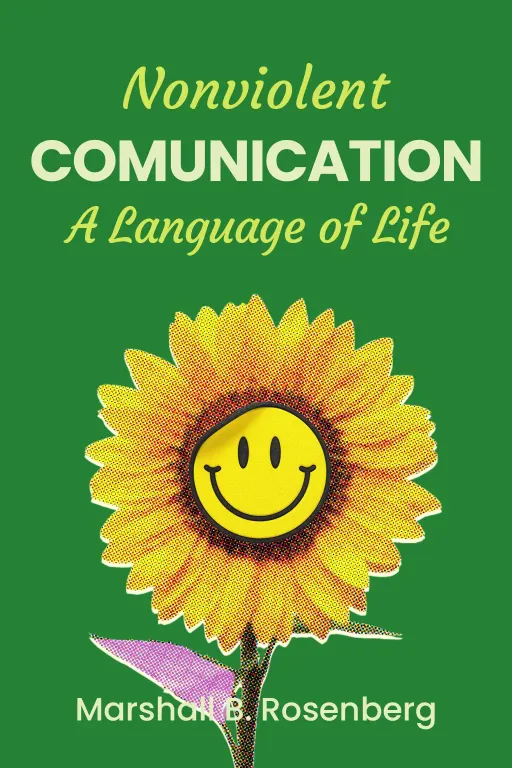
Nova: Closer than you think, Atlas! Today, we're dissecting the very fabric of human interaction, drawing profound insights from two seminal works: "Crucial Conversations: Tools for Talking When Stakes Are High" by Kerry Patterson, Joseph Grenny, Ron McMillan, and Al Switzler, and "Nonviolent Communication: A Language of Life" by Marshall B. Rosenberg. The first, "Crucial Conversations," emerged from decades of rigorous research into what makes top performers in organizations so effective, revealing communication patterns that literally transform company cultures and individual relationships.
Atlas: Wow. That makes me wonder what those communication patterns are. Because for anyone navigating complex relationships, whether at work or home, the struggle is real. We're constantly trying to articulate insights, influence outcomes, and avoid misunderstandings.
Nova: Exactly, and that's where the journey begins: understanding that these aren't just polite suggestions, but empirically validated strategies for those moments when everything is on the line. Let's dive into how we can master those high-stakes moments that define relationships.
The Art of Crucial Conversations: Navigating High Stakes
SECTION
Nova: So, a crucial conversation isn't just any old chat. It's defined by three things: high stakes, differing opinions, and strong emotions. Think about asking your boss for a raise, or confronting a friend about a broken promise, or discussing a sensitive political topic with family. Our natural instincts in these situations often lead us to either clam up and avoid the issue, or to blow up and confront aggressively. Both usually lead to bad outcomes.
Atlas: That makes sense. I can definitely relate to both sides of that coin. But how do you even begin to approach such a conversation without it immediately devolving into an argument or a cold war? It feels like the emotional temperature is already set to 'boiling.'
Nova: That’s the core challenge, and "Crucial Conversations" offers powerful tools. The first principle is to "Start with Heart," meaning, get clear on what you really want for yourself, for the other person, and for the relationship. And then, crucially, you "Make it Safe."
Atlas: But wait, what happens when emotions are already running high? How do you 'make it safe' when someone's already defensive, or you're already feeling frustrated? It sounds a bit like trying to calm a storm with a whisper.
Nova: It's not about calming the storm directly, but about building a sturdy vessel to weather it. Let me give you an example. Imagine a manager, Sarah, who has a high-performing engineer, David. David is brilliant, but he's also known for being incredibly abrupt and sometimes dismissive in team meetings, alienating colleagues. Sarah needs to address this. If she just tells him, "David, you're rude," he's immediately going to get defensive, feel attacked, and shut down.
Atlas: Absolutely. That’s a classic scenario. Most people would just see that as a personal attack, not constructive feedback.
Nova: Exactly. So, Sarah, applying the principles, first "Starts with Heart." She genuinely wants David to succeed and to be a more effective team player, not to punish him. Then, she makes it safe by focusing on "Mutual Purpose" and "Mutual Respect." She might start by saying something like, "David, I really value your technical expertise, and we all know how critical your contributions are to our projects. I want to talk about how we can ensure your brilliance is fully leveraged without unintentionally creating friction within the team."
Atlas: So, it's not about softening the message, but about strengthening the container for the message? Like building a sturdy bridge before you send heavy traffic over it? You're establishing common ground and respect upfront.
Nova: That’s a great analogy, Atlas. She’s demonstrating respect for his contributions and clarifying that their shared goal is team success. She’s not attacking his character, but addressing a behavior in service of a mutual goal. She's inviting dialogue, not dictating terms. This creates psychological safety. Once that safety is established, you can address the specific behavior directly, but always linking it back to the mutual purpose.
Atlas: That’s fascinating. Because our instincts often tell us to just get to the point, or to avoid the point entirely. This is counter-intuitive. It almost feels like slowing down actually speeds things up in the long run, because you avoid the inevitable blowback.
Nova: Precisely. It's about the delicate balance of candor and safety. You can be absolutely direct and honest, as long as the other person feels respected and believes you have their best interests, or a shared best interest, at heart. It's a skill that fundamentally changes how conflicts are resolved, or even avoided in the first place, allowing for genuine understanding rather than just a superficial truce. This approach really challenges the conventional wisdom that tension must lead to breakdown.
Empathetic Listening: Uncovering Needs and Feelings
SECTION
Nova: Speaking of those deeper currents, that naturally leads us to the profound insights of Marshall Rosenberg's "Nonviolent Communication," which takes "making it safe" to an entirely different level by focusing on what's going on beneath the surface.
Atlas: Oh, so we're moving from 'how to talk effectively' to 'how to truly understand'? Because often, even in safe conversations, it feels like we're just talking past each other.
Nova: Exactly. Rosenberg's work posits that all human behavior, even seemingly aggressive or uncooperative behavior, is an attempt to meet universal human needs. NVC provides a four-step model: Observations, Feelings, Needs, Requests. The magic happens when we move beyond judgments and interpretations to identify the universal human needs that are driving someone's actions or words.
Atlas: Wait, so when someone says, "You always interrupt me!", they're not actually complaining about my interruption as much as they're expressing a deeper need? Like for respect or to be heard? That's a huge shift in perspective.
Nova: It’s a massive shift. They're likely expressing a feeling of frustration, or annoyance, because their need for respect, or understanding, or to contribute, isn't being met. The key is to listen for that, rather than getting caught up in the accusation. Imagine a couple, Alex and Ben, arguing about household chores. Alex might say, "You never do the dishes! I always have to clean up after you!"
Atlas: Classic. And Ben immediately gets defensive, "That's not fair! I did them last Tuesday!" And the argument spirals.
Nova: Precisely. But with NVC, Alex learns to express their feelings and needs directly. They might say, "Ben, when I see the dishes piled up in the sink, I feel overwhelmed and unsupported, because I have a need for partnership and contribution in our home. Would you be willing to discuss a new chore schedule with me?."
Atlas: That sounds incredibly powerful, but also incredibly difficult in the moment. Our instincts often tell us to defend or counter-attack. How do you cultivate that kind of empathetic presence when you're feeling attacked yourself? It requires a kind of emotional intelligence that feels almost superhuman.
Nova: It absolutely requires practice, Atlas, and that's why Rosenberg emphasizes it as a "language of life." It's a journey, not a destination. He developed NVC through decades of working in conflict zones and mediating disputes, realizing that at the heart of every conflict were unmet human needs. The "tiny step" here is to simply try and identify the underlying feeling and need behind what the other person is saying, rather than just focusing on their words. Even if you don't articulate it perfectly, that shift in your internal listening changes your entire approach.
Atlas: That makes me wonder about the deeper purpose of this. It’s not just about resolving conflict, is it? It feels like it’s about grounding our interactions in something more fundamental, understanding the very essence of what drives us as humans. It connects to that sense of "purpose and existence" we often talk about.
Nova: It truly does. It moves us from a transactional view of communication to one that is deeply relational and empathetic. It's about recognizing our shared humanity, even amidst profound disagreements. It's a profound tool for fostering genuine connection.
Synthesis & Takeaways
SECTION
Nova: So, bringing it all together, "Crucial Conversations" gives us the robust framework for navigating those high-stakes moments, ensuring we maintain safety and mutual purpose. And "Nonviolent Communication" gives us the powerful lens to see the hidden needs and feelings driving those tough talks, transforming superficial exchanges into profound opportunities for genuine connection.
Atlas: It's like one builds the sturdy arena for dialogue, and the other teaches us the secret language of the gladiators within it. It's not just about 'getting through' a tough conversation, it's about deepening understanding and connection, even when it feels impossible. This isn't just communication; it's relational alchemy.
Nova: Exactly. The big takeaway is that truly effective communication isn't just about exchanging information; it's about exchanging understanding and empathy. It’s about recognizing that every human action, every word, every silence, stems from an unmet need or an unexpressed feeling. And our ability to perceive those deeply informs our ability to respond constructively.
Atlas: And for our listeners, especially those who are always looking to understand patterns and connect more meaningfully, the tiny step here is so potent: In your next conversation, try to listen not just for the words, but for the underlying feeling and the need behind them. Just that shift in focus can change everything. It's a commitment, and it truly honors your capacity for deeper connection.
Nova: It's about building bridges, not just debates. A truly profound way to engage with the world, and a skill that offers lasting intellectual value and life insights.
Atlas: What a journey.
Nova: Absolutely, Atlas. And that's all for today's deep dive into the art of connection.
Atlas: This is Aibrary. Congratulations on your growth!