Decoding Emotions: Navigating High-Pressure Medical Environments
Golden Hook & Introduction
SECTION
Nova: You know, Atlas, I was reading this fascinating anecdote about a renowned surgeon. He was in the middle of a life-or-death operation, everything going smoothly, and suddenly the power flickered. Just for a second, but enough to make the room go dark and the monitors beep ominously. His team panicked, but he just calmly said, "Someone get me a headlamp, and let's keep going."
Atlas: Whoa, that's intense. I mean, my heart rate just spiked thinking about it. You're talking about pure ice-in-the-veins calm under fire.
Nova: Exactly! It makes you wonder, what separates that kind of composure from utter chaos in moments of extreme pressure? How do you even begin to cultivate that?
Atlas: That’s going to resonate with anyone who struggles with keeping a cool head when things hit the fan. It's not just about medical environments, but any high-stakes situation.
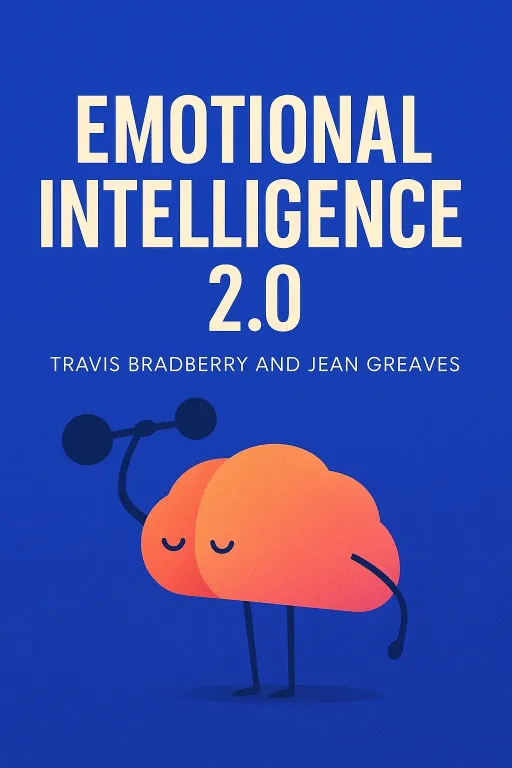
Nova: Absolutely. And that's precisely what we're diving into today, drawing insights from the incredibly practical and highly rated book, "Emotional Intelligence 2.0" by Travis Bradberry and Jean Greaves, alongside the critical framework of "Crucial Conversations: Tools for Talking When Stakes Are High" by Kerry Patterson, Joseph Grenny, Ron McMillan, and Al Switzler. What’s truly fascinating about Bradberry and Greaves is their background; they're not just academics, but co-founders of TalentSmart, a leading emotional intelligence training firm. Their work isn't just theoretical; it's born from working with over 75% of Fortune 500 companies, making their insights incredibly robust and real-world tested.
Atlas: Oh, I see. So this isn't just feel-good psychology; it's backed by serious application. You're talking about tools cultivated in boardrooms and high-pressure negotiations, which makes it even more compelling for intense environments like healthcare.
Nova: Precisely. And for anyone who's ever found themselves in a challenging interaction, feeling their emotions get the better of them, these books offer a roadmap.
Mastering Your Emotional Landscape
SECTION
Nova: Let's start with "Emotional Intelligence 2.0." It really breaks down EI into four core skills: self-awareness, self-management, social awareness, and relationship management. Think of self-awareness as the foundation—it's understanding your own emotions, strengths, weaknesses, values, and goals, and recognizing their impact on others. It’s like having an internal radar for your own feelings.
Atlas: That makes sense. I mean, you can't manage what you don't understand, right? But how deep does that self-awareness go? Is it just knowing you're angry, or is it digging into you're angry and what triggers it?
Nova: It's definitely the latter. It's about recognizing the subtle physiological cues—that tightness in your chest, the clenching jaw, the sudden rush of heat—before they explode into an emotional outburst. Bradberry and Greaves emphasize that it's not just about identifying the emotion, but understanding its source and trajectory. For example, they share a story of a brilliant but volatile ER doctor. He was a genius diagnostician, but under pressure, he’d snap at nurses, belittle residents, and create a toxic environment. He knew he was angry, but he didn't understand the pattern: it always happened when he felt his expertise was questioned or when a patient's outcome was uncertain, stirring up his own fears of inadequacy.
Atlas: Whoa, that’s kind of heartbreaking, actually. So he wasn’t just angry; he was scared, and it manifested as lashing out. It’s like the anger was a smokescreen for something deeper.
Nova: Exactly. His self-awareness was limited to the surface emotion. The book provides practical exercises, like journaling your emotional triggers and responses, to help you peel back those layers. Once he started doing that, he began to see the pattern, which then opened the door to self-management.
Atlas: Okay, so self-awareness is the diagnosis. What’s the treatment? How does self-management come into play once you know your triggers?
Nova: Self-management is where you actually something about those emotions. It's about consciously choosing your response instead of reacting impulsively. For that ER doctor, once he recognized his fear-driven anger, he could, for instance, step away for a 30-second breathing exercise before engaging with a challenging colleague, or reframe the situation in his mind. The book offers strategies like emotional reframing, delaying gratification, and practicing mindfulness to gain control. It’s about creating a pause between stimulus and response.
Atlas: That’s a really inspiring idea. It makes me wonder, though, for someone in a truly high-stakes environment, where every second counts, how do you even that pause? It sounds great in theory, but in a code blue situation, you don't exactly have time for a mindfulness retreat.
Nova: That's a crucial point, and it highlights why these skills need to be cultivated proactively, not just pulled out in a crisis. Bradberry and Greaves talk about "emotional hijacking"—when your amygdala bypasses your rational brain. The goal isn't to eliminate emotions, but to train your brain to respond more calmly and constructively. It's like building muscle memory for emotional regulation. The ER doctor's breakthrough came when he started practicing these techniques of the high-pressure moments—in less stressful interactions, during his commute, even while waiting in line. He built up his emotional "muscle" so that when the critical moments hit, the pause became almost automatic.
Atlas: So it's not about being emotionless, but about being able to direct your emotional energy effectively. Like a conductor with an orchestra, rather than a runaway train.
Navigating Crucial Conversations
SECTION
Nova: Precisely. And this leads us perfectly into our second core topic, which is relationship management, but specifically through the lens of "Crucial Conversations." Because sometimes, your emotional landscape isn't the only one in play; you're interacting with others, often with high stakes, differing opinions, and strong emotions.
Atlas: Oh man, I know that feeling. It's like walking into a minefield sometimes. You know it's going to be tough, but you also know you to have the conversation.
Nova: That's the essence of a crucial conversation: it's a discussion between two or more people where stakes are high, opinions vary, and emotions run strong. Think about a physician needing to deliver a difficult diagnosis to a family, or a medical team needing to confront a colleague about a patient safety issue. The authors of "Crucial Conversations" argue that most people handle these badly—they either avoid them, leading to resentment, or they handle them poorly, leading to conflict.
Atlas: That sounds rough, but I can definitely relate. It’s either silence or shouting, right? What’s the alternative?
Nova: The alternative is dialogue. The book introduces a framework for creating what they call "shared meaning"—a pool of information that everyone can contribute to and draw from. The key is to make it safe for everyone to contribute. They tell a powerful story about a hospital where medication errors were rampant, but nurses were afraid to speak up about doctors' mistakes for fear of retaliation. The stakes were literally life and death.
Atlas: That’s a terrifying scenario. So, how do you even begin to make it "safe" in an environment like that?
Nova: The authors suggest starting with "Start with Heart"—focusing on what you want for yourself, for the other person, and for the relationship. In that hospital, the nursing supervisor realized she wanted to improve patient safety, not just blame doctors. She then used a technique called "Make it Safe" by clarifying her positive intent. She opened a meeting by saying, "My goal here isn't to point fingers or accuse anyone. It's to ensure our patients receive the safest care possible, and I believe we all share that goal."
Atlas: That’s a great way to put it. It disarms the situation immediately. It's like saying, "We're on the same team here, even if we have different ideas on how to win."
Nova: Exactly. And another crucial technique is "State My Path"—sharing your facts, telling your story, and then asking for others' paths. So, instead of accusing a doctor, a nurse might say, "I noticed that patient X received a dosage of Y. My understanding of the protocol is Z. Can you help me understand what happened?" It's not about being timid, but about being clear, respectful, and open to alternative explanations.
Atlas: So you're saying it’s about presenting your observations as a question, rather than a judgment, and inviting collaboration. That’s actually really inspiring. It frames the interaction as a joint problem-solving exercise, rather than a confrontation.
Nova: Precisely. And for our listeners, particularly those who are nurturing future physicians, imagine the impact of teaching these skills early on. It's not just about managing emotions internally, but about skillfully navigating the interpersonal minefields that are an inherent part of high-pressure environments. By applying these principles, you can transform potentially explosive encounters into productive dialogues, ultimately leading to better outcomes for everyone involved.
Synthesis & Takeaways
SECTION
Nova: So, bringing it all together, what we're really talking about here is the power of intentionality. Whether it's developing your own emotional intelligence through self-awareness and self-management, or skillfully engaging in crucial conversations, it's about moving from reactive to proactive.
Atlas: That’s such a hopeful way to look at it. It sounds like a lot of work, but the payoff, especially in environments where the stakes are so high, is immeasurable. It’s about building resilience not just for yourself, but within your team.
Nova: Absolutely. And the unique insight here is that these aren't just "soft skills." They are critical competencies that directly impact patient outcomes, team cohesion, and individual well-being. The ER doctor who learned to manage his fear-driven anger didn't just become a nicer colleague; he became a more effective one, making clearer decisions under pressure. The hospital that fostered crucial conversations saw a dramatic drop in medication errors.
Atlas: That gives me chills. It shows that cultivating emotional intelligence and communication skills isn’t just about making us feel better; it’s about making us better, especially when it matters most. For anyone in a high-pressure role, or teaching those who will be, these aren't optional extras. They're foundational.
Nova: Indeed. It's about recognizing that our emotional landscape and our ability to communicate effectively are as vital as our technical skills. This is Aibrary. Congratulations on your growth!