Beyond the Battlefield: Mastering Conflict for Stronger Team Bonds.
Golden Hook & Introduction
SECTION
Nova: What if the biggest mistake leaders make isn't having conflict at all, but actively, sometimes even diligently, avoiding it?
Atlas: Oh man, that's a provocative start, Nova. Because I think for so many of us, especially in leadership roles, conflict feels like the enemy. It feels like something to squash, to smooth over, to just make disappear before it blows up the team.
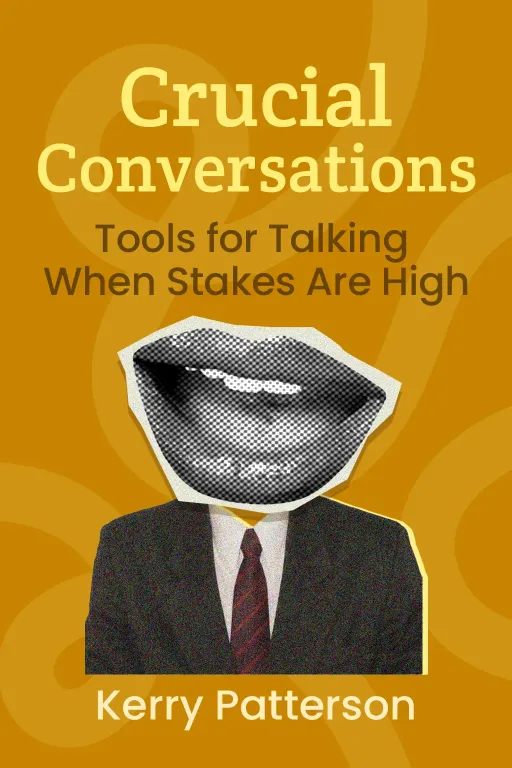
Nova: Exactly! And that's the core misconception we're tackling today. We're diving into two incredibly powerful books: "Crucial Conversations" by Kerry Patterson, Joseph Grenny, Ron McMillan, and Al Switzler, and "Difficult Conversations" by Douglas Stone, Bruce Patton, and Sheila Heen. What's fascinating about the "Crucial Conversations" authors is their background; they meticulously observed thousands of real-world, high-stakes interactions to distill their step-by-step method. This isn't just theory; it's practically engineered communication.
Atlas: Right. So, you're saying these aren't just academic musings, but battle-tested blueprints for actual human interaction. And for leaders building teams, this reframes conflict entirely, not as a problem, but as… an opportunity?
Nova: Precisely. It’s about transforming potential breakdowns into breakthroughs.
Creating Safe Spaces for High-Stakes Dialogue
SECTION
Nova: So, let's start with "Crucial Conversations." The premise is simple, but profound: a crucial conversation is one where opinions differ, the stakes are high, and emotions run strong. Think about giving tough feedback, discussing a major strategic disagreement, or confronting a team member about underperformance. These are the moments that can either make or break a team.
Atlas: Oh, I know that feeling. For anyone who's ever had to lay out a difficult decision or challenge an entrenched idea, the tension is palpable. The fear is that if you push too hard, you'll alienate someone. If you don't push enough, the problem festers. So, for a leader who wants their team aligned, how do you actually create that "safe space" when everyone's already on edge?
Nova: That's the million-dollar question, and the book offers a clear path. The first principle is "Start with Heart"—get clear on what really want for yourself, for the other person, and for the relationship. Not just in this moment, but long-term. Then, and this is critical, you have to "Make it Safe." If people don't feel safe, they won't talk. They'll resort to silence—avoiding the issue, masking their true feelings—or violence—attacking, labeling, controlling.
Atlas: Silence or violence. Wow, that’s a stark way to put it. I can definitely see that play out in team dynamics. It’s either passive-aggressive emails or outright shouting matches. But what if the other person want a safe space? What if they're just hostile, or they shut down completely? How do you restore safety when it feels like it's already gone?
Nova: That's where the tactical insights come in. They suggest two main tools: establishing "Mutual Purpose" and "Mutual Respect." Mutual Purpose means finding a shared goal. If two team leaders are arguing about project resources, their individual purposes might be to "win more budget." But a mutual purpose could be "delivering the best product for the customer." When you genuinely show you care about their goals and values, and you truly respect them as a person, even if you disagree, safety can be restored.
Atlas: I guess that makes sense. It's almost like you have to disarm the situation before you can even begin to talk about the actual issue. So, can you give me an example? A vivid case study where this actually worked?
Nova: Absolutely. Imagine a tech startup, let's call it "InnovateX," where two co-founders, Sarah and Mark, are locked in a bitter conflict over product direction. Sarah believes in rapid iteration and launching quickly; Mark insists on meticulous, long-term development. Their arguments had escalated to shouting in meetings, then to passive-aggressive emails, completely eroding trust and paralyzing the team. Morale was plummeting.
Atlas: Sounds like a classic scenario. High stakes, deeply held beliefs, and emotions definitely running strong.
Nova: Exactly. Their core purpose had been lost. A consultant came in and helped them identify their individual "Start with Heart" desires: Sarah wanted to see the product impact users quickly, Mark wanted to build a lasting, high-quality legacy. Both valid. But their mutual purpose, the one they'd forgotten, was "to build the most impactful and sustainable product possible for their customers."
Atlas: So, getting them to acknowledge that shared, overarching goal, that "mutual purpose," was the first step to making it safe?
Nova: Precisely. Once they both genuinely acknowledged that they were fighting for the company's success, just from different angles, the emotional temperature dropped. The consultant then helped them articulate their differing views with respect, rather than judgment. Mark could say, "My concern with rapid iteration is that it risks long-term product stability," instead of, "Sarah, your ideas are reckless." Sarah could say, "My concern with long-term development is that we might miss market opportunities," instead of, "Mark, you're too slow and risk-averse."
Atlas: That’s a subtle but powerful shift. It sounds like they moved from accusing each other to stating their concerns from a place of shared intent.
Nova: And that's the magic. They then worked together, combining Sarah's agility with Mark's emphasis on quality, creating a phased launch strategy that incorporated both. The key was that the conversation shifted from "who's right?" to "how can we achieve our mutual purpose?" The team saw this transformation, trust slowly rebuilt, and the company began to thrive again. It's a perfect illustration of how making it safe transforms potential breakdowns into genuine breakthroughs.
Deconstructing Conflict: The Three Layers of Difficult Conversations
SECTION
Nova: Building on that idea of safety, "Difficult Conversations" takes us even deeper, suggesting we often miss the true heart of the issue because we're not speaking the same language. We might think we're arguing about one thing, but beneath the surface, there are multiple, often hidden, conversations happening simultaneously.
Atlas: Oh, I love that. So you're saying it's not just we talk, but we're actually talking about, or perhaps talking about? This sounds incredibly relevant for leaders trying to connect with a diverse team, where cultural nuances or personal backgrounds can add so many unspoken layers.
Nova: Absolutely. The authors identify three fundamental layers that exist in almost every difficult conversation. First, there's the "What Happened?" conversation. This is about facts, intentions, and blame. Who said what? Who did what? Who's at fault?
Atlas: That's the easiest one to get stuck on, isn't it? We replay the events, gather evidence, assign blame.
Nova: Exactly. But then there's the second layer: the "Feelings" conversation. This is about our emotions. What am I feeling? What are they feeling? Are these emotions being acknowledged? Often, we try to suppress feelings in professional settings, but they don't just disappear. They leak out, influencing our tone, our body language, everything.
Atlas: So, for a leader, if you're only addressing the "what happened," you're missing a huge piece of the puzzle, especially if team members are feeling unheard or disrespected.
Nova: Precisely. And then, the deepest, often most challenging layer, is the "Identity" conversation. This is about what the situation means to our self-image, our sense of competence, our worth. "Am I a good person?" "Am I competent?" "Am I worthy of respect?" When our identity is threatened, our ability to listen and learn goes out the window. We become defensive.
Atlas: Wow, that’s deep. So basically, you could be arguing with a team member about a missed deadline, which is the "what happened," but underneath, they might be feeling shame or inadequacy, which is the "feelings" and "identity" conversation. How does understanding these layers prevent people from talking each other?
Nova: It allows for empathy. Let's take that missed deadline example. A leader, focusing only on "what happened," might say, "John, you missed the deadline. This impacts the whole team." John might respond defensively, "It's not my fault, the client changed requirements last minute!" They're stuck on the facts and blame.
Atlas: And the leader thinks, "He's making excuses." John thinks, "My boss thinks I'm incompetent."
Nova: Exactly. Now, imagine a leader who understands the three layers. Instead of just stating the fact, they might start by acknowledging the "feelings" they observe: "John, I know you've been working incredibly hard, and I can see you're frustrated by this missed deadline. I imagine this isn't easy for you." That immediately creates a sliver of safety.
Atlas: That’s actually really inspiring. It validates the person first.
Nova: Then, they might explore the "what happened" by inviting John's perspective: "Can you walk me through what happened? From your point of view, what led to this?" And crucially, they might gently probe the "identity" layer, not by accusing, but by offering reassurance: "I know you're committed to this project, and your work is usually top-notch. What's going on that might be making it harder to meet commitments right now?"
Atlas: That gives me chills. That approach completely changes the dynamic. It moves from accusation to curiosity, from blame to understanding. It's not just about fixing the deadline; it's about supporting the team member.
Nova: And that's how you build stronger bonds. By addressing all three layers, you're not just solving a problem; you're strengthening the relationship and fostering a culture of empathy. The "Tiny Step" the book suggests is incredibly powerful: Before your next potentially difficult conversation, identify the 'what happened,' 'feelings,' and 'identity' layers, and then plan how you will address each with genuine curiosity for the other person's perspective.
Atlas: So, it's about pre-meditating empathy, essentially. For a leader, this sounds like a foundational skill for empathetic leadership, helping them connect deeper with their diverse team.
Synthesis & Takeaways
SECTION
Nova: Precisely. Both "Crucial Conversations" and "Difficult Conversations" offer us powerful frameworks. They empower leaders to see conflict not as a problem to be avoided, but as a rich opportunity. An opportunity to deepen understanding, to strengthen trust, and ultimately, to build more resilient and cohesive teams. It’s a profound shift from managing conflict to mastering it, turning those tough moments into moments of growth.
Atlas: It really does. For any leader driven by impact, someone who cares deeply about collective success, this isn't just about having better meetings. This is about building a better team, a team that can actually navigate challenges together, rather than being fractured by them. It's about empowering people to rise, even through disagreement.
Nova: Exactly. So, for our listeners today, here's your actionable takeaway. Before your next tough conversation, choose one framework: either consciously work to "make it safe" by focusing on mutual purpose and respect, or take a moment to identify the "what happened," "feelings," and "identity" layers for both yourself and the other person. Plan how you'll approach each layer with curiosity.
Atlas: And then, tell us how it goes! We'd love to hear your stories of transforming conflict into connection.
Nova: This is Aibrary. Congratulations on your growth!