From Line Cook to CEO
Golden Hook & Introduction
SECTION
Nova: Atlas, if you had to sum up today's topic – going from a brilliant culinary idea to a thriving, perhaps even disruptive, business empire – in exactly five words, what would they be?
Atlas: Oh, a five-word review challenge? I love this! Hmm… "Grit, Genius, Guts, Growth, Gourmet."
Nova: "Grit, Genius, Guts, Growth, Gourmet." I like that! It's punchy, alliterative, and captures the essence beautifully. Today, we're diving deep into that very journey, inspired by two incredibly insightful books that, while seemingly different, offer a complete recipe for success.
Atlas: Exactly. We're talking about Rachel Hofstetter's "Cooking Up a Business" and David Chang's intensely personal memoir, "Eat a Peach." It's a fascinating pairing, because one gives you the blueprint, and the other gives you the mindset.
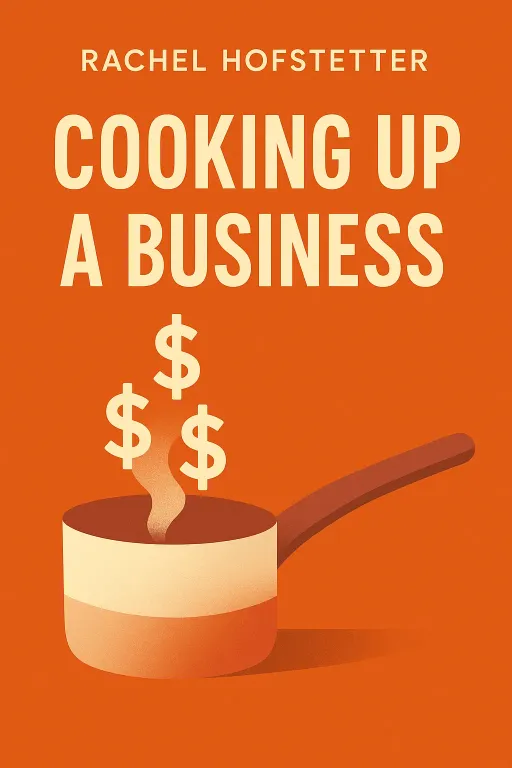
Nova: And what a combination it is. Hofstetter, a seasoned entrepreneur and marketing expert herself, wrote "Cooking Up a Business" as a tactical guide, almost a playbook, for taking a culinary concept and systematically transforming it into a profitable, scalable entity. It's lauded by business coaches for its practical, no-nonsense approach to everything from supply chains to branding.
Atlas: And then you have David Chang. His "Eat a Peach" is a raw, unflinching look at the psychological toll and incredible resilience required to not just innovate new culinary concepts, but to redefine an entire industry with landmark brands like Momofuku. It received widespread critical acclaim for its honesty about mental health struggles in a high-pressure world, resonating deeply with readers who felt the weight of ambition.
Nova: It's the perfect yin and yang, isn't it? One gives you the map, the other gives you the courage to trek through uncharted territory.
Building the Blueprint: From Culinary Concept to Scalable Business
SECTION
Atlas: So, Nova, let's start with Hofstetter. For any visionary out there with an incredible culinary idea, but maybe not the business chops, what's the first step in "cooking up a business" that actually scales?
Nova: That's the million-dollar question, isn't it? Hofstetter emphasizes that the initial spark of genius, that unique recipe or concept, is just the appetizer. The main course is the framework. She provides these incredible tactical frameworks, almost like a scaffolding you build around your creative core. It's about auditing your current operation, no matter how small, and asking: "Is this sustainable? Is this repeatable? Can this grow beyond?"
Atlas: I can definitely relate. A lot of visionaries, myself included, can get so caught up in the creative side that the operational details feel like… well, like washing dishes after a busy service. But how do you prevent that rigorous framework from stifling the very creativity that made the concept special in the first place?
Nova: That's a brilliant point, Atlas, and it's where Hofstetter shines. She's not advocating for rigid, soulless corporate structures. Instead, she’s helping you build systems that and your creativity, rather than burying it. Think of it like this: if you're a brilliant pastry chef creating these intricate, edible works of art, you don't want to spend all your time worrying about sourcing flour or managing payroll. A strong framework frees you up to innovate.
Atlas: So, it's about creating a robust engine so the driver can focus on the race, not the mechanics. Can you give us an example of how one of her tactical frameworks might play out in the real world?
Nova: Absolutely. Let’s imagine a local artisan bakery, "The Golden Crumb," famous for its sourdough. They have a loyal local following, but the owner, a true baking artist, is constantly overwhelmed. They’re making every loaf by hand, managing every order, doing all the deliveries. Hofstetter would come in and say, "Okay, your sourdough is gold. How do we scale that gold?"
Atlas: I know that feeling. As a strategist, I'd be looking at their processes.
Nova: Exactly. She'd introduce frameworks for systematizing production: standardizing recipes down to the gram, training assistant bakers to replicate the master's technique, implementing inventory management software so they're not running out of key ingredients, and even optimizing delivery routes. It sounds mundane, but these are the invisible gears that allow "The Golden Crumb" to open a second location, or even supply local cafes, without the owner burning out.
Atlas: That makes perfect sense. It’s about codifying the genius, so it’s not solely reliant on one person. It allows for delegation, which is crucial for growth and empowering a team. It’s about building a foundation that can withstand expansion. For a strategist, that’s gold. But what happens when the vision requires you to break the mold entirely, when the business plan to be unconventional?
The Chef's Edge: Innovation, Resilience, and the Unconventional Path
SECTION
Nova: Ah, and that’s a perfect segue into David Chang and "Eat a Peach." Because while Hofstetter gives you the tactical roadmap, Chang reminds you that sometimes, the map hasn't been drawn yet. His story is one of relentless innovation and an almost brutal psychological resilience. He took massive creative risks with Momofuku, often flying in the face of established culinary norms.
Atlas: That’s actually really inspiring. I’m curious, what do you mean by "unconventional risks" in Chang's context? Because for a lot of people, risk feels like… well, just risk. How do you distinguish between smart risk and reckless abandon?
Nova: That’s a fantastic question, Atlas. Chang’s risks weren't reckless; they were deeply informed by his vision and taste, even if they looked crazy to outsiders. When he opened the first Momofuku Noodle Bar, fine dining was all about white tablecloths, French technique, and hushed reverence. Chang opened a loud, casual noodle shop serving things like pork belly buns – food that was considered "lowbrow" at the time – but executed with incredible precision and creativity.
Atlas: Wow. So, it was almost a rebellious act against the established culinary scene. That’s a powerful narrative. What was the psychological cost of pushing those boundaries? Because I imagine that kind of innovation isn't just about the food; it's about facing skepticism, potential failure, and the immense pressure of defying expectations.
Nova: You've hit on the core of "Eat a Peach." Chang is incredibly open about his struggles with depression, anxiety, and the immense pressure he felt. He talks about the fear of failure, the constant self-doubt, and the sheer exhaustion of trying to invent something new every single day. His resilience wasn't about being fearless; it was about showing up despite the fear, about pushing through the psychological wall repeatedly.
Atlas: That gives me chills. That’s such a hopeful way to look at it, too. It’s not about being immune to struggle, but about enduring it. For someone trying to cultivate a team and lead them through innovative, potentially risky ventures, how do you foster that kind of resilience? How do you empower people to take those unconventional leaps when the leader themselves is battling internal demons?
Nova: That’s the profound insight from Chang’s journey. He realized that to truly innovate, you have to create an environment where failure isn't just tolerated, but seen as a necessary part of the process. He built a culture at Momofuku where chefs were encouraged to experiment, to break rules, and to learn from mistakes. It wasn't always pretty, and he admits his leadership style was often imperfect, but the core was this relentless pursuit of deliciousness, no matter how unconventional the path. He surrounded himself with people who believed in that shared vision and were willing to experiment alongside him.
Atlas: So it’s not just about the leader’s personal resilience, but about creating a resilient and that supports audacious innovation. It’s about fostering an environment where even if you fail, you learn and you keep moving forward. That sounds like a powerful lesson for any leader aiming for sustainable innovation.
Synthesis & Takeaways
SECTION
Nova: Absolutely, Atlas. And that brings us back to the core takeaway from both books: the need to blend disciplined business strategy with audacious creative risk-taking. Hofstetter shows you how to build the sturdy vehicle, and Chang shows you how to drive it off-road with style and grit.
Atlas: Right, like the prompt says, it's about auditing your current business plan to see if it allows for those 'unconventional' creative risks that define landmark brands like Momofuku. It's not enough to just have a solid plan; it has to be a plan that has room for the unexpected, for the revolutionary.
Nova: Exactly. For the visionary, it means understanding that your art needs a robust business backbone to truly flourish and reach a wider audience. For the strategist, it's realizing that sometimes, the best strategy is to break the mold entirely, to empower your team to chase those wild ideas. And for the cultivator, it's about building a culture of psychological resilience and supportive experimentation, where the journey, with all its ups and downs, is embraced.
Atlas: So, the real challenge isn't just scaling a business, or just innovating; it's doing both simultaneously. It's having the frameworks to build a stable house, but also the courage to paint it a color no one expects, and then defend that choice with passion and perseverance. It’s about understanding that true legacy comes from both meticulous planning and daring leaps of faith. What kind of culinary empire will you build?
Nova: A powerful question to ponder. This is Aibrary. Congratulations on your growth!