Unlocking Your Digital Edge: How to Stand Out in a Crowded Online World
Golden Hook & Introduction
SECTION
Nova: Digital marketing.
Atlas: Noise. Spam. Pop-ups. Ugh.
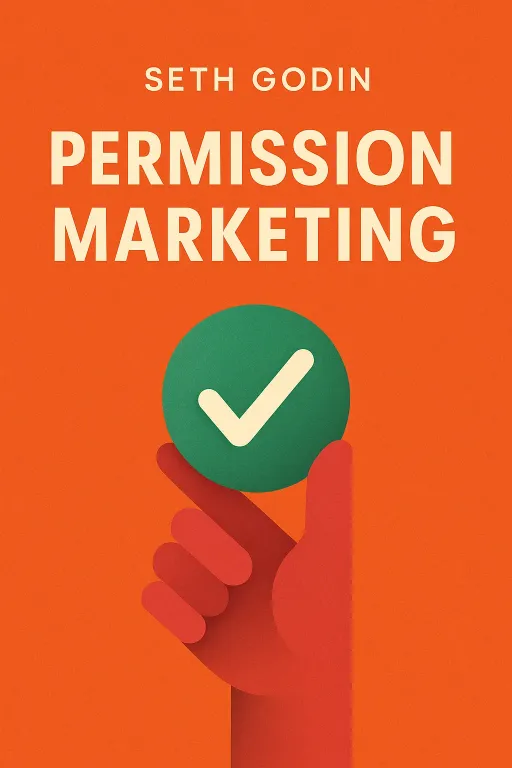
Nova: Exactly. But what if I told you there's a way to cut through that? Today, we're unlocking your digital edge, diving into how to stand out in a crowded online world. We're looking at two foundational texts: by the legendary Seth Godin, and by Joe Pulizzi. Godin, a former dot-com executive, wrote his book way back in 1999, practically predicting the attention economy we live in now. Pulizzi, on the other hand, built an entire empire, the Content Marketing Institute, on the very principles he preaches. These two visionaries, in their own ways, saw the tsunami of digital noise coming and offered a radically different path.
Atlas: Okay, so two heavyweights. But 'digital edge' sounds a bit like another buzzword. What's the real challenge we're tackling here?
Nova: The cold, hard fact is, getting noticed isn't enough anymore. You need to build genuine relationships. And that's where permission marketing comes in.
Permission Marketing: Earning Attention, Not Buying It
SECTION
Nova: Godin's central idea is that instead of interrupting people with ads they didn't ask for, we should their attention. Think about it: a TV commercial during your favorite show, a pop-up on a website. That's interruption marketing. It's like shouting at someone on the street.
Atlas: Yeah, and I usually just tune it out, or worse, get annoyed. So permission marketing... is that just getting someone's email address?
Nova: It's far more profound than just an email signup! It's about a privilege, not a right. Godin argues that when someone gives you permission, they're essentially saying, 'I trust you enough to let you communicate with me.' It's a fundamental shift from a broadcast model to a dialogue model. Imagine a dating analogy: interruption marketing is shouting 'Will you marry me?' on a first date. Permission marketing is asking for a second date, then a third, slowly building trust and rapport.
Atlas: Okay, that's a great analogy. But what's the of interruption marketing? Beyond just being annoying, what's the real damage?
Nova: The real damage is the erosion of trust and the diminishing returns. People build up a wall. They become ad-blind. Every time you interrupt someone, you're essentially borrowing their attention without asking, and that debt accrues. It makes your brand feel desperate, not valuable. Godin points out that companies spend billions on ads that are actively ignored or even resented. That's a massive waste of resources and goodwill.
Atlas: So it's not just about getting ignored, it's about actively the potential for a relationship. I can definitely see how that creates frustration, especially for someone trying to build a strong online presence. For our listeners who are trying to stand out, how does this translate into a practical approach? How do you for permission in a way that feels genuine?
Nova: It's all about providing value upfront. You offer something so compelling, so useful, that people to hear from you. Think of it like this: instead of a billboard yelling 'Buy our car!', it's a mechanic offering free tire pressure checks. Once you've earned that initial micro-permission – maybe they sign up for a useful newsletter, or they follow you on a platform because you share genuinely helpful tips – you've started a conversation. And crucially, you respect that permission. You don't abuse it by spamming or selling constantly. You continue to provide value, deepening the relationship.
Atlas: That sounds almost too simple, but it makes so much sense. It feels more human. So, building on that trust and value, how do you keep that conversation going and really solidify an audience? Because just getting permission once isn't enough, right?
Content Inc.: Building an Audience Through Consistent Value
SECTION
Nova: Exactly! And that's where Joe Pulizzi's comes in. Pulizzi takes Godin's concept of earning attention and shows you how to operationalize it, how to turn that permission into a loyal, engaged audience. His core message is: stop selling, start helping. Build an audience first, then figure out what to sell them.
Atlas: Wait, 'build an audience first, then figure out what to sell them'? That sounds completely backward to traditional business models. Most people start with a product and then try to find customers.
Nova: That's the radical shift! Pulizzi suggests identifying a niche, becoming the leading expert in that niche by consistently delivering valuable, free content—and only monetizing that audience. He calls it the 'Content Inc.' model. Think of it like a newspaper. They don't start by selling ads; they start by delivering valuable news and information. People subscribe, and advertisers want to reach that engaged audience.
Atlas: So, it's almost a long game. You're building a community around shared interests, and your brand becomes synonymous with solving a particular problem or providing a specific kind of insight. Can you give an example of this in action?
Nova: Absolutely. Pulizzi himself is a prime example with the Content Marketing Institute. He started with a blog and a newsletter, consistently sharing insights about content marketing. He didn't immediately launch a huge conference or a consulting business. He built an audience who trusted him, who saw him as the go-to expert. Only after establishing that trust and loyalty did he introduce products and services, which then sold incredibly well because he already had a captive, engaged audience. They were for him to offer solutions.
Atlas: That’s actually really inspiring. So many people get frustrated trying to shout louder in the digital noise. This sounds like a much more sustainable and, frankly, more enjoyable way to connect. For someone who feels like they're constantly fighting for attention, this approach offers a real sense of security and freedom, knowing that you're building a foundation of trust.
Nova: Precisely. It transforms your online presence from a broadcast to a meaningful conversation. It's not about being the loudest, it's about being the most helpful, the most trustworthy. And that's how you build genuine relationships that last.
Synthesis & Takeaways
SECTION
Atlas: So, what I'm hearing is that the digital world isn't a battlefield where you just try to win by force. It's more like a garden where you cultivate relationships. You earn trust through permission, and you nurture that trust by consistently providing value. The outcome is not just 'getting noticed,' but building a genuine community that actually to engage with you.
Nova: You've hit the nail on the head, Atlas. The tiny step for our listeners today, based on these powerful ideas, is to identify just one type of content your ideal audience would genuinely welcome. Then, brainstorm three ideas for it. It's not about launching a whole new strategy overnight; it's about taking that first deliberate step towards earning attention, rather than demanding it.
Atlas: That's a tangible action. And it shifts the focus from 'what can I get?' to 'what can I give?' which feels much more aligned with building something lasting. I can imagine that for someone who's felt frustrated by the constant grind of trying to get noticed, this approach offers a real sense of security and freedom, knowing that you're building a foundation of trust.
Nova: Absolutely. It transforms frustration into fuel, as we often say. Your resilience is a superpower here. Focus on that value, and the relationships will follow. It's how you truly unlock your digital edge.
Atlas: Powerful stuff. And a great reminder that genuine connection always wins in the end.
Nova: This is Aibrary. Congratulations on your growth!