Mastering Influence: The Art of Strategic Communication
Golden Hook & Introduction
SECTION
Nova: You know, Atlas, I was talking to someone the other day, a really sharp, driven person, but they were lamenting how often their brilliant ideas just… land flat. Like they’re speaking a different language.
Atlas: Oh, I know that feeling. It’s like you’ve got this perfectly crafted message in your head, and then it comes out and people are just… blinking. Or worse, nodding politely while their minds are clearly on what they’re having for dinner.
Nova: Exactly! It’s that gap between and. And for anyone who’s ever poured their heart into a presentation, or tried to rally a team, or even just explain a complex idea, that gap can feel like a chasm.
Atlas: A chasm that swallows impact, right? Because as a pragmatic visionary, you’re not just trying to be heard, you’re trying to. You want action, understanding, connection. Not just… noise.
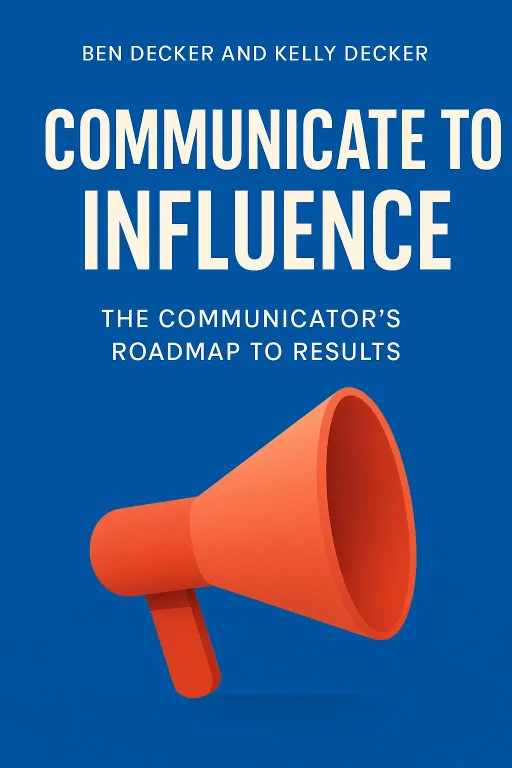
Nova: Precisely. And that’s why today, we’re diving into the heart of mastering influence through strategic communication, pulling insights from two powerhouse books. First, we’ll explore Ben Decker and Kelly Decker’s "Communicate to Influence," a book that really shook up how we think about business messaging. And then, we’ll layer that with David Lewis and G. Riley Mills’s "The Bullseye Principle," which introduces a fascinating concept they call ‘intention-based communication.’
Atlas: "Communicate to Influence"—that sounds like it promises to fix the blinking and the dinner thoughts. What’s the big idea there?
Nova: Well, the Deckers are actually communication strategists who’ve worked with Fortune 500 executives for decades. They found that a lot of conventional business communication advice was missing the mark. It was too focused on delivering information, not on achieving. Their whole approach centers on clarity, connection, and impact, moving beyond just 'getting your message out there' to making sure it and.
Atlas: So it’s not just about being clear, but about creating an actual ripple effect? That’s interesting. Because a lot of people think if they just articulate their points well, the job is done.
Nova: That’s the common misconception, isn't it? The Deckers argue that true influence isn't just about the words you choose, but how you craft them to forge a genuine connection with your audience, and then how you deliver them to elicit a specific, desired impact. It's an art, really, but one that has very actionable techniques.
Atlas: Okay, so is about the how – how to make your message land with clarity, connection, and impact. And? What does that add to the mix?
Nova: comes from a slightly different angle. David Lewis and G. Riley Mills draw on their backgrounds in theater and psychology, which gives them a unique lens. They argue that before you even about clarity or connection, you need to absolutely nail your 'core intent.'
Atlas: Ah, so the 'why' behind the 'what.'
Nova: Exactly! They call it ‘intention-based communication.’ It’s about defining your single, most important purpose for any interaction you open your mouth. Every word, every gesture, every pause then becomes a deliberate arrow aimed at that specific target. It’s about transforming how you persuade and connect by first understanding your own deeply held purpose.
Atlas: That makes me wonder if a lot of us are just shooting arrows blindly, hoping one hits something. Or maybe we think we know what we’re aiming for, but it’s actually a fuzzy, moving target.
The Power of Clarity, Connection, and Impact
SECTION
Nova: That’s often the case! The Deckers would say that fuzzy target is why so many communications fail. Let's start with their framework: clarity, connection, and impact. Most people focus almost exclusively on clarity. They think, "If I just organize my thoughts logically and use precise language, I'm good."
Atlas: Which, to be fair, is a huge challenge for many people in itself. I’ve sat through enough rambling presentations to know that clarity is a superpower.
Nova: It absolutely is a superpower, but it’s only one third of the equation for influence. The Deckers highlight that clarity means making sure your audience your message. That seems obvious, but it requires you to think from perspective, not just your own. What do already know? What do need to know? What jargon do use?
Atlas: So, it’s not just about simplifying, but about customizing the message for the receiver. Like translating it into their native cognitive language.
Nova: Exactly. And then comes connection. This is where many business communicators stumble, especially the pragmatic, results-driven types. They might think "connection" means being chummy or telling jokes. But for the Deckers, connection is about building rapport and trust, yes, but more importantly, it's about showing your audience that you. It’s about making your message to them.
Atlas: That’s a game-changer. So, it's not about being their best friend, but about demonstrating empathy and relevance. If I’m in a high-stakes meeting, trying to get buy-in for a new strategy, "connection" isn't just about smiling. It's about acknowledging their concerns about budget, or resources, or risk.
Nova: Precisely. Imagine a project manager trying to get a busy engineering team to adopt a new, complex software tool. Just explaining the features clearly isn't enough. Connecting means acknowledging their current workload, understanding their resistance to learning new systems, and showing them how this new tool will or they experience daily. You’re speaking to their current reality.
Atlas: So you're not just presenting data; you’re presenting a solution to problem.
Nova: Bingo. And when you achieve clarity and connection, you're set up for impact. Impact is the desired outcome. It’s what you want your audience to,, or after your communication. This is where the rubber meets the road. It's not just that they understood you; it’s that they are now motivated to act, or their perspective has shifted.
Atlas: That’s actually really inspiring. So many times, I’ve seen discussions end with everyone understanding but no one actually moving forward. It’s like clarity without propulsion.
Nova: And that’s why the Deckers emphasize designing your communication with the end in mind. What’s the single most important thing you want your audience to or? Every element of your communication should build towards that. For example, a compelling story isn't just for entertainment; it's to create an emotional connection that drives a specific action.
Atlas: Can you give an example of how that plays out? A real-world scenario where someone nailed all three?
Nova: Absolutely. Think about a CEO introducing a major organizational restructuring. A clear message would outline the new structure, roles, and reporting lines. A connected message would address employee anxieties about job security or change, explaining this is necessary for the company's future and it benefits them. The they're aiming for isn't just understanding; it's buy-in, reduced resistance, and proactive engagement with the new plan. They’re not just informing; they’re inspiring confidence and securing commitment.
Atlas: That makes total sense. It's a holistic approach. But even with all that, I can see how someone could still miss the mark if they haven't figured out their own true north. Which brings us to the second book, I imagine.
The Bullseye Principle: Intention-Based Communication
SECTION
Nova: You’ve hit the bullseye, Atlas! Because even if you master clarity, connection, and impact, if you're aiming at the wrong target, you're still not going to achieve true influence. This is where Lewis and Mills' "The Bullseye Principle" really shines. They argue that everything starts with your 'core intent.'
Atlas: My core intent. So, what’s the difference between having a goal and having a core intent? Aren’t they the same thing?
Nova: That’s a fantastic question, and it’s where the nuance lies. A goal might be "I want to close this deal" or "I want to convince my team to adopt this new software." But your goes deeper. It's the underlying, single, most important thing you want to accomplish or evoke. It’s less about the surface-level objective and more about the fundamental purpose or desired state.
Atlas: So, if my goal is to close the deal, what might my core intent be?
Nova: It could be: "To instill confidence in the client that we are the only reliable partner," or "To create a win-win scenario where both parties feel valued," or even "To establish a long-term, trusting relationship." Notice how these are more about a or a than just the transaction itself.
Atlas: I see. So it’s not just the, but the behind the, and often the it makes people. That’s a subtle but powerful distinction. It sounds almost like an emotional or psychological underpinning.
Nova: Exactly. Lewis and Mills, with their theatrical background, talk about how actors deeply understand their character's intent for every scene. It's not just about delivering lines; it's about what the character to achieve in that moment, what they want to in the other characters. They bring that same rigor to everyday communication. They say that when your words and your body language are all aligned with a singular, clear intent, your communication becomes incredibly powerful and almost magnetic.
Atlas: So, every gesture, every inflection, every pause... it's all in service of that one core intent. That sounds incredibly mindful and deliberate. For a focused learner, that level of precision could be really appealing.
Nova: It is. They provide a simple, yet profound exercise: before any critical conversation, take five minutes to explicitly define your single most important intention. Not two or three, but. And then, tailor your opening remarks to directly convey that intent.
Atlas: Just five minutes? That’s incredibly efficient for someone who values self-growth but struggles with time. It’s not asking for a whole communication overhaul. It’s a tiny, strategic shift.
Nova: It’s a tiny step with massive leverage. Think about a leader who needs to deliver difficult news about budget cuts. Their is to announce the cuts. But their might be: "To maintain team morale and ensure continued commitment to our mission," or "To demonstrate transparency and trust, even in challenging times." If that’s their core intent, their opening remarks won't just be "We're cutting budgets." They'll be crafted to foster trust and commitment, even as they deliver the hard facts.
Atlas: That changes everything. It’s the difference between delivering information and leading with purpose. It transforms a potentially negative interaction into an opportunity for strategic leadership.
Nova: And that’s the magic. When your core intent is crystal clear, your communication naturally becomes more focused, your connection more authentic, and your impact more profound. You’re not just talking; you're a specific outcome.
Atlas: I can see how that would prevent so much miscommunication and wasted effort. If I’m always clear on my intent, I’m less likely to get sidetracked or send mixed signals. It’s like having a compass for every conversation.
Synthesis & Takeaways
SECTION
Nova: Exactly, a compass. And when you combine these two powerful frameworks, you get a truly masterful approach to influence. The Deckers give you the tools for clarity, connection, and impact – the to construct your message effectively. But Lewis and Mills provide the essential foundation, the, the core intent that guides every single part of that construction.
Atlas: So, it’s not just about speaking well, but speaking with deep, singular purpose, and then making sure that purpose is articulated in a way that truly resonates and moves people. It’s a powerful combination for anyone driven by impact.
Nova: It’s about transforming communication from a mere exchange of information into a strategic act of influence. It means every conversation, every email, every presentation isn't just something you, but something you with intention and impact in mind. It reframes communication as a fundamental driver of success, not just an auxiliary skill.
Atlas: And the tiny step they recommend, defining your single most important intention for a conversation, then tailoring your opening remarks to it... that feels incredibly actionable. It’s not overwhelming. It’s a precise, focused action.
Nova: It’s a powerful micro-habit that can fundamentally shift your communication effectiveness. It forces you to be deliberate, to think beyond surface-level goals, and to truly consider the human element of your interactions. And that, for any empathetic strategist, is key to shaping a better future, one conversation at a time.
Atlas: It’s like a communication superpower, unlocked five minutes at a time. What a profound insight.
Nova: It really is. And the beauty is, it doesn't require a complete overhaul of your personality or your speaking style. It simply requires a deeper level of intentionality.
Atlas: This is Aibrary. Congratulations on your growth!