Designing for Engagement & Outcomes: From Brilliance to Understanding
Golden Hook & Introduction
SECTION
Nova: What if the biggest barrier to profound learning isn't the content itself, but how we're taught? We often push information, hoping for engagement. But the real magic lies in designing experiences that curiosity, making learning irresistible. Today, we unlock that secret.
Atlas: Oh, I love that framing, Nova. "Pulling curiosity." Because honestly, who hasn't sat through a presentation or a class where you felt like you were being force-fed information, just counting the minutes? It’s exhausting for everyone. But "irresistible learning"—that sounds like a dream for anyone trying to build effective programs.
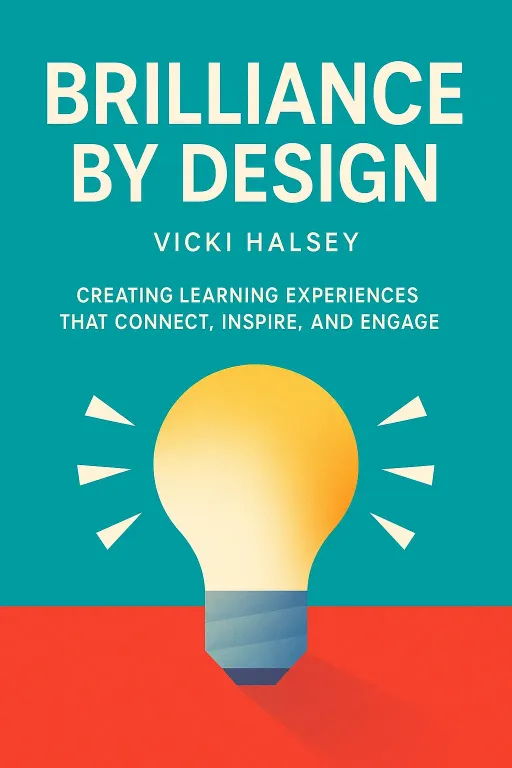
Nova: Absolutely, Atlas. And it’s not just a dream; it’s a design principle. Today, we’re diving into two foundational texts that, when combined, offer a powerful blueprint for creating precisely that: truly engaging experiences with demonstrably clear learning outcomes. We're talking about Vicki Halsey's "Brilliance by Design," and the seminal work by Jay McTighe and Grant Wiggins, "The Understanding by Design Handbook."
Atlas: Okay, so we have the spark, and we have the structure. For our listeners who are constantly iterating on educational projects, trying to blend that strategic clarity with genuine impact, how do these two ideas, these two books, really start to work together? Where do we even begin to ignite that spark?
Designing for Intrinsic Engagement: The 'Brilliance by Design' Approach
SECTION
Nova: That's the perfect question, because Halsey's "Brilliance by Design" starts by flipping the script on traditional learning. She emphasizes creating experiences that, foster, and lead to those profound "aha!" moments. Think about it: most learning design starts with 'what content do I need to deliver?' Halsey says, 'No, start with the learner's brain. What will make them to discover this?'
Atlas: So, it's not just about making it fun, then? Because "fun" can be fleeting. You're talking about something deeper, something that taps into an internal drive. What exactly does "activating curiosity" look like in practice? Can you give us a real-world scenario where this 'activation' actually happened? For those of us trying to design training or curriculum, what does this look like on the ground?
Nova: Let’s imagine a common scenario: a mandatory corporate training on, say, cybersecurity protocols. Traditionally, it’s a PowerPoint presentation, a list of rules, maybe a quiz. Most people mentally check out. Now, let’s apply Halsey’s principles. Instead of starting with the rules, you start with a mystery. You present a simulated, anonymized scenario: "A small company, just like ours, lost millions last week because an employee clicked link. Your task, as a team, is to figure out what happened, how it could have been prevented, and what role is in stopping it from happening here."
Atlas: Whoa. That's a completely different energy. You've instantly gone from "here's what you know" to "here's a puzzle you to solve." It's like going from a lecture to an escape room.
Nova: Exactly! You’ve activated their problem-solving instincts, their natural curiosity. The protocols then become the they discover they need to solve the mystery, rather than arbitrary rules they're forced to memorize. They're intrinsically motivated to understand because they see the immediate relevance and the challenge. The "aha!" moment isn't just understanding a rule; it's realizing that rule exists and how it empowers them. It unlocks their potential, not just fills their heads.
Atlas: I can definitely see how that would lead to a deeper understanding. But wait, looking at this from the perspective of someone who needs to show concrete results for their training investment – how do you measure that "aha!"? It sounds incredibly powerful, but also a bit... ephemeral. Is this just about engagement, or does it lead to demonstrable learning outcomes? Because at the end of the day, we need people to something differently.
Mastering Outcomes with Backward Design: The 'Understanding by Design' Framework
SECTION
Nova: That’s a brilliant question, Atlas, because feeling good and having an "aha!" moment are fantastic, but you’re right, we need to know if the learning and if it changed behavior. And that's precisely where McTighe and Wiggins' "Understanding by Design" framework becomes indispensable. It’s all about starting with the end in mind.
Atlas: So, instead of, "What content do I need to cover?" or "What activities can I plan?" it's "What do I want them to or at the very end of this experience?" Is that the core idea?
Nova: Precisely. Backward design is a three-stage process. Stage one: Identify desired results. What enduring understandings should learners achieve? What essential questions should they be able to answer? Stage two: Determine acceptable evidence. How will you know if they've achieved those results? What will they be able to or as evidence of their learning? This is where assessment design comes in you even think about teaching.
Atlas: Okay, so you're basically saying, define your target, then figure out how you'll know if you hit it, you even pick up the bow and arrow. That sounds incredibly logical, yet I feel like so many projects get it backwards, starting with the activities and hoping they lead somewhere.
Nova: They do! And that’s why so many learning experiences feel disjointed or ineffective. The final stage, stage three, is then planning learning experiences and instruction. Once you know what you want them to understand and how you'll assess that understanding, you design the activities that will get them there. This ensures every activity, every resource, every discussion is aligned and purposeful.
Atlas: Can you give an example of this in action? How does backward design prevent that feeling of "mile wide, inch deep" learning that often plagues complex subjects?
Nova: Imagine a high school history unit on the American Civil War. A traditional approach might start by chronologically listing battles, dates, and generals. Students might memorize facts, but do they the causes, the human impact, or its legacy? With backward design, you might start with the desired understanding: "Students will understand that complex societal issues often have multiple, deeply rooted causes and profound, long-lasting consequences."
Atlas: That's a much deeper understanding than just memorizing names and dates.
Nova: Exactly. Then, for acceptable evidence, you might decide students will write a persuasive essay from the perspective of a specific group during the war, arguing for or against a pivotal decision, citing historical evidence. Or they might debate the ethical implications of certain wartime policies., and only then, do you design the learning activities: primary source analysis, historical simulations, discussions, field trips. The facts become means to an end, not the end itself.
Atlas: That makes perfect sense. Halsey gets them excited to learn, and McTighe and Wiggins give that excitement a clear, measurable destination. But what if you have a brilliant, engaging idea from Halsey's world, but it doesn't immediately align with your backward-designed outcomes? Or conversely, you have clear outcomes, but the activities feel dry and uninspiring? How do these two frameworks actually to each other, so it’s not just one or the other?
Synthesis & Takeaways
SECTION
Nova: That’s the critical intersection, Atlas, and where the true brilliance lies. You don't pick one; you integrate them. Backward design provides your robust and your clear. It ensures your efforts are purposeful and measurable. Halsey's approach provides the, the, and the of the journey. It ensures learners are actively engaged and intrinsically motivated to follow that map.
Atlas: So, it's about making sure your meticulously planned journey is also an adventure people to take. The strategic clarity from backward design, combined with the human-centered spark from "Brilliance by Design."
Nova: Precisely. If you only have backward design, your learning might be effective but dull—like a perfectly efficient but joyless commute. If you only have "Brilliance by Design," it might be incredibly engaging but lack clear direction or measurable impact—like a thrilling joyride that ends up nowhere specific. The integration means you design for both the of profound discovery the of clear goals.
Atlas: That's a powerful combination for our listeners, the visionaries and architects who want to innovate with purpose, and the nurturers driven by impact. For anyone out there designing an educational project, a training program, or even just a new way to explain a complex idea, what's the one takeaway, the deep question they should be asking themselves this week?
Nova: The deep question is this: "How can I integrate the principles of intrinsic motivation and backward design into my next educational project to create truly engaging experiences with clear, demonstrable learning outcomes?" Don't just ask to teach, or to make it fun. Ask, and
Atlas: So, before you even open a textbook or sketch out an activity, pause. Ask yourself: What's the I want them to have? And how will I know they? Then, build the adventure that gets them there. It’s about designing for brilliance, with understanding.
Nova: Absolutely. It’s about creating a learning journey that is both deeply meaningful and undeniably effective.
Atlas: This is Aibrary. Congratulations on your growth!