

Synthesizing Biological Health and Intellectual Breadth
Golden Hook & Introduction
SECTION
Nova: Atlas, if I told you that two of the most impactful books we’ve discussed this year could be summarized in just five words each, what would you say? And more importantly, what would those five words be?
Atlas: Oh, Nova, you're challenging my verbal economy right out of the gate! Alright, for James Nestor’s "Breath," I’d go with: "Breathe Better, Live Longer, Calm." It’s deceptively simple, but profound.
Nova: Deceptively simple, indeed! And for David Epstein’s "Range"? The book that dared to tell us that specialization isn't always the answer?
Atlas: For "Range," it has to be: "Broad Paths Yield Deep Solutions." It's about finding strength in variety.
Nova: "Broad Paths Yield Deep Solutions." I love that. And you've perfectly captured the essence of two books that, on the surface, might seem like they belong in completely different libraries, but actually offer a remarkably cohesive blueprint for thriving in our complex world.
Atlas: They really do. You have one book, "Breath" by James Nestor, diving into the ancient, yet scientifically validated, power of our most fundamental biological process. And then "Range" by David Epstein, championing the generalist in an age of hyper-specialization. Both authors, interestingly, are fantastic science journalists, known for their deep dives and ability to make complex research incredibly accessible. Nestor even famously subjected himself to extreme breathing experiments for his book, bringing a very personal, narrative-driven approach to hard science.
Nova: Exactly. They both challenge conventional wisdom, often through compelling personal stories or extensive research, making their arguments incredibly persuasive. And what we're going to explore today is how these two seemingly disparate ideas—mastering your breath for internal calm and embracing broad interests for external problem-solving—actually converge into a powerful, actionable framework for personal growth and impact.
Atlas: That makes me wonder, for our listeners who are always looking for ways to maximize their knowledge gain and cut through the noise, how does something as basic as breathing become a strategic tool?
The Foundational Power of Breath
SECTION
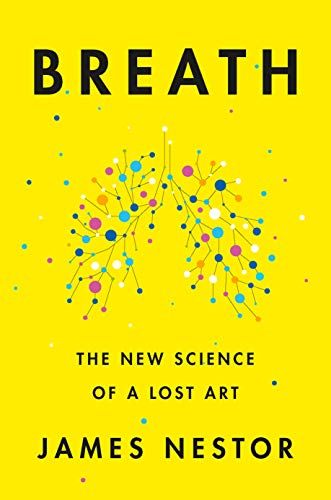
Nova: It’s a fantastic question, and it’s where James Nestor’s "Breath: The New Science of a Lost Art" truly shines. This book, which has been widely acclaimed for bringing ancient wisdom into the modern scientific spotlight, argues that most of us are simply breathing wrong, and it’s impacting everything from our sleep and stress levels to our physical health and longevity.
Atlas: Wait, you're saying something as simple as I breathe can make much difference? For someone who's always rushing, trying to squeeze more into less time, this sounds like another thing to add to the 'to-do' list, another optimization to chase.
Nova: I get that feeling, but Nestor’s point is that it’s not about something, it’s about something fundamental. He makes it incredibly vivid through his own experiments. For instance, he spent weeks deliberately breathing only through his mouth, and then only through his nose, all under scientific supervision. The results were astounding.
Atlas: Really? What happened?
Nova: When he was mouth-breathing, his snoring went through the roof, he developed sleep apnea, his heart rate variability plummeted, and his blood pressure increased. He felt foggy, irritable, and his athletic performance declined significantly. It was a stark demonstration of how quickly the body deteriorates when this fundamental biological process is compromised. It was a visceral, almost alarming, transformation.
Atlas: That’s wild. So, the mere act of breathing through your mouth, something so many of us do without thinking, was actively making him sick?
Nova: Precisely. But then, when he switched to exclusive nose breathing, all those negative markers reversed. His sleep improved dramatically, his snoring vanished, his athletic endurance soared, and his overall sense of calm and mental clarity returned. He wasn't anything else differently, just changing he breathed. It’s a powerful illustration of cause and effect, right there in his own body.
Atlas: That’s incredible. I mean, we breathe over 20,000 times a day, and you’re telling me most of us are doing it inefficiently, or even detrimentally? For our listeners who are navigating high-pressure environments, where stress regulation is key, what’s the immediate, actionable benefit here? Beyond just "don't breathe through your mouth"?
Nova: The immediate benefit for stress regulation comes from understanding the link between slow, deep nasal breathing and your autonomic nervous system. When you breathe slowly and deeply through your nose, you activate the parasympathetic nervous system – your "rest and digest" system. This signals to your body that you're safe, reducing cortisol levels, lowering heart rate, and promoting a sense of calm. Think of it like hitting a reset button for your internal state.
Atlas: So it's not just about getting more oxygen, it's about signaling to your brain that everything's okay?
Nova: Exactly. It's about optimizing your CO2 tolerance, which can actually make you feel calmer and more focused, and stimulating the vagus nerve, which is a major pathway for stress reduction. A simple technique like "box breathing"—inhaling for four counts, holding for four, exhaling for four, holding for four—can be done anywhere, anytime, to immediately regulate your state. It’s an efficient, high-impact tool for anyone needing to manage their internal landscape.
The Unsung Strength of Broad Exploration
SECTION
Nova: Speaking of foundational shifts, let's pivot from the internal mechanics of health to the external dynamics of intellectual growth with David Epstein’s "Range: Why Generalists Triumph in a Specialized World." This book challenges the pervasive idea that early, intense specialization is the only path to success, particularly in complex fields. It was a highly talked-about book, sparking debate among educators and career coaches alike.
Atlas: But in a world that screams 'niche down,' 'become an expert,' and ‘10,000 hours,’ isn't broadness just... being mediocre at a lot of things? How does this help someone trying to make their time count in a specialized field, especially when they need to deliver tangible impact?
Nova: That's the common misconception Epstein tackles head-on. He argues that for problems in "wicked" learning environments—where rules are unclear, feedback is delayed or misleading, and patterns don't repeat—generalists often outperform specialists. He uses incredible case studies to illustrate this, and one of my favorites is his comparison of Roger Federer and Tiger Woods.
Atlas: Oh, the legendary athletes. I can see where this is going. Woods was specialized from birth, right?
Nova: Absolutely. Tiger Woods was famously hitting golf balls practically from the moment he could walk. His father groomed him for golf from an incredibly young age, creating a highly specialized, deliberate practice path. This led to unparalleled early success. But then you have Roger Federer, arguably the greatest tennis player of all time, who had a completely different trajectory.
Atlas: I’m curious. What was Federer’s path like?
Nova: Federer actually played a wide variety of sports as a child—squash, basketball, wrestling, skiing, badminton, skateboarding, even table tennis—before focusing on tennis relatively late for a professional athlete. He wasn't pushed into one sport; he explored broadly, developing a diverse set of motor skills and an intuitive understanding of strategy across different domains.
Atlas: So, his "range" in other sports made him better at tennis? That sounds counter-intuitive for someone who's focused on achieving peak performance.
Nova: It’s a critical insight. Epstein argues that this broad exploratory phase gave Federer a unique adaptive advantage. He developed a more holistic understanding of movement, strategy, and problem-solving that he could then apply to tennis. When faced with a novel situation on the court, his brain had a larger database of experiences and analogies to draw from, making him more adaptable and innovative. This is especially crucial in fields where problems aren't neatly defined, like healthcare, technology, or even complex business strategy.
Atlas: That makes sense. For our listeners who are trying to synthesize complex information and find cross-disciplinary solutions in their research, this isn't just about collecting hobbies. It’s about building a mental toolkit of diverse perspectives.
Nova: Exactly. It's about analogical thinking, connecting dots between seemingly unrelated fields. Think about how many major scientific breakthroughs came from someone applying a concept from biology to engineering, or physics to medicine. Generalists, with their broader exposure, are often the ones who make those connections, because they aren't confined to a single, narrow mental model. They're better equipped to see the forest the trees.
Synthesis & Takeaways
SECTION
Nova: So, we have the foundational calm and clarity derived from mastering our breath, and the adaptive intelligence and innovative capacity that comes from embracing a wide range of experiences and knowledge. How do these two seemingly different concepts—biological depth and intellectual breadth—create what the book content calls a 'T-shaped' individual?
Atlas: That's the million-dollar question, right? For our listeners who are focused achievers, trying to navigate complex information and maximize knowledge gain, what's the actionable takeaway? How do we this? It's easy to say 'breathe better' and 'read broadly,' but how do these two pillars actually support each other in practice?
Nova: They support each other synergistically. The deep vertical bar of the 'T' represents your chosen area of expertise or, in this context, your foundational self-mastery—like the immediate stress regulation you get from conscious breathing. It’s about cultivating that inner calm, that mental clarity, which allows you to engage more effectively with the world. Without that stable base, without that internal regulation, the breadth of your intellectual exploration can feel overwhelming, or even lead to burnout.
Atlas: Oh, I see. So the breath work isn't just a separate health hack; it's the anchor that allows you to confidently explore the horizontal bar of the 'T' – the broad interests and cross-disciplinary thinking. It gives you the mental fortitude to handle the ambiguity and complexity that comes with being a generalist.
Nova: Absolutely. That horizontal bar, the breadth, is where you connect disparate ideas, apply insights from one field to another, and innovate. But to do that effectively, you need mental resilience, emotional regulation, and focused attention—all qualities significantly enhanced by proper breathing. The T-shaped approach isn't just about having skills; it's about having the to deploy those skills effectively and adaptively. It’s about building an internal anchor, and then having the freedom to explore the intellectual seas without getting lost. It's not just about health or career; it's about a holistic approach to life itself.
Atlas: That’s a profound insight. It means that the simplest, most overlooked biological function can unlock the potential for the most complex intellectual achievements. It’s a reminder that true growth isn't always about adding more, but optimizing what's already within us, and then boldly exploring what's around us.
Nova: Exactly. It’s about realizing that even small, consistent actions, like consciously regulating your breath for 15 minutes a day, can have a compounding effect, creating the mental space and resilience needed to truly leverage your broad interests for groundbreaking solutions. It’s a powerful combination for anyone looking to make their time count and create real impact.
Atlas: So, for everyone listening, try scheduling just five minutes today to focus on slow, deep nasal breathing. And then, maybe pick up a book or an article on a topic completely outside your usual domain. You might be surprised by what connections you make.
Nova: This is Aibrary. Congratulations on your growth!