The Power of Networks: Crafting Entrepreneurial Ecosystems
Golden Hook & Introduction
SECTION
Nova: Forget the lone genius in a garage. Seriously. The biggest breakthroughs, the fastest growth, the most enduring impact? They don't happen in isolation. They happen in the wild, interconnected world of innovation ecosystems.
Atlas: Whoa, hold on a second, Nova. Are you saying that all those stories about the brilliant inventor toiling away in secret, only to emerge with a world-changing idea, are... well, not entirely true? That feels like it goes against everything we've been told about innovation.
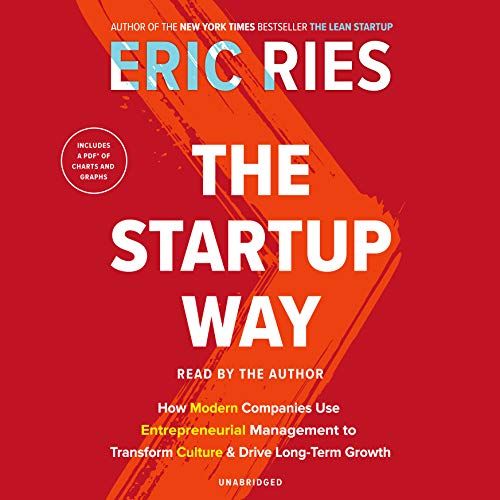
Nova: Absolutely, Atlas! It’s one of the most persistent myths, and today we're going to dismantle it with insights from two pivotal books: Eric Ries's "The Startup Way" and Reid Hoffman and Chris Yeh's "Blitzscaling." Ries, who essentially wrote the bible on lean startups, shifted his focus in "The Startup Way" to showing how even massive, entrenched corporations can learn to foster that nimble, entrepreneurial spirit internally. It's about making giants dance like startups.
Atlas: That is fascinating. So, we're talking about taking the agility of a small startup and injecting it into the bloodstream of a huge company? That sounds like trying to teach an elephant to tap dance. What does that actually look like in practice?
Nova: Exactly! It’s about understanding that no entrepreneur, no matter how brilliant, truly succeeds in a vacuum. The secret weapon isn't just a great idea; it's the ecosystem around it. And that brings us directly to our first core idea: how these innovation ecosystems actually work.
Ecosystems of Innovation: The Interconnected Web
SECTION
Nova: So, think about it. When we talk about innovation ecosystems, we're not just talking about a bunch of companies in the same city. We're talking about a dynamic web of talent, capital, ideas, and infrastructure that allows innovation to flourish. Eric Ries, in "The Startup Way," really drives this home by extending his lean startup principles beyond the small garage venture into the corporate boardroom.
Atlas: Okay, so you’re saying that even a massive, established company needs to think like a startup, internally? For someone working in a large, structured environment, that might sound almost impossible. How do you actually get a behemoth like General Electric to move like a nimble startup?
Nova: That’s the million-dollar question, and it's precisely what Ries addresses. Take the example of General Electric under Jeff Immelt. He tried to implement these very principles, essentially attempting to create an internal innovation ecosystem within a company that had existed for over a century. Imagine the sheer inertia! They faced immense resistance, a culture deeply ingrained in traditional processes, and a natural fear of failure.
Atlas: I can only imagine. It’s like trying to turn a supertanker on a dime. All those layers of management, existing protocols… how did they even begin to chip away at that?
Nova: It was a monumental task. They adopted what Ries calls "entrepreneurial management," which meant breaking down large projects into smaller, testable hypotheses. Instead of launching a massive product with a multi-year development cycle, they started building Minimum Viable Products, or MVPs, and testing them with real customers, even if those customers were internal departments at first. They learned to iterate, to pivot, to fail fast and learn faster.
Atlas: So, it wasn't about completely overthrowing the existing structure, but rather injecting these iterative, learning-focused processes into it. That makes sense. It's about creating pockets of agility. But what about rapid growth, what Hoffman calls "blitzscaling"? Can you truly achieve that without an external network, without the broader ecosystem?
Nova: That's where the second layer comes in, and it's crucial. While internal entrepreneurial thinking is vital, true "blitzscaling" often relies heavily on leveraging and contributing to external networks. "Blitzscaling" is about prioritizing speed over efficiency in the face of massive uncertainty to achieve market dominance. And you simply cannot do that in isolation.
Your Network Blueprint: Building Connections with Purpose
SECTION
Nova: When Reid Hoffman, co-founder of LinkedIn, talks about "blitzscaling," he's not just talking about growing fast; he's talking about growing fast by intentionally building and scaling your operations and, critically, your networks.
Atlas: So, it's not just about having a great product, but about how that product plugs into and expands an existing network, or even creates a new one? That makes me wonder, what's a prime example of a company that truly mastered building its external network blueprint for massive growth?
Nova: LinkedIn itself is the perfect illustration. It wasn't just a platform; it was designed from day one to be an ecosystem for professionals. Hoffman and his team understood that the value wasn't just in individual profiles, but in the connections those profiles. They strategically focused on building network effects.
Atlas: That sounds like a classic chicken-and-egg problem, though. How do you build a network when you're just starting out? It feels like you need connections to get connections. For an aspiring innovator, that initial hurdle can feel insurmountable.
Nova: That's a brilliant point, and it’s why understanding the "network blueprint" is so vital. LinkedIn didn't wait for people to show up; they actively sought out early adopters, influential professionals, and strategic partners. They built features that encouraged sharing and interaction, making the network more valuable with each new member. They weren't just extracting value; they were creating a space where professionals could value to each other.
Atlas: Ah, so it really boils down to that "Deep Question" in our content: How can you actively contribute to an entrepreneurial ecosystem rather than just extracting value from it? It’s not just about what you get; it’s about what you give.
Nova: Exactly! It's the difference between seeing a network as a resource to be mined and seeing it as a garden to be cultivated. When you contribute – whether it's sharing expertise, making introductions, offering genuine feedback, or collaborating on projects – you not only strengthen the ecosystem, but you also build your own reputation and trust within it. That's your network blueprint. It’s about becoming an indispensable part of the web, not just a spider waiting for flies.
Atlas: I love that analogy. It's not just about who you know, but about what you build together, and how you make that network stronger. It transforms "networking" from a transactional chore into a meaningful act of community building.
Synthesis & Takeaways
SECTION
Nova: So, bringing it all together, whether it’s Eric Ries showing established companies how to foster internal entrepreneurial ecosystems, or Reid Hoffman revealing how to "blitzscale" by strategically building external networks, the core message is clear: innovation is a team sport. It's an interconnected dance.
Atlas: It’s truly profound when you consider it. It redefines success not as an individual achievement, but as a collective one. So, for our listener, the aspiring innovator or conscious explorer trying to make a tangible difference, what's the most practical, immediate step they can take to start building their own "network blueprint"?
Nova: The "Tiny Step" is this: identify one industry event or online community related to your interests – whether it's AI, sustainability, or entrepreneurship – and make a concrete plan to engage with it. Don't just lurk; participate. Ask a question, offer a thought.
Atlas: And then, take that "Deep Question" with you: How can you actively contribute to that ecosystem rather than just extracting value from it? Because, as we’ve seen, the future landscape, especially with the rapid evolution of AI and the urgent need for sustainable business models, demands this interconnected approach. No significant impact happens in isolation. It's the sum of countless thoughtful contributions.
Nova: Absolutely. The cumulative power of small, consistent contributions within a vibrant ecosystem can lead to truly transformative change, far beyond what any single individual could achieve.
Atlas: That’s actually really inspiring. It frames success not just as reaching a destination, but as actively participating in the journey of discovery and co-creation with others.
Nova: This is Aibrary. Congratulations on your growth!