Scaling Up: From Concept to Culinary Empire
Golden Hook & Introduction
SECTION
Nova: Alright, Atlas, quick game. I’ll say a business concept, and you give me the most hilariously bad, self-help book title for it. Ready?
Atlas: Oh, this sounds dangerous. But I’m in. Hit me.
Nova: Okay. "Scaling Up."
Atlas: "Scaling Up: How to Make Your Business Bigger, But Not Necessarily Better, While Also Losing All Your Hair."
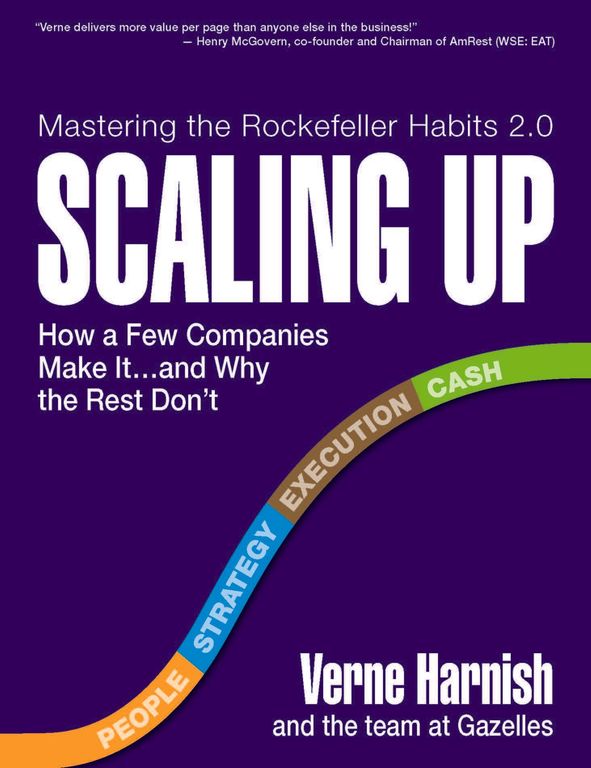
Nova: Oh, that’s surprisingly accurate for some. The hair part, especially! Today, we're actually diving into the art of scaling up, not just getting bigger, but building a culinary empire that can actually handle the heat. We're talking about the wisdom from some incredible minds, starting with Verne Harnish's foundational work, "Scaling Up: How a Few Companies Make It... and Why the Rest Don't."
Atlas: Ah, Harnish! He's like the grand architect of business growth, isn't he? I remember hearing about how he started the Entrepreneurs' Organization way back, practically building a blueprint for founders before "startup" was even a buzzword. His insights come from years of seeing what actually works, and what crashes and burns.
Nova: Exactly. He’s seen it all, from the garage startups to the global giants. And his book distilled all that experience into four critical decisions that every business leader faces when trying to scale: People, Strategy, Execution, and Cash. It’s got practical tools, habits, it’s a whole system.
Atlas: That makes sense. It’s not just about having a great idea, is it? It’s about the underlying machinery. And I imagine a lot of our listeners, especially those in the food industry, are thinking, “Okay, I’ve got the concept, the passion, the killer recipe. But how do I go from one successful pop-up to a chain of restaurants without everything falling apart?”
The Growth Accelerator
SECTION
Nova: That’s precisely where Harnish shines. He gives you the scaffolding. But then, if you want to go from scaffolding to a skyscraper, you need to understand the concept of "Blitzscaling."
Atlas: Blitzscaling. That sounds less like a business strategy and more like a tactical maneuver in a war game. Is that Reid Hoffman and Chris Yeh?
Nova: Spot on. Hoffman, the co-founder of LinkedIn, and Yeh, his co-author, literally wrote the playbook on achieving rapid, massive scale. Their idea is that sometimes, to win a market, you have to prioritize speed and dominance over short-term efficiency. It’s about being the first to capture that huge market share, even if it means a little chaos.
Atlas: That’s a bit counterintuitive to Harnish’s meticulous approach, isn’t it? Harnish wants steady, sustainable growth, optimizing every step. Blitzscaling sounds like throwing caution to the wind and just going for broke.
Nova: That’s the brilliant tension! Harnish gives you the foundation for growth, building systems that can handle complexity. Blitzscaling tells you when to hit the accelerator and essentially break some of those systems temporarily to overwhelm the market. Imagine a small, artisanal bakery that suddenly gets a national distribution deal. Harnish would say, "Do you have the people, strategy, execution, and cash to handle that?" Blitzscaling would say, "If you don't grab that deal now, someone else will, and you'll lose out on becoming the dominant artisanal bakery across the country."
Atlas: So it’s a calculated risk, not just reckless abandon. It’s about accepting inefficiencies for a strategic advantage. I’m curious, though, for our listeners who are navigating things like regulatory compliance in the food industry, or optimizing their supply chains—would blitzscaling even be without everything unraveling? That sounds like a recipe for disaster if your foundations aren't rock solid.
Nova: Exactly the right question. And that's why understanding perspectives is crucial. You can't blitzscale without eventually needing Harnish's principles to bring order back to the chaos. Blitzscaling is about to win the market, but Harnish is about once you've captured it. It’s the difference between a lightning strike and building a permanent power grid. And speaking of capturing that market, once you have your product and your strategy, how do you actually get customers? That’s where Gabriel Weinberg and Justin Mares come in with "Traction: How Any Startup Can Achieve Explosive Customer Growth."
Atlas: Ah, Traction! That book is a classic. It’s like a menu of growth channels, isn’t it? Not just "do social media" or "run ads," but a systematic way to figure out what actually works for business.
Nova: Precisely. They lay out 19 different marketing channels—everything from viral marketing and SEO to public relations and offline ads. And the key insight, which is often overlooked, is that most businesses only need one or two primary traction channels to really take off. It’s not about doing everything; it’s about finding the right thing.
Atlas: That’s a relief. For someone trying to optimize a complex food supply chain, the idea of having to master 19 different marketing channels at once would be overwhelming. So, the book helps you identify your core channels.
Nova: Yes, and it offers a framework for testing and scaling those channels. It's about finding what they call the "Bullseye" — that one channel that gives you the most bang for your buck. So, when you're looking at scaling a culinary empire, you're not just thinking about more kitchens or more staff; you're thinking about how you get more eyes and mouths onto your product. And that brings us to my overall take on scaling: it isn't just about getting bigger; it's about building systems that can handle increased complexity and demand. It's about foresight.
Your Growth Playbook
SECTION
Atlas: That really resonates with the idea of being a pragmatist and a visionary. You see the whole picture, identify the challenges, but you’re also grounded in actionable steps. So, let’s make this real. Considering Harnish’s focus on execution and systems, what’s one tiny step someone could take this week?
Nova: Excellent question. For a tiny step, I’d say: Identify one key bottleneck in your current business that would prevent you from doubling your output next month. Just one. Is it your oven capacity? Your fastest cook? Your delivery logistics? Then, what’s the immediate, single action you can take to alleviate it? Even if it's just researching a new oven or cross-training one person. The goal is to highlight the constraint.
Atlas: That’s brilliant. It makes the abstract idea of "scaling" very concrete. It’s not about dreaming big, it’s about fixing the small thing that’s holding you back right now. And it also addresses that strategic mind, seeing the challenge.
Nova: Exactly. It's about removing the biggest obstacle to hypothetical future growth. Now, flipping that coin to the visionary side, let's talk Blitzscaling. For our listeners who are aiming to create a culinary empire, what calculated risks are they willing to take to achieve rapid market dominance in their niche, even if it means short-term inefficiencies? This is where you trust your instincts.
Atlas: Wow. That's a deep question, Nova. It forces you to embrace the journey and really trust your vision. For someone navigating regulatory compliance, for example, a calculated risk might be investing heavily in new food safety tech that's still emerging, hoping it gives them a massive competitive edge, even if it's costly and not yet fully proven. Or, from a supply chain perspective, it could be locking into a long-term, high-volume contract with a single supplier for a key ingredient, betting on their market dominance, even if it means less flexibility in the short term. It’s about that rapid, almost aggressive, push for market share.
Nova: Precisely. It’s not about being reckless; it’s about recognizing that sometimes, the biggest risk is taking one. It’s understanding that in a rapidly evolving market, waiting for perfect efficiency can mean losing the entire race. The key is that they are risks, not blind leaps. It’s about having a vision and being willing to make strategic sacrifices to get there.
Synthesis & Takeaways
SECTION
Atlas: This whole conversation really highlights the dynamic interplay between these books. Harnish gives you the steady hand, the architectural drawings. Hoffman and Yeh give you the rocket fuel. And Weinberg and Mares give you the map to get customers into your rapidly expanding empire. So, what’s the ultimate takeaway here for someone trying to build something truly lasting?
Nova: I think the profound insight is that scaling is not a linear path; it's a dynamic dance between stability and disruption. You need the foundational principles of Harnish to build a robust internal engine, but you also need the foresight to know when to "blitz"—when to temporarily sacrifice some internal efficiency for external market capture, as Hoffman and Yeh would advocate. And through it all, you have to be relentlessly focused on acquiring and retaining customers, as "Traction" teaches us. The most common mistake isn't just failing to grow, it's growing unsustainably or growing without a clear path to market. It's about being both the meticulous chef and the daring food scientist, knowing when to follow the recipe and when to invent something entirely new to dominate the culinary landscape.
Atlas: That’s actually really inspiring. It’s about understanding that growth isn't just about getting bigger; it's about building intelligently, playing strategically, and connecting deeply with your market. It gives me chills thinking about the potential.
Nova: Absolutely. It’s about creating something truly impactful. And for all our listeners out there, what’s one thing you’re going to scale today? What small, vital step are you going to take to move your concept towards that empire? Share your insights with us.
Atlas: And remember, whether you're building a culinary empire or just trying to get your brilliant idea off the ground, the journey is just as important as the destination.
Nova: This is Aibrary. Congratulations on your growth!