The Network Effect is a Trap: Why You Need 'Anti-Fragile' Personal Branding.
Golden Hook & Introduction
SECTION
Nova: We're told to build our networks, make connections, grow our reach. More is always better, right? What if that's exactly the trap?
Atlas: Hold on, Nova. Are you really saying that building a massive network, something most of us aspire to, could actually be… a bad thing? That sounds like heresy in the age of connection.
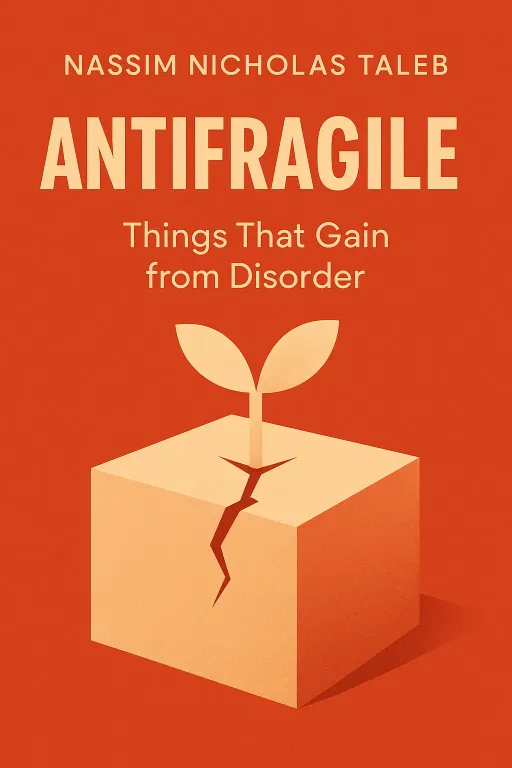
Nova: It sounds counterintuitive, I know, but that's exactly the provocative idea at the heart of our discussion today. We're diving into the brilliant, often controversial, mind of Nassim Nicholas Taleb, specifically his groundbreaking works, "Antifragile: Things That Gain from Disorder" and "The Black Swan: The Impact of the Highly Improbable."
Atlas: Taleb, the former options trader turned philosopher? The guy who basically told the financial world they were looking at risk all wrong?
Nova: The very same. His background in navigating extreme unpredictability in markets makes his insights into fragility and resilience incredibly potent, and frankly, a bit unsettling for conventional thinkers. He challenges the very foundation of how we perceive robustness.
Atlas: So, he’s not just talking about surviving a shock, but actually benefiting from it. That’s a whole new level of strategic thinking.
Nova: Exactly. And today, we're taking those radical ideas and applying them to something deeply personal: your personal brand. Because many of us are building brands that look strong, but are actually just waiting for the next big shock to shatter them.
The Antifragile Paradox: Why Your Network Might Be a Trap, Not a Shield
SECTION
Nova: So, let's start with this core blind spot: the belief that more connections automatically mean more resilience. On the surface, it seems logical. A bigger network, more resources, more people to fall back on, right? But Taleb would argue that a complex, highly interconnected network can actually be inherently fragile.
Atlas: That makes me wonder about the implications for someone trying to build a career in a rapidly evolving field, where staying connected feels like a survival instinct. What do you mean by fragile in this context?
Nova: Think of it like a modern power grid or a highly specialized global supply chain. They appear incredibly efficient, vast, and robust. But because everything is so tightly linked, a single point of failure – a cyberattack on one station, a bottleneck in one port – can cascade into a catastrophic system-wide collapse. It’s too optimized, too interconnected, and lacks redundancy. It’s robust to small shocks, but fragile to large ones.
Atlas: So, you're saying robust isn't enough? That just being able to withstand a hit isn't the goal? What exactly is this antifragile thing then?
Nova: Precisely. Robustness means you can resist damage; you return to your original state. A stone is robust. But antifragility is beyond robustness. It means you from disorder, from shocks, from volatility. What doesn't kill you makes you stronger, literally. My favorite analogy is the Hydra from Greek mythology. You cut off one head, and two grow back. Or our own muscles: they break down under stress, then rebuild themselves stronger.
Atlas: Wow, that's a whole new way to think about it. So, it's about actively seeking out the 'cuts' to grow more heads, or the 'stress' to build more muscle, for our brand? That’s a radical shift from avoiding risk.
Nova: It absolutely is. It's about cultivating a system – in this case, your personal brand – that doesn't just survive challenges, but uses them as fuel for growth and evolution. It’s an active, even aggressive, posture towards uncertainty. It challenges the conventional wisdom of risk avoidance that dominates so much of our planning.
Atlas: I can see how that would be incredibly difficult to embrace, especially for people who are used to meticulously planning every step of their career. It requires a complete mindset shift.
Forging an Antifragile Personal Brand: Intentional Stressors and Black Swan Preparedness
SECTION
Nova: That's the million-dollar question, isn't it? If we want to be Hydras, how do we intentionally introduce those 'small, controlled stressors' into our personal branding efforts? Because let's be clear, we're not talking about self-sabotage.
Atlas: That makes me wonder, for someone trying to disrupt an industry or launch a truly innovative product, how do you even begin to apply this? It sounds like you're encouraging them to lean into the very things that cause discomfort.
Nova: Exactly! It means taking calculated risks. It could be experimenting with a new, unfamiliar platform to share your ideas, even if it feels awkward at first. It could be actively seeking out constructive criticism, engaging with people who disagree with you to refine your arguments, rather than just retreating into an echo chamber. Or, it might be pitching an idea you genuinely believe in, even if it's met with initial skepticism, learning to defend and adapt it.
Atlas: Can you give an example of how this plays out in the real world? Someone who actually did this and benefited?
Nova: Absolutely. Consider a content creator who, instead of shying away from controversial or complex topics in their niche, strategically engages with them. They don't just state their opinion; they invite debate, they analyze opposing viewpoints. The initial "stress" might be negative comments or difficult questions, but by consistently and thoughtfully engaging, they learn to refine their arguments, deepen their understanding, and attract a more engaged, thoughtful audience. Their brand doesn't just become more popular; it gains intellectual muscle, clarity, and depth from the very "stress" of debate.
Atlas: Okay, that's practical. That’s something I can apply to how I present ideas. But what about the really big shocks? The 'Black Swans' Taleb talks about? Those aren't 'controlled stressors,' they're total game-changers that can wipe out entire industries overnight.
Nova: And this is where the side of Taleb's genius comes in. Black Swans are highly improbable, unpredictable events with massive impact. Think 9/11, the 2008 financial crisis, or the sudden global shift to remote work. You can't predict them, so you can't build a brand designed to avoid them. The antifragile brand isn't built to these, but to with such agility that it potentially benefits from the ensuing disorder.
Atlas: Like how some businesses thrived during the pandemic by quickly shifting their models, while others, more rigid, collapsed?
Nova: Precisely. Take an expert in a niche field who had cultivated a personal brand around constant learning and adaptability, rather than rigid specialization. When their industry was suddenly disrupted by AI, instead of becoming obsolete, they quickly pivoted their skills to consulting on AI integration, becoming even more in-demand. Their brand wasn't tied to a specific tool or methodology, but to their capacity for intellectual growth and problem-solving. They gained from the disorder.
Atlas: So it's not about predicting the unpredictable, it's about being so adaptable that whatever comes your way, you're positioned to thrive, or at least learn and grow stronger from it. That's powerful. It shifts the focus from protection to proactive evolution.
Synthesis & Takeaways
SECTION
Nova: Absolutely. The core idea here is that antifragility in personal branding is about seeing challenges not as obstacles to avoid, but as opportunities to strengthen and evolve. It's moving beyond mere survival to actual growth in the face of uncertainty. It's about designing your brand to become more robust, more innovative, and more impactful with every shake-up.
Atlas: For anyone who wants to build something lasting, something impactful, this isn't just about risk management. It's about designing your brand for exponential growth, even when the world goes sideways. It’s about being brave enough to test your ideas, to put yourself out there, and to trust your instincts to navigate that chaos.
Nova: It truly is. This mindset shift is key for making a real difference, for becoming a thought leader who isn't afraid of the future, but who actively shapes it.
Atlas: So, the next time you face a challenge, instead of asking 'How do I survive this?', ask 'How can this make me stronger?' That's the antifragile question.
Nova: Exactly. It's about building a brand that the future can't break.
Atlas: This is Aibrary. Congratulations on your growth!