Stop Reacting, Start Anticipating: The Guide to Proactive Disaster Preparedness
Golden Hook & Introduction
SECTION
Nova: Atlas, I was today years old when I realized our obsession with 'resilience' might actually be holding us back.
Atlas: Whoa, hold on. Resilience? That's, like, the gold standard, isn't it? The ability to bounce back, to withstand shocks. How could that possibly be holding us back? That sounds almost… counterintuitive.
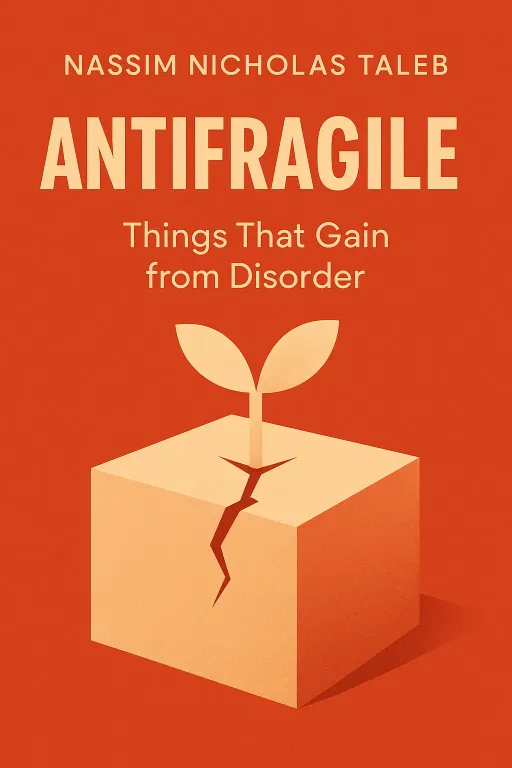
Nova: Exactly! It’s a bit like saying, 'Sure, a well-built wall is good, but what if the wind could actually make your house stronger?' We're talking about a groundbreaking idea today, really brought to the mainstream by Nassim Nicholas Taleb in his book, "Antifragile: Things That Gain from Disorder."
Atlas: Nassim Nicholas Taleb, the former options trader, right? The one who dives into randomness and uncertainty. I remember some of his work on black swans.
Nova: That's him. Taleb spent years studying how financial markets, political systems, and even human bodies react to stress. His insights challenge a lot of conventional wisdom, pushing us beyond just surviving. He argues that simply being resilient, just bouncing back to the original state, is good, but it's not the ultimate goal.
Atlas: I see. So for our listeners, especially those strategic innovators and compassionate guardians who are constantly looking for the path forward, who don't just want to withstand the next crisis but genuinely want to grow from it, this is going to resonate. It’s about more than just enduring; it's about evolving.
Nova: Precisely. And that's where we start today. We're not just talking about surviving the storm, but about becoming stronger because of it.
Antifragility: Thriving in Disorder
SECTION
Nova: So let's dive into this concept of antifragility. Taleb defines it as something that doesn't just resist shocks or return to its original state, but actually and from volatility, randomness, and stressors. It's the opposite of fragile, but it's more than robust.
Atlas: Okay, so you’re saying it’s not just about not breaking, it’s about getting better when things get tough. Can you give me a really clear example of that? Because my first thought is, how does anything from chaos? That sounds a bit out there.
Nova: Absolutely. Think about the human immune system. When you're exposed to minor pathogens, your immune system doesn't just 'bounce back'; it learns, adapts, and develops stronger defenses. Those small, controlled stressors make it more robust for future, potentially larger threats. It from disorder.
Atlas: Ah, I see. So it’s like getting a vaccine – a small, controlled dose of the 'disorder' makes you stronger.
Nova: Perfect analogy. Or consider forest management. For decades, the strategy was to suppress all forest fires. But what happened? Fuel built up, creating conditions for catastrophic, uncontrollable infernos. Now, many foresters practice controlled burns – small, intentional fires that clear out underbrush, return nutrients to the soil, and prevent those massive, destructive events. The ecosystem, in a strange way, becomes antifragile through these smaller, contained 'shocks.'
Atlas: That's a great example. So the 'tiny step' we often talk about—identifying an area for small-scale stress tests—that's an antifragile strategy in action. You're intentionally creating contained failures to reveal weaknesses and improve. But wait, looking at this from a leader's perspective, someone trying to protect their community from a massive natural disaster, isn't that just inviting risk? You can't exactly 'stress test' a hurricane.
Nova: That's a critical distinction, Atlas. Antifragility isn't about inviting catastrophe, but understanding that volatility is inevitable, and designing systems to benefit from it. For a community facing natural disasters, an antifragile approach might involve decentralized energy grids that don't fail all at once, or local supply chains that can adapt when global ones break down. It's about building in redundancy and optionality, so when a shock hits, parts of the system can actually pivot and even thrive, rather than the whole thing collapsing.
Atlas: So basically you’re saying, instead of building a wall that might eventually crack, you build a system that uses the pressure from the outside to compress and strengthen itself, or even sprout new pathways?
Nova: Exactly! It’s moving beyond just 'withstanding' to actively 'gaining' from the unexpected. It's the difference between merely surviving a market downturn and having diversified investments that allow you to capitalize on new opportunities that emerge from it.
Systems Thinking: Predicting Unintended Consequences & Finding Leverage Points
SECTION
Nova: But to truly gain from disorder, to design those antifragile systems, you need to understand disorder moves through a system. And that brings us to Donella H. Meadows and her seminal work, "Thinking in Systems."
Atlas: Donella Meadows. Her work is foundational for understanding how everything is interconnected. I’m curious, how does her systems thinking connect with Taleb’s antifragility?
Nova: They're two sides of the same coin, really. Meadows shows us that systems are dynamic, full of feedback loops, delays, and non-linear relationships. By understanding these dynamics, you can predict unintended consequences – the ripple effects of your actions – and, crucially, identify 'leverage points.'
Atlas: Leverage points. So, small interventions that create large, positive shifts? That sounds incredibly powerful for someone who's a natural strategist, always looking to connect dots.
Nova: It is. Think about a community trying to reduce its ecological footprint. A simple, linear approach might be to just tell people to use less water. But a systems thinker looks at the whole picture: Where does the water come from? How is it used in agriculture, industry, homes? What are the policies, incentives, and infrastructure involved? A leverage point might not be individual conservation, but rather investing in smart water metering across the city, which then provides real-time data and nudges behavior, or reforming agricultural subsidies to encourage water-efficient crops.
Atlas: That makes me wonder, for our listeners passionate about ecological restoration, how would they apply systems thinking to something as complex as, say, climate change impacts on a specific ecosystem? Like, how do you find a leverage point in that giant, interconnected web?
Nova: That's a fantastic question, Atlas. For ecological restoration, a leverage point often lies in understanding the keystone species or critical feedback loops. For example, instead of just planting trees everywhere, a systems thinker might focus on restoring a specific native pollinator population or reintroducing a predator species that keeps an invasive herbivore in check. That small, targeted intervention can then trigger a cascade of positive effects throughout the entire ecosystem, restoring balance and enhancing its natural resilience, or even its antifragility, to future climate shocks. It’s not about doing more; it’s about doing the right thing in the right place.
Atlas: So it's about seeing the hidden drivers, the fundamental structures, rather than just reacting to the symptoms. That’s incredibly insightful. It allows you to be truly proactive, not just resilient.
Nova: Exactly. It's about designing strategies that naturally gain from stress, because you've understood the underlying mechanics of how things work. You're not just patching up problems; you're fundamentally redesigning the system to be more robust, more adaptable, and ultimately, more antifragile.
Synthesis & Takeaways
SECTION
Nova: So, what we've really been talking about today is this profound shift in mindset. It's moving from merely surviving the inevitable shocks of life and leadership, to actively designing systems – whether they're personal, organizational, or ecological – that actually gain from disorder.
Atlas: That's actually really inspiring. It’s not about being naive and hoping for the best, but about being incredibly smart and strategic about how you face uncertainty. It's about acknowledging that chaos is coming, and then asking, 'How can this make us stronger?'
Nova: And that's where the power of systems thinking comes in. It's the guide, the map that helps us identify those leverage points, those small interventions that can transform a fragile operation into an antifragile one. It's about understanding the interconnectedness, seeing the bigger picture, and then making those precise, impactful moves. For anyone who sees the path forward, who connects dots, and who is driven by service, this isn't just theory; it's a blueprint for a better future.
Atlas: That’s a powerful thought. So, for our listeners, I’d challenge you: think about one area in your current operations, or even your personal life, where you're currently aiming for 'resilience.' Could you instead identify a controlled, small-scale stress test, a tiny intervention, that could reveal hidden weaknesses and, more importantly, lead to improvement and growth? How can you start to embrace unpredictability and design for gain, rather than just endurance?
Nova: A fantastic call to action, Atlas. Because it's not about avoiding the bumps in the road; it's about making sure each bump actually makes your vehicle run smoother.
Atlas: This is Aibrary. Congratulations on your growth!