The Quiet Mind's Blueprint: Neuroscience for Deeper Meditation
Golden Hook & Introduction
SECTION
Nova: Atlas, if I told you there's a practice that doesn't just change your mind, but physically changes your brain, what's your first reaction?
Atlas: Oh, I'd say, 'Show me the MRI!' Because frankly, Nova, a lot of what we hear about 'mind-body' stuff sounds a little too ephemeral for my liking. I need data!
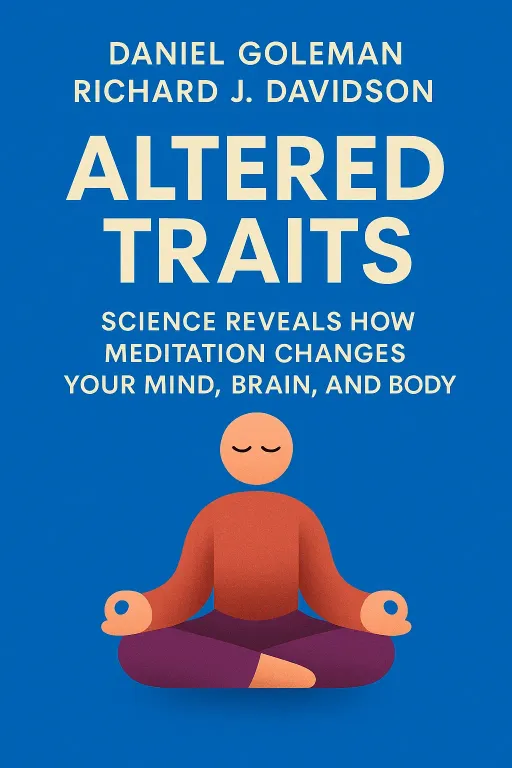
Nova: Well, prepare for some fascinating data then, because today we're dissecting 'Altered Traits' by Daniel Goleman and Richard Davidson, and 'The Mindful Brain' by Daniel Siegel. What's particularly striking about the work of Goleman and Davidson is Davidson's pioneering efforts at the University of Wisconsin. He essentially founded the entire field of contemplative neuroscience, bringing meditation out of the monastery and directly into the fMRI scanner, which is a massive shift.
Atlas: That's a huge deal. It’s one thing to hear ancient wisdom, but another entirely to see it lighting up on a brain scan. So, we're talking about more than just feeling a bit calmer after a session? We're talking hard science here?
The Brain's Malleability: How Meditation Physically Reshapes Us
SECTION
Nova: Exactly. We're moving beyond 'altered states'—those temporary feelings of peace or focus—and into 'altered traits.' These are enduring changes in your personality, your default mode, your very being. Think of it like this: your brain isn't static. It's incredibly plastic, constantly adapting. And meditation, especially long-term practice, is like a sculptor for your grey matter.
Atlas: Wait, so you're saying my thoughts aren't just fleeting whispers, but they're literally reshaping the physical architecture of my brain? That's… profound.
Nova: It absolutely is. One of the most compelling case studies comes from Davidson's own lab, looking at long-term meditators, some of them Tibetan monks with tens of thousands of hours of practice. Their fMRI scans show significant thickening in areas like the prefrontal cortex, which is crucial for sustained attention and executive function, and the insula, which is involved in self-awareness and compassion.
Atlas: Thickening? That’s wild. But hold on, 'Tibetan monks'—that's a pretty high bar. For our listeners who are managing high-pressure situations or just trying to get through their day, how much 'dosage' does it take to see these kinds of changes? Are we talking about needing to move to a mountaintop?
Nova: Not at all! While the monks provide the most dramatic evidence, studies have shown measurable changes in as little as eight weeks of consistent daily practice, even just 20-30 minutes a day. The key is consistency. This isn't about becoming a monk; it's about leveraging your brain's natural capacity for change.
Atlas: That’s actually really inspiring. So, these structural changes, how do they manifest in daily life? Does it just make you calmer, or does it genuinely make you more resilient when the inevitable stresses hit?
Nova: It’s both, and more. That thickening in the prefrontal cortex means better attentional control – you're less likely to be hijacked by distractions. The changes in the insula lead to heightened emotional awareness and compassion, not just for others, but for yourself. It builds a kind of inner architecture for resilience, allowing you to observe challenging emotions rather than being swept away by them.
Atlas: I can definitely relate to that. It’s like, instead of being a leaf in a hurricane, you become a tree with deeper roots. That’s a perfect analogy for what many of us are seeking—not to avoid the storm, but to stand firm within it.
Mindfulness as Integration: Bridging Brain Regions for Deeper Well-being
SECTION
Nova: Exactly. And that naturally leads us to the second key idea we need to talk about, which often acts as a deeper dive into this resilience is built. This is where Daniel Siegel’s work in 'The Mindful Brain' becomes so illuminating. He talks about 'integration'—the process of linking differentiated parts of the brain.
Atlas: Okay, 'integration.' What does that actually mean? Are we talking about two different parts of the brain finally talking to each other after years of silence?
Nova: In a way, yes! Think of your brain as a complex city with many different districts—some are logical, some are emotional, some are for memory, others for planning. Often, these districts operate somewhat independently, or even in conflict. For example, your logical prefrontal cortex might know you shouldn't snap at a colleague, but your limbic system, the emotional center, might be flaring up with irritation.
Atlas: Oh, I know that feeling. It’s like having two different voices shouting in your head, and neither of them is particularly helpful.
Nova: Exactly. Mindfulness practices, particularly those focused on open awareness, act like a skilled urban planner. They build new highways and bridges between these districts. Siegel emphasizes how mindfulness connects your prefrontal cortex—your rational, executive control center—with your limbic system, your emotional core.
Atlas: So, it's not about suppressing emotions, which I think is a common misconception about meditation. It’s about creating a more harmonious relationship with them?
Nova: Precisely. It fosters what he calls 'response flexibility.' Instead of reacting impulsively out of fear or anger, which often happens when the limbic system takes over, the integrated brain allows for a pause. That pause gives your prefrontal cortex a chance to weigh in, to bring wisdom and perspective. You're still feeling the emotion, but you're not controlled by it. You can wisely, rather than habitually.
Atlas: That’s powerful. For our listeners who are constantly feeling overwhelmed or anxious, that 'pause' sounds like a superpower. It sounds like it helps you to navigate the complexities of life without losing your center.
Nova: It truly does. This integration isn't just about managing negative emotions; it also enhances your ability to experience positive ones more fully and to connect more deeply with others. It's about bringing your whole self online, creating a more coherent, resilient, and balanced inner experience. It’s about making spirituality accessible and real, grounding it in your own neurobiology.
Atlas: That makes me wonder, if you’re a community weaver, someone who wants to foster connection and build spaces for growth, how does this brain integration support those goals? Because understanding your own inner landscape seems pretty vital to helping others navigate theirs.
Nova: Absolutely. The more integrated your own brain is, the better you can self-regulate, empathize, and communicate complex spiritual ideas clearly. It allows you to hold space for others' emotions without being overwhelmed by them, and to foster true connection from a place of inner harmony. It’s leading by example, which is a core part of the 'Ancient-Modern Bridge' approach.
Synthesis & Takeaways
SECTION
Nova: So, what we've really explored today is the incredible science underpinning advanced meditation. It's not just a feel-good practice; it's a profound neurobiological intervention. From Davidson's work showing physical thickening in key brain regions, leading to 'altered traits' of compassion and attention, to Siegel's insights into how mindfulness integrates disparate brain parts for emotional balance and self-regulation.
Atlas: It’s amazing to think that something as simple as sitting quietly and observing your breath can literally rewire your brain for greater well-being. It moves meditation from the realm of the mystical to the scientifically verifiable, making it something tangible and achievable for everyone.
Nova: And that's the beauty of it. It validates the profound impact these practices have on our well-being. The 'tiny step' we can all take, as suggested by the literature, is next time you meditate, consciously observe a specific sensation or thought without judgment, then reflect on how this practice might be subtly reshaping your brain's pathways.
Atlas: I love that. It’s about embracing the journey of integration, knowing it’s a process, not a destination. And by dedicating time daily to our own advanced meditation practice, we can lead by example, fostering that inner harmony we all seek.
Nova: Exactly. It's a journey of continuous growth, and one that's backed by profound science.
Atlas: That’s a powerful thought to carry into the week.
Nova: This is Aibrary. Congratulations on your growth!