Healing Interpersonal Friction and Rebuilding Emotional Connection
Golden Hook & Introduction
SECTION
Atlas: We lose about two point eight hours of productive time every single week just dealing with, or recovering from, interpersonal conflict. That is over a hundred hours a year spent in the friction of misunderstandings, defensive arguments, and the lingering residue of bad interactions.
Nova: That is a staggering number when you think about it in terms of potential. We are talking about weeks of your life literally evaporated by the friction of human relationships. And the irony is, most of us are trying to solve these problems by attacking the symptoms instead of the source.
Atlas: It feels like we are constantly trying to patch leaks in a sinking ship, but we are using the wrong material. We keep trying to fix the argument, fix the schedule, or fix the other person's behavior, but the water keeps rising.
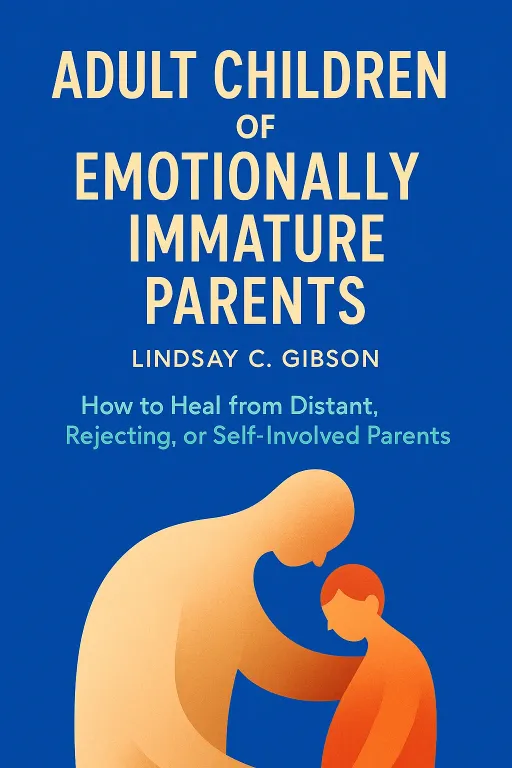
Nova: Exactly. Today we are looking at two seminal works that change that entirely. We are diving into Adult Children of Emotionally Immature Parents by Lindsay C. Gibson, and Hold Me Tight by Sue Johnson. Gibson gives us the framework for understanding how to protect our own mental space, and Johnson provides the map for how to actually build a secure, unbreakable connection with the people who matter most.
Atlas: I love the pairing. Gibson is clinical, sharp, and cuts right to the psychological root of why we feel so drained by certain people. She has spent decades working as a clinical psychologist, and her work on emotional loneliness is basically the gold standard for anyone who grew up feeling unseen. And then you have Sue Johnson, who is the pioneer of Emotionally Focused Therapy. She basically turned the chaotic mess of couple’s conflict into a predictable, manageable science.
Nova: Together, they offer a complete toolkit. Gibson teaches you how to stand on your own two feet, and Johnson teaches you how to walk toward someone else without losing your balance.
Atlas: Which is exactly what I need, because my default setting during a conflict is usually either to build a fortress or to go on the offensive. Neither of those seems to lead to a secure connection.
The Reality of Emotional Immaturity
SECTION
Nova: That defensive response is exactly what Gibson warns against. When we talk about emotional immaturity, we are not talking about people who are childish in a funny way. We are talking about people who lack the capacity for deep emotional self-reflection. They are essentially emotional sponges. They absorb your energy, they project their anxieties onto you, and they leave you feeling drained.
Atlas: I have definitely felt that. It is that feeling after a conversation where you walk away and think, why am I the one who feels exhausted, even though they were the one complaining for twenty minutes?
Nova: That is the hallmark of the dynamic. You are absorbing their instability. Gibson’s big insight here is about boundaries. Most people think boundaries are walls. They think a boundary is saying, I am not talking to you, or I am cutting you off. But Gibson argues that a boundary is actually an internal state. It is an invisible barrier you carry around with you that says, I am not responsible for your emotional regulation.
Atlas: That is a difficult pill to swallow. Because if I am not responsible for their reaction, then what am I responsible for? It feels like I am abandoning them if I don't help them manage their mood.
Nova: And that is the trap. The guilt is the mechanism that keeps the cycle going. When you stop trying to fix their mood, you are not abandoning them. You are simply allowing them to have their own experience. Think of it like being an observer. When you are with someone who is emotionally immature, you can choose to step into the role of an observer rather than a participant. You watch the drama unfold, you acknowledge it, but you do not let it enter your internal space.
Atlas: So, instead of getting sucked into the argument about why they are upset, I just observe that they are upset. It sounds like emotional detachment. Is that dangerous?
Nova: It is not detachment. It is differentiation. You are keeping your self-identity separate from their emotional state. It is the difference between saying, I am sad because you are yelling, and saying, I see that you are yelling, and I am choosing to remain calm. One keeps you trapped in the cycle; the other gives you the agency to steer the conversation.
Atlas: I can see how that would work in a professional setting or with difficult family members. It is basically a way to keep your cool. But what happens when we apply that to the people we are actually close to? Because if I start observing my partner like a scientist observing a specimen, they are going to notice, and they are going to get annoyed.
Breaking the Cycle of Protest
SECTION
Nova: That is the perfect pivot to Sue Johnson. When you are with a partner, you cannot just be an observer, because the goal is connection, not just survival. This is where Hold Me Tight becomes essential. Johnson talks about the protest pool. When we fight, we are rarely fighting about the dishes or the finances. We are fighting because we are scared.
Atlas: Scared of what? The dishes?
Nova: Scared of disconnection. Johnson’s research shows that underneath almost every destructive argument, there is a primal fear. It is the fear that, if I am not perfect, or if I am not heard, or if I am not understood, I am going to be alone. The argument is a protest. It is a desperate, often misguided, attempt to get the other person to say, I am here, I am listening, and you are safe with me.
Atlas: So, when my partner criticizes me for forgetting to lock the door, they are not actually talking about the lock?
Nova: Exactly. They are likely expressing a fear that they are not a priority, or that you are not paying attention to the details of their life, which makes them feel insecure. But because we are bad at saying, Hey, I feel insecure and I need some reassurance, we say, You are so irresponsible, you never lock the door.
Atlas: That is the protest. The accusation is the protest.
Nova: Yes. It is a protest against the feeling of being disconnected. And the tragedy is that the more we protest, the more the other person defends. They hear the criticism, they get defensive, and they pull away. The more they pull away, the more scared we get, and the louder we protest. It is the classic cycle.
Atlas: It sounds like a loop. I protest, you defend. You defend, I feel ignored. I get louder, you shut down. And suddenly we are in a full-blown war over a locked door.
Nova: Precisely. And the key Johnson gives us is to identify the dance. You have to stop looking at the content of the argument—the door, the money, the schedule—and start looking at the process. You have to be able to say, Wait, we are doing the dance again. I am criticizing you, you are shutting down, and we are both feeling miserable.
Atlas: But how do you do that in the heat of the moment? When my blood pressure is up, I am not thinking, Oh, look, here is the protest dance. I am thinking, I am right, and they are being unreasonable.
Nova: That is the hardest part. It requires a massive amount of self-regulation. But it starts with the realization that your partner is not your enemy. They are just another human being who is as terrified of abandonment as you are. If you can shift your perspective from, You are attacking me, to, You are scared and you don't know how to ask for help, the entire dynamic changes.
Atlas: It changes the power dynamic from adversary to ally. Instead of me versus you, it becomes us versus the fear.
Integrating Boundaries and Connection
SECTION
Nova: Exactly. And this is where Gibson and Johnson meet. You need the boundaries Gibson talks about so that you don't absorb your partner's fear as your own, but you also need the vulnerability Johnson talks about so that you can actually bridge the gap between you.
Atlas: So, I use Gibson’s boundaries to keep myself stable, and I use Johnson’s framework to reach out for connection.
Nova: Yes. Think of it as having a strong foundation. A house with strong walls can handle a storm. If your boundaries are weak, any time your partner gets scared or emotional, you feel like you are being attacked, so you go into defensive mode. But if you have strong internal boundaries, you can see their protest for what it is—a cry for connection—and you can reach out instead of fighting back.
Atlas: That is incredibly empowering. It takes the blame out of the equation. It is not, Why are you acting like this? It is, What are you feeling right now that is making you act like this?
Nova: And you can ask that question. You can say, I notice that when I do X, you get really quiet. Is it possible that you are feeling a bit worried about our connection? That one sentence can stop a fight in its tracks.
Atlas: It is disarming. It is impossible to keep a fight going when the other person refuses to play the game and instead tries to understand you.
Nova: Because you have changed the game. You are no longer playing the game of who is right and who is wrong. You are playing the game of, how do we get back to feeling safe together?
Synthesis & Takeaways
SECTION
Atlas: This feels like a total shift in how I view relationships. I spent so much time thinking that being a good partner or a good person meant being a sponge for everyone else's emotions, but Gibson shows that that is actually just a recipe for burnout and resentment.
Nova: And it is a recipe for bad relationships, because you are not showing up as a whole person. You are showing up as a reaction to them.
Atlas: And Johnson shows that even when I am trying to be connected, I am often doing it through a lens of fear. The protest pool, the dance—it explains so much of why we get stuck.
Nova: The takeaway here is really about maturity. Emotional maturity is the ability to hold your own space while simultaneously opening your heart to someone else. It is the rarest and most valuable skill you can develop.
Atlas: I think the challenge for our listeners today is to pick one relationship—whether it is a partner, a parent, or a colleague—and try to identify the dance. Just observe it for a few days. Don't try to fix it yet, just watch the pattern. See when the protest happens. See when the withdrawal happens.
Nova: That is the perfect starting point. Just become a student of your own interactions. Once you see the pattern, you can no longer be a victim of it. You become an active participant in changing the outcome.
Atlas: It is not about being perfect. It is about being conscious. And that is a much better way to live.
Nova: It is, indeed. That is the path to real, lasting connection.
Atlas: I am definitely going to be watching my own "protest dance" this week. I have a feeling I am going to see it everywhere.
Nova: That is the first step toward freedom.
Atlas: This is Aibrary. Congratulations on your growth!