The Loneliness Algorithm: Deconstructing Disconnection in the Digital Age
Golden Hook & Introduction
SECTION
Atlas: Are the digital tools we build to connect students actually making them more isolated? We pour billions into education technology, promising global classrooms and collaborative platforms. But what if, by solving for access, we're accidentally engineering a new, more profound kind of loneliness?
Alex Sarlin: That’s a heavy question, Atlas. It’s something that keeps a lot of us in the ed-tech space up at night. The promise is connection, but the reality can feel very different.
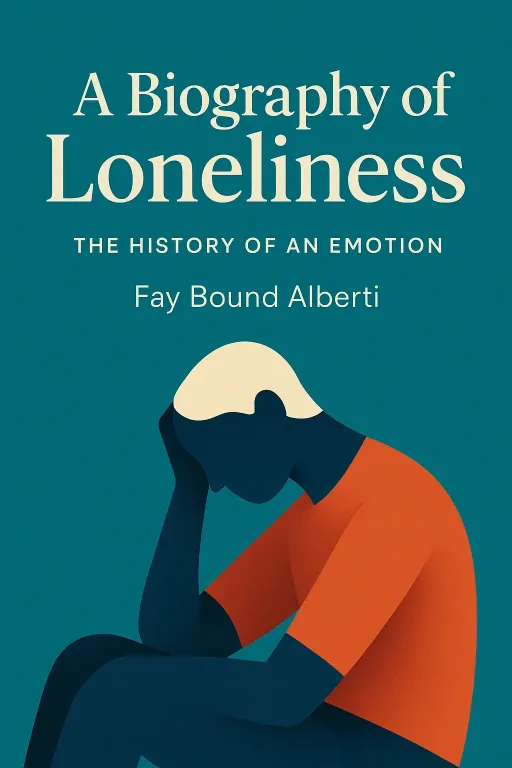
Atlas: Exactly. And that's the provocative question we're tackling today, using Fay Bound Alberti's incredible book, 'A Biography of Loneliness,' as our guide. I'm thrilled to have you here, Alex, because as a long-time product leader in education technology, you live at this intersection of code and human connection.
Alex Sarlin: Thanks for having me. This book’s premise is fascinating. The idea that we can trace the history of an emotion to better design our future is right up my alley.
Atlas: Perfect. Today we'll dive deep into this from two perspectives. First, we'll travel back in time to uncover the surprising birth of loneliness as a modern emotion. Then, we'll jump to the present to debate whether our digital tools are the architects of our isolation or our best hope for connection.
Deep Dive into Core Topic 1: The Invention of an Emotion
SECTION
Atlas: So, Alex, let's start with the book's most radical idea. We think of loneliness as this timeless, universal human feeling. But Alberti argues it's an invention, barely 200 years old. Before that, there was just 'oneliness'—the state of being alone, which wasn't necessarily bad. It was a physical state, not an emotional crisis.
Alex Sarlin: That distinction is huge. 'Oneliness' versus 'loneliness'. One is a fact, the other is a feeling of lack.
Atlas: Precisely. And the book illustrates this with a brilliant comparison. Think about Daniel Defoe's, written back in 1719. Here's a man shipwrecked on a deserted island, completely isolated for 28 years. But the novel isn't about his emotional pain. It's a story of competence, of self-sufficiency. He builds a shelter, he domesticates animals, he farms his land. The crushing, psychological weight of 'loneliness' as we know it is almost entirely absent from the story. He is in a state of 'oneliness'.
Alex Sarlin: He's a lone operator, and that's the focus. Survival, not emotional turmoil.
Atlas: Exactly. Now, fast forward to the year 2000, to the movie. Tom Hanks plays Chuck Noland, a FedEx executive who finds himself in the exact same situation—sole survivor of a plane crash on a deserted island. But his story is the complete opposite. It's a harrowing tale of psychological torment. He's so desperate for companionship that he takes a volleyball, presses his bloody handprint onto it to make a face, and names it Wilson.
Alex Sarlin: And Wilson becomes a real character. He talks to it, argues with it.
Atlas: He does! And the most emotionally devastating moment in the entire film isn't the plane crash or the struggle for food. It's when he's escaping on a raft and Wilson falls into the ocean and drifts away. He is screaming, sobbing, utterly broken by the loss of an inanimate object. That profound shift—from Crusoe's resourceful solitude to Noland's desperate need for Wilson—that's the 'biography of loneliness' the book describes. It's a new emotional state born out of a modern world that prizes the individual but leaves us terrified of being alone.
Alex Sarlin: That's a powerful frame, Atlas. It immediately makes me think about the design of learning environments. For centuries, the ideal of education was the solitary scholar—basically, Crusoe on his island of books. The library carrel, the quiet study hall. But modern instructional design is all about collaborative learning, group projects, peer-to-peer feedback. We're designing for Wilson. We're designing for that innate need for connection because we've implicitly acknowledged that 'oneliness' isn't enough for effective, deep learning anymore.
Atlas: And the book links this societal shift to the rise of individualism and the breakdown of traditional, built-in communities like the church or the village. It also points out something you'll find interesting: every new technology that disrupted those old forms of community, like the telephone in the late 19th century, sparked a massive moral panic. People wrote articles fearing it would make us lazy, destroy home life, and leave us all isolated.
Alex Sarlin: You know, it's almost comical how perfectly we see that exact same pattern, that same discourse, with every new platform today. Social media, VR, even AI tutors. There's always this fear that it's replacing 'real' interaction and will lead to societal breakdown. But as a product manager, my first thought isn't 'is this technology good or bad?' It's 'what fundamental human need is it serving, and how can we design it to serve that need?' The history shows the need for connection is what's constant. The question for us is, are we building tools that just deliver information to a solitary user, or are we architecting digital spaces where a genuine community can actually form?
Deep Dive into Core Topic 2: The Digital Dilemma
SECTION
Atlas: That's the perfect segue to our second point, because the book dives right into that digital dilemma. It doesn't just blame technology. It asks if social media, in its current form, is creating what it calls 'Instaglum'—this constant, curated performance of happiness that paradoxically makes everyone else feel left out and lonelier.
Alex Sarlin: The highlight reel effect. You're comparing your behind-the-scenes reality to everyone else's polished public performance.
Atlas: And it can have devastating consequences. The book gives this chilling, truly tragic example. In 2014, a 32-year-old woman in North Carolina named Courtney Sanford was driving to work. She was listening to that Pharrell song, 'Happy,' which was everywhere at the time. While driving, she took a selfie and posted it to Facebook with the caption, 'The happy song makes me HAPPY.' One minute later, at 8:34 AM, authorities received a 911 call. She had crossed the center line and died in a head-on collision. Her last conscious act on earth was to happiness for a digital audience.
Alex Sarlin: Wow. That's... that's visceral. And it speaks directly to the incentive structures of these platforms. The core loop, the currency, is engagement—it's likes, shares, comments. And that performance of heightened emotion, whether it's happiness or outrage, is what gets rewarded by the algorithm. In an educational context, this is an incredibly dangerous dynamic to replicate.
Atlas: How so?
Alex Sarlin: Well, if we design learning platforms that primarily reward the of learning—getting the badge, the perfect score, the fastest completion time—over the actual, messy, often frustrating struggle and collaborative process of learning, we risk creating that same isolating dynamic. Students feel they have to project this image of effortless mastery. They're afraid to ask the 'stupid' question in a public forum. That's a recipe for isolation, not learning.
Atlas: Right. The book calls the underlying anxiety FOMO—the Fear of Missing Out. It's this pervasive feeling that everyone else is having more rewarding experiences than you are. But, to its credit, the book is nuanced. It also says technology isn't all bad. For many people who are physically isolated or part of a marginalized group, online communities can be an absolute lifeline.
Alex Sarlin: Absolutely. It's not the tool, it's the intent. It's about the 'why' behind the design. Are we designing for social validation or for social connection? The book mentions a difference between 'interest-based' and 'bond-based' communities. That's a distinction we talk about all the time in ed-tech. An interest-based community is just a forum where everyone likes the same topic. A 'bond-based' community is the holy grail. It's a cohort that feels accountable to one another, that supports each other through the difficult parts of a course.
Atlas: Like a digital 'Wilson'.
Alex Sarlin: Exactly! A digital Wilson. The future of education isn't just about delivering content digitally; it's about using technology to scale that feeling of a supportive cohort, of having someone—or a group of someones—to help you get through the tough problems. That's how you fight loneliness with tech. You design for the bond.
Synthesis & Takeaways
SECTION
Atlas: So, what I'm really taking from this conversation, Alex, is that loneliness isn't this vague, personal failing we should be ashamed of. It's a historically shaped emotion, a modern condition that our world, and especially our technology, can either soothe or seriously amplify. But by understanding its origins, by having its 'biography,' we can be much more intentional about what we do next.
Alex Sarlin: Exactly. It moves the conversation from a moral judgment on users to a design critique of the systems. We can't just 'build a cool feature' anymore. We have to ask the deeper questions: Does this feature foster individual performance or collective belonging? Does its core loop encourage comparison or collaboration? The history that Alberti lays out gives us the 'why' behind the 'what' we need to build. It's a framework for responsible innovation.
Atlas: A framework for responsible innovation. I love that. It's a powerful thought to end on. So for everyone listening, especially those who build, design, or teach with technology, here's the question to take with you, inspired by Alex's point.
Alex Sarlin: As you design the next digital experience, the next app, the next online course, ask yourself this one question: are you building an empty room for a solitary user, or are you building a space where they can find their 'Wilson'—a true companion for their journey?