Future's Echo: Archaeology's Lessons for Long-Term Strategy
Golden Hook & Introduction
SECTION
Nova: What if the biggest blind spot in your future strategy isn’t about tomorrow’s tech, but about yesterday’s dust?
Atlas: Huh, really? Yesterday’s dust? That’s a bold claim for anyone trying to lead innovation in a fast-paced world. I imagine our listeners, especially those deep in digital innovation, are constantly looking forward, not backward.
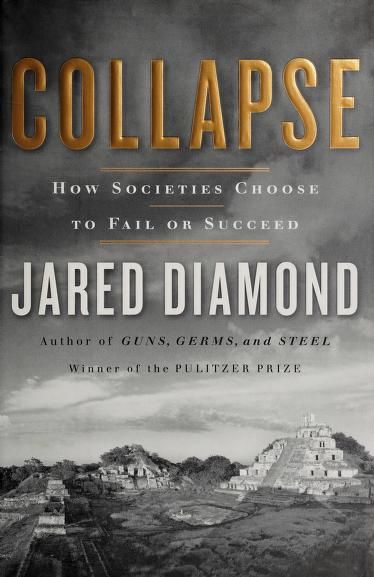
Nova: Absolutely, Atlas. Because today, we’re unearthing millennia of wisdom. We’re talking about Jared Diamond’s Pulitzer-winning work,, and Charles C. Mann’s equally groundbreaking. Diamond, a geographer and historian, uses his vast interdisciplinary knowledge to dissect environmental and societal failures, while Mann, a science journalist, meticulously re-evaluates pre-Columbian American history, challenging long-held assumptions about their sophistication and impact on the landscape.
Atlas: That makes me wonder, for anyone trying to grasp market shifts and shape the future, how do these ancient patterns offer a playbook that’s not just academic, but profoundly strategic right now? It feels like we're always told to innovate faster, disrupt more.
Nova: Exactly! The core of our podcast today is really an exploration of how looking backward through archaeology can be the most powerful way to look forward, especially when crafting long-term strategies. Today we'll dive deep into this from two perspectives. First, we'll explore the cautionary tales of societal collapse and the choices that led to them, drawing from Jared Diamond's seminal work. Then, we'll pivot to the surprising resilience and innovation of ancient civilizations, as revealed in Charles C. Mann's, to understand lessons in adaptation and strategic design.
The Warnings from Collapse: Understanding Societal Vulnerabilities
SECTION
Nova: So, let’s start with the stark warnings. Diamond’s is a masterclass in understanding how societies, even thriving ones, can unravel. It's not about sudden, cataclysmic events most of the time, but a slow, often ignored accumulation of unsustainable choices.
Atlas: Okay, so, what’s the most vivid example that really drives home this idea of a slow unraveling? Because for a strategist, it's those creeping risks that are often the hardest to spot.
Nova: For me, it’s always Easter Island. Imagine this remote, triangular speck of land in the vast Pacific. It’s a microcosm of human ambition and environmental tragedy. For centuries, the Rapa Nui people thrived there, building an incredible culture, most famously, those monumental moai statues.
Atlas: Oh man, the giant heads! They’re iconic. But I always thought they were just… a mystery. What does Diamond say about them?
Nova: He says they were a symptom, not the cause. The Rapa Nui were master carpenters and seafarers. They used massive trees—giant palms, some of the largest in the world—to transport and erect those statues. They also used the timber for fishing canoes, housing, and fuel. For generations, they kept cutting.
Atlas: So basically you’re saying they were so focused on building their legacy, those statues, that they didn’t see the forest for the trees, literally?
Nova: Precisely. Their population grew, their demand for resources grew, and the forest, which was their lifeblood, dwindled. By the time Europeans arrived in the 18th century, Easter Island was a treeless grassland. No trees meant no canoes for deep-sea fishing, no timber for houses, and rampant soil erosion. The once-thriving society had descended into warfare, cannibalism, and a fraction of its former population.
Atlas: Wow. That’s kind of heartbreaking. It’s like they optimized for one metric—statue production—without considering the entire ecosystem of their survival. I can definitely relate to how a lot of modern companies optimize for quarterly growth without fully grasping the long-term environmental or social costs. For our listeners in digital innovation, what's the direct parallel? Is it about resource depletion, or something more subtle?
Nova: It's both. Diamond identifies five factors: environmental damage, climate change, hostile neighbors, decreased support from friendly neighbors, and society's response to its environmental problems. For Easter Island, it was primarily environmental damage and the failure to adapt. For modern strategists, it’s asking: what are the 'trees' you’re consuming in your quest for growth? Is it talent, trust, natural resources, or even the attention span of your users? And how are you responding to the early warning signs of depletion? Are you looking for sustainable alternatives, or just pushing harder?
Atlas: That gives me chills. Thinking about the relentless pursuit of growth in many industries, it's easy to see how a company could, metaphorically, "deforest" its own talent pool or customer loyalty in the pursuit of the next big "moai" innovation. It forces a question: what long-term vulnerabilities in our current strategies are we blind to because we're focused on immediate trends?
The Resilience and Innovation of Ancient Societies: Lessons from '1491'
SECTION
Nova: That’s a perfect bridge, Atlas, because history isn't just about what to do. It’s also about incredible ingenuity and resilience. While Diamond shows us the consequences of missteps, Charles C. Mann in reveals the astonishing sophistication and sustainable practices of pre-Columbian American societies.
Atlas: I’ve always heard about a few ancient marvels, like the Mayan calendars, but Mann’s title itself,, implies a whole world of complexity before European arrival. What’s an example that truly blew you away?
Nova: The Amazon. For centuries, we pictured it as pristine, untouched wilderness. Mann, building on extensive research, shows us that huge swathes of the Amazon basin were carefully managed, even engineered, by indigenous populations. They didn't just live the forest; they parts of it.
Atlas: Created it? Like, they planted a rainforest? That sounds a bit out there.
Nova: Not quite planted, but they transformed infertile soil into incredibly rich, fertile "terra preta," or black earth. It’s a man-made soil, created by mixing charcoal, pottery shards, and organic waste. This terra preta doesn't degrade; it regenerates itself, allowing for sustainable agriculture for of years. We're talking about a system that was producing food for vast populations without depleting the land, for far longer than modern industrial agriculture has existed.
Atlas: So, basically you’re saying while some societies were collapsing due to resource mismanagement, others in the Amazon were literally creating sustainable resource engines that lasted millennia? That’s a great way to put it. For an innovator, that's not just a historical curiosity, it’s a blueprint for resilient design.
Nova: Exactly! Or consider the city of Cahokia, near modern-day St. Louis. At its peak around 1100 AD, it was larger than London was at the time, with complex urban planning, massive earthen mounds, and a sophisticated social structure. These weren't 'primitive' peoples; they were advanced civil engineers and city planners who understood how to manage large populations and resources.
Atlas: That’s incredible. It challenges the entire narrative many of us grew up with about these societies. For someone focused on digital innovation or strategic storytelling, what can we learn from this 'terra preta' approach or Cahokia’s urban planning? How do we build something that's not just innovative but also inherently regenerative and resilient, especially when facing external market disruptions?
Nova: The lesson is about integrated thinking and long-term design. The terra preta wasn't just a farming technique; it was a holistic approach to land management that factored in waste, soil health, and long-term productivity. Cahokia wasn't just a collection of buildings; it was a planned ecosystem. In today's world, it means asking: how can our 'innovations' not just solve immediate problems, but also regenerate resources, foster community, and build long-term resilience? How do we design systems that are robust enough to withstand the 'European arrival' of unexpected market shifts or technological disruptions, rather than crumble?
Atlas: That makes me wonder, it sounds like these ancient societies were masters of what we now call 'systems thinking' and 'circular economy' principles, long before we had the terms. It's about designing for durability and positive feedback loops, not just efficiency.
Synthesis & Takeaways
SECTION
Nova: Precisely. The archaeology from Diamond and Mann offers two sides of the same coin when it comes to long-term strategy. Diamond’s work is a cautionary tale: ignore your blind spots, deplete your resources, fail to adapt, and you risk a collapse, often not from a single blow, but from a cascade of small, unsustainable choices.
Atlas: And Mann’s is the inspiring counterpoint: it shows us that with deep ecological understanding and innovative social structures, societies can not only survive but thrive sustainably for millennia, building complex and resilient systems. It’s not just about avoiding failure; it’s about aspiring to a higher level of integrated, regenerative success.
Nova: So, to answer that deep question about long-term vulnerabilities in your current strategies: are you building your own version of Easter Island’s statues, consuming critical resources for short-term glory? Or are you cultivating your own 'terra preta,' designing systems that are inherently regenerative and resilient, even in the face of inevitable disruptions? The past isn't just history; it’s a vital playbook for navigating future strategic challenges.
Atlas: That’s actually really inspiring. It means the past is not just a collection of dusty facts, but a dynamic source of wisdom for anyone trying to lead, innovate, and inspire today. What’s one immediate action our listeners can take to start applying this?
Nova: Start by identifying one "resource" critical to your long-term success – be it talent, customer trust, or even your own creative energy. Then, ask yourself: are you consuming it unsustainably, or are you actively cultivating its regeneration, like the Amazonian people did with their soil?
Atlas: That’s a fantastic challenge. We’d love to hear your thoughts on this. What ancient lessons do you think are most relevant to your strategic challenges today? Share your insights with us on social media!
Nova: This is Aibrary. Congratulations on your growth!