

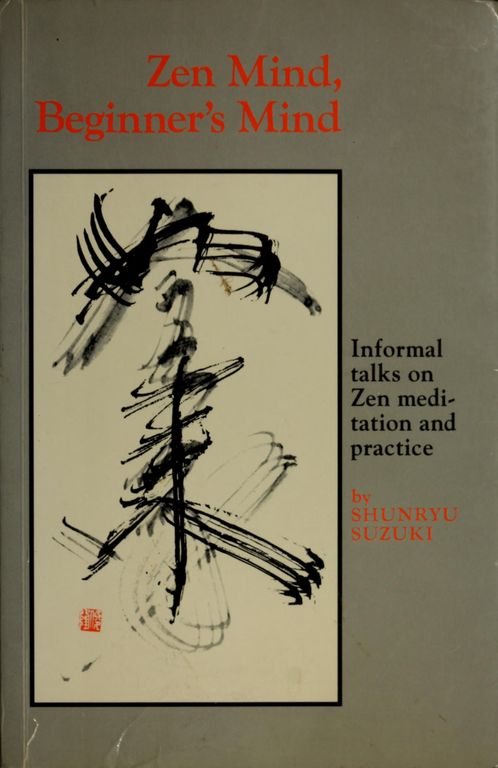
Zen mind, beginner's mind
Informal Talks on Zen Meditation and Practice
Introduction
Nova: In 1959, a quiet Japanese Zen priest stepped off a plane in San Francisco. He was 54 years old, spoke almost no English, and had come to serve a small Japanese-American congregation. He had no grand plan. No ambition to become famous. Yet within a decade, Shunryu Suzuki would become one of the most influential spiritual teachers in American history, and the book compiled from his talks, Zen Mind, Beginner's Mind, would sell over a million copies and transform how the West understands meditation, mindfulness, and the very nature of the self.
Nova: : A million copies? For a book about Zen? That's remarkable. What made this particular book resonate so deeply?
Nova: That's exactly the question worth exploring. The book's title itself contains its central paradox. What does it mean to have a beginner's mind? Suzuki Roshi, as his students called him, opens with one of the most quoted lines in spiritual literature: In the beginner's mind there are many possibilities, but in the expert's mind there are few.
Nova: : So it's not a book for beginners in the sense of being introductory or simplified. It's about cultivating a quality of mind that even the most advanced practitioner needs.
Nova: Precisely. And that's what makes it timeless. Whether you've never meditated or you've been sitting for forty years, the book speaks directly to you. Today we're going to unpack this extraordinary little book, the man behind it, and why its message might be more urgent now than when it was first published in 1970.
Shunryu Suzuki's Journey
The Man Who Spoke in Broken English
Nova: Let's start with the man himself, because understanding Suzuki Roshi's life helps us understand why his teaching landed so powerfully. He was born in 1904 near Tokyo, the son of a Zen priest. By age 12, he had decided to become a monk himself. He trained rigorously in Soto Zen monasteries in Japan, eventually earning his dharma transmission, which is essentially a Zen teaching license.
Nova: : So he was deeply traditional, deeply trained. But then he comes to America. What was that transition like?
Nova: It was humbling in ways that probably shaped his entire teaching. He arrived in San Francisco in 1959 to serve as the priest at Sokoji, a Soto Zen temple serving the Japanese-American community. He was supposed to stay just a few years. But something unexpected happened. Young Americans, beatniks and hippies, started showing up at his door wanting to learn Zen.
Nova: : Wait, these were people who probably couldn't sit still for five minutes, let alone do traditional Zen practice. How did he handle that?
Nova: That's the beautiful thing. He didn't turn them away. He didn't insist they adopt Japanese culture. He met them exactly where they were. He spoke in what his students affectionately called broken English, simple, unpolished, but somehow perfectly clear. One student said his English was like a stone polished by a river, all the rough edges worn away until only the essential meaning remained.
Nova: : There's something poetic about that. A Zen master whose very language embodied the simplicity he was teaching.
Nova: Exactly. And by 1962, he founded the San Francisco Zen Center. By 1967, he established Tassajara Zen Mountain Center, the first Zen monastery outside of Asia. All of this happened in less than a decade. But here's the key: Suzuki never sought fame. He never wrote a book. The book happened to him.
Nova: : What do you mean, the book happened to him?
Nova: His students recorded his Saturday morning talks at the Los Altos Zen Center. These were informal dharma talks, given to small groups sitting on cushions in a converted house. A student named Marian Derby transcribed them, and another student, Trudy Dixon, edited them into a manuscript. Suzuki didn't sit down to write a bestseller. He just showed up every week and spoke from his heart. The book is literally a collection of his spoken words.
Nova: : So the book captures his actual voice. That explains why it feels so intimate when you read it. It's not a polished treatise. It's a conversation.
Core Teaching
The Beginner's Mind Paradox
Nova: Let's dive into the central concept. Shoshin, or beginner's mind. Suzuki writes: In the beginner's mind there are many possibilities, but in the expert's mind there are few. What do you think that means?
Nova: : Well, on the surface, it sounds like experts become narrow-minded. They think they already know everything, so they stop seeing new possibilities.
Nova: That's part of it. But Suzuki is pointing to something deeper. He's not just talking about intellectual humility. He's describing a fundamental orientation toward life. The expert's mind is always categorizing, judging, comparing. It says, I've seen this before. I know what this is. The beginner's mind approaches each moment as if for the first time.
Nova: : But isn't expertise valuable? I mean, we spend years developing skills and knowledge. Are we supposed to throw all that away?
Nova: Great question. Suzuki isn't saying abandon your knowledge. He's saying don't let your knowledge become a barrier. He uses this wonderful metaphor: You should not have your own idea of Zen. Forget what you have learned about Zen. Just be sincere and make your best effort. It's not anti-knowledge. It's anti-attachment to knowledge.
Nova: : So it's about holding your expertise lightly.
Nova: Yes. He says the goal of practice is to keep our beginner's mind. Imagine you've been practicing zazen, sitting meditation, for twenty years. The danger is that you start thinking, I know how to do this. I'm an experienced meditator. And in that moment, you've lost it. You've closed yourself off from the actual experience of sitting.
Nova: : That's counterintuitive. Usually we think practice makes perfect, and after twenty years you should feel like a master.
Nova: Suzuki would say the master is the one who sits down each time as if it were the first time. There's a famous story about a professor who visits a Zen master. The master pours tea. He keeps pouring until the cup overflows. The professor says, Stop, it's full! And the master says, Like this cup, you are full of your own opinions. How can I show you Zen unless you first empty your cup?
Nova: : Ah, so beginner's mind is the empty cup.
Nova: Exactly. And here's the radical part. Suzuki says this isn't just a technique for learning Zen. It's a way of being alive. Every moment, every encounter, every breath is fresh. When you wash the dishes, really wash the dishes. When you drink tea, really drink tea. The beginner's mind transforms ordinary life into continuous discovery.
Non-Duality in Action
Practice and Enlightenment Are One
Nova: This brings us to what might be the most challenging teaching in the book. Suzuki says that practice and enlightenment are not two different things. Zazen practice is not a means to an end. It is itself the expression of enlightenment.
Nova: : Wait. So sitting on a cushion is enlightenment? That seems like a big claim.
Nova: It is a big claim, and it's one that distinguishes Suzuki's Soto Zen approach. In some Buddhist traditions, you practice meditation in order to attain enlightenment someday in the future. Suzuki flips this. He says if you think zazen is a method to get something, you're already lost. You're practicing with a gaining idea.
Nova: : A gaining idea. What does that mean exactly?
Nova: A gaining idea is any thought that says, I'm doing this practice in order to achieve something. I'm meditating to become calmer. I'm meditating to become enlightened. I'm meditating to become a better person. Suzuki says all of these are traps. They put the goal somewhere in the future, which means you're not fully present now.
Nova: : But isn't it natural to want to improve? Isn't that why people start meditating in the first place?
Nova: Absolutely. And Suzuki acknowledges this. He says it's fine to start with a gaining idea. Most people do. But at some point, you have to let it go. He has this wonderful line: You are perfect just as you are, and you could use a little improvement.
Nova: : That sounds like a contradiction.
Nova: It's a paradox, and paradox is at the heart of Zen. You are already Buddha. You are already complete. And yet, you practice. Not to become something you're not, but to express what you already are. It's like a musician who practices not to become musical someday, but because they are musical and want to express it more fully.
Nova: : So the practice is the expression, not the preparation.
Nova: Exactly. Suzuki uses the metaphor of a train track. If you think the destination is what matters, you miss the entire journey. But if you realize that every inch of the track is the destination, then the whole journey becomes meaningful. He says: Treat every moment as your last. It is not preparation for something else.
Nova: : That's both liberating and terrifying. If every moment is complete, there's nowhere to hide. You can't say, I'll really live after I finish this project, or after I retire, or after I get enlightened.
Nova: That's the challenge. And it's why this book, despite being about Zen meditation, is really about how to live. Suzuki is constantly bringing the teaching back to ordinary life. How do you chop vegetables? How do you bow? How do you breathe? Each of these is a complete act, not a step toward something else.
Understanding the Self
The Waves and the Water
Nova: One of the most beautiful metaphors in the book is the image of waves and water. Suzuki says we usually think of ourselves as separate waves, individual selves moving through the world. We see other waves and think they're separate from us. We see the wave rise and fall and fear our own death.
Nova: : Because the wave does die. It rises, it crests, it disappears.
Nova: But Suzuki says: look deeper. The wave is water. It was water before it became a wave, and it remains water after the wave dissolves. The wave is a temporary expression of something vast and fundamental. You are not just the wave. You are the water.
Nova: : So the individual self is an illusion?
Nova: Not exactly an illusion. Suzuki is careful here. He doesn't say the wave doesn't exist. He says the wave exists, but its true nature is water. Similarly, you exist as an individual, but your true nature is something much larger. He calls it big mind, as opposed to small mind.
Nova: : Small mind being our ordinary, thinking, worrying, planning self?
Nova: Yes. Small mind is the voice in your head that's always comparing, judging, grasping, rejecting. It's the self that feels separate and threatened. Big mind is the awareness that contains all of that. It's the water that holds all the waves. Suzuki says zazen practice helps us experience big mind directly, not as a concept but as a lived reality.
Nova: : How do you experience big mind? Is it something you feel during meditation?
Nova: Suzuki would say you're already experiencing big mind. You just don't notice it because you're so identified with small mind. It's like a fish asking how to find the ocean. The practice of zazen, just sitting without trying to achieve anything, allows the waves of thought to settle so you can perceive the water that was always there.
Nova: : He also talks about controlling things versus letting go, right? I remember something about a cow.
Nova: Yes! The cow metaphor is wonderful. Suzuki says if you want to control a cow, you can tie it to a post. But the cow will struggle and suffer. A better approach is to give the cow a large, spacious meadow. The cow will feel free and peaceful, and it won't run away. Your mind is the cow. Trying to control every thought is like tying it to a post. Zazen is giving your mind a vast meadow.
Nova: : So meditation isn't about controlling your thoughts. It's about giving them space.
Nova: Exactly. And this is so different from how many people approach meditation. They think they need to empty their mind or stop thinking. Suzuki says that's impossible and unnecessary. Just let thoughts come and go. Don't invite them in for tea, but don't chase them away either. The spacious awareness that remains is big mind.
Posture, Breath, and the Physicality of Zen
The Body Sits, the Mind Follows
Nova: One thing that surprises many readers is how much Suzuki emphasizes the body. He spends a great deal of time talking about how to sit, how to hold your hands, how to breathe. This isn't incidental. In Zen, the body is not separate from the mind.
Nova: : So the physical posture actually matters? It's not just about what's happening in your head?
Nova: Suzuki is emphatic about this. He says: To take this posture is itself to have the right state of mind. There is no need to obtain some special state of mind. When you sit in the full lotus position, with your spine straight, your ears in line with your shoulders, your chin tucked slightly, you are already expressing enlightenment.
Nova: : That's a strong claim. Just sitting in a certain position is enlightenment?
Nova: Remember, Suzuki doesn't separate form and essence. The form is the essence. When you sit with full presence, with your whole body and mind, you are not preparing for enlightenment. You are manifesting it. He says the most important thing is to keep your spine straight. When your spine is straight, your breathing naturally deepens, and your mind naturally settles.
Nova: : What about breathing? He talks a lot about following the breath.
Nova: Yes, and in a very specific way. Suzuki says don't try to control your breath. Just follow it. Feel the air coming in, feel it going out. He says to breathe as if you were breathing through your whole body. When you inhale, the entire universe is breathing into you. When you exhale, you are breathing out into the entire universe.
Nova: : That's a beautiful image. It connects the individual breath to something cosmic.
Nova: And it's practical. Suzuki says if you're struggling with thoughts during zazen, just focus on your breath. Not forcefully, but gently. Let the breath be your anchor. He also talks about the importance of the hands. The cosmic mudra, the oval shape made by your hands resting in your lap, left hand on top of right, thumbs lightly touching. He says this hand position reflects your state of mind. If you're tense, your thumbs will press together. If you're drowsy, they'll fall apart.
Nova: : So your hands are like a biofeedback device.
Nova: Exactly. And here's what I find most moving. Suzuki says that when we sit zazen, we are sitting in the same posture as Buddha. We are not imitating Buddha. We are being Buddha. The posture itself is the expression of our true nature. There's no separation between the person sitting and the awakened state.
Nova: : That's radically democratic. Anyone who sits down and straightens their spine is, in that moment, Buddha.
Nova: Yes. And Suzuki lived this. He didn't put himself on a pedestal. His students describe him as utterly ordinary and utterly extraordinary at the same time. He would garden, wash dishes, greet visitors, all with the same presence he brought to the meditation hall. The practice wasn't something he did. It was how he was.
Legacy and Relevance Today
The Ripple Effect
Nova: Zen Mind, Beginner's Mind was published in 1970. Suzuki Roshi died of cancer the following year, in 1971, at the age of 67. He never saw the full impact of his teaching. But the book took on a life of its own.
Nova: : What was the initial reception like?
Nova: It was published by Weatherhill, a small press specializing in Asian topics. The preface was written by Huston Smith, one of the most respected scholars of world religions, which gave it credibility in academic circles. But it was word of mouth that made it a classic. People passed it to friends. Meditation teachers recommended it. It became one of those rare books that crosses boundaries, read by Buddhists and Christians, psychologists and artists, CEOs and college students.
Nova: : Why do you think it crossed those boundaries so easily?
Nova: Because Suzuki never preaches. He never says, you must believe this or convert to that. He simply describes his own experience and invites you to explore yours. The book is remarkably free of dogma. You can read it as a Buddhist text, or you can read it as a guide to being more present and alive. It works either way.
Nova: : And it arrived at a particular cultural moment, didn't it? The early seventies, the counterculture, the interest in Eastern spirituality.
Nova: Absolutely. But what's remarkable is that it outlasted that moment. Most books from that era feel dated now. Zen Mind, Beginner's Mind feels more relevant than ever. In our age of distraction, of constant notifications and endless scrolling, the invitation to just sit and be present is almost radical.
Nova: : There's also the mindfulness movement. Mindfulness is everywhere now, in schools, in corporations, in therapy. Does Suzuki's teaching connect to that?
Nova: It does, but with an important distinction. Suzuki would probably be wary of mindfulness reduced to a productivity tool or a stress-reduction technique. For him, zazen wasn't about getting better at your job or being more efficient. It was about waking up to your true nature. He might say that mindfulness without the beginner's mind is just another form of grasping.
Nova: : Another gaining idea.
Nova: Exactly. But at the same time, the widespread interest in meditation that Suzuki helped spark has brought genuine benefit to millions of people. The San Francisco Zen Center he founded continues to thrive. Tassajara is still a vibrant monastery. And countless teachers trace their lineage back to him.
Nova: : What would you say is the single most important thing someone should take from this book?
Nova: I think it's this: you don't need to become something different. You don't need to fix yourself. You don't need to attain some special state. You just need to pay attention, right now, to what is already here. As Suzuki said: When you are you, Zen is Zen. The beginner's mind isn't something you achieve. It's something you return to, again and again, moment by moment.
Conclusion
Nova: So here we are, more than fifty years after a soft-spoken Japanese priest sat down with a small group of California students and began to talk. His words, preserved in Zen Mind, Beginner's Mind, continue to find new readers, new hearts, new minds ready to empty their cups.
Nova: : What strikes me is how countercultural the message remains. In a world that celebrates expertise, credentials, and knowing, Suzuki says: don't know. In a world obsessed with achievement and optimization, he says: just sit. In a world that tells you you're not enough, he says: you are perfect just as you are.
Nova: And yet, you could use a little improvement. That paradox is the heart of the teaching. It's not either-or. It's both-and. You are complete, and you practice. You are Buddha, and you sit zazen. The wave is the water, and the water is the wave.
Nova: : If someone listening has never read the book, where should they start?
Nova: Just pick it up and read it slowly. It's a short book, but it's not meant to be consumed quickly. Read a few pages, then sit with them. Let them settle. Suzuki's words have a way of unfolding over time. What seems simple on first reading reveals new depths on the tenth reading.
Nova: : And if someone already knows the book well?
Nova: Read it again with beginner's mind. Approach it as if for the first time. Because in a very real sense, it is the first time. You've never read this book in this moment, with this mind, with this life. Everything is always new, if we have the eyes to see it.
Nova: : In the beginner's mind there are many possibilities.
Nova: But in the expert's mind there are few. May we all keep our beginner's mind, in meditation and in life, on the cushion and off it, today and every day.
Nova: : This is Aibrary. Congratulations on your growth!