

Personalized Podcast
Golden Hook & Introduction
SECTION
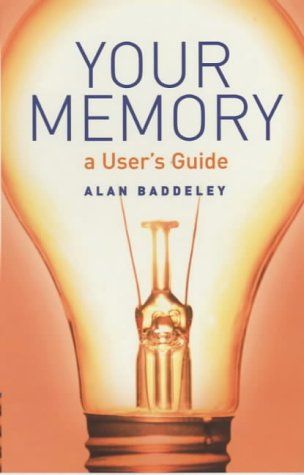
Albert Einstein: Imagine, if you will, that your mind is a grand theater. The stage is beautifully lit, but it is incredibly small—only big enough for a few actors to stand on at any given moment. If you try to crowd twenty actors onto this tiny stage, they fall off into the orchestra pit! This, my friends, is not just a whimsical thought experiment; it is the fundamental reality of our working memory. Welcome to today's episode, where we are diving deep into Alan D. Baddeley's masterpiece, Your Memory: A User's Guide. I am Albert, and joining me today is the wonderfully analytical and ever-curious laiba.
laiba: It is wonderful to be here, Albert. You know, that theater analogy is absolutely perfect. When we look at Baddeley's work, we realize that memory isn't just a dusty filing cabinet in the basement of our brains. It is an active, dynamic system. Today, we are going to tackle this fascinating book from three distinct angles. First, we will explore the architecture of working memory—our mental workspace. Second, we will look at the psychology of retrieval cues and why context is everything when we try to remember. And finally, we will discuss how we can practically apply these insights to learn faster and think more clearly.
Albert Einstein: Splendid! A perfect roadmap for our journey today. Tell me, laiba, as someone who loves to analyze how systems work, what was your very first reaction to Baddeley's breakdown of how we process immediate information?
laiba: Honestly, Albert, it changed how I view my own daily focus. We often talk about memory as one single thing, but Baddeley showed us that our immediate mental workspace—what he famously termed working memory—is actually a cooperative team of different components. It made me realize why multitasking is such a cognitive illusion.
Albert Einstein: Ah, multitasking! A modern myth, is it not? Like trying to play the violin, solve an equation, and bake a soufflé all at the same time. The laws of physics—and psychology—simply do not allow it!
Deep Dive into Core Topic 1
SECTION
Albert Einstein: Let us look closer at this mental workspace. Baddeley proposed that our working memory isn't just a single holding pen, but a system managed by what he calls the Central Executive. And this executive has two main assistants: the Phonological Loop and the Visuospatial Sketchpad. What a marvelous, almost theatrical way to describe the brain!
laiba: It really is. Let's break those down with a practical example because the psychology behind them explains so much of our daily struggles. The Phonological Loop is essentially your inner voice. It handles verbal information. Think about when you are trying to remember a verification code sent to your phone. You repeat it over and over in your head: four, eight, nine, two, one... four, eight, nine, two, one. That is your phonological loop actively spinning to keep those numbers on the stage.
Albert Einstein: Yes! It is like a tiny tape recorder that only has about two seconds of tape. If you do not keep rewinding and playing it, the tape fades away. But what happens if I suddenly walk up to you and start shouting random numbers while you are doing this?
laiba: Oh, it completely derails the system! And that is because of a psychological phenomenon called articulatory suppression. Because the phonological loop has a strictly limited capacity, the new verbal input floods the system, wiping out the numbers I was trying to hold onto.
Albert Einstein: Magnificent! And then, on the other side of the stage, we have the Visuospatial Sketchpad. This is our inner eye. If I ask you to picture a golden retriever riding a bicycle through the streets of Munich, you do not hear those words repeating; you construct a visual image in your mind. You can see the dog, the wheels, the cobblestones.
laiba: Exactly. And what is fascinating from a psychological standpoint is that these two systems—the inner voice and the inner eye—are almost entirely independent. Researchers have shown that you can perform a visual task and a verbal task simultaneously with relatively little interference. But try to perform two visual tasks at once, or two verbal tasks, and the system crashes.
Albert Einstein: It is like trying to draw a circle with your left hand and a square with your right hand, but much more fundamental to our survival. The Central Executive has to decide how to allocate our limited attention. It is the conductor of the cognitive orchestra.
laiba: Right, and as an analytical thinker, I find the limitations of the Central Executive to be the most critical part. When we are stressed, or when we are bombarded with notifications, our Central Executive is overwhelmed. We lose our ability to filter out irrelevant information. Psychology shows us that cognitive load directly degrades our decision-making capacity. We aren't getting dumber; our stage is just overcrowded.
Albert Einstein: Yes, the noise of the world crowds out the music of thought! I always found that to do my best work, I needed long periods of quiet contemplation. I had to clear the stage so that the laws of the universe could dance without interruption.
laiba: That makes complete sense, Albert. If we don't actively manage our cognitive load, our working memory simply cannot process deep, complex ideas. We end up skimming the surface of everything.
Deep Dive into Core Topic 2
SECTION
Albert Einstein: Now, let us move from the temporary stage of working memory to the vast, mysterious archives of long-term memory. How do we get information off the stage and into the archives, and more importantly, how do we find it again when we need it? This brings us to the brilliant concept of retrieval cues and encoding specificity.
laiba: This is one of my absolute favorite parts of Baddeley's work. To explain this, we have to look at a truly classic psychological study from 1975 by Godden and Baddeley. They took a group of deep-sea divers and had them learn a list of words in two entirely different environments: some learned the words on dry land, while others learned them twenty feet underwater!
Albert Einstein: Underwater! Imagine trying to memorize vocabulary while looking at a passing octopus. That is what I call an immersive education! What did they find?
laiba: The results were astonishing. When they tested the divers later, those who learned underwater remembered significantly more words when they were tested underwater. And those who learned on land performed much better when tested on land. If you learned underwater and tried to recall the words on land, your memory dropped off significantly.
Albert Einstein: Incredible! This is the Encoding Specificity Principle. The environment itself—the cold water, the sound of the breathing apparatus, the weightlessness—became woven into the memory trace itself. The context became the key to unlocking the archive.
laiba: Exactly. Psychology plays a massive role here because it shows that memory is associative. We don't just store the facts; we store the entire experience. The sights, the smells, our emotional state—they all act as retrieval cues. If the cues present during retrieval match the cues that were present during encoding, the memory is easily unlocked. If they don't match, the path to that memory is blocked, even though the information is still technically in your brain.
Albert Einstein: It is like having a key but no lock, or a lock with no key! I often experienced this when thinking about physics. If I was stuck on a problem, I would go for a walk or play my violin. By changing my physical and mental context, I allowed my brain to access different pathways, finding connections that were invisible while sitting at my desk.
laiba: That is a perfect example of leveraging context, Albert. And it explains why we sometimes experience that bizarre phenomenon of walking into a room and completely forgetting why we went there.
Albert Einstein: Ah, yes! The doorway effect! You stand in the kitchen, staring blankly at the refrigerator, wondering what on earth you wanted.
laiba: Precisely! When you walk through a doorway, your brain perceives a change in context. It essentially clears the working memory stage to prepare for the new environment. The retrieval cues from your living room are gone, so the thought you had there suddenly loses its anchor. But if you walk back into the living room...
Albert Einstein: Aha! The cues return, the key fits the lock, and you suddenly remember: "Ah, I wanted my glasses!" It is a marvelous demonstration of how deeply our minds are tethered to our physical surroundings.
laiba: It really is. And this has massive implications for how we study, work, and design our environments. If we always study in a perfectly quiet, sterile room, but have to perform in a high-stress, noisy environment, we are setting ourselves up for retrieval failure. We need to align our learning contexts with our application contexts.
Synthesis & Takeaways
SECTION
Albert Einstein: We have traveled from the tiny, bustling stage of working memory to the deep, context-dependent oceans of long-term retrieval. It seems to me, laiba, that the great lesson of Baddeley's work is one of humility and design. We must respect the limits of our minds to truly unleash their potential.
laiba: I couldn't agree more, Albert. If I had to synthesize our discussion into actionable takeaways, the first would be to protect your working memory. Stop trying to hold everything in your head. Use external tools—lists, diagrams, notes—to free up your Central Executive so it can do what it does best: analyze and connect ideas.
Albert Einstein: Yes! Never memorize what you can look up in a book, or on a smartphone, as the modern equivalent goes! Keep the stage clear for creative thinking. And what about our second takeaway regarding context?
laiba: The second takeaway is to build rich, varied retrieval cues when you learn. Don't just read a page passively. Connect the new information to things you already know, discuss it with friends, or even study in different locations. By doing this, you are creating multiple pathways to that memory, making it far easier to retrieve in the future.
Albert Einstein: Beautifully said. My friends, memory is not a passive recording of the past; it is an active, creative construction of the present. By understanding the psychology of our minds, we can build better stages and find better keys. Thank you, laiba, for this wonderfully analytical and stimulating conversation.
laiba: Thank you, Albert. It was an absolute pleasure. To everyone listening, we leave you with one question to ponder: How can you redesign your environment today to make your memory work for you, rather than against you? Until next time, keep wondering.
Albert Einstein: And keep exploring! Auf Wiedersehen!