

Rewiring the Unreachable: How Neuroplasticity Redefines Human Potential
Golden Hook & Introduction
SECTION
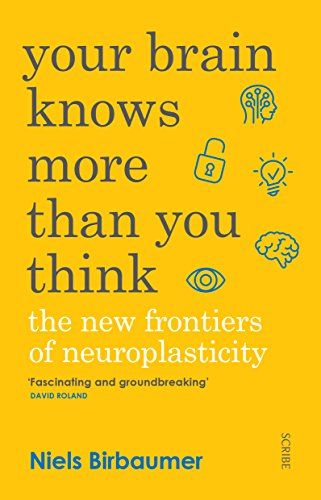
Dr. Roland Steele: Imagine being completely frozen inside your own body. You cannot move a muscle, you cannot blink, and you cannot speak, yet your mind is fully awake, observing everything. For decades, medicine assumed that once you reached this completely locked-in state, communication was gone forever. But what if your brain could bypass your entire nervous system to speak directly to the world? Today, we are going to tackle Niels Birbaumer's groundbreaking book, Your Brain Knows More Than You Think, from three distinct angles. First, we will explore the incredible clinical cases of completely locked-in patients who learned to communicate using only their thoughts. Second, we will break down the mechanics of neurofeedback and how the brain can be trained to regulate its own electrical activity. And finally, we will look at the profound implications this has for human learning, adaptability, and the invisible incentives that drive our neural pathways. I am Dr. Roland Steele, and joining me today is analytical thinker laiba. Welcome, laiba.
laiba: Thanks, Roland. I am incredibly excited to be here. This book completely blew my mind because it challenges the traditional, static view of the brain. As someone who loves looking at systems and finding connections, the idea that the brain can entirely reroute its communication channels when the physical body fails is just fascinating. It is not just about biology; it is about the ultimate form of system adaptability.
Dr. Roland Steele: It really is. And as an economist, I keep coming back to the concept of incentives. How do you motivate a brain to learn when it has zero physical feedback from the outside world? It turns out the brain has its own internal currency, and Birbaumer figured out how to trade in it.
laiba: Exactly. It is about finding that internal leverage. And the clinical cases Birbaumer shares are not just scientific milestones; they are deeply moving human stories that redefine what we call consciousness.
Deep Dive into Core Topic 1
SECTION
Dr. Roland Steele: Let us dive right into one of those stories, because it sets the stage for everything. Birbaumer introduces us to a patient named Hans-Peter. He was a former lawyer who suffered from advanced Amyotrophic Lateral Sclerosis, or ALS. Over time, ALS systematically destroys the motor neurons, leading to total paralysis. Eventually, Hans-Peter entered what is called the completely locked-in state. He was entirely cut off. No eye movements, nothing.
laiba: Right, and this is where the science gets incredibly intense. Usually, doctors use eye-tracking devices for ALS patients, but when even the eye muscles stop working, those devices become useless. Birbaumer and his team had to build a direct bridge to Hans-Peter's brain. They used an electroencephalogram, or EEG, to measure something called slow cortical potentials. These are basically slow shifts in the electrical tension of the brain, which can go positive or negative.
Dr. Roland Steele: Think of it like a biological dimmer switch. If you can turn the switch up or down at will, you can create a binary code. Up is yes, down is no. But here is the catch, laiba. How do you teach someone to control an electrical wave in their brain when they have never had to think about it before?
laiba: That is the brilliant part of the system design. They set up a computer screen in front of Hans-Peter. Even though he could not move his eyes, his visual cortex was still processing information. On the screen, there was a cursor. If his brain waves shifted in a positive direction, the cursor went up. If they shifted negative, the cursor went down. The goal was to hit a target at the top or bottom of the screen.
Dr. Roland Steele: And this is where the learning process looks a lot like training a muscle, except the muscle is entirely metaphorical. In the beginning, it was pure trial and error. Hans-Peter had to try different mental states. He might think about a warm day, or try to imagine singing a song, or focus on a specific word, just to see what made the cursor move.
laiba: Yes, and it took hundreds of sessions. Thousands of repetitions. It requires immense cognitive stamina. But over time, through sheer persistence, Hans-Peter's brain figured out the exact pattern of thought required to move that cursor. He learned to regulate his slow cortical potentials. Once he mastered that, they replaced the target with letters of the alphabet. By selecting letters through this binary yes-or-no process, he was able to spell out words, sentences, and eventually, express his thoughts to his family.
Dr. Roland Steele: From an economic perspective, the cost of this cognitive labor is astronomical. The brain consumes about twenty percent of the body's energy under normal circumstances. Imagine the metabolic demand of consciously modulating your own microvoltage for hours just to spell out a single sentence. What do you think kept him going, laiba? What was the return on investment for his brain?
laiba: I think the incentive was the restoration of agency. Human beings have an intrinsic need to exert control over their environment. When you are locked in, your agency is zero. By giving Hans-Peter a way to affect his environment, even if it was just moving a cursor on a screen to say "yes" or "no," they restored his humanity. It shows that the brain's desire for connection and control is one of our strongest survival instincts.
Dr. Roland Steele: That is a powerful point. It suggests that cognitive adaptability is not just a passive biological trait, but an active, goal-driven process. The brain rewires itself because it wants to achieve an outcome.
laiba: Absolutely. And it makes you wonder about the limits of this adaptability. If a brain can learn to control its electrical output to communicate without a body, what else is it capable of learning when we remove our self-imposed limitations?
Deep Dive into Core Topic 2
SECTION
Dr. Roland Steele: That transition brings us perfectly to our second core topic, which is neurofeedback and self-regulation. We often think of our brain waves as something that just happens to us, like our heartbeat or digestion. But Birbaumer shows that we can consciously train our brain to change its own state, which has massive implications for treating conditions like epilepsy and ADHD.
laiba: Yes, the epilepsy studies in the book are a perfect example of this. Let us look at how a seizure actually works. It is essentially an electrical storm in the brain. A sudden, uncontrolled surge of synchronized electrical activity. Birbaumer realized that if patients could learn to prevent these runaway electrical surges, they could stop their seizures before they even started.
Dr. Roland Steele: Right, and they used a similar neurofeedback setup. They targeted a specific brain wave pattern called the sensorimotor rhythm, or SMR. When a person is physically still but mentally alert, their brain produces more SMR waves. Birbaumer trained epilepsy patients to increase their SMR waves using real-time visual feedback.
laiba: It is like giving the brain a mirror. Normally, the brain has no idea what its electrical state is. But when you show it a visual representation of its own waves, say, a rocket ship on a screen that flies higher when SMR waves increase, the brain starts to make connections. It says, oh, when I feel this specific, quiet way, the rocket ship goes up, and that feels good.
Dr. Roland Steele: And here is the economic angle again: reinforcement. The brain is a prediction machine that seeks rewards. In this case, the visual success of seeing the rocket ship rise acts as a micro-reward, triggering a tiny splash of dopamine. Over time, the brain optimizes its pathways to get that reward more efficiently. The patients actually learned to suppress the hyper-excitable brain states that trigger seizures.
laiba: What I find fascinating is that this training has long-lasting structural effects. It is not a temporary fix. They found that even months after the training stopped, the patients had significantly fewer seizures. The brain had literally rewritten its default operating system. It learned a new way to stabilize itself.
Dr. Roland Steele: It is like building a financial buffer in an economy. By training the brain to increase its threshold for electrical excitement, you are creating a buffer that prevents minor fluctuations from escalating into a full-blown systemic crash, which is exactly what a seizure is.
laiba: That is a great analogy, Roland. It also applies to ADHD. Children with ADHD often show an overabundance of slow theta waves, which are associated with daydreaming, and a deficit of fast beta waves, which are linked to active focus. Through neurofeedback, they can learn to suppress the theta waves and boost the beta waves. Instead of relying solely on pharmaceutical interventions like Ritalin, which artificially alter brain chemistry, neurofeedback teaches the brain how to produce its own focus state.
Dr. Roland Steele: It is the difference between giving a market a temporary bailout versus teaching it how to regulate its own liquidity. One is a external patch; the other is a structural upgrade. But it requires active participation. The patient is not a passive recipient of treatment; they are the active driver of their own recovery.
laiba: And that is a massive shift in how we view medicine and therapy. It moves us away from the victim-of-biology mindset. If our brain knows more than we think, and can do more than we think, then we have a much higher degree of responsibility and capability for our own mental well-being than we realize.
Synthesis & Takeaways
SECTION
Dr. Roland Steele: As we wrap up our discussion today, it is clear that Niels Birbaumer's work challenges the very boundaries of human potential. We have looked at how completely locked-in patients can bypass physical paralysis to communicate through slow cortical potentials, and how neurofeedback can train the brain to self-regulate and prevent neurological crises. Laiba, when you synthesize all of this, what is the big takeaway for you?
laiba: For me, it is the realization that neuroplasticity is not just a childhood phenomenon. The brain remains highly adaptable throughout our entire lives, even under the most extreme conditions of decay or paralysis. It tells us that learning is a fundamental property of neural tissue. If a brain with no sensory input can still learn to navigate a computer interface, then our everyday brains are capable of mastering almost any cognitive challenge we throw at them, provided we set up the right feedback loops.
Dr. Roland Steele: I agree completely. From my perspective, it highlights the power of feedback and incentives. The brain is incredibly efficient; it will not waste energy rewiring itself unless there is a clear benefit. Whether that benefit is communicating with a loved one or achieving a sense of internal calm, we have to provide the brain with clear, immediate feedback to guide its development.
laiba: So, to our listeners, here is a thought-provoking question to ponder: If your brain is constantly adapting to the feedback you give it, what habits, environments, or thoughts are you feeding it right now? Are you training your brain for focus and resilience, or are you inadvertently wiring it for distraction and anxiety?
Dr. Roland Steele: That is a powerful question to leave our audience with. The tools to rewire your mind are already inside you; you just have to start paying attention to the feedback. Thank you, laiba, for this incredibly insightful conversation.
laiba: Thank you, Roland. It was an absolute pleasure.
Dr. Roland Steele: And thank you all for listening. Tune in next time as we continue to decode the hidden systems that shape our world and our minds.