

The Phoenix Blueprint for Personal Sovereignty
Golden Hook & Introduction
SECTION
Atlas: We spend roughly eighty percent of our daily cognitive budget managing things that do not actually exist. We are constantly negotiating with ghosts—ghosts of past mistakes, ghosts of future anxieties, and the ghost of the version of ourselves we think we are supposed to be.
Nova: That is a staggering way to frame it, Atlas. It is essentially the mental equivalent of running a high-performance computer with a dozen heavy, unnecessary background processes eating up all the RAM. You are trying to execute a high-stakes life strategy while your internal processor is entirely consumed by maintaining these phantom loops.
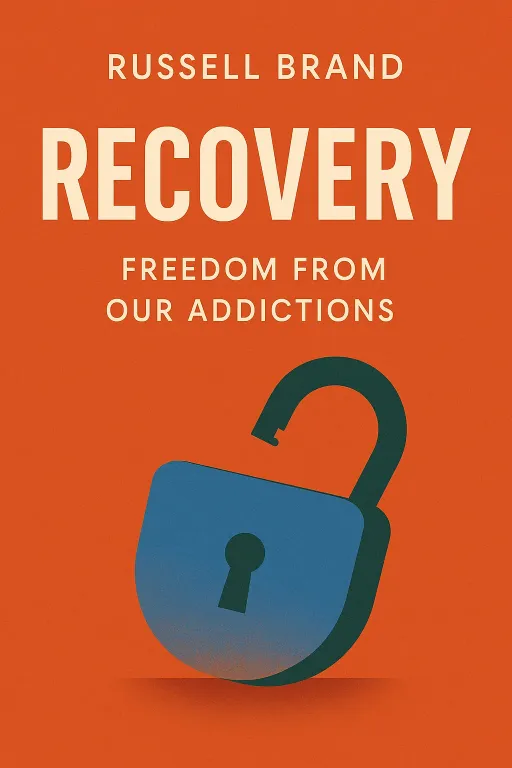
Atlas: Exactly. And that brings us to the core of what we are dissecting today. We are looking at the architecture of personal sovereignty. We are pulling insights from two distinct, yet surprisingly complementary sources. First, there is Russell Brand’s book, Recovery, which takes the classic 12-step program and translates it into a raw, modern, and accessible framework for breaking free from destructive habits. And second, we are layering in Melanie Tonia Evans’s work, You Can Thrive After Narcissistic Abuse.
Nova: It might seem like an odd pairing at first glance. Brand is often associated with the chaotic, public world of celebrity and addiction, while Evans focuses on the deeply private, often hidden dynamics of emotional trauma and narcissistic recovery. But both authors are essentially writing about the same thing: the reclamation of the self from external and internal hijackers.
Atlas: I am curious to see how you connect these. Brand’s work is famously unfiltered. He wrote Recovery during a time when his own public persona was undergoing massive scrutiny, and he brought that same level of brutal honesty to the page. It is not a clinical textbook; it is a visceral experience of what it means to be stuck in a loop.
Nova: And that is precisely why it works for the high-stakes navigator. Brand strips away the clinical language and gets to the mechanics of the ego. Meanwhile, Evans provides the psychological blueprint for what happens when that ego has been shattered by toxic external forces. She argues that healing is an active process of energetic and psychological reconstruction. The combination of these two perspectives gives us a complete map: Brand gives us the tools to dismantle the destructive system, and Evans gives us the blueprint to build a new, sovereign structure in its place.
Atlas: Let us dive in then. If we are looking at this as a system update for the human mind, where do we start?
The Mechanics of the Loop
SECTION
Nova: We start by identifying the loop. In the world of high-performance, we often mistake intensity for progress. We think that if we are constantly busy, constantly anxious, or constantly seeking external validation, we are making forward momentum. But Brand argues that this is actually a form of addiction. He is not just talking about substance abuse. He is talking about the addiction to the self-importance that drives us to overwork, to over-explain, and to over-identify with our own narrative.
Atlas: That makes perfect sense. I see this all the time with people who are high achievers. They are addicted to the result. They need the next win, the next accolade, or the next project to feel like they exist. If they stop, the silence feels dangerous.
Nova: That silence is exactly what Brand is pointing toward. The reason we cling to these habits is that they serve as a distraction from the fundamental truth that we are not our achievements. When you remove the substance—or the status, or the busyness—you are left with yourself. And for many people, that is the most terrifying place to be. Brand’s 12-step framework is essentially a protocol for moving from a state of external dependency to internal stability.
Atlas: Hold on, let me push back on that. If someone is a high-stakes navigator, they need that drive to succeed. They need that focus. Are you saying that being driven by achievement is the same as being addicted to a substance?
Nova: It is not about the content of the drive; it is about the source of the fuel. If your drive comes from a place of fear—the fear of being irrelevant, the fear of being seen as a failure—then that is a destructive loop. It is a reactive state. Sovereignty, in the context of Brand’s work, is the ability to choose your actions from a place of calm, intentional alignment rather than reactive, fear-based survival. The 12-step process he outlines is a way to objectively audit your own operating system. You look at where your power is leaking. You look at the moments where you are acting out of character because you are triggered.
Atlas: I see that. It is the difference between a thermostat and a thermometer. A thermometer just reacts to the temperature of the room. A thermostat sets the temperature.
Nova: That is a perfect analogy. Most people are operating as thermometers. They are reacting to the market, to their boss, to their social media feed, to their own internal critical voice. They are constantly adjusting their behavior to match the environment. Brand’s framework is about becoming the thermostat. It is about establishing an internal baseline that remains constant regardless of what is happening externally.
Atlas: So, how does one actually execute that audit? If I am a listener who feels like they are constantly reacting, where do I look first?
Nova: You look at your attachments. Brand suggests that we are all attached to specific stories about who we are. I am the busy person. I am the victim of my circumstances. I am the genius who is misunderstood. These are attachments. They feel like truths, but they are actually just narratives that keep us locked in our current, often suboptimal, reality. To regain sovereignty, you have to be willing to interrogate those stories. You have to ask yourself, is this story serving my long-term growth, or is it just keeping me comfortable in my dysfunction?
Atlas: That is a tough pill to swallow. It requires a level of brutal honesty that most people avoid. We prefer the comfortable lie of our own narrative over the difficult truth of our own behavior.
Nova: Absolutely. And that is where the transition to Melanie Tonia Evans’s work becomes so relevant. Because once you start peeling back those layers, you often encounter deeper, more systemic trauma. Brand helps you identify the habit, but Evans helps you understand the energetic and psychological environment that allowed that habit to take root in the first place.
Reclaiming the Internal Landscape
SECTION
Atlas: I am curious about how Evans’s work bridges this. If Brand is about the habit, is Evans about the origin?
Nova: Yes, exactly. Evans focuses on the concept of narcissistic abuse, which she frames not just as a relationship issue, but as a dynamic of self-betrayal. She argues that we often attract or stay in toxic dynamics because we have a fragmented sense of self. We are looking for an external source to validate our worth because we have not yet learned how to validate it from within.
Atlas: That sounds like a powerful shift. It moves the focus from blaming the external "narcissist"—who could be a toxic boss, a partner, or even a cultural pressure—to taking responsibility for the internal vacuum that allowed that dynamic to exist.
Nova: Precisely. Evans’s work is about closing the gaps in your own psyche. She uses the term "narcissistic abuse" to describe the way we lose ourselves in the service of someone else’s reality. It is a loss of sovereignty. When you are in that state, you are essentially a satellite orbiting someone else’s sun. Evans provides a blueprint to pull your gravity back to yourself.
Atlas: How does that look in a professional setting? Because, let’s be honest, we all have to deal with difficult people. We cannot just cut everyone off.
Nova: It is not about cutting people off; it is about cutting off the energetic supply. In a professional context, this means detaching your emotional worth from the outcome of the interaction. When you are operating from a sovereign place, you can see a difficult person for what they are—a person acting out of their own brokenness—without internalizing their behavior as a reflection of your value.
Atlas: That is a crucial distinction. It is the difference between being a target and being an observer.
Nova: Exactly. Evans talks about the importance of "going within." She suggests that the healing process is not about changing the other person. It is about becoming so grounded in your own truth, your own values, and your own identity that the toxic behavior no longer finds a hook to catch on. It is like becoming Teflon.
Atlas: I love that. It is the ultimate high-stakes strategy. You optimize your own internal environment so that you become immune to external volatility.
Nova: And that is the synthesis of these two books. You use Brand’s framework to audit your own behaviors and habits—the 12-step approach to self-honesty. And then you use Evans’s work to fortify your internal landscape so that you are no longer susceptible to the external validation loops that cause you to sabotage your own progress.
Atlas: Let me make sure I have this right. Brand helps you stop the bleeding from your own bad habits. Evans helps you build a scar tissue that prevents future infections from external sources.
Nova: That is a sharp way to put it. We are talking about moving from a state of dependency to a state of self-governance.
Atlas: But what about the fear of isolation? If you stop playing the game of constant validation—if you stop being the person who is always available, always compliant, always seeking approval—you might lose some of those connections.
Nova: That is the risk, and it is a necessary one. Sovereignty is not comfortable. It is not about being liked; it is about being authentic. When you start setting boundaries, you will inevitably lose the people who were only interested in the version of you that was compliant or useful to them. But you will also create space for people who respect your boundaries and value your true self.
Atlas: It is a trade-off. You lose the superficial connections to gain profound ones.
Nova: And more importantly, you gain a connection with yourself that is unshakeable. That is the ultimate goal. When you are sovereign, you are your own primary reference point. You are not looking to the world to tell you who you are. You are telling the world who you are through your actions, your choices, and your integrity.
The Architecture of Boundaries
SECTION
Atlas: Let’s get granular about the boundary-setting part. Because I think that is where most people struggle. They have the intellectual understanding, but the execution is messy. How do we turn this "sovereignty" concept into a tactical, daily practice?
Nova: It starts with what I call the "pause-and-pivot" protocol. Most of our reactive behaviors happen in the space between stimulus and response. Someone sends a demanding email, or a colleague makes an undermining comment, and we immediately jump into a defensive or people-pleasing mode. Sovereignty is about expanding that space.
Atlas: So, when the stimulus hits, you force a delay.
Nova: Exactly. You do not respond immediately. You create a buffer. In that buffer, you ask yourself three questions. First, what is the story I am telling myself about this situation? Second, is this story objectively true? Third, what is the most sovereign response I can take right now?
Atlas: That is brilliant. It takes the emotion out of the equation and forces you into a strategic mindset. It turns a potential crisis into a data point.
Nova: And that is where the influence of Evans comes in. She emphasizes that we often feel guilty when we set boundaries because we have been conditioned to believe that our needs are secondary. The "pause-and-pivot" is a way to rewire that conditioning. Every time you choose your own boundary over someone else’s demand, you are sending a signal to your nervous system that you are safe, that you are in control, and that you matter.
Atlas: I can see how that would compound over time. It is like building muscle. At first, it is difficult and awkward, but eventually, it becomes your default setting.
Nova: It does. And the beauty of this approach is that it is sustainable. You are not relying on willpower; you are relying on a system. You are replacing the old, destructive loop with a new, sovereign one.
Atlas: And what about when you fail? Because you will fail. You will slip back into the old pattern.
Nova: That is where the humility of the 12-step tradition, as Brand frames it, is so vital. You don't beat yourself up for the slip. You acknowledge it, you own it, and you reset. Sovereignty is not about perfection; it is about consistency in your commitment to yourself. It is about the ability to course-correct without shame.
Atlas: Shame is the enemy of growth. It keeps us locked in the loop.
Nova: Shame is the gatekeeper of the old reality. The moment you release the shame, you release the loop. You start to see your mistakes as data rather than evidence of your worthlessness. That is the moment you truly become the architect of your own life.
Synthesis & Takeaways
SECTION
Atlas: We have covered a lot of ground today. We started with the idea of the cognitive budget and the ghosts that drain it. We moved through Brand’s framework for auditing the ego and Evans’s blueprint for reclaiming the internal landscape. It feels like we are talking about a fundamental shift in how we relate to our own existence.
Nova: It is a shift from being a passenger in your own life to being the driver. The core insight here is that personal sovereignty is not something you are given; it is something you build. It is built through the daily, often invisible, work of auditing your habits, setting your boundaries, and choosing your own value over external validation.
Atlas: And it is a process that never really ends. It is a constant calibration.
Nova: It is a practice. Just like any high-stakes skill, it requires maintenance. But the payoff is immense. When you are sovereign, you are no longer at the mercy of the environment. You become the environment. You set the tone. You define the reality.
Atlas: That is a powerful place to land. For our listeners who are feeling the weight of those "ghosts" we mentioned at the start—the anxiety, the need for validation, the exhaustion from maintaining those old loops—what is the one thing they can do today to start this process?
Nova: Start by noticing where you are leaking power. Just for today, pay attention to the moments where you say "yes" when you want to say "no." Notice the moments where you are seeking approval for an action you already know is right. Don't try to change it yet. Just observe it. The moment you bring awareness to the loop is the moment you start to break it.
Atlas: Awareness is the first step of the recovery process.
Nova: Exactly. And once you have that awareness, you can begin to make different choices. You can begin to build your own Phoenix blueprint.
Atlas: I love that. It is about rising from the ashes of your own past patterns, one choice at a time. This has been a fantastic exploration, Nova. I feel like we have given our listeners a real toolkit for reclaiming their power.
Nova: It is a pleasure to dive into these ideas with you, Atlas. The goal is always to move from theory to reality, and I think we have mapped out a clear path for anyone ready to take that step.
Atlas: For everyone listening, remember that the work of sovereignty is the most important work you will ever do. It is the foundation for everything else—your work, your relationships, your legacy. Start small, stay consistent, and trust the process.
Nova: And remember, you are the conscious architect of your own experience. Build wisely.
Atlas: This is Aibrary. Congratulations on your growth!









