

The Alchemy of Emotional Fortitude
Golden Hook & Introduction
SECTION
Nova: The most expensive asset in your organization is your focus, and yet, most of us are bleeding it out through unresolved emotional leaks. We treat our professional lives like high-performance engines, ignoring the fact that the fuel line is cracked and leaking everywhere.
Atlas: That is a brutal way to start the morning, but I cannot argue with the math. Most of us are walking around with a mental tax on our bandwidth, and we call it professional stress. We tell ourselves it is just part of the job description.
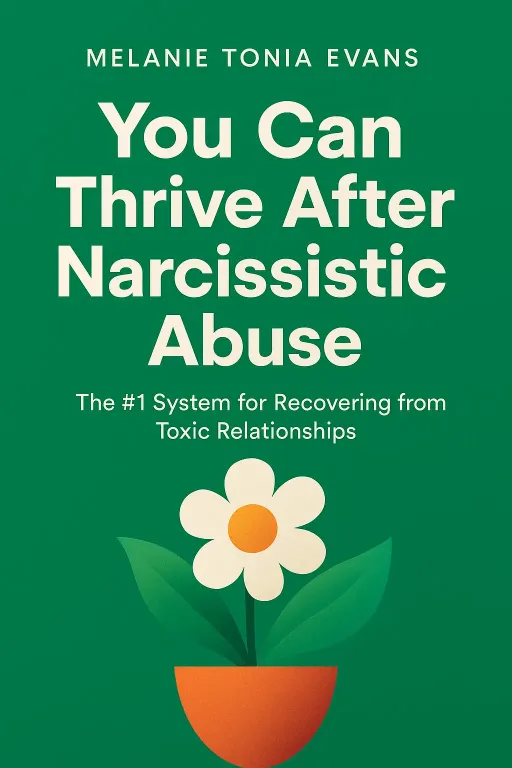
Nova: We do, but that is a dangerous miscalculation. Today, we are looking at two very different authors who arrived at the same conclusion from opposite ends of the spectrum. We are diving into the work of Melanie Tonia Evans, known for her framework on thriving after narcissistic abuse, and we are pairing that with the Pulitzer Prize-winning memoir Angela's Ashes by Frank McCourt.
Atlas: Putting those two in the same room is an interesting choice. One is a modern specialist in emotional recovery and trauma, and the other is a classic, visceral account of surviving 1930s poverty in Ireland. What is the bridge between them?
Nova: The bridge is the alchemy of the human spirit. Melanie Tonia Evans, in her work, focuses on the Quanta Freedom Healing method, which is all about how shifting your internal frequency changes your external reality. Then you have Frank McCourt, who used his own horrific childhood neglect not as a cage, but as the raw material for a masterpiece. Both authors demonstrate that resilience is not a passive trait. It is an active, structural process of taking the raw, painful data of your life and reconfiguring it into a foundation for strength.
Atlas: That makes sense. I often see people in high-pressure roles trying to compartmentalize their history, thinking that if they just lock the box, they can outrun the contents. But you are suggesting that the box is actually the engine?
Nova: Exactly. Let us start with the internal mechanics.
The Alchemy of Internal Frequency
SECTION
Atlas: I want to dig into this Quanta Freedom Healing method. Melanie Tonia Evans talks about shifting internal trauma frequencies. For a lot of our listeners, that sounds like abstract, new-age terminology. Can you make that concrete for someone who thinks in terms of KPIs and quarterly goals?
Nova: Think of it this way. In your professional life, you have a baseline of operation. If you are carrying unresolved trauma, that baseline is constantly consuming energy. It is like running a laptop with forty background applications you cannot see, all draining the battery. Evans argues that when you have experienced narcissistic abuse, or really any form of deep emotional betrayal, your nervous system gets stuck in a loop of hyper-vigilance. You are constantly scanning the horizon for the next threat.
Atlas: That sounds like standard anxiety, but you are saying it is deeper.
Nova: It is deeper because it becomes your identity. You start to view the world through a lens of lack or danger. Evans’ method is about identifying that specific frequency of thought—that constant, low-level hum of "I am not safe" or "I am not enough"—and actively interrupting it. It is not about positive thinking. It is about emotional regulation. You cannot change your external reality—the people you work with, the market conditions, the past events—until you change the internal frequency that is broadcasting your reaction to those things.
Atlas: So, if I am a leader dealing with a toxic team member, my internal frequency of "I need to defend myself" is actually making me less effective at managing that person?
Nova: Precisely. Because you are reacting to the person based on the trauma, not based on the objective reality of the situation. You are in survival mode, and survival mode is terrible for strategic decision-making. When you shift the frequency, you stop being the victim of the dynamic and become the architect of it. You detach. You stop feeding the energy that the other person is trying to extract.
Atlas: That is a powerful distinction. It sounds like she is advocating for a radical form of self-containment. How does one actually do that in the middle of a high-stakes meeting?
Nova: It starts with recognition. You have to catch yourself the moment you feel that spike of emotional reactivity. Evans suggests a process of acknowledging the wound, feeling it without judgment, and then intentionally choosing a different response. It is the difference between a knee-jerk reaction and a deliberate, strategic choice. You are essentially decoupling your self-worth from the external situation.
Atlas: I see the utility in that. It is a way to reclaim agency. It is not about changing them; it is about changing your internal output so you are no longer a target for that energy.
Nova: Exactly. You become a neutral party in your own life. And that is exactly where Frank McCourt’s story becomes so illuminating, because he had to do something similar, but in a much more extreme, physical environment.
The Narrative of Triumph
SECTION
Atlas: Right, let us pivot to Angela's Ashes. It is a legendary book, obviously. It won the Pulitzer, it sold millions of copies, and it really defined a generation of memoir writing. But for people who haven't read it in a while, it is essentially a story about growing up in absolute, soul-crushing poverty in Limerick, Ireland.
Nova: It is. The conditions were horrific. There was starvation, disease, and the constant threat of death. But the reason the book resonates, and the reason it is relevant to our discussion, is not because of the misery. It is because of how McCourt writes about it. He took that raw, traumatic data—the hunger, the neglect, the cold—and he processed it through the act of storytelling.
Atlas: That is a profound point. He didn't just write a list of grievances. He transformed his history into a narrative of survival.
Nova: He did. He turned his tragedy into a tool. By writing about it, he was able to integrate those memories. He stopped being a victim of his past and became the narrator of his life. That is the key to psychological resilience. You have to be able to tell the story of your life in a way that gives you agency. If the story of your life is "I am a victim of circumstances," that is the frequency you will broadcast. If the story of your life is "I am someone who survived and learned from these circumstances," that is an entirely different frequency.
Atlas: That brings up a critical question for our listeners who are in the middle of a crisis. If you are currently in the thick of it, how do you step back and narrate your own life? It feels like you are too close to the fire to see the patterns.
Nova: You start by looking for the "heroic" element in your own narrative. Not heroic in the sense of a movie star, but heroic in the sense of endurance. What did you do to survive? How did you adapt? When you look at McCourt’s work, he doesn't shy away from the pain, but he highlights the moments of human connection and the small, stubborn acts of dignity that occurred despite the poverty. He found the light in the dark.
Atlas: That is a technique I think we can apply to professional setbacks. If a project fails, or a career move goes sideways, the default is to view it as a failure of character. But if you reframe that as a chapter in a longer, more resilient story, does that change the outcome?
Nova: It changes everything. It changes your emotional state from shame to curiosity. Shame closes you down. Curiosity opens you up. When you are curious about your own story—"How did I handle this? What did I learn? How did this prepare me for the next phase?"—you are back in the driver's seat. You are integrating the experience rather than being defined by it.
Atlas: This reminds me of the concept of the "narrative self." We are constantly writing our own biographies in real-time. If you are writing a tragedy, you will make decisions that lead to tragic outcomes. If you are writing a story of resilience, you will make decisions that lead to growth.
Nova: That is the core of it. And it is not about lying to yourself. McCourt didn't lie about the poverty. He described it in brutal detail. But he gave it a meaning. He gave it a place in his life that did not diminish his potential.
The Strategic Architect's Blueprint
SECTION
Atlas: Okay, let us synthesize this for the Strategic Architect. We have two pillars here: the internal frequency management from Evans, and the narrative integration from McCourt. If I am a leader, or just someone trying to optimize my own resilience, how do I build a daily practice out of this?
Nova: Start with the "Frequency Audit." Every time you feel that surge of frustration, anger, or defensiveness, stop. Label it. Identify the frequency. Is this a response to what is actually happening, or is this a response to a past wound being triggered? That is the Evans approach. It is an immediate, in-the-moment intervention.
Atlas: I like that. It turns emotional regulation into a data-collection task. You are essentially debugging your own operating system.
Nova: Exactly. And then, once you have regulated the emotion, you apply the McCourt approach. You integrate the experience into your narrative. Instead of hiding the failure or the frustration, you write it into your story. You ask, "What part of my leadership legacy does this moment build?" Maybe it is the moment you learned to set a boundary. Maybe it is the moment you realized you needed to change your team structure. You turn the event into a lesson, not a scar.
Atlas: This is helpful for long-term career transitions, too. When you are moving from one role to another, it is easy to carry the baggage of the previous role with you. This framework suggests that you need to "process" the previous role before you can fully inhabit the new one. You have to tell the story of the old role—the good, the bad, and the ugly—and then file it away as a completed chapter.
Nova: That is a perfect analogy. You are closing the loop. If you don't close the loop, you carry that energy into the new environment. You end up recreating the same dynamics because your internal frequency hasn't changed. You are still broadcasting the old program.
Atlas: It also sounds like this requires a fair amount of solitude. You cannot do this kind of integration while you are constantly distracted. This connects back to the growth recommendation we often discuss: deep reading and reflection. You need that twenty minutes of quiet to actually process the narrative.
Nova: You cannot build a legacy of competence if you are constantly running from your own history. Resilience is not about toughness. It is about the ability to integrate your full experience. It is about being whole.
Atlas: I think about the most effective leaders I have known. They are the ones who can talk about their failures with a sense of calm. They don't hide them. They own them. They have integrated them. They are not triggered by the mention of a past mistake because they have already processed it.
Nova: They have done the alchemy. They have taken the lead of their failures and turned it into the gold of their wisdom. It is a process that never really ends. It is a lifelong practice of refining your internal frequency and updating your narrative.
Atlas: It is a bit daunting, but it is also empowering. It means you are never stuck. You are always in a position to reframe, to shift, to integrate.
Nova: That is the ultimate freedom. You are not a prisoner of your past. You are the author of your future.
Synthesis & Takeaways
SECTION
Atlas: We have covered a lot of ground today. From the internal frequency work of Melanie Tonia Evans to the narrative mastery of Frank McCourt. The core takeaway seems to be that resilience is a structural process, not just a personality trait. It is something you build, intentionally, by regulating your internal state and owning your story.
Nova: It is the most important work you will ever do. And it is the most practical work you will ever do. Because when you are clear internally, your external actions become precise, intentional, and effective. You stop reacting to the world and start shaping it.
Atlas: For our listeners, the challenge for the next twenty-four hours is simple: observe your own frequency. The next time you feel a spike of stress or a negative reaction, pause. Don't act on it. Label it. Ask yourself, "Is this a current reality, or is this a past program?" Then, take that story and rewrite it into a narrative of growth. It is a small shift, but it is the one that changes everything.
Nova: It is the foundation of authentic leadership. You cannot lead others to a place you have not been yourself. Your work is to go there, integrate it, and then share the map.
Atlas: I love that. It turns the entire process into a journey.
Nova: It is a journey that is well worth taking. And remember, the goal is not to be perfect. The goal is to be integrated. To be whole. To be the architect of your own experience.
Atlas: That is a great note to end on. Thank you for walking through this with me. It has been a pleasure to break down these frameworks.
Nova: It has been a pleasure, Atlas. Always good to dig into the mechanics of the human spirit.
Atlas: To our listeners, keep building, keep refining, and keep owning your story. This is Aibrary. Congratulations on your growth!









