

Setting Boundaries and Healing Friction
Golden Hook & Introduction
SECTION
Nova: If your life were a building, most of us are running a power grid that’s leaking electricity into every room except the one we’re actually trying to live in. We spend so much energy managing the expectations of others, patching up the cracks in our relationships, and wondering why the lights are flickering, that we never actually get around to building the structure we intended.
Atlas: That is a brutal way to start a conversation, but you’re completely right. It feels like we’re constantly in maintenance mode for other people’s emotional architecture. We’re so busy propping up someone else’s walls that our own foundation is just crumbling.
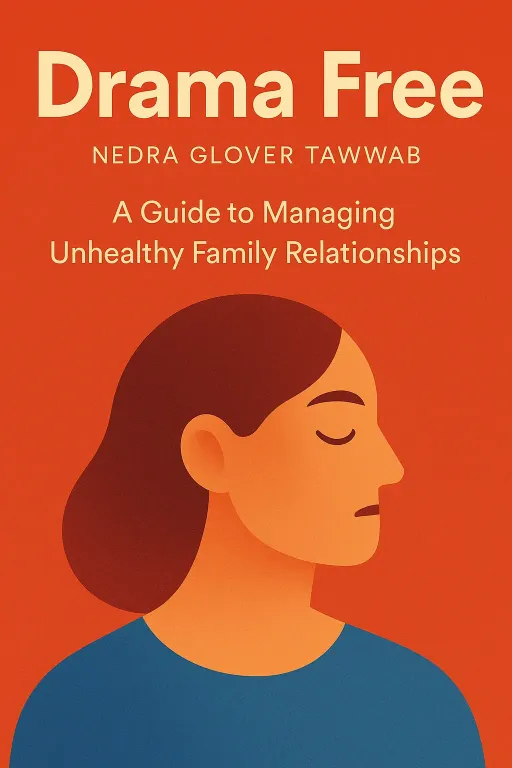
Nova: Exactly. And that is the problem we are dissecting today. We are looking at two distinct, yet deeply complementary, blueprints for reclaiming that energy. We are diving into the framework provided by Nedra Glover Tawwab in her work, Drama Free, which offers a structural approach to boundaries. And we are balancing that with Melanie Tonia Evans’ perspective in You Can Thrive After Narcissistic Abuse, which tackles the somatic, or body-based, healing process required when those boundaries have been violated for a long time.
Atlas: It’s a heavy pairing. Tawwab is known for her very direct, almost clinical, but incredibly compassionate way of dissecting relational patterns. She’s built a massive reputation for turning the abstract idea of boundaries into something you can actually execute on a Tuesday afternoon. And Evans comes at it from a place of deep, almost visceral recovery. She’s focused on the idea that you can’t just think your way out of trauma; you have to feel your way out of it.
Nova: That is the perfect distinction. Tawwab gives us the structural engineering—the "what" and the "how" of setting the boundary. Evans gives us the interior design and the electrical work—the somatic, nervous-system-level healing that happens once the boundaries are actually in place.
The Architecture of Boundaries
SECTION
Atlas: Let’s start with the structure, then. Because when I hear the word boundaries, I immediately think of walls. I think of keeping people out. But Tawwab’s work suggests something different. It feels less like a fortress and more like a gate.
Nova: That is the most important distinction to make. If you view boundaries as walls, you are thinking about containment. You are thinking about defense. But Tawwab argues that boundaries are actually about clarity. They are the clear, compassionate, and consistent rules of engagement that define what is acceptable behavior in your life. The reason we struggle with them is that we confuse boundaries with punishment. We think if we say no, we are rejecting the person.
Atlas: That hits home. I think for a lot of high-performers, or anyone who prides themselves on being reliable, saying no feels like a failure of character. It feels like you’re saying, I am not capable enough to handle this request.
Nova: And that is a dangerous trap. When you operate from that mindset, you are essentially saying that your availability is the measure of your worth. Tawwab flips that. She argues that having clear boundaries is actually the highest form of respect for the other person. If I have a clear boundary, you never have to guess where you stand with me. You don’t have to wonder if I’m secretly resenting you for helping me move on a Saturday.
Atlas: I can see the logic there. It’s like code documentation. Good code is documented so the next person knows exactly how to interact with it without breaking the system. But let’s play devil’s advocate. What happens when you start implementing these boundaries? Because in my experience, when you try to change the rules of engagement with someone who is used to your previous, more accommodating version, they don’t just say, Oh, thank you for the clarity. They push back.
Nova: They absolutely do. And that is exactly what Tawwab anticipates. She talks about the friction that occurs when you begin to change your relational dynamics. People who have benefited from your lack of boundaries will not be happy when you establish them. They will perceive your boundary as a loss of control.
Atlas: So, how do you handle that? Because that’s where most people fold. They set the boundary, they get the pushback, they feel the guilt, and then they retreat.
Nova: The key is in the consistency. Tawwab emphasizes that a boundary is not a one-time conversation. It is a persistent standard. She uses a framework of identifying the recurring dynamic—that energy-draining loop—and then crafting a clear, concise statement. Not a paragraph of justification, not a long-winded apology, but a simple statement of fact.
Atlas: Give me an example. Because I think people struggle with the phrasing. They either get too aggressive, which causes a fight, or too passive, which gets ignored.
Nova: Let’s say you have a colleague who constantly dumps their work on you at 4:55 PM. A typical, boundary-less response is to just do it and complain about it later. A passive-aggressive response is to send a snarky email. The boundary-focused response, according to Tawwab’s framework, is to say something neutral and firm. You might say, I’m not able to take on new tasks at this hour, but I can look at this tomorrow morning at 9:00 AM.
Atlas: That’s clean. It’s not an attack. It’s a statement of capacity.
Nova: Exactly. It’s not about their worth; it’s about your capacity. The friction comes when they push back. They might say, But this is urgent! And your boundary holds firm because you repeat the standard. You say, I understand it’s urgent, and I’m available tomorrow at 9:00 AM. You are not arguing; you are stating the reality of your operating parameters.
Atlas: I love that framing. It turns it into a technical specification of your own life. You aren’t arguing with the person; you’re just stating the status of your availability. But let’s move to the deeper layer here. Because even if you say that line perfectly, your heart rate might still spike. You might still feel that internal panic, that fear of being the bad guy. And that is where the second piece of the puzzle, the work of Melanie Tonia Evans, becomes essential.
The Somatic Shift
SECTION
Nova: You are spot on. You can have the perfect script for your boundaries, but if your nervous system is trapped in a loop of trying to please others to stay safe, the script won’t matter. Your body will override your logic.
Atlas: Explain that. Because I think we’ve all been there. You know you need to say no, you know the boundary is healthy, but you physically cannot make the words come out. Your throat feels tight, your chest feels heavy. It’s like a physical blockage.
Nova: That is exactly what Evans describes. She focuses on the idea that trauma—especially relational or narcissistic abuse—is stored in the body. It’s not just a memory. It’s a physiological state of hyper-vigilance. If you grew up in an environment where your boundaries were constantly violated, or where your safety was contingent on pleasing someone else, your body learned that setting a boundary equals danger.
Atlas: That explains why the intellectual understanding of a boundary doesn't fix the problem. You can read all the books on healthy relationships, but if your nervous system thinks that asserting yourself is a threat to your survival, you’re going to stay stuck.
Nova: Precisely. Evans argues that the path forward requires a somatic approach. You have to teach your body that it is safe to hold space for yourself. She talks about the process of releasing the trauma, which isn't just about talking about it. It’s about creating a new physical experience.
Atlas: What does that look like in practice? Because somatic work can sometimes sound a bit esoteric to the analytical mind. How do you actually 'release' trauma from the body?
Nova: It starts with awareness. It’s the ability to pause when that panic hits. When you are about to set a boundary and you feel that tightness in your throat or that sinking feeling in your stomach, you don’t just push through it. You stop. You acknowledge it. You say to yourself, This is the old survival mechanism firing. This is my body trying to protect me from a threat that isn't here right now.
Atlas: So, it’s a form of physiological reality testing. You’re telling your nervous system, We are safe. The person in front of me is not my abuser. This is just a colleague asking for a report.
Nova: That’s it. And then, you engage in grounding techniques. Evans encourages methods that bring you back into the present moment. It could be as simple as focusing on your breath, feeling your feet on the floor, or using movement to discharge that pent-up energy. The goal is to complete the stress cycle. If you are in a fight-or-flight response, your body has mobilized energy to act. If you suppress that, the energy stays trapped.
Atlas: This is fascinating because it changes the definition of strength. We usually think of strength as the ability to endure, to take the hit, to keep going. But what you’re describing is that the real strength is the ability to regulate your own nervous system so that you don’t have to keep enduring things that are destructive to you.
Nova: I couldn’t agree more. It’s the difference between being a shock absorber and being a boundary. A shock absorber just takes the impact and vibrates. A boundary stops the impact from reaching the core.
Atlas: I’m thinking about how these two work together. If you use Tawwab’s approach to set the boundary, you are creating the external environment for safety. If you use Evans’ approach, you are building the internal capacity to handle the discomfort of that change.
Nova: That is the ultimate synthesis. Without the external boundary, you are constantly being exposed to the same triggers. You are trying to heal in the same environment that made you sick. That’s almost impossible. But without the internal somatic work, you will be too terrified to actually enforce the boundary. You will set it, feel the spike of fear, and immediately retract it to soothe your nervous system.
Atlas: It’s a dual-track strategy. You have to build the fence, and you have to learn how to exist comfortably within the yard you’ve created.
Synthesis & Takeaways
SECTION
Nova: Think about the person who is listening to this right now. They are likely a high-achiever, someone who builds, someone who creates. They are probably used to solving problems by thinking harder, working longer, and optimizing their output. But this is not an optimization problem. This is a regulation problem.
Atlas: It’s a recalibration of the entire system. You can’t just optimize your calendar to fix a boundary issue. You have to optimize your nervous system. And that takes a different kind of discipline. It’s not about doing more; it’s about doing less, but doing it with more presence.
Nova: And that brings us back to the tiny step. If we want to move from theory to reality, we need a concrete point of entry. Tawwab suggests identifying one recurring relationship dynamic that drains your energy. Just one. Don't try to overhaul your entire social circle this week.
Atlas: I like that. It’s the 'architectural' way to approach it. You don't renovate the whole building at once; you start with the room that has the biggest leak.
Nova: Exactly. Write down the boundary statement. What is the clear, neutral, firm thing you will say the next time that specific drain happens? And then, when you go to say it, practice the somatic check-in. Notice the panic. Breathe through it. Let your body know it is safe to be assertive.
Atlas: It’s the difference between building a legacy that lasts and building a house of cards that collapses the moment someone leans on it. You need the structural integrity of the boundary, and you need the internal stability of a regulated nervous system.
Nova: That is the foundation of a truly sustainable life. It’s not about being 'drama-free' because the world stops having drama. It’s about being drama-free because you stop being the participant in the cycles that create it.
Atlas: I love that. You aren’t removing the external chaos; you are removing your own contribution to it. And that is where the real power lies.
Nova: It is. And for everyone listening, remember: your energy is your most precious resource. Don’t let it leak away in the service of dynamics that no longer serve you. Start with one boundary, one conversation, and one moment of somatic awareness this week.
Atlas: That is a blueprint for real growth. Thank you for walking through this, Nova. It feels a lot more manageable when you break it down into these two components.
Nova: It’s a pleasure. We’re building something better, one boundary at a time. This is Aibrary. Congratulations on your growth!









