

Reclaiming Autonomy and Healing After Adversity
Golden Hook & Introduction
SECTION
Nova: We spend so much time optimizing our schedules, bio-hacking our mornings, and automating our workflows, yet we completely ignore the biggest drain on our mental battery. It is the unconscious pattern that keeps us stuck in cycles of drama and burnout.
Atlas: That is a bold opening. Most people think their problem is a lack of time management or a lack of focus. You are suggesting the real issue is something much deeper, something we are actually addicted to.
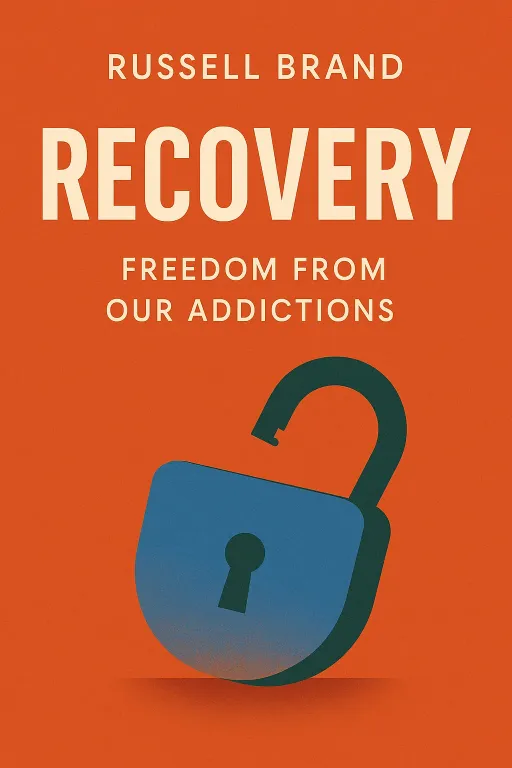
Nova: Exactly. Today we are looking at two powerful frameworks that, when combined, offer a blueprint for reclaiming your autonomy. We are diving into the ideas found in Russell Brand's book, Recovery, and Melanie Tonia Evans's work, You Can Thrive After Narcissistic Abuse.
Atlas: Those are two very different worlds. Brand is known for his high-energy, often chaotic public persona, and the topic of narcissistic abuse is usually discussed in the context of personal relationships. How do those two things possibly connect for a professional, focused audience?
Nova: It comes down to the architecture of your life. Brand’s work focuses on the internal structure, or rather, the lack of it, which leads us to repeat self-sabotaging behaviors. Evans’s work focuses on the external environment, specifically how we allow toxic dynamics to erode our boundaries. Both books are essentially manuals for becoming the sovereign ruler of your own mind.
Atlas: I see where you are going. It is about moving from being a passive recipient of your circumstances to an active architect of your reality. Let’s start with the internal side. What are we actually talking about when we say addiction in the context of someone who is not necessarily struggling with substance abuse?
Dismantling Unconscious Patterns
SECTION
Nova: Think of addiction here as a repetitive loop. Russell Brand’s approach in Recovery is to take the traditional 12-step model and democratize it. He strips away the heavy institutional baggage and reveals the core mechanism: we are all addicted to something that keeps us from growing. For many high-performers, that addiction is not a substance. It is the addiction to the story of our own struggle, or the addiction to the adrenaline of a crisis.
Atlas: That is a sharp distinction. It sounds like you are saying we use stress or drama to avoid facing the quiet, uncomfortable work of self-improvement.
Nova: Precisely. When you are constantly putting out fires or reacting to a toxic email, you are in a state of high-arousal. It feels like productivity, but it is actually a form of avoidance. Brand argues that we have to identify these unconscious behaviors. We have to look at our repetitive patterns—the way we always say yes to the wrong projects, or the way we always assume the worst about a colleague—and label them for what they are: obstacles to our own sovereignty.
Atlas: I have seen this in high-stakes environments all the time. People get hooked on the chaos. They feel like they are only valuable when they are saving the day. But if you take away the crisis, they feel empty. Is that the addiction Brand is talking about?
Nova: That is exactly it. He suggests that we are often addicted to our own suffering because it provides a clear identity. If I am the person who is always overwhelmed, then I do not have to be the person who is responsible for my own long-term growth. The 12-step framework, in his view, is just a tool to acknowledge that you are not in control of these impulses. You have to step back and admit that your current operating system is glitching.
Atlas: So, the first step for our listeners is not to fix the external problem, but to look at the pattern of reaction. Instead of asking how to solve the crisis, they should be asking why they are attracted to the crisis in the first place.
Nova: That is the pivotal shift. It is about honesty. Most people are afraid to be honest about why they keep inviting the same problems into their professional lives. Maybe it is because they are afraid of the quiet that comes with having boundaries.
The Boundary Framework
SECTION
Atlas: That leads perfectly into the second piece of this puzzle. You mentioned Melanie Tonia Evans and her work on narcissistic abuse. Now, usually, that phrase gets thrown around to describe nightmare ex-partners. How does that translate into a professional or, let’s say, a high-functioning environment?
Nova: Evans’s perspective is crucial here because she moves the conversation from victimhood to energetic healing. In a professional sense, narcissistic abuse is about the erosion of your reality. It is when you work with someone who constantly moves the goalposts, gaslights you about project requirements, or makes you feel like your best is never enough.
Atlas: I imagine a lot of our listeners are nodding along right now. We have all had that client or that manager who makes us feel like we are losing our minds. But how do you apply an energetic healing framework to a spreadsheet or a board meeting?
Nova: It is not about the spreadsheet. It is about the boundary you set around your internal state. Evans argues that you cannot heal from toxic manipulation if you are still engaging with the toxic source on their terms. You have to enforce a strict boundary. This means you stop trying to explain your side, you stop trying to win their approval, and you stop letting their chaos dictate your output.
Atlas: It sounds like you are describing the difference between a wall and a filter. A wall keeps everyone out, which is not sustainable in business. A filter lets the good stuff in and keeps the toxicity out.
Nova: That is a perfect analogy. Evans’s approach is about creating that filter through what she calls energetic boundaries. When you are dealing with a toxic individual, your natural instinct is to fight back or to over-explain. That is actually feeding the dynamic. It gives them more engagement. The real power move is to withdraw your emotional investment entirely.
Atlas: So, you are saying the most effective way to deal with a toxic professional dynamic is to become boring to them?
Nova: Exactly. You become the grey rock. You are polite, you are professional, you are efficient, but you are not providing any emotional fuel. You are no longer a participant in their drama. You are just a service provider.
Atlas: That is incredibly hard to do when you are in the middle of it. It feels risky. You feel like if you stop fighting, you lose.
Nova: That is the fear, isn't it? But consider the cost of staying in the fight. You are losing your autonomy. You are losing your ability to focus on your own craft. Evans’s point is that you are actually more powerful when you stop trying to change the other person and start focusing entirely on your own energetic sovereignty. You are taking back the power you handed over the moment you started caring about their opinion of you.
Atlas: This connects back to Brand, doesn't it? If Brand is about identifying your internal addiction to the drama, then Evans is about cutting off the external supply of that drama.
Nova: You nailed it. One is the internal cleanup, the other is the external perimeter defense. You cannot have one without the other. You can clean up your internal patterns all you want, but if you keep walking back into a toxic environment, you will just get re-infected. And you can build all the boundaries you want, but if you are still addicted to the chaos, you will just find a new toxic person to replace the old one.
Synthesis & Takeaways
SECTION
Atlas: This is starting to feel like a full ecosystem. It is not just about time management or productivity hacks. It is about self-governance. If you do not own your internal state, someone else will eventually own it for you.
Nova: That is the core takeaway. Sovereignty is not a state you arrive at; it is a discipline you practice. Every single day, you are making choices that either reinforce your autonomy or give it away.
Atlas: So, for the person listening who is currently dealing with a micromanager or a project that is draining their soul, what is the actionable step? We talk about tools, not theory. What is the tool?
Nova: We need to start with a "Tiny Step." I want you to identify one professional boundary you have let slip recently. Maybe it is the client who texts you at 9:00 PM, or the colleague who dumps their work on you every Friday afternoon.
Atlas: And what do they do with that identified boundary?
Nova: You write down a clear, non-negotiable script. Not a long, apologetic email. A simple, firm script. Something like, "I am not available for non-urgent tasks after 6:00 PM, but I will review this first thing Monday morning." Or, "I cannot take on additional projects this week, so let’s look at the priorities for next quarter instead."
Atlas: The key there is that it is a script. You are not improvising in the heat of the moment when your cortisol is spiking. You are prepared.
Nova: Exactly. Because in the heat of the moment, you will revert to your old patterns. You will revert to the addiction to being the "fixer." Having the script is your anchor. It protects your energetic sovereignty. It is the boundary that allows you to do the deep, meaningful work you are actually capable of.
Atlas: It is fascinating how these two concepts—dismantling internal patterns and setting external boundaries—create a feedback loop. When you set a boundary, you start to see your internal patterns more clearly. When you fix your internal patterns, setting boundaries becomes easier.
Nova: It is the ultimate professional development hack. If you want to master your craft, you have to master your environment and your own reactions to it. You do not need to read a hundred books on productivity. You just need to stop the leaks.
Atlas: I love that. Stop the leaks. It is simple, but it requires a level of honesty that most people are terrified of.
Nova: Courage is required. But the reward is a life where your time and your energy actually belong to you. That is the definition of success in our book.
Atlas: This has been a great look at reclaiming that control. For everyone listening, take that tiny step today. Write that script. Protect your bandwidth.
Nova: We will be back next time to dive into another framework for your growth. Until then, remember that the most important project you will ever work on is your own sovereignty.
Atlas: This is Aibrary. Congratulations on your growth!









