Designing Healthy Interpersonal Boundaries
Golden Hook & Introduction
SECTION
Nova: If you were designing a building, you would never leave the perimeter open to the street. You would clearly define where the property ends and the public sidewalk begins. Yet, in our personal and professional lives, we often leave the front door wide open, inviting everyone to wander in and rearrange the furniture.
Atlas: That is a brutal way to put it, but honestly, it hits home. We treat our time like it is a public park, and then we wonder why we feel exhausted and overextended. It is like we are trying to build a skyscraper on a foundation of shifting sand.
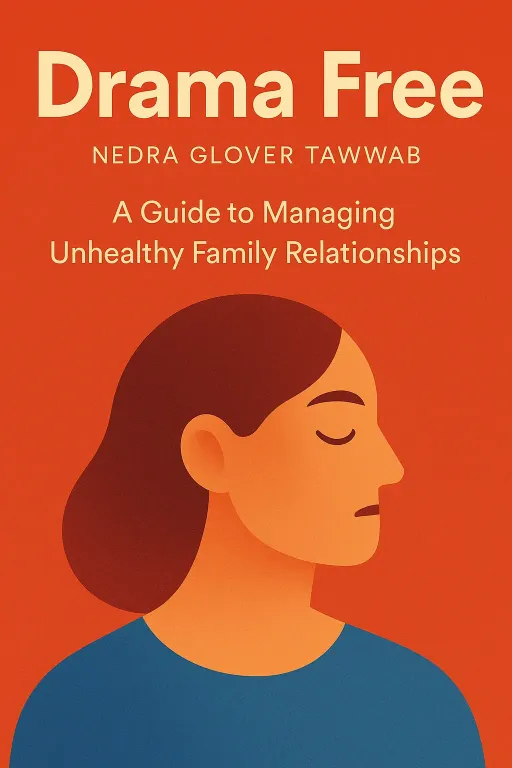
Nova: Exactly. And that is why we are looking at two specific frameworks today that help you stop that erosion. We are diving into Drama Free by Nedra Glover Tawwab, which gives us the actual blueprint for setting boundaries, and You Can Thrive After Narcissistic Abuse by Melanie Tonia Evans, which focuses on the deeper, internal work of reclaiming your energy when those boundaries have been violated for a long time.
Atlas: I have seen Nedra Glover Tawwab all over the place lately, and for good reason. Her approach is surprisingly clinical for a self-help book. It feels less like therapy-speak and more like project management for your relationships. And Melanie Tonia Evans is the perfect follow-up because she deals with the aftermath—the trauma loop that makes setting those boundaries feel terrifying in the first place.
Nova: That is the perfect distinction. Tawwab provides the structural manual, and Evans provides the recovery protocol. If you are an architect of your own life, you need to know how to build the fence, but you also need to know how to heal the land you are building on.
The Architecture of Boundaries
SECTION
Atlas: Let’s start with the structural side, because that is where I think most people get stuck. We talk about boundaries like they are these big, dramatic declarations. But Nedra Glover Tawwab makes it sound like they are just daily maintenance. Is that the shift?
Nova: It is. The biggest misconception is that a boundary is a punishment for the other person. In reality, a boundary is simply a statement of what you can and cannot tolerate. It is a data point. When you do not provide that data to the people around you, they are essentially walking around in the dark. They do not know where the edge is until they fall off, and by then, you are already resentful.
Atlas: I can see that. I think the fear is that setting a boundary is an act of aggression. If I tell a colleague, "I can't take on this project," I feel like I am saying, "I don't care about your success." But you are saying that is actually a misinterpretation of the data.
Nova: You are hitting on the core of it. Tawwab is very clear that boundaries are actually the most loving thing you can do for a relationship. When you set a boundary, you are preserving the relationship by preventing the buildup of resentment. If you keep saying yes when you mean no, you are just storing up emotional debt. Eventually, that debt comes due, and the relationship collapses.
Atlas: That makes total sense from an efficiency standpoint. If I am overcommitted, I am not doing good work anyway. I am doing mediocre work while being secretly angry. So, the boundary is actually a quality control mechanism. But how do you handle the immediate pushback? Because people are used to you saying yes. When you suddenly start drawing lines, they are going to notice.
Nova: They will notice, and they will likely test it. Tawwab calls this the testing phase. If you have been the person who always says yes, people have built their own systems around your availability. When you change your system, their system breaks. You have to be prepared for the discomfort that follows. The key, according to her, is to keep your boundary statements simple, direct, and free of explanations.
Atlas: I love that. We love to over-explain, don't we? We give a five-minute preamble about why we can't do the thing, which just gives the other person five minutes to negotiate with us.
Nova: Precisely. You are giving them ammunition. If you say, "I can't help with that project because my cat is sick and I have a deadline and I'm feeling tired," they will say, "Oh, but your cat is fine now, and the deadline is flexible, so you can do it." If you just say, "I don't have the capacity for that right now," there is no room for negotiation. It is a hard stop.
Atlas: It sounds so cold when you say it out loud, though. Is there a way to say that without sounding like a robot?
Nova: It is not cold; it is clear. There is a profound difference. You can deliver that line with kindness, with a smile, with warmth. The tone matters. But the content must be firm. And remember, you are not saying "I don't care about you." You are saying "I am managing my resources." That is professional mastery. You wouldn't run a server at 110 percent capacity, would you?
Atlas: No, that leads to a system crash. I guess we treat our professional lives with more logic than our personal lives. We optimize our workflows, we automate our tasks, but we let our emotional boundaries be completely manual and chaotic.
Nova: That is the perfect analogy. We are essentially running our lives on legacy software that was installed when we were children, and we are wondering why we are constantly crashing. Tawwab’s work is about upgrading that operating system. It is about recognizing your own capacity as a finite resource.
Reclaiming Your Energy
SECTION
Atlas: Okay, so I understand the structural part. I build the wall, I maintain the gate. But what if I have spent years letting people trample over my property? What if I have some trauma or some deep-seated patterns of people-pleasing that make it impossible for me to even think about setting a boundary without feeling like my heart is going to beat out of my chest?
Nova: That is where Melanie Tonia Evans becomes essential. Her work in You Can Thrive After Narcissistic Abuse isn't just about the people who are overtly abusive; it is about the dynamic of "narcissistic abuse," which can happen in any relationship where there is a power imbalance and a lack of empathy. She introduces the Quanta Freedom Healing method.
Atlas: I have heard that term. It sounds a bit metaphysical. Can you break that down into something more practical?
Nova: Think of it as nervous system regulation. When you have been in a relationship—whether it is a parent, a partner, or a boss—where your boundaries were consistently violated, your nervous system learns to stay in a state of high alert. You are constantly scanning for the next intrusion. You are essentially living in a state of hyper-vigilance.
Atlas: Oh, I know that feeling. It is that "walking on eggshells" sensation. You are constantly predicting what the other person needs so you can avoid the conflict before it happens.
Nova: Exactly. Evans argues that you cannot set healthy boundaries while your nervous system is trapped in that state of fear. You are trying to use your logical brain to solve an emotional, physiological problem. The Quanta Freedom Healing method is about going into the body, identifying the trauma, and releasing the emotional charge. It is about shifting your internal state so that setting a boundary feels safe, not dangerous.
Atlas: So, it is about getting the body on board with the brain. Because my brain knows I should say no, but my body is screaming at me that if I say no, I am going to be abandoned or attacked.
Nova: That is the conflict. Evans suggests that the reason we stay in these cycles is that we are looking for the other person to change. We want them to validate us, to apologize, to finally "get it." She argues that this is the ultimate trap. You are giving your power away to the very person who is draining it.
Atlas: That is a tough pill to swallow. We spend so much time analyzing the other person’s behavior, trying to figure out why they are the way they are. We treat them like a puzzle we have to solve.
Nova: And she says stop. Stop solving them. Start solving yourself. The shift happens when you decide that your internal peace is more important than their understanding of you. When you do that, the energy you were spending on them—the obsession, the frustration, the planning—comes back to you.
Atlas: It is like reclaiming real estate in your own mind. All those thoughts I have about "Why did they say that?" or "How can I fix this?"—that is just occupied space. If I clear that out, I have more room for actual productive, creative work.
Nova: That is exactly right. It is a reclamation project. And the interesting thing is that once you start doing that internal work, the external boundaries become much easier to set. You aren't setting them from a place of fear anymore; you are setting them from a place of self-possession. You aren't asking for permission to have a boundary; you are simply stating a fact about your reality.
Atlas: It sounds like the two books are actually two sides of the same coin. Tawwab is the external framework, the "how-to" of the fence. And Evans is the internal renovation, the "how-to" of the foundation. If you try to build the fence without fixing the foundation, the fence just falls over.
Nova: I couldn't have said it better. You need both. You need the tactical skill to say "I don't have the capacity," but you also need the internal security to be okay with the fact that the other person might not like it.
The Practical Application
SECTION
Atlas: Let’s get really tactical for a second. Let's say I am in a situation where I am constantly overcommitting to a team member who is disorganized. I feel responsible for their work. I feel like if I don't help them, the project fails. How do I apply these two frameworks to that specific, very common scenario?
Nova: First, you use Tawwab’s approach to identify the boundary. You have to be clear about what you are responsible for and what they are responsible for. If you are doing their work, you are enabling their lack of organization. So, the boundary is: "I can support you by reviewing your plan, but I cannot execute the tasks for you."
Atlas: That sounds professional. It is direct. It is not an attack.
Nova: And then, you use Evans’ approach to deal with your own internal reaction. You are going to feel guilty. You are going to feel like the "bad guy." You are going to have that voice in your head saying, "But if I don't do it, they will fail and I will look bad."
Atlas: That is the voice that always wins. That is the voice that makes me pick up the slack.
Nova: That is the voice you have to work with. Instead of letting that voice dictate your actions, you acknowledge it. You say, "I feel guilty because I am stepping out of a codependent pattern." You breathe through it. You realize that the guilt is just a symptom of your old system trying to keep you safe in a familiar, albeit painful, way. You don't have to act on the guilt. You just have to sit with it.
Atlas: So, you feel the guilt, you recognize it as a "legacy system" warning, and you do the right thing anyway. It is like exposure therapy for people-pleasing.
Nova: Exactly. And the more you do it, the weaker that voice gets. Eventually, you realize that the project didn't fail, the team member figured it out, and you have preserved your energy. That is where the mastery comes in. You aren't just reacting to the environment; you are shaping it.
Atlas: I think that is the key for our listeners. We are all trying to be high performers. We are all trying to be "conscious builders." But you cannot build anything lasting if you are constantly burning your own resources to keep other people’s projects afloat.
Nova: It is unsustainable. And honestly, it is a disservice to the other person. When you step in and fix things, you are robbing them of the opportunity to develop their own systems, their own boundaries, their own competence.
Atlas: That is a great point. It is a form of micromanagement disguised as helpfulness.
Synthesis & Takeaways
SECTION
Nova: So, let’s bring this back to the core idea. The next time you feel that pressure—that familiar tug in your gut to say yes when you want to say no—I want you to pause. Do not react immediately.
Atlas: Pause. That is the first step. The "Space Between Stimulus and Response."
Nova: Right. And in that pause, identify the boundary. What is the actual limit here? Is it time? Is it energy? Is it emotional capacity? And then, use that phrase we talked about: "I want to help, but I don't have the capacity for this right now."
Atlas: "I want to help, but I don't have the capacity for this right now." It is so simple. It is not aggressive. It is not a rejection of the person. It is just a statement of reality.
Nova: And notice what happens to your energy when you say it. Notice the relief. Notice the clarity. That is your baseline. That is the feeling of being an architect of your own life, rather than a tenant in someone else’s.
Atlas: I love that. It is not about being cold or distant. It is about being a professional of your own existence. You wouldn't let a contractor build a house without a blueprint, so why are we letting people build our lives without them?
Nova: Precisely. And if you are struggling with the internal fear that makes you want to say yes, remember that it is just a pattern. It is just a story your nervous system is telling you. You don't have to believe it. You can write a new one.
Atlas: This has been incredibly grounding. It feels like we are moving from "surviving our relationships" to "designing our relationships."
Nova: That is exactly the shift. It is the difference between being a victim of your circumstances and being the architect of your reality. Take this blueprint, apply it to one small interaction this week, and see how the structure of your life changes.
Atlas: One small change, one boundary at a time. It is a scalable system. I am going to try this at my next meeting.
Nova: I can't wait to hear how it goes. Remember, your energy is your most valuable asset. Protect it with purpose.
Atlas: That is a great place to leave it. Thank you for walking through this with me.
Nova: Always a pleasure. This is Aibrary. Congratulations on your growth!