

The Architect of Joy: Redesigning Your Life for Lasting Happiness
Golden Hook & Introduction
SECTION
Nova: Think about the last thing you bought that you were excited about. A new phone, a great pair of shoes... Where is that excitement now? If you're like most of us, it's probably faded. We're told to chase success by acquiring more, but what if that's a trap? What if the stuff you own, ends up owning you?
Dora Pan: That’s a provocative question, Nova. It really gets to the heart of a paradox we all live with.
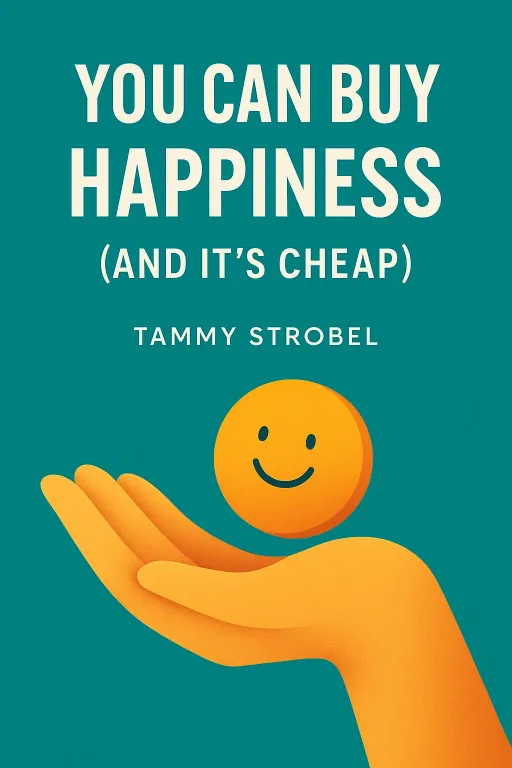
Nova: It really does. And in her book, "You Can Buy Happiness," Tammy Strobel argues just that. Today, with the help of our wonderful guest, Dora Pan, an expert in education and mindset, we're going to explore this blueprint for escaping the trap.
Dora Pan: It’s a pleasure to be here. I think this is a critical conversation.
Nova: I agree! So today we'll dive deep into this from two powerful perspectives. First, we'll expose 'The Ownership Trap' and how our possessions can end up controlling us. Then, we'll pivot to the solution, exploring how to build a life rich in experiences and connection, which the book argues is the real secret to buying happiness. Dora, with your analytical mind, I feel like you're the perfect person to help us deconstruct this.
Dora Pan: I'm ready. It sounds like we're about to debug the modern algorithm for happiness.
Deep Dive into Core Topic 1: The Ownership Trap
SECTION
Nova: I love that framing! Let's start there. Let's dive into that first idea, Dora: 'The Ownership Trap.' The book opens with a powerful quote: 'The stuff you own owns you.' What does that even mean? To understand it, we have to look at the author Tammy's own story. In the mid-2000s, she and her husband Logan were living what looked like a normal life. But behind the scenes, they were drowning in $30,000 of debt from student loans and car payments.
Dora Pan: So they were living paycheck to paycheck, just to maintain this 'normal' life.
Nova: Exactly. Tammy describes feeling depressed, trapped in a job she didn't love, all to service the debt on their stuff. She’d look at her friends with their beautiful custom homes and feel this pang of envy, this pressure to keep up. The cars, the clothes, the potential for a bigger house... it all felt like a heavy weight. They were literally working to support their possessions.
Dora Pan: It's a classic 'hedonic treadmill,' isn't it? The pursuit of the thing you think will make you happy is actually the source of your stress. It's a vicious feedback loop. What's so striking to me is that the eventual solution wasn't to figure out how to earn more, but how to less. That's a fundamental mindset shift, not just a financial one.
Nova: It's a total system reboot. And the book shows how extreme this mindset can get. It recounts these horrifying Black Friday incidents. In one, a Walmart worker named Jdimytai Damour was trampled to death in 2008 by a crowd of shoppers who shattered the store's glass doors before it even opened. They were so focused on getting deals, they literally ran over a human being.
Dora Pan: That's a terrifying breakdown of empathy. The 'thing'—the discounted television or gadget—becomes more important than the person. It shows how deeply this consumerist programming can run, to the point where it overrides our most basic human instincts for connection and compassion. From an educational standpoint, it makes you wonder what we're teaching about value.
Nova: It's a stark example of the 'trap.' But the book offers a way out. For Tammy, the turning point was discovering the story of a woman named Dee Williams, who, after a health scare, sold her large house and built a tiny, 84-square-foot home. This act of radical downsizing wasn't about deprivation; it was about reclaiming her freedom. It was the spark that made Tammy and Logan realize they could choose a different path.
Dora Pan: So, it wasn't just a financial strategy; it was an emotional and relational one. It was about reclaiming agency over their own lives. I'm curious, how did that initial shift in one area—their possessions—cascade into other parts of their lives?
Nova: That's the perfect question, and it leads us right to the second, more hopeful part of this blueprint.
Deep Dive into Core Topic 2: The Experience Economy
SECTION
Nova: Exactly. It's a breakdown of our core values. And that brings us to the second, more hopeful part of this blueprint: if we escape the ownership trap, what do we do with that newfound freedom? The book argues we invest in experiences.
Dora Pan: So if the first part was about deconstruction, this is about construction. If you reclaim the time, money, and mental energy spent on 'stuff,' what do you build?
Nova: Precisely! And Tammy gives this beautiful, simple example. After they had downsized and started paying off their debt, she and Logan decided to go on their first bike camping trip. It was a forty-mile ride in the Oregon summer heat. She was anxious, it was physically grueling, and at one point she was so exhausted she almost gave up.
Dora Pan: That doesn't sound like a 'pleasurable' experience in the moment.
Nova: Not at all! It was hard. But they made it. They got to the park, set up their tent, and recovered. And she writes that this weekend, which cost them a grand total of fifty dollars, became one ofthe best of their entire summer. The feeling of accomplishment, the shared struggle, the quiet moments in nature—that became the treasure.
Dora Pan: This is the crucial difference, isn't it? A material object, like a new phone, depreciates. It depreciates in monetary value, and it certainly depreciates in the happiness it provides as you get used to it. But an experience, especially a challenging one, becomes a story. And that story appreciates in value every time you tell it or remember it. It becomes a part of your identity and builds your self-confidence.
Nova: You've hit the nail on the head. And the science backs this up! The book cites research by Elizabeth Dunn, a professor at the University of British Columbia, who found that spending money on experiences—and also on other people—provides far more lasting satisfaction than buying more stuff for ourselves.
Dora Pan: And it's often social, which is a key component. The bike trip, building a community... these aren't solo activities. The 'experience economy' is inherently a 'relationship economy.' You're not just buying an activity; you're buying connection. This directly addresses that fundamental human need for belonging that a mountain of possessions can never fill. It's a much more efficient and effective way to 'buy' happiness.
Nova: A 'relationship economy'—I love that. It’s about investing in memories and people. The book is filled with these stories. People who quit jobs they hate to pursue work they love, not because they won the lottery, but because they intentionally lowered their expenses. They traded a big house for more time with their kids. They traded car payments for the freedom to travel.
Dora Pan: It reframes wealth entirely. It suggests that 'time wealth' and 'relationship wealth' are the real currencies we should be accumulating. As someone in education, it makes me think about how we define success for young people. We push them toward careers that promise financial wealth, but we rarely have explicit conversations about designing a life that is rich in time and autonomy. This book feels like a missing curriculum.
Nova: A missing curriculum for a happier life. That’s a perfect way to put it. It’s about making conscious choices.
Synthesis & Takeaways
SECTION
Nova: So, when we put it all together, it's really a two-step process. First, we have to recognize and consciously dismantle the 'Ownership Trap' that drains our resources. That means questioning the 'normal' we've been sold.
Dora Pan: And second, we reinvest those reclaimed resources—our time, our money, our mental energy—into the things that actually yield long-term returns on happiness: experiences, community, and relationships.
Nova: Exactly. It's a powerful and, as the title says, surprisingly cheap way to buy happiness. Dora, as we wrap up, what’s the big idea you'd want our listeners, especially those who love to analyze and build systems, to take away from this?
Dora Pan: I think it's the idea that you can and should be the architect of your own happiness. It requires the intellectual curiosity to question the 'default settings' of society and the creativity to design a life that aligns with your true, core values—not just what you're told to want. For anyone listening, especially analytical thinkers, the challenge is to treat your own happiness as the most important system you'll ever design and optimize. Don't just accept the pre-installed software.
Nova: I love that. Be the architect, not just the occupant. So here's a thought to leave with everyone, inspired by the book. What is one 'tiny pleasure,' as the book calls it, that you can intentionally savor this week? Not a big purchase, but a simple, free moment. The taste of your morning coffee, a short walk without your phone, a real conversation with a friend.
Dora Pan: A small, deliberate investment in your own well-being.
Nova: Exactly. Because as we've learned today, that's where true wealth is really found. Dora, thank you so much for helping us build this understanding today.
Dora Pan: It was my absolute pleasure, Nova. Thank you.









