

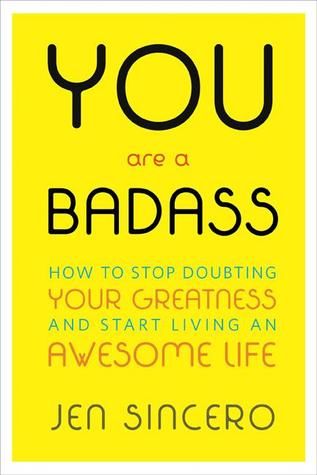
You Are a Badass
How to Stop Doubting Your Greatness and Start Living an Awesome Life
Introduction
Nova: What if I told you that a woman who was making twenty-eight thousand dollars a year, living in a tiny apartment in Venice Beach, and had exactly zero dollars in savings, went on to sell over five million copies of a self-help book and become a seven-figure success coach? That's the actual, real-life story of Jen Sincero, and today we're diving into the book that changed everything for her and millions of readers: You Are a Badass.
Nova: Exactly. And that's what makes this book resonate so deeply. It's not some polished guru telling you to meditate your way to millions from a mountaintop. Sincero had been a freelance writer, a rock musician, someone who wrote a book called Don't Sleep With Your Drummer. She tried everything from writing love letters to her uterus to marrying herself in a ceremony before she cobbled together the philosophy that became You Are a Badass.
Nova: To her uterus. That was one of the self-help experiments she mentions. She basically waded through every weird and wonderful corner of the personal development world so we don't have to. And what she distilled from all of it is a book that's part tough love, part spiritual awakening, and part stand-up comedy routine.
Nova: The engine of the entire book is a single shift: going from wanting to change your life to deciding to change your life. That's it. Not hoping, not wishing, not setting intentions and then waiting for the universe to deliver pizza. Deciding. And the book is structured around making that shift real in every area of your life.
Nova: Precisely. And today we're going to walk through the five parts of the book, the wild backstory, the surprising criticisms, and why this book has sat on the New York Times bestseller list for over five years. I'm Nova.
Key Insight 1: The Subconscious Blueprint
How You Got This Way
Nova: So the book is divided into five parts, and part one is called How You Got This Way. And it starts with a concept that Sincero returns to over and over: your subconscious beliefs are running the show, whether you realize it or not.
Nova: That's exactly it. Sincero explains that our conscious mind is the one we're aware of, the one that's spinning with thoughts all day. But our subconscious mind has no filter. It's where feelings and instincts live, and it absorbs everything when we're kids, before we even have the ability to question it. So if you grew up hearing that money is the root of all evil, or that people in your family just don't know how to make money, your subconscious treats that as absolute truth.
Nova: Bingo. Sincero says no matter what you consciously say you want, if there's a subconscious belief linking that desire to pain, you either won't let yourself have it, or you'll get it and then be, quote, rill fucked up about it and lose it anyway.
Nova: It's part of why the book broke through. She's funny, she swears, she doesn't talk like a typical self-help author. And then from the subconscious, she moves into this idea of Source Energy. She basically says we are all connected to a limitless power, call it God, the Universe, intuition, the Force, whatever you want. The name doesn't matter. What matters is that most of us are using only a tiny fraction of it.
Nova: She was extremely skeptical. She describes herself as snarky about higher power stuff. But when she started reading books about finding your true calling, every single one had a spiritual bent. So she decided to give it a shot. She figured she had nothing to lose. And as she started meditating and connecting with this idea of Source Energy, she found she could manifest things into her life with surprising speed and specificity.
Nova: Results. She started seeing things happen that she couldn't explain through pure coincidence. And she's not asking readers to blindly believe. She's saying, try it. If it works, great. If it doesn't, you've lost nothing. It's a very pragmatic approach to spirituality.
Nova: This is one of my favorite parts. She calls the ego the Big Snooze, or BS for short, which is a pretty great double meaning. The ego is your shadow self. It operates from fear. Its entire job is keeping you safe inside your comfort zone, even when that comfort zone is making you miserable. So whenever you try to grow, your ego throws up roadblocks. Suddenly you're too tired, too busy, you don't have enough money, it's not the right time. The ego would rather you stay stuck and safe than risk change.
Nova: We all do. That's the point. She says the ego seeks validation from outside sources. What do you think I should do? versus your true self, which gets validation from within: My decision feels right to me and I love and trust myself. And most of us spend way too much time in ego mode.
Key Insight 2: Self-Love and Purpose
Embracing Your Inner Badass
Nova: Part two of the book is about embracing your inner badass, and it starts with the most radical concept of all: actually loving yourself.
Nova: She frames it as a return, not an acquisition. When you were born, you already knew how to trust your instincts. You ate when you were hungry. You didn't care what anyone thought of your dancing. You played and created and loved without holding back. Then as you grew up, you absorbed the messages from everyone around you, and you replaced your instincts with fear, shame, and self-doubt.
Nova: Exactly. She has this metaphor I love. She says we're all born with a big bag of money to fund our dreams, but instead we listen to other people and invest in what they believe. You believe you're too old to switch careers. You believe you're not smart enough to start a business. Every time you buy into someone else's limiting belief, your inner fortune dwindles.
Nova: She gives very specific exercises. Stop comparing yourself to others. It's not your business what other people are doing. Do things you love and pay attention to what genuinely lights you up. Drown yourself in affirmations you need to hear. And here's the one that I think hits hardest: do not spend your life clinging to the insulting decisions you've made about yourself.
Nova: And then she tackles the big one: caring what other people think. She says people often live in fear of what others think instead of celebrating who they are, and this fear stops you from ever leaving your comfort zone. Her solution is counterintuitive though. It's not just about ignoring criticism. You also have to stop getting hooked on praise.
Nova: Her argument is that when you base your self-worth on what anyone thinks of you, good or bad, you hand all your power over to them. Then you're dependent on an external source for validation, and if that source shifts its focus or changes its mind, you end up with a full-blown identity crisis. One of her most famous quotes is: What other people think about you has nothing to do with you and everything to do with them.
Nova: She does, and her advice is refreshingly practical. She says we're all born with unique gifts, and when we share them, we're in alignment with our highest self. But if you don't know what those gifts are, don't sit around trying to figure it out. Just take a step. Get curious. Follow what interests you. Pay attention to suggestions and opportunities that present themselves. She says, quote, your job isn't to know the how, it's to know the what and to be open to discovering the how.
Nova: Exactly. One of my favorite lines in the whole book is her personal motto: I just wanna see what I can get away with. She says it takes all the pressure off, puts a punk rock attitude in, and reminds you that life is but a game. She's basically saying: treat your dreams like an experiment, not a life sentence.
Key Insight 3: Meditation, Manifestation, and Vibration
Tapping Into Source Energy
Nova: Part three is where things get a little woo-woo, and Sincero is the first to admit it. This section is about tapping into Source Energy, and her primary tool for that is meditation.
Nova: She does lean heavily into law of attraction principles, but she presents them in a much more grounded way. Her version goes like this: the universe is made of energy. Everything vibrates at a certain frequency, including you and everything you want. The basic idea is: focus on what makes you feel good and you'll attract more good. Focus on the negative and you'll attract more of what you don't want.
Nova: She gives concrete practices. Meditation is the big one. She recommends sitting cross-legged, focusing on your breath, and letting thoughts pass without attaching to them. The goal is to quiet the mental chatter so you can actually hear your inner guidance. She also recommends making vision boards, shifting your physical environment to signal to the universe that you're ready for change, and surrounding yourself with people who think the way you want to think.
Nova: Yes, the Crab Effect. If you put a bunch of crabs in a bowl and one tries to climb out, the others will pull it back down instead of helping push it out. The people you surround yourself with are mirrors for who you are and how much you love yourself. If your friends are threatened by your growth, they will unconsciously sabotage you.
Nova: She also talks about gratitude as a frequency-raising practice. Her suggestion is to write down or mentally note ten things you're grateful for every night. But not just the obvious stuff like your health or your family. She says be grateful for the difficult neighbor who taught you patience, the job you hated that clarified what you actually want. Gratitude isn't about pretending everything is perfect. It's about training yourself to see the opportunity in everything.
Nova: Yes. She says giving is one of our greatest joys and it raises our frequency. When you trust that you live in an abundant universe and give freely, whether it's your time, money, a smile, a laugh, you put yourself in flow to receive abundantly in return. It's not transactional. It's about shifting from a scarcity mindset to an abundance mindset.
Nova: And that's exactly why the book works even for skeptics. She's not asking you to sit on your couch and visualize a Ferrari. She's saying: get your mind right, then get to work. The spiritual practices are in service of action, not a replacement for it.
Key Insight 4: Fear, Procrastination, and Forgiveness
Getting Over Your BS
Nova: Part four of the book is called How to Get Over Your BS, and it's where Sincero really comes for your excuses. She tackles procrastination, perfectionism, and fear head-on.
Nova: Exactly. On perfectionism, she's blunt: nothing is ever perfect. The quest for perfection is just fear dressed up in a fancy outfit. Instead, she says just take a small step in the direction you want to go and commit to learning and adapting along the way. Once you start moving, you pick up momentum, and it actually becomes harder to stop than to keep going.
Nova: Yes. She says pay attention to the exact moment you stop working toward a goal. Is it when you hit a technical challenge? When you need to ask for help? When you have to put yourself out there publicly? If you can pinpoint the moment you quit, you can prepare for it. Hire a coach, delegate that task, remove the distraction. Don't just let the same pattern play out over and over.
Nova: On fear, she has one of the most powerful lines in the book. She says: Fear lives in the future. The feeling of being afraid is real, but the fear itself is all made up because it hasn't happened yet.
Nova: Right. And she has another one: view fear from your rearview mirror. No matter how intimidating your next leap seems right now, it will look small when you look back at it someday. So why wait?
Nova: She frames forgiveness as an act of self-care, not an act of generosity toward the person who wronged you. She says holding onto resentment is like drinking poison and expecting the other person to die. Forgiveness is about putting your desire to feel good before your desire to be right. It's about taking responsibility for your own happiness instead of pretending it's in somebody else's hands.
Nova: And she acknowledges that. She's not saying what they did was okay. She's saying you deserve to be free of the weight. You're not forgiving them for their benefit. You're doing it so you can stop carrying around anger that's only hurting you.
Nova: That's a fair critique. Sincero writes from her own experience, and while she was broke, she was also a white woman with a college degree and connections in the publishing and music industries. The book doesn't deeply engage with systemic inequality, racism, or economic barriers. It operates from a place of radical personal responsibility, which can read as tone-deaf if you're facing genuine structural obstacles.
Nova: I think that's exactly right. The book is a tool for the internal work. But the external realities of the world don't disappear just because you've meditated about them. Sincero herself would probably say, great, now that you've acknowledged those barriers, what are you going to do about it? Her answer is always action.
Key Insight 5: Decision, Action, and Momentum
How to Kick Ass
Nova: The final section of the book is called How to Kick Ass, and it's the shortest but most actionable part. The first principle is deceptively simple: make the decision.
Nova: Sincero draws a sharp distinction. She says so often we pretend we've made a decision when what we've really done is signed up to try until it gets too uncomfortable. Deciding means jumping in all the way, doing whatever it takes, and going after your dreams with what she calls the tenacity of a dateless cheerleader a week before prom night.
Nova: It's very her. When you truly decide, you sign up to keep moving forward regardless of what's in your path. The only failure is quitting. Everything else is just gathering information.
Nova: A few things. First, set realistic goals and get clear on your vision. She says your job isn't to know exactly how everything will unfold. Your job is to know the what and be open to discovering the how. Second, hang out with people who are already where you want to be. Not to network in a sleazy way, but because proximity changes what feels possible.
Nova: Huge. She says take care of your body, get in the zone, and take action. Each time you grow, it's going to be uncomfortable because you're learning something new. That discomfort is the price of admission. Breathe through it. Keep moving forward.
Nova: Yes. In order to kick ass, you must first lift up your foot. She's a self-quoter, which is delightfully on-brand. But the point is: the first step is always the hardest, and it's always smaller than you think. You don't need to have the whole path mapped out. You just need to start.
Nova: She reframes failure entirely. Nobody who ever accomplished anything big or new or worth raising a celebratory fist in the air did it from their comfort zone. They risked ridicule and failure and sometimes even death, she writes. The point is that failure isn't the opposite of success. It's part of the process. Every failure is information. Use it, adjust, and keep going.
Nova: That's what gives the book its credibility. She was forty-something, broke, living in a crappy apartment. She'd published two books that went nowhere. She tried being a rock star. She tried freelance writing. She tried success coaching. She failed repeatedly. And then, when she finally put all the pieces together, You Are a Badass hit number one on the New York Times list and stayed in the top ten for over five years. She went from twenty-eight thousand dollars a year to seven figures.
Nova: And she's very clear that it wasn't overnight. It took years of uncomfortable work. But the shift from wanting to deciding, that was the hinge point. Everything changed after that.
Conclusion
Nova: So let's bring it all together. You Are a Badass by Jen Sincero is built around five core ideas. First, your subconscious beliefs are running the show, and if you want a different life, you have to excavate and rewrite those beliefs. Second, loving yourself isn't indulgent. It's the foundation for everything else, and it requires unlearning all the garbage you've absorbed about not being enough. Third, there is a force bigger than you, call it whatever you want, and connecting to it through meditation, gratitude, and giving will change what's possible for you. Fourth, fear, perfectionism, and procrastination are just your ego trying to keep you safe, and you have to learn to act in spite of them. And fifth, the difference between wanting and deciding is everything. Decide to change, and everything else follows.
Nova: I think the healthiest way to read this book is as a call to personal agency within whatever circumstances you're in. Sincero's message isn't that the world is fair. It's that you have more power than you think, and most of us leave most of it on the table. The question isn't whether you're qualified or ready or worthy. The question is: are you willing to decide?
Nova: Exactly. One of her quotes I keep coming back to is this: You are responsible for what you say and do. You are not responsible for whether or not people freak out about it. I think that captures the spirit of the whole book. Own your life. Stop apologizing for who you are. And go make something happen.
Nova: Same here. Thanks for joining us on this deep dive into You Are a Badass. If this episode resonated with you, maybe go write down ten things you're grateful for tonight. Or better yet, take one small step toward something you've been putting off. Lift up that foot.