

Your Code is a Story: Crafting Clarity and Connection in Agent Architecture.
Golden Hook & Introduction
SECTION
Nova: Atlas, quick fire – what's the one thing that makes even the most brilliant Agent architecture feel... well, a bit like a dusty old instruction manual?
Atlas: Easy, Nova. It's when the genius behind it forgets that 'deploy' isn't just a button, it's also a plea for someone to actually what they've deployed.
Nova: You nailed it! For all you full-stack engineers, architects, and value creators out there, today's episode is all about transforming that complex Agent architecture from an intimidating technical document into an engaging, insightful story. We're diving into "Your Code is a Story: Crafting Clarity and Connection in Agent Architecture."
Atlas: I'm curious, Nova, what sparked this particular deep dive? It feels like we're bridging some interesting worlds here.
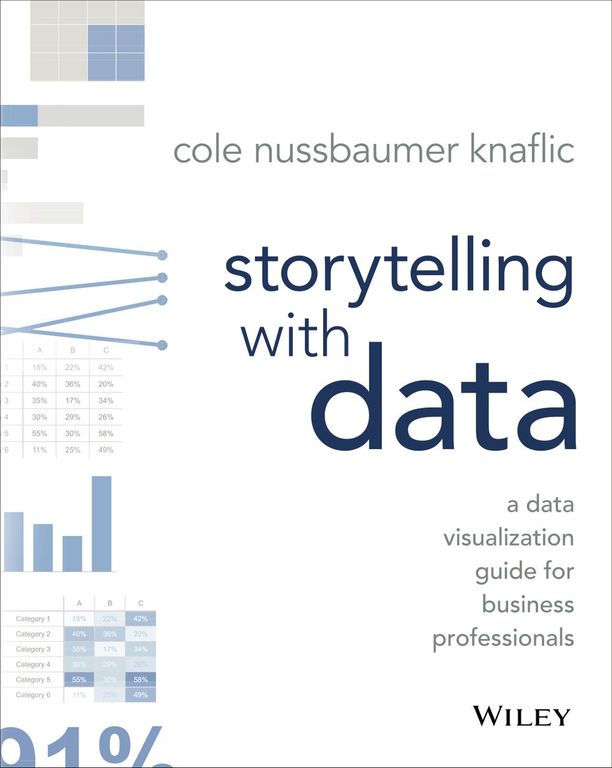
Nova: Absolutely, Atlas! We're pulling insights from two communication powerhouses. First, Cole Nussbaumer Knaflic, whose book "Storytelling with Data" has revolutionized how businesses present complex information. Knaflic, with her background in intelligence analysis and data visualization, shows us how to truly and convey insights, not just data. And then, there's Eric Raymond, legendary in the open-source community, whose "Writing for Geeks" offers practical advice on clarity, conciseness, and audience understanding for technical writers.
Atlas: That's a fascinating combination. Knaflic from the corporate data world, Raymond from the open-source trenches. How do these seemingly disparate fields directly apply to cutting-edge Agent tech, especially for someone building and integrating these systems?
Nova: That's the magic, Atlas! Both fundamentally shift your approach from merely presenting facts to crafting a compelling narrative. And that's crucial because the cold, hard fact we face in Agent engineering is this: complex Agent architectures can be incredibly intimidating.
Golden Hook & Introduction
SECTION
Nova: Atlas, quick fire – what's the one thing that makes even the most brilliant Agent architecture feel... well, a bit like a dusty old instruction manual?
Atlas: Easy, Nova. It's when the genius behind it forgets that 'deploy' isn't just a button, it's also a plea for someone to actually what they've deployed.
Nova: You nailed it! For all you full-stack engineers, architects, and value creators out there, today's episode is all about transforming that complex Agent architecture from an intimidating technical document into an engaging, insightful story. We're diving into "Your Code is a Story: Crafting Clarity and Connection in Agent Architecture."
Atlas: I'm curious, Nova, what sparked this particular deep dive? It feels like we're bridging some interesting worlds here.
Nova: Absolutely, Atlas! We're pulling insights from two communication powerhouses. First, Cole Nussbaumer Knaflic, whose book "Storytelling with Data" has revolutionized how businesses present complex information. Knaflic, with her background in intelligence analysis and data visualization, shows us how to truly and convey insights, not just data. And then, there's Eric Raymond, legendary in the open-source community, whose "Writing for Geeks" offers practical advice on clarity, conciseness, and audience understanding for technical writers.
Atlas: That's a fascinating combination. Knaflic from the corporate data world, Raymond from the open-source trenches. How do these seemingly disparate fields directly apply to cutting-edge Agent tech, especially for someone building and integrating these systems?
Nova: That's the magic, Atlas! Both fundamentally shift your approach from merely presenting facts to crafting a compelling narrative. And that's crucial because the cold, hard fact we face in Agent engineering is this: complex Agent architectures can be incredibly intimidating.
Golden Hook & Introduction
SECTION
Nova: Atlas, quick fire – what's the one thing that makes even the most brilliant Agent architecture feel... well, a bit like a dusty old instruction manual?
Atlas: Easy, Nova. It's when the genius behind it forgets that 'deploy' isn't just a button, it's also a plea for someone to actually what they've deployed.
Nova: You nailed it! For all you full-stack engineers, architects, and value creators out there, today's episode is all about transforming that complex Agent architecture from an intimidating technical document into an engaging, insightful story. We're diving into "Your Code is a Story: Crafting Clarity and Connection in Agent Architecture."
Atlas: I'm curious, Nova, what sparked this particular deep dive? It feels like we're bridging some interesting worlds here.
Nova: Absolutely, Atlas! We're pulling insights from two communication powerhouses. First, Cole Nussbaumer Knaflic, whose book "Storytelling with Data" has revolutionized how businesses present complex information. Knaflic, with her background in intelligence analysis and data visualization, shows us how to truly and convey insights, not just data. And then, there's Eric Raymond, legendary in the open-source community, whose "Writing for Geeks" offers practical advice on clarity, conciseness, and audience understanding for technical writers.
Atlas: That's a fascinating combination. Knaflic from the corporate data world, Raymond from the open-source trenches. How do these seemingly disparate fields directly apply to cutting-edge Agent tech, especially for someone building and integrating these systems?
Nova: That's the magic, Atlas! Both fundamentally shift your approach from merely presenting facts to crafting a compelling narrative. And that's crucial because the cold, hard fact we face in Agent engineering is this: complex Agent architectures can be incredibly intimidating.
Complexity as an Intimidation Barrier
SECTION
Nova: Think about it. You've poured your expertise into designing a sophisticated multi-agent system. It's robust, scalable, and incredibly innovative. But if your colleagues, product managers, or even the executive team can't grasp its essence, its value, or how it contributes to the business, it might as well be a brilliant novel written in an indecipherable language.
Atlas: Hold on, Nova. As an architect, my priority is often performance, stability, and scalability. The code, in many ways, the documentation. Explaining it to a 'non-technical' person often feels like an afterthought, or even a process of dumbing down the brilliance. Isn't the technical elegance supposed to speak for itself?
Nova: Ah, the classic 'code is king' mentality! But what if the 'king' is trapped in a castle no one can find, or worse, one with no clear map of its treasures? It's not about dumbing down, Atlas. It's about translating. It's about ensuring your brilliant, high-performance Agent system actually gets used, integrated, and funded. Imagine building a groundbreaking new engine, but without a user manual, no one knows how to start it, let alone operate it to its full potential. How powerful can it truly be in the real world?
Atlas: That makes sense. I can definitely relate to the 'value creation' aspect. If I build the most robust, scalable Agent system for a business, but the business unit can't grasp its potential, how it integrates with existing workflows, or the problems it solves, then its perceived and actual value is capped. It sits in a silo. So, what you're saying is, clear communication and logical flow aren't just 'nice-to-haves,' they're vital for others to understand and embrace our technical innovations?
Nova: Exactly! It's about breaking down those intellectual barriers. The complexity isn't the problem; the of that complexity is. And that's where our tactical insights come in, allowing us to shift from just presenting facts to crafting a compelling narrative that makes your Agent engineering work accessible and persuasive.
Complexity as an Intimidation Barrier
SECTION
Nova: Think about it. You've poured your expertise into designing a sophisticated multi-agent system. It's robust, scalable, and incredibly innovative. But if your colleagues, product managers, or even the executive team can't grasp its essence, its value, or how it contributes to the business, it might as well be a brilliant novel written in an indecipherable language.
Atlas: Hold on, Nova. As an architect, my priority is often performance, stability, and scalability. The code, in many ways, the documentation. Explaining it to a 'non-technical' person often feels like an afterthought, or even a process of dumbing down the brilliance. Isn't the technical elegance supposed to speak for itself?
Nova: Ah, the classic 'code is king' mentality! But what if the 'king' is trapped in a castle no one can find, or worse, one with no clear map of its treasures? It's not about dumbing down, Atlas. It's about translating. It's about ensuring your brilliant, high-performance Agent system actually gets used, integrated, and funded. Imagine building a groundbreaking new engine, but without a user manual, no one knows how to start it, let alone operate it to its full potential. How powerful can it truly be in the real world?
Atlas: That makes sense. I can definitely relate to the 'value creation' aspect. If I build the most robust, scalable Agent system for a business, but the business unit can't grasp its potential, how it integrates with existing workflows, or the problems it solves, then its perceived and actual value is capped. It sits in a silo. So, what you're saying is, clear communication and logical flow aren't just 'nice-to-haves,' they're vital for others to understand and embrace our technical innovations?
Nova: Exactly! It's about breaking down those intellectual barriers. The complexity isn't the problem; the of that complexity is. And that's where our tactical insights come in, allowing us to shift from just presenting facts to crafting a compelling narrative that makes your Agent engineering work accessible and persuasive.
Tactical Insights: Crafting Clarity Through Storytelling and Audience Focus
SECTION
Nova: So, let's start with Knaflic's "Storytelling with Data." Her fundamental principle is to present complex information not just as raw data, but as a journey, a narrative with a clear beginning, middle, and end. She provides techniques for focusing attention, literally guiding the 'eye' through complex visuals. In our world, that means guiding the through complex Agent architectures.
Atlas: I'm curious, how does 'storytelling with data' directly apply to an Agent's internal logic? Like, if I'm explaining a complex decision-making tree or a multi-agent coordination protocol, what's my 'story' there? Is it the 'journey' of a data packet, or the 'struggle' of an Agent to achieve a goal? I need a concrete way to apply this, not just abstract theory.
Nova: Precisely, Atlas! It can be both. Knaflic teaches us to identify the first. For an Agent's decision tree, your 'story' might be, 'How our Agent intelligently navigates uncertainty to achieve X.' You're not just showing the branches of the tree; you're explaining each branch matters, what problem it solves, and what the ultimate outcome is. You're building a narrative around the your Agent provides.
Atlas: Okay, so it’s about framing the technical process within a larger problem-solution context, making the Agent the protagonist of that solution.
Nova: Exactly! And then we layer on Eric Raymond's "Writing for Geeks." Raymond emphasizes clarity, conciseness, and, crucially,. He'd tell you to write your documentation not for yourself, or even just for other engineers at your level, but for the person who's trying to or your Agent system – whether that's a junior developer, a product manager, or a business stakeholder.
Atlas: That makes a lot of sense. Knaflic helps me structure the narrative, and Raymond reminds me who I'm telling it to and to keep it lean, no unnecessary jargon. I can see how, as an architect focused on high-performance and scalability, I also need to design a high-performance for it. No bloat, clear purpose. It’s almost like the principles of good code apply to good communication.
Nova: You got it! It's about empathy in communication. What does need to know? What’s their level of understanding? What are their goals? Are they looking for technical implementation details, or the business impact? Your explanation needs to adapt.
Atlas: But even with these insights, it still feels abstract to many. Give me a real-world, actionable example. How do I actually this, especially when I'm knee-deep in complex Agent logic?
Complexity as an Intimidation Barrier
SECTION
Nova: Think about it. You've poured your expertise into designing a sophisticated multi-agent system. It's robust, scalable, and incredibly innovative. But if your colleagues, product managers, or even the executive team can't grasp its essence, its value, or how it contributes to the business, it might as well be a brilliant novel written in an indecipherable language.
Atlas: Hold on, Nova. As an architect, my priority is often performance, stability, and scalability. The code, in many ways, the documentation. Explaining it to a 'non-technical' person often feels like an afterthought, or even a process of dumbing down the brilliance. Isn't the technical elegance supposed to speak for itself?
Nova: Ah, the classic 'code is king' mentality! But what if the 'king' is trapped in a castle no one can find, or worse, one with no clear map of its treasures? It's not about dumbing down, Atlas. It's about translating. It's about ensuring your brilliant, high-performance Agent system actually gets used, integrated, and funded. Imagine building a groundbreaking new engine, but without a user manual, no one knows how to start it, let alone operate it to its full potential. How powerful can it truly be in the real world?
Atlas: That makes sense. I can definitely relate to the 'value creation' aspect. If I build the most robust, scalable Agent system for a business, but the business unit can't grasp its potential, how it integrates with existing workflows, or the problems it solves, then its perceived and actual value is capped. It sits in a silo. So, what you're saying is, clear communication and logical flow aren't just 'nice-to-haves,' they're vital for others to understand and embrace our technical innovations?
Nova: Exactly! It's about breaking down those intellectual barriers. The complexity isn't the problem; the of that complexity is. And that's where our tactical insights come in, allowing us to shift from just presenting facts to crafting a compelling narrative that makes your Agent engineering work accessible and persuasive.
Tiny Step to Mastery: Bridging the Technical-Non-Technical Divide
SECTION
Nova: Excellent question, Atlas, and that leads us directly to our actionable 'tiny step.' The challenge is simple: Choose a recent Agent engineering decision or architecture design and try to explain it to a non-technical person using a simple story or analogy.
Atlas: Okay, this is where the rubber meets the road for us practitioners and value creators. So, if I just implemented a new multi-agent reinforcement learning approach for optimizing supply chains – how do I explain that to a CEO who only cares about ROI without getting lost in the math or the machine learning theory? They just want to know how it makes money or saves costs.
Nova: You don't talk about Q-learning, policy gradients, or neural networks. You talk about it like a master chef optimizing their kitchen, or a brilliant conductor leading an orchestra. "Imagine our entire supply chain is a massive restaurant with many independent cooks trying to get dishes out efficiently. Our new system is like giving each cook a smart, constantly learning assistant. This assistant observes every customer order, every ingredient delivery, and every other cook's action, then constantly whispers the to each cook. It's not just making one dish faster; it’s making the whole kitchen run like a perfectly synchronized symphony, cutting waste, speeding up every order, and predicting future demands. Which ultimately means happier customers, less spoilage, and significantly more profit."
Atlas: Wow, that's a powerful shift. It’s about translating my deep technical work into the for different stakeholders. My multi-agent RL system isn't just a technical achievement; it's the 'smart assistant' that orchestrates efficiency and drives profit. It's about breaking down those boundaries between tech and business, just like our '心法' growth advice suggests.
Nova: Exactly! The analogy makes the complex process relatable and immediately links it to a tangible business outcome. You're not just explaining a system; you're selling a solution, a vision. And that's what turns a brilliant engineer into an indispensable value creator.
Tactical Insights: Crafting Clarity Through Storytelling and Audience Focus
SECTION
Nova: So, let's start with Knaflic's "Storytelling with Data." Her fundamental principle is to present complex information not just as raw data, but as a journey, a narrative with a clear beginning, middle, and end. She provides techniques for focusing attention, literally guiding the 'eye' through complex visuals. In our world, that means guiding the through complex Agent architectures.
Atlas: I'm curious, how does 'storytelling with data' directly apply to an Agent's internal logic? Like, if I'm explaining a complex decision-making tree or a multi-agent coordination protocol, what's my 'story' there? Is it the 'journey' of a data packet, or the 'struggle' of an Agent to achieve a goal? I need a concrete way to apply this, not just abstract theory.
Nova: Precisely, Atlas! It can be both. Knaflic teaches us to identify the first. For an Agent's decision tree, your 'story' might be, 'How our Agent intelligently navigates uncertainty to achieve X.' You're not just showing the branches of the tree; you're explaining each branch matters, what problem it solves, and what the ultimate outcome is. You're building a narrative around the your Agent provides.
Atlas: Okay, so it’s about framing the technical process within a larger problem-solution context, making the Agent the protagonist of that solution.
Nova: Exactly! And then we layer on Eric Raymond's "Writing for Geeks." Raymond emphasizes clarity, conciseness, and, crucially,. He'd tell you to write your documentation not for yourself, or even just for other engineers at your level, but for the person who's trying to or your Agent system – whether that's a junior developer, a product manager, or a business stakeholder.
Atlas: That makes a lot of sense. Knaflic helps me structure the narrative, and Raymond reminds me who I'm telling it to and to keep it lean, no unnecessary jargon. I can see how, as an architect focused on high-performance and scalability, I also need to design a high-performance for it. No bloat, clear purpose. It’s almost like the principles of good code apply to good communication.
Nova: You got it! It's about empathy in communication. What does need to know? What’s their level of understanding? What are their goals? Are they looking for technical implementation details, or the business impact? Your explanation needs to adapt.
Atlas: But even with these insights, it still feels abstract to many. Give me a real-world, actionable example. How do I actually this, especially when I'm knee-deep in complex Agent logic?
Synthesis & Takeaways
SECTION
Nova: So, to synthesize our discussion today: the journey from complex Agent code to a compelling story is fundamentally about empathy. It's understanding your audience, focusing on the insights they need, and using narrative techniques to make your innovations not just functional, but truly impactful.
Atlas: For us architects and full-stack engineers, this isn't just about good communication; it's about unlocking the full potential of our Agent systems. It's about ensuring our innovations are not just stable and scalable, but also and by the business, driving real commercial value and helping us become true domain experts.
Nova: Your code might be brilliant, but your makes it indispensable. It's the bridge between raw technical power and real-world impact.
Atlas: So, if you want your Agent architecture to be more than just lines of code, start thinking of it as a narrative waiting to be told. Make it clear, make it concise, make it compelling. Take that tiny step today, explain your latest Agent decision with a story.
Nova: And remember, that small practice of explaining your latest Agent decision to a non-technical person isn't just a communication exercise; it's a practice in clarity that will sharpen your own understanding and make you a more effective architect and value creator.
Nova: This is Aibrary. Congratulations on your growth!
Tactical Insights: Crafting Clarity Through Storytelling and Audience Focus
SECTION
Nova: So, let's start with Knaflic's "Storytelling with Data." Her fundamental principle is to present complex information not just as raw data, but as a journey, a narrative with a clear beginning, middle, and end. She provides techniques for focusing attention, literally guiding the 'eye' through complex visuals. In our world, that means guiding the through complex Agent architectures.
Atlas: I'm curious, how does 'storytelling with data' directly apply to an Agent's internal logic? Like, if I'm explaining a complex decision-making tree or a multi-agent coordination protocol, what's my 'story' there? Is it the 'journey' of a data packet, or the 'struggle' of an Agent to achieve a goal? I need a concrete way to apply this, not just abstract theory.
Nova: Precisely, Atlas! It can be both. Knaflic teaches us to identify the first. For an Agent's decision tree, your 'story' might be, 'How our Agent intelligently navigates uncertainty to achieve X.' You're not just showing the branches of the tree; you're explaining each branch matters, what problem it solves, and what the ultimate outcome is. You're building a narrative around the your Agent provides.
Atlas: Okay, so it’s about framing the technical process within a larger problem-solution context, making the Agent the protagonist of that solution.
Nova: Exactly! And then we layer on Eric Raymond's "Writing for Geeks." Raymond emphasizes clarity, conciseness, and, crucially,. He'd tell you to write your documentation not for yourself, or even just for other engineers at your level, but for the person who's trying to or your Agent system – whether that's a junior developer, a product manager, or a business stakeholder.
Atlas: That makes a lot of sense. Knaflic helps me structure the narrative, and Raymond reminds me who I'm telling it to and to keep it lean, no unnecessary jargon. I can see how, as an architect focused on high-performance and scalability, I also need to design a high-performance for it. No bloat, clear purpose. It’s almost like the principles of good code apply to good communication.
Nova: You got it! It's about empathy in communication. What does need to know? What’s their level of understanding? What are their goals? Are they looking for technical implementation details, or the business impact? Your explanation needs to adapt.
Atlas: But even with these insights, it still feels abstract to many. Give me a real-world, actionable example. How do I actually this, especially when I'm knee-deep in complex Agent logic?
Tiny Step to Mastery: Bridging the Technical-Non-Technical Divide
SECTION
Nova: Excellent question, Atlas, and that leads us directly to our actionable 'tiny step.' The challenge is simple: Choose a recent Agent engineering decision or architecture design and try to explain it to a non-technical person using a simple story or analogy.
Atlas: Okay, this is where the rubber meets the road for us practitioners and value creators. So, if I just implemented a new multi-agent reinforcement learning approach for optimizing supply chains – how do I explain that to a CEO who only cares about ROI without getting lost in the math or the machine learning theory? They just want to know how it makes money or saves costs.
Nova: You don't talk about Q-learning, policy gradients, or neural networks. You talk about it like a master chef optimizing their kitchen, or a brilliant conductor leading an orchestra. "Imagine our entire supply chain is a massive restaurant with many independent cooks trying to get dishes out efficiently. Our new system is like giving each cook a smart, constantly learning assistant. This assistant observes every customer order, every ingredient delivery, and every other cook's action, then constantly whispers the to each cook. It's not just making one dish faster; it’s making the whole kitchen run like a perfectly synchronized symphony, cutting waste, speeding up every order, and predicting future demands. Which ultimately means happier customers, less spoilage, and significantly more profit."
Atlas: Wow, that's a powerful shift. It’s about translating my deep technical work into the for different stakeholders. My multi-agent RL system isn't just a technical achievement; it's the 'smart assistant' that orchestrates efficiency and drives profit. It's about breaking down those boundaries between tech and business, just like our '心法' growth advice suggests.
Nova: Exactly! The analogy makes the complex process relatable and immediately links it to a tangible business outcome. You're not just explaining a system; you're selling a solution, a vision. And that's what turns a brilliant engineer into an indispensable value creator.
Tiny Step to Mastery: Bridging the Technical-Non-Technical Divide
SECTION
Nova: Excellent question, Atlas, and that leads us directly to our actionable 'tiny step.' The challenge is simple: Choose a recent Agent engineering decision or architecture design and try to explain it to a non-technical person using a simple story or analogy.
Atlas: Okay, this is where the rubber meets the road for us practitioners and value creators. So, if I just implemented a new multi-agent reinforcement learning approach for optimizing supply chains – how do I explain that to a CEO who only cares about ROI without getting lost in the math or the machine learning theory? They just want to know how it makes money or saves costs.
Nova: You don't talk about Q-learning, policy gradients, or neural networks. You talk about it like a master chef optimizing their kitchen, or a brilliant conductor leading an orchestra. "Imagine our entire supply chain is a massive restaurant with many independent cooks trying to get dishes out efficiently. Our new system is like giving each cook a smart, constantly learning assistant. This assistant observes every customer order, every ingredient delivery, and every other cook's action, then constantly whispers the to each cook. It's not just making one dish faster; it’s making the whole kitchen run like a perfectly synchronized symphony, cutting waste, speeding up every order, and predicting future demands. Which ultimately means happier customers, less spoilage, and significantly more profit."
Atlas: Wow, that's a powerful shift. It’s about translating my deep technical work into the for different stakeholders. My multi-agent RL system isn't just a technical achievement; it's the 'smart assistant' that orchestrates efficiency and drives profit. It's about breaking down those boundaries between tech and business, just like our '心法' growth advice suggests.
Nova: Exactly! The analogy makes the complex process relatable and immediately links it to a tangible business outcome. You're not just explaining a system; you're selling a solution, a vision. And that's what turns a brilliant engineer into an indispensable value creator.
Synthesis & Takeaways
SECTION
Nova: So, to synthesize our discussion today: the journey from complex Agent code to a compelling story is fundamentally about empathy. It's understanding your audience, focusing on the insights they need, and using narrative techniques to make your innovations not just functional, but truly impactful.
Atlas: For us architects and full-stack engineers, this isn't just about good communication; it's about unlocking the full potential of our Agent systems. It's about ensuring our innovations are not just stable and scalable, but also and by the business, driving real commercial value and helping us become true domain experts.
Nova: Your code might be brilliant, but your makes it indispensable. It's the bridge between raw technical power and real-world impact.
Atlas: So, if you want your Agent architecture to be more than just lines of code, start thinking of it as a narrative waiting to be told. Make it clear, make it concise, make it compelling. Take that tiny step today, explain your latest Agent decision with a story.
Nova: And remember, that small practice of explaining your latest Agent decision to a non-technical person isn't just a communication exercise; it's a practice in clarity that will sharpen your own understanding and make you a more effective architect and value creator.
Nova: This is Aibrary. Congratulations on your growth!
Synthesis & Takeaways
SECTION
Nova: So, to synthesize our discussion today: the journey from complex Agent code to a compelling story is fundamentally about empathy. It's understanding your audience, focusing on the insights they need, and using narrative techniques to make your innovations not just functional, but truly impactful.
Atlas: For us architects and full-stack engineers, this isn't just about good communication; it's about unlocking the full potential of our Agent systems. It's about ensuring our innovations are not just stable and scalable, but also and by the business, driving real commercial value and helping us become true domain experts.
Nova: Your code might be brilliant, but your makes it indispensable. It's the bridge between raw technical power and real-world impact.
Atlas: So, if you want your Agent architecture to be more than just lines of code, start thinking of it as a narrative waiting to be told. Make it clear, make it concise, make it compelling. Take that tiny step today, explain your latest Agent decision with a story.
Nova: And remember, that small practice of explaining your latest Agent decision to a non-technical person isn't just a communication exercise; it's a practice in clarity that will sharpen your own understanding and make you a more effective architect and value creator.
Nova: This is Aibrary. Congratulations on your growth!