

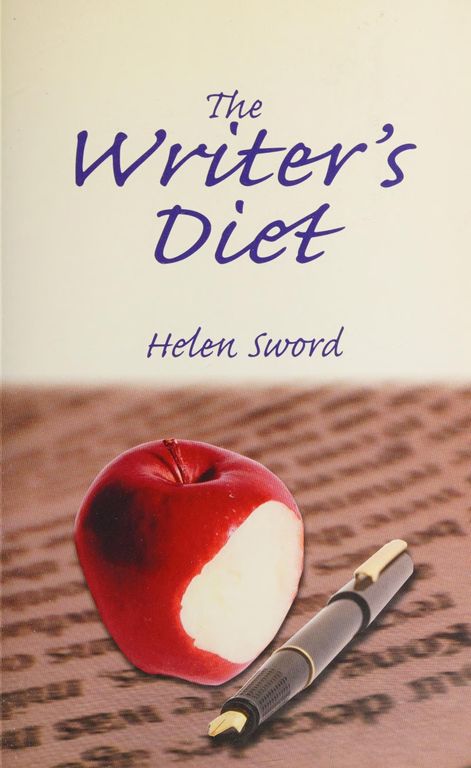
Writer's Diet
A Guide to Fit Prose
Introduction
Nova: Imagine you just finished a thousand-word article. You are feeling proud, you hit the word count, and you think the prose sounds sophisticated. But then, you run it through a specific diagnostic tool, and the result comes back with a flashing red warning: Heart Attack.
Nova: In this case, it is the writing. We are diving into the world of Helen Sword and her book, The Writer's Diet. She argues that most of our professional and academic writing is actually suffering from a lack of fitness. It is flabby, it is bloated, and in some cases, it is literally on the verge of a verbal cardiac arrest.
Nova: Not at all. Helen Sword is actually an expert in higher education and academic writing, and she hates rigid rules. The Writer's Diet isn't about being a grammar snob. It is about energy. It is about making your sentences move with purpose instead of just sitting there on the page like a sack of potatoes.
Key Insight 1
The Philosophy of Verbal Fitness
Nova: To understand the book, you have to buy into the metaphor. Sword treats writing like a physical body. If you eat nothing but junk food, you get sluggish. If you load your sentences with junk words, the meaning gets buried under the weight.
Nova: It is more about the function of the words. She breaks it down into five specific categories: Verbs, Nouns, Prepositions, Adjectives/Adverbs, and what she calls Waste Words. The goal is to achieve a balance. She even created an online tool where you paste in a sample of your writing, and it gives you a rating from Lean to Heart Attack.
Nova: That is the interesting part. Sword admits that even great writers like E. B. White or Henry James sometimes get a Flabby rating. The point isn't that you must be Lean all the time. The point is that if you are Flabby all the time, your reader is going to get exhausted. You are making them do too much work to find the actual point.
Nova: Exactly. She wants us to strip away the unnecessary padding. She found that academic writing in particular is notorious for this. We use big, abstract words to sound smarter, but often we are just obscuring the truth. She calls this the base of the pyramid. If your verbs and nouns are weak, the whole structure collapses.
Nova: It almost always starts with the verbs. Or rather, the lack of them. We tend to rely on what she calls be-verbs. Am, is, are, was, were. They are the couch potatoes of the language. They don't do anything; they just exist.
Nova: It is useful, but it is static. If every sentence starts with It is or There are, nothing is actually happening. Sword challenges us to find action. Instead of saying The results are an indication of, say The results indicate. It is a tiny shift, but it changes the entire energy of the sentence.
Key Insight 2
The Zombie Noun Apocalypse
Nova: Now we get to my favorite part of her research. She coined a term that has actually become quite famous in writing circles: Zombie Nouns.
Nova: In a way, yes! The technical term is nominalization. These are nouns that have been created from verbs or adjectives. Think of a word like implementation. It started as the verb implement, but then we added a suffix and turned it into a heavy, abstract noun.
Nova: That is the trap! Sword calls them zombies because they suck the life out of the sentence. They take an action, which is full of life, and they turn it into a thing. When you have a sentence full of zombie nouns, nobody is doing anything. Things are just happening in the abstract.
Nova: Okay, listen to this: The proliferation of nominalizations results in the obfuscation of meaning.
Nova: Right? Proliferation, nominalization, obfuscation. All zombies. Now, try this: Using too many abstract nouns hides your meaning.
Nova: Exactly. The zombies have been banished. Sword's rule of thumb is to look for words ending in -ion, -ism, -ty, or -ment. If your page is covered in them, you have a zombie infestation. You need to go back and find the verbs hidden inside those nouns and set them free.
Nova: She calls it Prepositional Podge. It is when you string together too many prepositions in a row. The collection of the data for the purpose of the study of the effects... It creates a sort of stuttering effect. The reader's brain has to keep pausing to figure out how all these little pieces connect.
Key Insight 3
Verbal Glue and Waste Words
Nova: That paperclip analogy is perfect. Sword actually calls prepositions the verbal glue of a sentence. You need some glue to hold things together, but if you use too much, everything just gets sticky and messy.
Nova: Usually, you have to rewrite the sentence to be more direct. Instead of the opinion of the committee, you say the committee's opinion. You use a possessive or you turn a phrase into an adjective. It makes the sentence leaner and faster.
Nova: They can, but Sword warns against what she calls Ad-dictions. This is when we use adverbs to prop up weak verbs. If you write he ran quickly, you are using an adverb to do the work that a better verb could do. Why not say he sprinted or he dashed?
Nova: Precisely. And then there is the final category, which is often the hardest to fix: Waste Words. These are the pointers like it, this, that, and there.
Nova: They become waste when they are used vaguely. Think of how many sentences start with It is important to note that... or This shows that...
Nova: We all do! But Sword points out that when you use this without a clear noun following it, the reader might not know exactly what this refers to. Is it the previous sentence? The whole paragraph? The entire theory? It creates a fuzzy connection. She suggests being more specific. Instead of This shows, try This experiment shows or This data suggests.
Nova: That is exactly it. She isn't saying you can never use the word that. She is saying don't use it as a crutch. If you can remove a word and the sentence still means the same thing, that word was flab.
Key Insight 4
The Creativity Paradox
Nova: One of the most surprising things about Helen Sword's approach is that she doesn't want everyone to write exactly the same way. She isn't trying to turn us all into Ernest Hemingway.
Nova: She agrees! In fact, she argues that once you trim the flab, you actually have more room for creativity. When your sentences aren't weighed down by zombie nouns and prepositional podge, you can use metaphors, you can play with rhythm, and you can actually develop a unique voice.
Nova: Exactly. She uses the example of professional athletes. They have very low body fat, but they are incredibly powerful and flexible. That is what she wants for our prose. She even talks about the importance of pleasure in writing. If you are bored writing it, your reader will definitely be bored reading it.
Nova: Sword's research into academic writing actually showed that the most cited and respected scholars often have the most readable styles. They don't hide behind jargon. They use active verbs and clear structures because they want their ideas to be understood.
Nova: It really is. And she provides a lot of practical exercises in the book to help you get there. It is not just a theory; it is a workout plan. She suggests taking a paragraph you've written and circling all the be-verbs. Then, try to replace half of them. It is harder than it sounds!
Nova: But once you start doing it, you notice a change. Your writing starts to have a pulse. It starts to breathe. That is the ultimate goal of the Writer's Diet: to bring the human element back into professional communication.
Conclusion
Nova: We have covered a lot of ground today, from the dangers of zombie nouns to the sticky mess of prepositional podge. The big takeaway from Helen Sword is that writing is a craft that requires constant tuning. It is not a one-and-done thing.
Nova: Don't be discouraged if you are! Even the best writers have flabby first drafts. The magic happens in the editing. By applying the five categories of the Writer's Diet, you can transform a sluggish, confusing piece of text into something that is lean, fit, and ready to perform.
Nova: Well said. If you want to dive deeper, I highly recommend picking up The Writer's Diet by Helen Sword. It is a short, punchy read that practices exactly what it preaches. It might just change the way you look at a blank page forever.
Nova: Any time. This is Aibrary. Congratulations on your growth!