

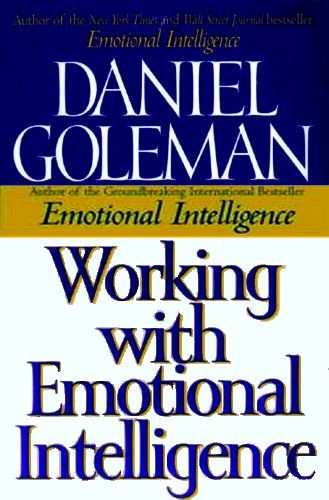
Working with Emotional Intelligence
Introduction
Nova: Imagine two candidates walk into a job interview. Both have identical technical qualifications, same degree, same years of experience. One gets hired, the other doesn't. What tipped the scales? According to Daniel Goleman's groundbreaking book Working with Emotional Intelligence, it wasn't a higher IQ or a fancier certification. It was something entirely different, something most of us were never taught in school.
Nova: : So you're telling me that being the smartest person in the room isn't enough anymore?
Nova: Not even close. Goleman's research, drawn from nearly five hundred corporations, government agencies, and nonprofits worldwide, reveals a startling finding: for star performance in every field, emotional competence is twice as important as purely cognitive abilities. And here's the kicker: the higher you climb on the corporate ladder, the more emotional intelligence matters.
Nova: : Twice as important? That's a bold claim. What exactly does he mean by emotional intelligence at work?
Nova: That's exactly what we're diving into today. Goleman's 1998 book Working with Emotional Intelligence takes the concept he popularized in his earlier bestseller and applies it squarely to the workplace. He argues we're being judged by a new yardstick, not just by how smart we are or our technical expertise, but by how well we handle ourselves and each other. And the data backs him up in ways that might surprise you.
Nova: : Alright, I'm intrigued. Let's unpack this new yardstick.
Why EQ Outranks IQ at Work
The New Yardstick
Nova: Let's start with a striking paradox Goleman presents. Since 1918, the average IQ score in the United States has risen 24 points. Similar increases have occurred across developed countries. Better nutrition, more schooling, even computer games have all contributed. But here's the disturbing flip side: as children grow smarter in IQ, their emotional intelligence is actually declining.
Nova: : Wait, declining? What does that look like in practice?
Nova: Goleman cites a massive study by University of Vermont psychologist Dr. Thomas Achenbach, who surveyed parents and teachers about children's emotional wellbeing. Between the mid-1970s and late 1980s, children became more lonely, more depressed, more angry, more impulsive, and more aggressive. And this decline was consistent across all economic groups, from the wealthiest suburbs to the poorest inner cities.
Nova: : So we're raising a generation that's technically smarter but emotionally less capable. What does that mean for the workplace?
Nova: Goleman's warning is stark. The generation falling behind in emotional intelligence is now in the workforce. And the workplace itself has changed dramatically. Think about it: downsizing means fewer people doing more work, with greater visibility. You can't hide a hot temper or crippling shyness anymore. Globalization means you're collaborating across cultures. Constant technological change means you're always adapting. All of these demand emotional intelligence.
Nova: : So the old model of just being technically brilliant and keeping your head down doesn't work anymore.
Nova: Exactly. Goleman opens the book with a powerful statement: the rules for work are changing. We're being judged by a new yardstick. And he's not just speculating. He draws on analyses from dozens of experts who studied what actually distinguishes star performers from average ones. The conclusion is remarkably consistent across industries: IQ and technical skills are threshold competencies. They get you in the door. But what makes you excel, what makes you a star, is emotional intelligence.
Nova: : Threshold competencies, meaning they're the minimum requirement?
Nova: Precisely. You need enough cognitive ability to handle the complexity of the job. But beyond that baseline, emotional competencies are what separate the outstanding from the merely adequate. Goleman puts it bluntly: for star performance in all jobs, in every field, emotional competence is twice as important as purely cognitive abilities. And for leadership roles, the ratio is even more dramatic.
Nova: : That's a pretty radical reframing of what it means to be smart at work.
Mapping the Skills That Matter Most
The Emotional Competence Framework
Nova: So what exactly are these emotional competencies? Goleman originally organized them into twenty-five specific capabilities grouped into five categories. Three are personal competencies, and two are social competencies. Let's walk through them.
Nova: : Start with the personal side. What do I need to master within myself?
Nova: The first category is self-awareness. This is the foundation of everything. It includes emotional awareness, knowing what you're feeling and why. It includes accurate self-assessment, being honest about your strengths and limits. And it includes self-confidence, a sure sense of your self-worth and capabilities. Goleman says people with strong self-awareness can voice unpopular views, make sound decisions despite uncertainty, and learn from experience.
Nova: : So it's not just about knowing you're angry. It's understanding why and what to do with it.
Nova: Right. And that leads to the second category: self-regulation. This covers self-control, managing disruptive emotions and impulses. It includes trustworthiness, maintaining integrity and authenticity. Conscientiousness, taking responsibility for your performance. Adaptability, flexibly handling change. And innovativeness, being comfortable with new ideas. Goleman emphasizes that self-regulation isn't about suppressing emotions. It's about managing them so they're expressed appropriately and effectively.
Nova: : And the third personal category?
Nova: Motivation. And Goleman makes a crucial distinction here. The most powerful motivators are internal, not external. He talks about a state called flow, where a task engages all of your skills, maybe even requires learning new ones, and you become completely absorbed. Flow is the ultimate motivator. The competencies here include achievement drive, striving to meet a standard of excellence; commitment, aligning with the group's goals; initiative, readiness to act on opportunities; and optimism, persisting despite obstacles.
Nova: : Now what about the social side? The people skills?
Nova: The fourth category is empathy, which Goleman calls emotional radar. It's sensing others' feelings and perspectives, taking an active interest in their concerns. But it goes further. It includes service orientation, anticipating and meeting customer needs. Developing others, sensing what people need to grow. Leveraging diversity, seeing it as opportunity. And political awareness, reading a group's emotional currents and power relationships.
Nova: : Political awareness sounds almost cynical.
Nova: It's not about manipulation. Goleman describes it as accurately reading key power relationships, detecting crucial social networks, and understanding the forces that shape views and actions. It's organizational savvy, not scheming. And it connects to the fifth category: social skills. These are the capabilities that determine your ability to elicit cooperative responses from others. They include influence, communication, leadership, change catalyst, conflict management, building bonds, collaboration, and team capabilities.
Nova: : That's a lot of competencies. Twenty-five of them. How does anyone master all of that?
Nova: Goleman is clear that nobody is strong in all twenty-five. Each of us has a personal profile of strengths and weaknesses. The goal isn't perfection. It's awareness and growth. And here's something fascinating: Goleman later refined this into four domains with twelve competencies, but the core insight remains the same. Emotional intelligence is a set of learned capabilities, not fixed traits.
Your Brain on Emotions at Work
The Neuroscience of Emotional Intelligence
Nova: One of the most fascinating parts of Goleman's book is the neuroscience. He explains the biological basis for why emotional intelligence matters so much. It all comes down to two key brain structures: the amygdala and the prefrontal cortex.
Nova: : The amygdala, that's the emotional alarm system, right?
Nova: Exactly. The amygdala is a deep, primordial structure that stores emotional memories. When you encounter a situation, the amygdala scans your emotional memory banks and can trigger a response before your thinking brain even registers what's happening. That's where gut feelings come from. Goleman argues that attention to these gut feelings underlies self-awareness. The amygdala sends signals along nerve pathways that can guide judgment, if we learn to listen.
Nova: : But the amygdala can also hijack us, can't it?
Nova: That's the famous amygdala hijack. When you experience intense stress, the emotional centers of the brain can override the prefrontal cortex, which is where working memory lives. Working memory handles complex thought, long-term planning, reasoning, and comprehension. When the amygdala takes over, you get anxiety, panic, or rage. Your ability to think clearly goes out the window.
Nova: : So emotional intelligence is essentially about keeping the prefrontal cortex in charge?
Nova: It's about getting them to work together. Goleman describes self-regulation as requiring the emotional and executive brain centers to operate jointly. You're not suppressing the amygdala. You're integrating its signals with rational thought. This is why people with strong emotional self-control can stay calm and clear-headed under stress, even during a crisis. They've trained their brains to maintain that connection.
Nova: : Is this something you can actually train, or is it just how some people are wired?
Nova: This is one of Goleman's most hopeful messages. Unlike IQ, which stabilizes in adolescence and changes little after our teen years, emotional intelligence seems to be largely learned. It continues to develop throughout life. Studies tracking people's emotional intelligence over years show that people get better at handling their emotions, motivating themselves, and honing empathy and social skills as they age. Goleman says there's an old-fashioned word for this growth: maturity.
Nova: : So the brain is plastic enough that we can rewire these emotional responses?
Nova: Yes. The neural pathways between the amygdala and prefrontal cortex can be strengthened through practice. Every time you catch yourself before an emotional outburst, every time you pause to consider someone else's perspective, you're reinforcing those circuits. This is why Goleman emphasizes that emotional intelligence isn't about being nice or letting it all hang out. It's about managing feelings so they're expressed appropriately and effectively, enabling people to work together smoothly.
Why Most Training Fails and What Actually Works
Can Emotional Intelligence Be Learned
Nova: Here's a sobering statistic from Goleman: millions of dollars are wasted on training programs that fail to cultivate emotional competence. The reason? They lack effective methods to change behavior. You can't learn emotional intelligence the way you learn a spreadsheet.
Nova: : Why not? What's different about learning these skills?
Nova: Emotional competencies are rooted in the brain's limbic system, which learns differently than the neocortex, where technical skills reside. The neocortex grasps concepts quickly. You can read a manual and understand how software works. But the limbic system requires motivation, extended practice, and feedback. It's the difference between knowing you should stay calm under pressure and actually staying calm under pressure.
Nova: : So it's like the difference between reading about riding a bike and actually riding one.
Nova: Perfect analogy. And Goleman, through the Consortium for Research on Emotional Intelligence in Organizations that he co-founded, developed fifteen guidelines for best practices in teaching emotional competencies. Let me highlight a few of the most important ones.
Nova: : Please do.
Nova: First, assess the job and the individual before starting. You need to know what competencies the role actually requires and where the person currently stands. Second, make change self-directed. People need to choose to develop, not be forced. Third, focus on manageable goals. Don't try to fix everything at once. Fourth, give performance feedback. People need to know how they're doing. And fifth, encourage practice. Lots of practice, in safe environments, with support.
Nova: : So it's not a one-day workshop. It's an ongoing process.
Nova: Exactly. Goleman emphasizes that these guidelines work best in combination. A standalone seminar with no follow-up is almost certainly a waste of money. The most effective programs involve sustained practice over weeks and months, with coaching and feedback loops. He also stresses that the motivation has to come from within. You have to genuinely want to change.
Nova: : What about organizations that get this right? Are there examples?
Nova: Goleman shares numerous anecdotes throughout the book. One that stands out is the California biotech startup where everyone worked in cross-functional teams with no fixed offices, putting in seventy to eighty-hour weeks. The CEO thought it was perfect. But when Goleman talked to staff, he found people felt burned out and unheard. Despite all the technology connecting them, nobody felt truly listened to. The organization had high IQ but low EQ.
Nova: : That hits close to home. I've definitely worked in places like that.
Nova: Most of us have. And that's Goleman's point. Structural fixes and technological advances alone aren't enough. They often create new problems that demand even greater emotional intelligence. The organizations that thrive are the ones that invest in developing these capabilities systematically.
From Individual Skills to Collective Success
The Emotionally Intelligent Organization
Nova: The final section of Goleman's book zooms out from the individual to the organization as a whole. He argues that organizations, like people, have emotional intelligence. And it's positively correlated with profits.
Nova: : How do you measure an organization's emotional intelligence?
Nova: Goleman identifies several organizational-level emotional competencies that mirror the personal ones. The first is collective emotional self-awareness. This means promoting honest, respectful dialogue between team members. Organizations need to know their emotional climate, just as individuals need to know their own emotions. He recommends systematically evaluating the emotional climate rather than just hoping for the best.
Nova: : So like an emotional audit?
Nova: Exactly. The second is emotion management at the organizational level. This is about how the organization regulates the expression of feelings and what collective emotions the organization itself creates. Does the culture encourage people to speak up or to suppress concerns? Are conflicts addressed openly or swept under the rug?
Nova: : And the third?
Nova: Building trust and a spirit of cooperation. Goleman argues that when trust is high, power struggles diminish in favor of collaborative efforts. He talks about team performance far surpassing the sum of each member's talents when relationships create synergy. This happens through social coordination, where people's strengths complement each other rather than clash.
Nova: : This reminds me of what he said about star performers. It's not just individual brilliance.
Nova: Right. Goleman found that two abilities that mattered relatively little for success in the 1970s became crucially important by the 1990s: team building and adapting to change. And entirely new capabilities emerged as traits of star performers, notably change catalyst and leveraging diversity. The competencies needed for success are not static. They evolve as the business world evolves.
Nova: : So what does Goleman say are the absolute most critical competencies for leaders today?
Nova: In a Forbes interview, Goleman distilled it to three: self-awareness, which lets you know your strengths and limits and strengthens your inner ethical radar; self-management, which lets you lead yourself effectively; and empathy. Notice that two of the three are personal competencies. It starts with knowing and managing yourself before you can effectively lead others.
Nova: : That's a powerful framework. But I have to ask: is there any pushback to this? Critics who say IQ still matters more?
Nova: Goleman is careful not to dismiss IQ. He explicitly says cognitive ability is a threshold competency. You need it. But once you have enough, emotional intelligence becomes the distinguishing factor. The research he draws on, from close to five hundred organizations globally, consistently shows this pattern. The debate isn't really EQ versus IQ. It's about recognizing that IQ alone is insufficient for outstanding performance, especially in leadership.
Nova: : And the book was published in 1998. Does this still hold up today?
Nova: If anything, it's become more relevant. The trends Goleman identified, globalization, constant change, the premium on collaboration, have only accelerated. Remote work, which has exploded since the book was published, puts even greater demands on emotional intelligence. You can't read body language over email. You have to be more intentional about empathy, communication, and building trust. The new yardstick Goleman described has become the standard yardstick.
Conclusion
Nova: So let's bring this together. Daniel Goleman's Working with Emotional Intelligence makes a compelling, research-backed case that the skills that truly distinguish outstanding performers at work are not raw intellectual horsepower or technical expertise. They are emotional competencies: self-awareness, self-regulation, motivation, empathy, and social skills.
Nova: : And the really hopeful part is that these aren't fixed. Unlike IQ, emotional intelligence can grow throughout your life.
Nova: Exactly. But Goleman is also honest that developing these competencies is hard work. It requires genuine motivation, sustained practice, and honest feedback. You can't learn it from a one-day seminar. It's a lifelong practice of paying attention to your emotions, managing your impulses, understanding others, and building relationships.
Nova: : What would you say is the single most actionable takeaway for someone listening right now?
Nova: Start with self-awareness. Goleman calls it the foundation of emotional intelligence. Begin paying attention to what you're feeling and why. Notice the link between your emotions and your performance. Ask for candid feedback about your strengths and weaknesses. You can't manage what you don't notice. And from that foundation, everything else builds.
Nova: : And for organizations?
Nova: Stop wasting money on training programs that don't change behavior. Invest in sustained development that follows the best practices Goleman outlines: assess needs, make it self-directed, focus on manageable goals, provide feedback, and encourage practice. And perhaps most importantly, model emotional intelligence from the top. An organization's emotional climate reflects its leadership.
Nova: : Goleman's book may be from 1998, but the message feels more urgent than ever. In a world of AI, automation, and remote work, the one thing machines can't replicate is genuine emotional intelligence.
Nova: Beautifully said. The rules for work have changed, and the new yardstick is here to stay. It's not just about how smart you are. It's about how well you handle yourself and each other. That's the heart of Working with Emotional Intelligence.
Nova: : This is Aibrary. Congratulations on your growth!