

Beyond the Scorecard: Cultivating Emotional Intelligence for Lasting Connection.
Golden Hook & Introduction
SECTION
Nova: Atlas, I want you to give me five words. What's the one thing that gets brilliant, technically gifted people fired or, at the very least, completely stalled in their careers?
Atlas: Oh, that's easy. Smart, but completely clueless about... people.
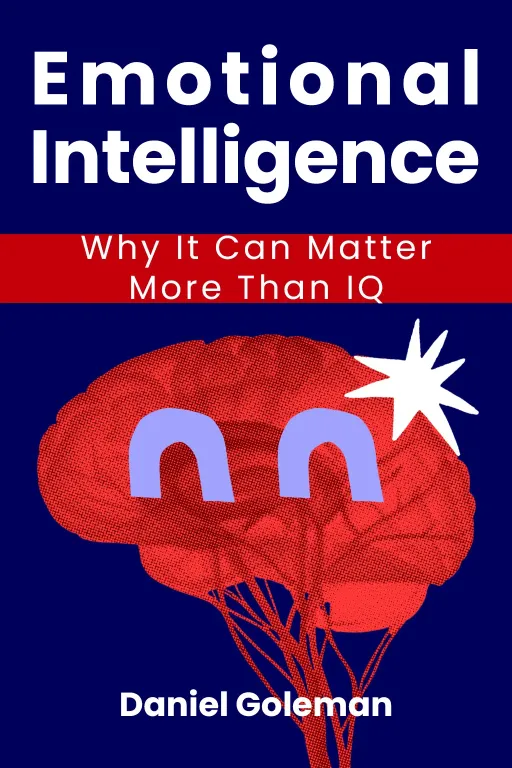
Nova: Exactly! You just nailed the core insight of a groundbreaking book that completely redefined how we think about success: Daniel Goleman's "Emotional Intelligence." Goleman, a science journalist for The New York Times, revolutionized the conversation by synthesizing decades of psychological and neurological research, showing us that IQ isn't the sole predictor of achievement. His work sparked a global conversation, and he followed it up with "Working with Emotional Intelligence," specifically applying these insights to the workplace.
Atlas: Oh, I've heard the term "emotional intelligence" thrown around a lot, but sometimes it feels like a fluffy concept, right? Like, isn't it just about being nice? Or having good manners? I mean, for those of us who are driven by efficiency and analytical thinking, it sounds a bit... soft. What's the actual science behind it?
The Foundational Role of Emotional Intelligence
SECTION
Nova: That's a great question, and it’s a common misconception. It's far from soft; it’s a strategic superpower. Goleman breaks EI down into five core components: self-awareness, self-regulation, motivation, empathy, and social skills. Think of it like this: your technical skills or IQ are the high-performance engine of a car. But emotional intelligence? That's the skilled driver who knows how to navigate tricky roads, anticipate hazards, and get you to your destination efficiently and safely. Without that driver, even the most powerful engine can crash.
Atlas: So you’re saying it's not just about having the horsepower, but about knowing how to actually drive the car in traffic? That makes sense. But what does that look like in real life? Can you give me an example where raw intellect just completely falls short because of a lack of EI?
Nova: Absolutely. Let's take Alex, a brilliant software architect I once encountered – or rather, a composite of many brilliant Alexes I've seen. He could code circles around anyone, solve the most complex technical problems, and his algorithms were pure genius. But working with him was a nightmare. He'd explode in meetings if challenged, dismiss colleagues' ideas as 'inferior,' and consistently miss social cues. He’d dominate conversations, blind to the fact that his aggressive style was shutting down collaboration.
Atlas: Oh man, I know that feeling. I imagine a lot of our listeners who are harmonious collaborators have been in similar situations, trying to work with someone like that. So, his genius was actually holding him back?
Nova: Exactly. His emotional blind spots were the cause. His process involved constant, unintentional alienation, and the outcome was a team that dreaded working with him, projects that stalled not from technical difficulty, but from interpersonal friction, and eventually, a brilliant mind isolated and ineffective. He was a career bottleneck, despite his raw technical talent. The problem wasn't his code; it was his inability to manage his own reactions and connect with others.
Atlas: That’s such a vivid example. It really highlights how self-awareness, the first component you mentioned, is so crucial. If he understood his own triggers, his impact on others, maybe things would have been different?
Nova: Precisely. Self-awareness is the bedrock. It’s understanding your own emotions, strengths, weaknesses, values, and goals—and recognizing their impact on others. Alex's lack of it meant he couldn't even begin to regulate his impulses or empathize with his team, ultimately sabotaging his own success and the team's well-being.
EI in the Workplace: From Individual Skill to Team Synergy
SECTION
Nova: It's not just about stopping brilliant people from failing, is it? It's also about elevating entire teams and organizations. And that naturally leads us to how emotional intelligence transforms the workplace.
Atlas: So, if Alex was the individual problem, how does this scale up? What does an emotionally intelligent leader do differently? Because for our listeners who are balanced achievers, constantly juggling demands, the idea of adding "emotional work" to their plate might feel like just another thing to manage.
Nova: That’s a fair point. But Goleman's research in "Working with Emotional Intelligence" shows it's not about adding work; it's about changing you work, and it pays dividends. Emotionally intelligent leaders foster engagement, reduce conflict, and dramatically enhance performance. They create environments where people to contribute their best.
Atlas: Okay, but in a high-stakes, competitive environment, isn't being "empathetic" sometimes seen as a weakness? Like, if you're too understanding, people will walk all over you, or you won't be able to make tough decisions. How do you balance being decisive and tough with being emotionally intelligent? That sounds like a real tightrope for leaders.
Nova: That’s a common and understandable concern, but it misunderstands empathy. It's not about being soft; it's about being strategically smart. Empathy is understanding what others are feeling, not necessarily agreeing with it. It allows you to anticipate reactions, communicate more effectively, and motivate people from a place of understanding rather than just authority. It’s about influence, not just control.
Atlas: Right, like active listening, understanding where someone is coming from even if you have to deliver bad news. That makes sense.
Nova: Exactly! Let's consider Sarah, a leader who inherited a demoralized, underperforming sales team. Instead of cracking down with harsh metrics, she started by actively listening. She held individual meetings, not just to review numbers, but to understand what was demotivating them—their frustrations, their fears, their unvoiced ideas. She validated their feelings and created psychological safety.
Atlas: So, the cause was her high EI, and the process was her active listening and collaborative problem-solving. What was the outcome?
Nova: The outcome was a dramatic turnaround. Team morale soared, productivity jumped, and innovation flourished. Her empathy allowed her to address the root causes of their underperformance, not just the symptoms. She wasn't soft; she was effective. She made tough decisions, but she did so with an understanding of her team's perspective, which garnered respect and commitment. It fostered an environment of mutual growth and sustained well-being, precisely what our harmonious collaborators and balanced achievers are striving for.
Synthesis & Takeaways
SECTION
Nova: So, what we're really seeing is that emotional intelligence isn't just a nice-to-have; it's a foundational skill set for both individual thriving and collective success. It transforms how we lead, how we collaborate, and how we truly connect with others.
Atlas: And what’s fascinating is that the "tiny step" Goleman suggests for cultivating this, active listening, is something we can all start doing today. Focusing not just on what's said, but the emotions conveyed, and validating those feelings before responding. That makes it feel very actionable.
Nova: It's incredibly powerful. Active listening is the gateway to empathy, and empathy is the pathway to deeper connection. When you validate someone's feelings, you're not necessarily agreeing with their perspective, but you're acknowledging their humanity, their experience. That simple act can disarm tension, build trust, and open doors to genuine understanding.
Atlas: That gives me chills, honestly. Because if we all consistently practiced that, imagine the ripple effect. Not just in our professional lives, but in our personal relationships, in our communities. It's not just about managing emotions; it's about building a more resilient, connected world.
Nova: You've hit on the deep insight, Atlas. The true power of emotional intelligence lies not just in navigating our inner world, but in building resilience and fostering a deeper, more authentic human connection that transcends superficial interactions. It forms the bedrock of lasting well-being and collective achievement. It’s the unseen force that truly opens every other door.
Atlas: That’s a profound thought to end on. If you've been inspired by today's conversation and want to explore your own emotional intelligence, try that active listening exercise this week. We'd love to hear how it goes! Share your experiences with us on social media.
Nova: This is Aibrary. Congratulations on your growth!