

Unlocking Academic Vocabulary: The Secret to IELTS Mastery
Golden Hook & Introduction
SECTION
Nova: Atlas, I'm going to throw out some academic words, and you just hit me with the first thing that comes to mind, no filter.
Atlas: Alright, Nova, you're on. Bring it.
Nova: Paradigm.
Atlas: Shift. Definitely shift.
Nova: Ubiquitous.
Atlas: Smartphones. Everywhere.
Nova: Cognitive.
Atlas: Load. My brain right now.
Nova: Perfect! That was exactly the kind of rapid-fire, intuitive response we rarely get when we're just trying to vocabulary lists. And that's exactly what we're tackling today: unlocking academic vocabulary not through brute force, but through deep understanding.
Atlas: It's so true. I imagine a lot of our listeners, especially those building towards something big like an IELTS exam or an academic career, hit that wall. They're told to "learn more words," and the immediate instinct is flashcards, lists… but it often feels like trying to fill a leaky bucket.
Nova: Exactly! Today we're diving deep into an approach that helps you not just fill that bucket, but repair it, so the knowledge sticks. The core of our podcast today is really an exploration of how to build an academic vocabulary that’s not just extensive, but deeply understood and naturally usable, especially for focused learners aiming for mastery. We’ll dive deep into this from two perspectives. First, we'll explore the foundational power of deconstructing words through roots and affixes, then we'll discuss the critical importance of mastering words in their natural academic context.
Atlas: That first point really resonates. Why does that traditional memorization approach often fall short for so many? It feels like the most straightforward path, but it's often the most frustrating.
Beyond Memorization: The Power of Root Words
SECTION
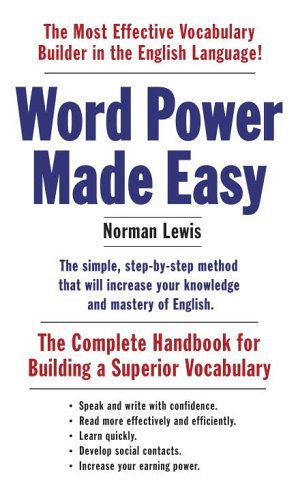
Nova: It’s a great question, and it's because our brains aren't designed for isolated data points. They crave patterns, connections, and logic. When you just memorize 'ubiquitous' means 'everywhere,' you have one data point. When you understand 'ubi' means 'where' and 'quitous' relates to 'being,' you suddenly have a tool. This is the genius behind resources like Norman Lewis's classic, "Word Power Made Easy." He teaches you to build vocabulary by understanding prefixes, suffixes, and root words.
Atlas: So you're saying it's like learning the DNA of language? Not just recognizing the individual, but understanding the genetic code that creates it?
Nova: Precisely! Think about the root 'duc,' which means 'to lead.' Once you grasp that, words like 'deduce'—to lead down to a conclusion—'induce'—to lead into a state—'reduce'—to lead back or diminish—and 'produce'—to lead forth or create—all start to make logical sense. You don't have to memorize four separate definitions; you understand a core concept and see its variations.
Atlas: That's actually really inspiring. Because if you encounter a new academic word, say, 'conducive,' you don't panic. You see 'con' and 'duc' and you can infer it means 'leading together' or 'tending to produce.' It's like unlocking a secret code.
Nova: Exactly! It empowers you to deduce the meaning of unfamiliar academic words on the fly, which is a critical skill for reading comprehension, especially in high-stakes environments like the IELTS reading section where you'll encounter sophisticated vocabulary you might not have seen before. It shifts the burden from sheer recall to logical inference.
Atlas: But wait, for someone who needs to improve their vocabulary for an exam in, say, three months, is this method fast enough? It sounds like a long-term strategy, and sometimes learners are looking for that immediate boost.
Nova: That’s a valid concern, and it’s where the 'systematic' part comes in. It’s not about instantly learning fifty roots and then knowing everything. It's about starting with the most common roots and affixes that appear in academic English. Even learning a dozen of these can unlock hundreds of words. It’s an exponential return on your learning investment. The focus isn't just on passing the test; it's on building a robust, usable vocabulary through logical patterns, which ultimately makes the test easier because you're genuinely fluent. It’s a foundational change, not a quick fix.
Contextual Mastery: Using Words Naturally
SECTION
Atlas: I can definitely relate to that. Knowing a word's parts is great for understanding, but how do you make sure you're using it? Not just knowing it, but it in your writing or speaking? I’ve seen people use incredibly complex words, but they just don't fit the sentence, and it actually detracts from their message.
Nova: You've hit on the crucial next step, Atlas. This is where contextual learning and collocations come in, and it's beautifully covered in resources like Michael McCarthy and Felicity O'Dell's "English Vocabulary in Use: Advanced." Words don't live in isolation; they have 'friends' they hang out with, other words they naturally pair with. These are called collocations.
Atlas: Like how you 'make a decision' but you don't 'do a decision'?
Nova: Precisely! Or you 'achieve a goal,' 'achieve success,' 'achieve your potential.' You don't generally 'get a goal' or 'do success.' Learning these natural pairings, these collocations, is what makes your language sound natural, accurate, and truly fluent. It's the difference between sounding like you swallowed a dictionary and sounding like a sophisticated communicator.
Atlas: That’s a great way to put it. I imagine this is absolutely vital for the IELTS writing and speaking sections, where examiners are looking for not just a wide vocabulary, but also natural and accurate usage.
Nova: Absolutely. It's not enough to know what 'demonstrate' means; you need to know you 'demonstrate commitment,' 'demonstrate understanding,' or 'demonstrate a point.' This contextual application helps Ella, our focused learner, not just know words, but know how to use them naturally and accurately in academic settings. It's the nuance that elevates your score from good to excellent.
Atlas: I’ve been thinking about this. For many of our listeners, they're juggling demanding schedules. How can someone actively practice this contextual learning without feeling like they're adding another huge task to their plate? It sounds like it could be quite time-consuming to learn every word in every context.
Nova: That’s a very practical concern. The key is integration, not addition. As you're reading academic texts – articles, journals, textbooks – don't just look up unfamiliar words. Pay attention to the words them. When you find a new academic word, don't just write down its definition. Write down the entire phrase or sentence it came from. For example, if you see 'rigorous analysis,' make 'rigorous analysis' your vocabulary entry, not just 'rigorous.'
Atlas: So it's about actively noticing the linguistic environment of a word, like observing an animal in its natural habitat rather than just seeing it in a zoo.
Nova: Exactly! And the tiny step we suggest is incredibly powerful: pick five new academic words you encounter today. Break them down by root, prefix, and suffix, then write a sentence using each, paying close attention to its natural collocations based on how you first encountered it. This dual approach of deconstruction and contextualization builds a robust, usable vocabulary through logical patterns and contextual application, rather than simple, often ineffective, memorization.
Synthesis & Takeaways
SECTION
Nova: So, what we've really explored today is that mastering academic vocabulary is far more than just expanding a word list. It's a strategic undertaking. It means understanding the foundational building blocks of language through root words and affixes, which gives you the power to decode new words.
Atlas: And then, crucially, it's about seeing those words in their natural habitat, understanding their collocations, and how they truly function in academic discourse. It's the difference between knowing a word exists and being able to wield it with precision and confidence.
Nova: Combining these two approaches means you're not just a passive recipient of vocabulary; you become an active architect of your linguistic understanding. This systematic approach empowers focused learners to build a vocabulary that's not just extensive, but deeply understood and naturally usable, which is simply invaluable for high-stakes exams and long-term academic growth.
Atlas: That’s actually really inspiring, Nova. It turns what feels like a daunting, endless task into a solvable puzzle. For our listeners who are ready to take that tiny but mighty step, here’s a challenge: today, pick just five new academic words you encounter. Break them down by their root, prefix, and suffix. Then, write a sentence using each, making sure you're thinking about the words it naturally pairs with. It's a small action, but it builds a massive foundation.
Nova: Start small, but start smart. It’s about building those neural connections.
Atlas: This is Aibrary. Congratulations on your growth!