

The Visual Mind: How We Map Words to Our World
Golden Hook & Introduction
SECTION
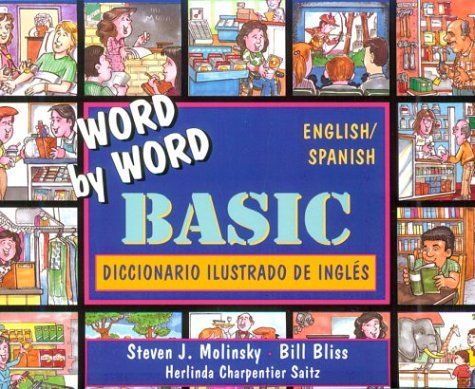
Atlas: Look at a picture of an apple. Now look at the word apple. Which one does your brain process faster? Welcome to the show. Today, we are dissecting a seemingly simple book: Steven J. Molinsky's Word by Word Basic Picture Dictionary. But do not let the illustrations fool you. This is not just a vocabulary tool. It is a window into the cognitive architecture of the human mind. Today, we are going to tackle this book from two different angles. First, we will explore the science of dual-coding and why our brains crave visual anchors for language. Then, we will discuss how organizing information into situational schemas helps us build faster, more resilient mental networks. Let us jump in. I am Atlas, and joining me is Rukhsar Sakhizada, an analytical thinker who loves connecting the dots across different domains. Rukhsar, a picture dictionary. Why are we talking about this today?
Rukhsar Sakhizada: Thanks, Atlas. It is great to be here. You know, when most people look at a book like Word by Word, they see a basic language-learning tool designed for beginners. They see drawings of everyday objects with English and Spanish labels underneath. But if you step back and look at it through the lens of cognitive science, you realize this book is actually a physical manifestation of how our brains map reality. It is a structured database of human concepts. As an analytical thinker, I find it fascinating because it raises fundamental questions about how we acquire knowledge, how we categorize our environment, and how bilingual minds navigate two different linguistic systems simultaneously. It is not just about learning what a table is in Spanish; it is about how the brain links the visual concept of a table to two entirely different phonetic and symbolic representations.
Atlas: Love that perspective. Turn the page. Look at the design. It is vibrant, it is immediate, and it is highly structured. There is no fluff. It is direct mapping. Let us break down why this works so incredibly well from a neurological standpoint. This brings us to our first core topic: the visual-verbal bridge, or what cognitive scientists call Dual-Coding Theory. Rukhsar, explain this. What is actually happening in our heads when we see a picture paired with a word?
Rukhsar Sakhizada: This is where we have to look at the work of Allan Paivio, a psychologist who proposed the Dual-Coding Theory in the late 1960s. His core idea was that the human mind processes information through two separate but parallel channels: a visual channel and a verbal channel. Think of them as two independent pipelines in your brain. The visual channel handles images, shapes, and spatial relationships. The verbal channel handles linguistic information, like spoken words, written text, and abstract symbols. Now, here is the magic. When you present information through only one channel—say, just the written word apple—the brain has to work harder to construct a mental image and store it. But when you present the word apple alongside a clear, colorful illustration of an apple, both channels are activated simultaneously. They do not just run parallel; they cross-reference and reinforce each other. This dual activation creates a much stronger, more resilient memory trace in your long-term storage.
Atlas: Think about that. Double the pathways, double the retention. It is like building a bridge from both sides of a river at the same time. They meet in the middle, and boom, you have a solid connection. If you only use words, you are building from one side only. It takes twice as long, and it is way more fragile.
Rukhsar Sakhizada: Exactly. And there is a well-documented cognitive phenomenon called the Picture Superiority Effect. Study after study shows that people are far more likely to remember images than they are to remember words. If I show you a list of fifty words, and then show someone else a list of fifty corresponding pictures, the person who saw the pictures will consistently recall significantly more items. Why? Because pictures are concrete. They immediately evoke sensory experiences. When Steven Molinsky designed Word by Word, he was tapping directly into this evolutionary bias. Our brains evolved over millions of years to navigate a visual, physical world. Written language, on the other hand, is a very recent cultural invention. It is highly abstract. By anchoring these abstract English and Spanish words to concrete visual representations, the book essentially bypasses the cognitive friction of abstract processing. It allows the learner to leverage their highly developed visual cortex to accelerate language acquisition.
Deep Dive into Core Topic 1
SECTION
Atlas: Stop right there. Let us look at a specific example from the book to make this concrete. Imagine a page showing a busy city street. You have got a bus, a traffic light, a sidewalk, a pedestrian. In a traditional dictionary, you would look up the word sidewalk, read a dry definition like a paved path for pedestrians, and try to memorize it. In Word by Word, you see a drawing of a person walking on a grey path next to a road, with the word sidewalk and acera pointing directly to it. Tell me about the cognitive load difference here. How does this visual mapping save mental energy?
Rukhsar Sakhizada: It comes down to cognitive economy. When you read a text-based definition, your brain has to perform several sequential steps. First, it decodes the letters of the word. Then, it retrieves the semantic meaning of those words from your mental lexicon. Next, it synthesizes those meanings to construct a mental simulation of a sidewalk. Only then can you attempt to store that new association. That is a high cognitive load. It requires significant working memory. Now, contrast that with the visual mapping in Molinsky's book. You look at the illustration of the city street. Your visual system instantly recognizes the spatial relationship: the path is next to the road, people are walking on it, cars are not. You already have a pre-existing mental concept of what that physical space is. The illustration immediately activates that concept. Then, you see the labels sidewalk and acera pointing directly to it. The brain does not have to build the concept from scratch; it simply attaches the new linguistic labels to an already active visual concept. You are essentially plugging the new words directly into an existing cognitive socket. It is incredibly efficient.
Atlas: Yes. Cut out the middleman. Do not translate from word to definition to concept. Go straight from word to concept via the image. It is a direct line. But let us push this further. Rukhsar, you are an analytical thinker. How does this apply to bilingualism? When a Spanish speaker looks at that page, they see acera and sidewalk. Are they translating sidewalk back to acera in their head, or are both words anchoring to the same visual concept?
Rukhsar Sakhizada: That is a crucial question in bilingual research, and it touches on the distinction between coordinate, compound, and subordinate bilingualism. In a subordinate bilingual, the second language is accessed through the first language. So, a Spanish speaker sees sidewalk, translates it to acera, and then accesses the concept of the physical path. This is slow and mentally exhausting. But what a picture dictionary facilitates is a shift toward compound or coordinate bilingualism. By presenting the Spanish word acera and the English word sidewalk pointing to the exact same visual representation, the book encourages the brain to associate both words directly with the underlying concept, rather than associating one word with the other. The visual image acts as a neutral, non-linguistic hub. Both languages branch out from this single conceptual node. This means when the learner needs to use the English word, they can retrieve it directly from the concept, rather than having to go through the mental translation step. It fosters a much more natural, fluent command of the language because it builds a shared conceptual foundation.
Atlas: Brilliant. It is about building a shared foundation, not a chain of translations. A chain is only as strong as its weakest link, and translation chains are slow. By anchoring both to the image, you create a direct, dual-access database. Now, let us pivot to our second core topic: Schemas and Semantic Mapping. Look at how this book is organized. It is not alphabetical. You do not open it and see apple, then apron, then architect. That is not how our brains experience the world. Instead, you open it to a page titled The Kitchen, or The Doctor's Office, or The Classroom. Why is this structural choice so significant?
Rukhsar Sakhizada: This is perhaps the most brilliant aspect of the book's design, and it aligns perfectly with how our brains naturally organize knowledge. In cognitive psychology, we talk about schemas. A schema is a cognitive framework or concept that helps us organize and interpret information. Think of it as a mental template for a specific situation, place, or event. For example, you have a kitchen schema. When you think of a kitchen, your brain automatically activates a network of related concepts: a refrigerator, a stove, cooking, eating, plates, knives. These concepts are not stored randomly in your brain; they are highly interconnected in a semantic network. When Steven Molinsky groups vocabulary by situational scenes, he is aligning the book's structure with the brain's pre-existing schemas. He is not presenting isolated, random words. He is presenting a cohesive, interconnected ecosystem of words that all belong to the same mental category.
Deep Dive into Core Topic 2
SECTION
Atlas: Think about the power of that. If you learn words in alphabetical order, you are forcing your brain to jump from an apple to an apron to an architect. Those concepts have zero semantic relationship. Your brain has to constantly reset, build a new context, and store the word in isolation. It is highly inefficient. But when you learn words within a schema—like The Kitchen—every word you look at reinforces every other word on the page. They are all part of the same story.
Rukhsar Sakhizada: Absolutely, Atlas. It is all about contextual priming. When you look at the page titled The Kitchen, your brain immediately activates your entire kitchen schema. This activation primes your neural pathways. It makes it much easier for your brain to absorb and integrate new, related information. If you already know the Spanish word for refrigerator, and you see it next to the new English word, that familiar context helps anchor the new word. Furthermore, learning words in context mimics how we naturally acquire our first language. Children do not learn language by reading a dictionary from A to Z. They learn it by interacting with their environment. They learn the word spoon while sitting in a high chair, eating food, in the kitchen. The physical context provides the meaning. Word by Word recreates this natural, contextual learning environment on the page. It provides a visual narrative that gives the words immediate relevance and utility.
Atlas: Let us paint a picture of this. Imagine you are looking at the page for The Doctor's Office. You see a waiting room, a receptionist, a scale, a blood pressure cuff, a stethoscope. Each of these items is numbered and labeled. Describe how an analytical mind navigates this page. You are not just memorizing a list of nouns. You are mapping a system.
Rukhsar Sakhizada: Exactly. You are mapping a functional system. As an analytical thinker, I do not just see isolated objects; I see relationships and processes. When I look at that doctor's office scene, my brain automatically starts constructing a narrative. I see the patient checking in with the receptionist. That action links the patient to the receptionist. I see the nurse weighing the patient on the scale. That links the nurse, the patient, and the scale. I see the doctor using the stethoscope to listen to the patient's heart. This spatial and situational arrangement allows the learner to understand not just what the words mean, but how they function in relation to one another. It is a form of systems thinking applied to vocabulary acquisition. You are learning the vocabulary of a process. This is incredibly powerful because it prepares the learner for real-world application. When they actually walk into a doctor's office, their brain will recognize the physical environment, activate the corresponding schema, and immediately retrieve the relevant vocabulary because it was learned as a cohesive system, not as a fragmented list.
Atlas: Yes. It is about systems, not fragments. Learn the system, and the vocabulary follows naturally. But let us address a potential counterpoint. Some might say, sure, this works great for concrete nouns like table, chair, or bus. But what about abstract concepts? How does a picture dictionary handle verbs, prepositions, or emotions? Can you really map those visually?
Rukhsar Sakhizada: That is a very fair critique, and it is where the design of the book has to become even more creative. If you look closely at Word by Word, you will see that it does not just illustrate nouns. It uses sequential illustrations and action scenes to depict verbs, prepositions, and even complex social interactions. For example, to teach prepositions of place, it might show a cat in various positions relative to a box: in the box, on the box, under the box, next to the box. The visual contrast between these simple scenes makes the abstract relationship immediately clear. For verbs, it uses action-oriented illustrations—someone running, jumping, cooking, or driving. The key here is contrast and context. By showing a character performing an action within a familiar setting, the book provides the necessary context to deduce the meaning of the verb. It is still leveraging the visual-verbal bridge, but instead of mapping a static object, it is mapping a dynamic relationship or action. It shows that even abstract concepts can be anchored to concrete visual metaphors.
Atlas: Contrast and context. Those are the keys. If you show a cat on a box versus a cat under a box, the only variable that changes is the spatial relationship. The brain instantly isolates that variable and maps the corresponding preposition. It is like a scientific experiment on the page. You control the variables to highlight the concept.
Rukhsar Sakhizada: That is a perfect analogy, Atlas. It really is like a controlled experiment. By keeping the background and the characters consistent, and only changing the specific action or relationship, the book guides the learner's attention directly to the target concept. This minimizes cognitive noise. In cognitive science, we talk about the importance of reducing extraneous cognitive load—the mental effort spent on processing irrelevant details. A well-designed illustration filters out the noise and highlights the essential features of the concept. It is a form of visual scaffolding. It supports the learner's understanding until they can internalize the concept and use it independently.
Synthesis & Takeaways
SECTION
Atlas: This is incredibly powerful. We have gone from a basic picture dictionary to a deep discussion on dual-coding, cognitive schemas, systems thinking, and visual scaffolding. Let us bring this all together. Rukhsar, how can our listeners apply these insights to their own lives? If they are trying to learn a complex, abstract subject—not necessarily a new language, but maybe computer science, finance, or philosophy—how can they use these visual-verbal, schema-based strategies to accelerate their learning?
Rukhsar Sakhizada: This is where the true value of this discussion lies. The principles behind Word by Word are universally applicable to any domain of learning. If you are tackling a complex, abstract subject, the first thing you should do is stop trying to memorize isolated facts or definitions. Instead, build your own visual-verbal bridge. Create mind maps, diagrams, or flowcharts that visually represent the relationships between different concepts. Do not just write down a definition of a database; draw a diagram of how data flows through a system. Activate both your visual and verbal channels. Second, leverage the power of schemas. Do not study topics in isolation. Group related concepts together into cohesive mental frameworks. Try to understand the system as a whole before you dive into the individual components. Ask yourself, how does this concept fit into the bigger picture? What is the narrative here? By organizing your study material into situational or functional schemas, you will build a much stronger, more interconnected semantic network in your brain. This will make retrieval faster and more reliable when you need to apply that knowledge in the real world.
Atlas: Build your own bridge. Map your own systems. Do not just read; visualize. Do not just memorize; connect. That is how you turn information into deep, resilient knowledge. Rukhsar, this has been an absolutely fascinating conversation. You have completely transformed how I look at a simple picture dictionary.
Rukhsar Sakhizada: Thank you, Atlas. It was a pleasure. It just goes to show that if you look closely enough, even the most basic tools can reveal the profound complexity of the human mind.
Atlas: Well said. To our listeners, here is your challenge for today: take one complex concept you are currently trying to learn, and draw it. Create a visual-verbal map. See how much faster your brain locks it in. Until next time, keep pushing forward, keep analyzing, and keep connecting the dots. We will see you on the next episode.