

The Power of Narrative: Crafting Compelling Stories
Golden Hook & Introduction
SECTION
Nova: Think about your favorite story, Atlas. The one that sticks with you, years after you first encountered it. Why that one? What made it so indelible?
Atlas: Oh, that’s a great question, Nova. For me, it’s usually the emotional punch, you know? The characters feel real, their struggles resonate. It’s like the story gets under your skin and just… lives there.
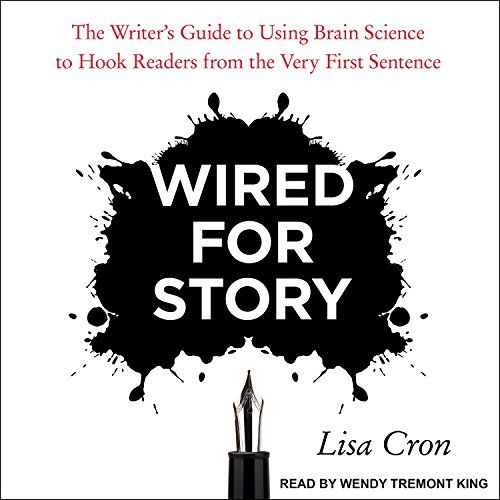
Nova: Exactly! It’s not just the plot points, is it? It’s the way those points are connected, the way they make you. And that's precisely what Lisa Cron unpacks in her absolutely brilliant book,.
Atlas: Ah, yes, Cron! I’ve heard whispers about this one. It sounds like she’s peeling back the curtain on the magic trick of storytelling, showing us the neuroscience behind why some narratives just.
Nova: She absolutely does. It’s not just for writers, either. Anyone who wants to communicate more effectively, persuade, or simply connect on a deeper level can benefit from understanding how our brains are, as she puts it, "wired for story." It’s fascinating because Cron isn’t just a writer; she’s taught at UCLA, worked as a story consultant for Warner Bros. and Showtime, and really bridges that gap between creative intuition and scientific understanding. Her background as a story coach really shines through, making complex brain science incredibly accessible.
Atlas: That’s what I appreciate about her work – it feels grounded. It’s not just abstract theory; it's practical. For anyone who has ever tried to explain a complex idea, or even just share a personal anecdote, and felt like it fell flat, this book is practically a manual for how to get it right.
Nova: It truly is. And the core of our podcast today is really an exploration of that profound truth: that stories aren't just entertainment; they're fundamental to how our brains process information, make decisions, and even heal. Today we'll dive deep into this from two perspectives. First, we'll explore why our brains are so uniquely predisposed to narrative, almost like a biological imperative. Then, we'll discuss the practical implications of understanding this wiring – how we can leverage it to craft truly compelling stories, whether we're writing a novel or just trying to explain our week.
Why Our Brains are Wired for Story
SECTION
Nova: So, let’s start with the fundamental question Cron poses: why story? Why are humans, across all cultures and throughout history, so utterly captivated by narratives? It turns out, our brains aren’t just story, they story.
Atlas: Need it? That's a strong word, Nova. I mean, I love a good binge-watch as much as the next person, but "need"? What’s the biological imperative there?
Nova: It’s about survival, Atlas. Our brains are constantly trying to make sense of a chaotic world, to predict what’s going to happen next so we can avoid danger and seize opportunities. Stories are essentially simulations. They allow us to experience scenarios, understand cause and effect, and learn lessons without having to actually live through the potentially dangerous consequences.
Atlas: So, you’re saying that when I’m listening to a podcast, or reading a novel, my brain is actually running a kind of risk assessment? Like a mental flight simulator?
Nova: Pretty much! Cron explains that our brains are constantly asking, "What does this mean? What happens next?" And stories provide a framework for answering those questions. They give us a protagonist with a goal, obstacles, and a struggle. Our brains latch onto that. They become deeply invested in the outcome because, evolutionarily speaking, understanding outcomes helps us navigate our own lives.
Atlas: That makes so much sense! It’s like when you’re telling a story about a challenge you faced at work, and you can see people lean in. They’re not just being polite; their brains are genuinely trying to extract a lesson.
Nova: Exactly! Cron highlights that a story is not just a sequence of events. It's about how those events the protagonist. It's about internal struggle, about transformation. Our brains are wired to track that internal change because it provides invaluable data for our own personal growth and problem-solving. Consider the classic hero's journey. It’s not just an entertaining tale; it’s a blueprint for navigating life's challenges. The hero faces adversity, learns, adapts, and emerges changed. Our brains subconsciously absorb that pattern.
Atlas: Wow. That’s a fundamentally different way to look at narrative. It goes beyond entertainment and into a core cognitive function. But how does this translate into the actual of storytelling? What are the practical takeaways for someone trying to communicate effectively?
Nova: Well, Cron argues that many aspiring writers—or indeed, anyone trying to tell a compelling story—make a crucial mistake. They focus too much on the plot, on the external events, and not enough on the protagonist's internal struggle.
Atlas: Okay, so the "what happened" versus the "what it felt like and how it changed me."
Nova: Precisely. She gives this great example of a story about a woman who loses her job. A conventional approach might focus on the economic hardship, the job search, the interviews. But Cron would say, "That's not where the story truly lives." The real story is about the woman's internal journey: her sense of identity being shattered, her fear of failure, her struggle to redefine herself, and ultimately, how she confronts and overcomes those internal demons.
Atlas: So, the external events are just the stage upon which the internal drama unfolds. It’s the internal drama that truly hooks our wired-for-story brains.
Nova: Exactly. Because our brains are constantly trying to figure out people do what they do, and what the emotional consequences are. Cron emphasizes that clear, compelling interiority—the character’s thoughts, feelings, and motivations—is what makes a story resonate. Our brains are essentially empathy machines, and stories allow us to step into someone else's shoes, feel what they feel, and learn from their experience. This is why a story about someone overcoming a personal fear can move us more deeply than a purely factual account of an event. It taps into our own fears and hopes.
Crafting Compelling Narratives with Brain Science
SECTION
Nova: This brings us to the second core idea: if we understand our brains crave story, how do we use that knowledge to better stories? Cron is very clear: it starts with a protagonist and an internal problem.
Atlas: An internal problem. Not just, "I need to find a treasure," but "I need to find a treasure to prove my worth to my estranged father." Is that the kind of distinction we’re talking about?
Nova: You've got it! The treasure is the external goal, the visible plot. But the story, the one that grips our brains, is about proving worth, about healing a fractured relationship. Cron insists that from the very first sentence, a good story introduces a protagonist with a deep-seated desire or problem, and then shows how that problem is exacerbated or challenged by the unfolding events.
Atlas: So, even if I'm just trying to explain a new company policy, I need to frame it not as a list of rules, but as a journey where the employees are the protagonists facing a challenge?
Nova: That’s the spirit! Instead of saying, "Here are the new rules for submitting expense reports," you might say, "Sarah, a busy marketing manager, used to dread expense reports. They felt like a black hole of paperwork. But with this new system, she discovered a way to reclaim hours of her week and finally focus on what she loves." You've created a mini-narrative. Sarah is the protagonist, the old system is the obstacle, and reclaiming time is the goal.
Atlas: Oh, I like that! It’s taking something inherently dry and injecting that human element, that internal struggle and resolution. It makes it immediately more relatable, more memorable. I imagine a lot of our listeners, especially those who work in fields where they’re constantly trying to convey complex information, could really benefit from this. It's about making the audience the "protagonist" of the information.
Nova: Absolutely. Cron talks about "primal questions" that our brains are always asking: "Will I survive? Will I be loved? Will I belong?" A compelling story, even a seemingly simple one, subtly taps into these questions. When the character struggles, our brains are asking, "How would handle that? What would learn?" And that’s where the deep engagement comes from. It's not just about the information; it's about the emotional and psychological impact.
Atlas: It’s interesting, because this really highlights the difference between simply something and something that evokes a feeling. It reminds me of how powerful personal anecdotes can be. If I tell you a statistic about stress, it’s one thing. If I tell you a story about a time I was so stressed I forgot my own birthday, that’s another.
Nova: Exactly! And that’s where Cron’s healing moment comes in. She asks us to consider a personal experience we often share and then reframe it using these principles. How can you emphasize the internal stakes, the transformation, the emotional journey, rather than just the sequence of events? It's about finding the universal truth within your specific story. For instance, instead of just saying, "I traveled to Japan," you might say, "I traveled to Japan, hoping to find inspiration after feeling creatively drained, and what I found wasn't just beautiful scenery, but a profound shift in how I viewed my own artistic process."
Atlas: That’s a powerful distinction. It’s the difference between a travelogue and a hero's journey of self-discovery. It makes me think about how much more impactful our conversations could be, both professionally and personally, if we approached them with this narrative mindset. It's not just about conveying facts; it's about inviting someone into an experience.
Synthesis & Takeaways
SECTION
Nova: So, to bring it all together, Lisa Cron's isn't just a book about writing; it's a deep dive into human psychology. It reveals that our brains are not just passive recipients of information, but active meaning-makers, constantly seeking patterns, cause-and-effect, and emotional resonance.
Atlas: And that means if we want to truly connect, persuade, and be remembered, we have to speak to that innate wiring. We have to offer not just data, but a story—a protagonist, an internal struggle, and a meaningful transformation.
Nova: Precisely. It’s a call to move beyond mere information delivery and embrace narrative as our most powerful tool for communication. Because when you tap into that primal human need for story, you're not just sharing facts; you're creating an experience, a simulation that helps people understand themselves and the world a little better. It’s about creating an emotional connection that lasts.
Atlas: That gives me chills, Nova. It’s a profound insight that transcends any single medium. Whether you're pitching an idea, writing a speech, or just sharing your day, understanding this principle can fundamentally change how effectively you connect with others. It’s not just about being heard, but about being understood on a deeply human level.
Nova: Absolutely. It’s about building bridges of understanding, one compelling story at a time.
Atlas: This is Aibrary. Congratulations on your growth!