

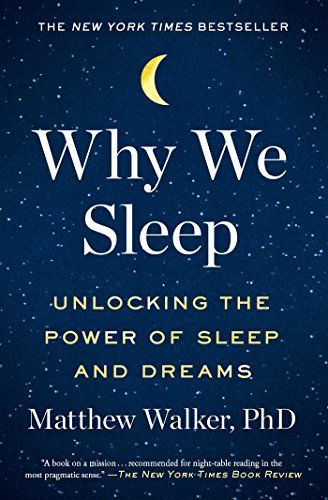
The Unseen Asset: Unlocking Peak Performance Through the Science of Sleep
Golden Hook & Introduction
SECTION
Nova: What if I told you there's a saboteur in your organization, silently eroding decision-making, stifling creativity, and costing you a fortune in lost productivity? And what if I told you that many of us are, in fact, encouraging it?
Chanel: That’s a pretty dramatic opening, Nova. You’ve got my attention.
Nova: Right? Because this isn't about a rogue employee or a market competitor. It's about sleep deprivation. Matthew Walker's research in his groundbreaking book, 'Why We Sleep,' reveals a startling fact: after just one night of only four or five hours of sleep, our cognitive impairment is the same as if we were legally drunk.
Chanel: Wow. Okay, when you put it like that... you start thinking about all the decisions, big and small, that are made every single day in that state. That's a sobering thought, ironically.
Nova: Exactly. And that's why we're so excited to have you here, Chanel. With your fifteen-plus years as an Operations Manager, you live at the intersection of people and performance. Today, we're going to dissect this book from a leader's perspective. First, we'll explore the hidden crisis: how sleep loss systematically dismantles our team's most critical abilities.
Chanel: The defensive game. How to protect the organization from these hidden risks. I like it.
Nova: Then, we'll flip the script and reveal how you can harness sleep as your most powerful strategic tool for unlocking learning, innovation, and peak performance.
Chanel: The offensive strategy. Using this science to actually get ahead. Okay, I'm ready. Let's dive in.
Deep Dive into Core Topic 1: The Executive Brain Under Siege
SECTION
Nova: So, Chanel, let's start with that 'legally drunk' idea. It sounds like hyperbole, but the science in 'Why We Sleep' is crystal clear. When we're sleep-deprived, we’re not just tired. Our brains are fundamentally compromised. Walker paints this incredible picture of what’s going on inside our heads.
Chanel: I’m all ears. As a manager, I’m used to looking at process flows and org charts. A map of the tired brain sounds fascinating.
Nova: Well, think of your brain having a CEO. It's a region called the prefrontal cortex. It sits right behind your forehead, and it's the 'adult in the room.' It’s responsible for rational thought, long-term planning, and emotional control. It’s the calm, logical voice that says, "Let's think this through before we react."
Chanel: Okay, I know that voice. I try to be that voice for my team, especially when things get stressful.
Nova: Exactly! But when you lose sleep, the prefrontal cortex essentially goes offline. It loses its strong connection to the rest of the brain. And you know what takes over? The amygdala. This is the deep, primal part of our brain. It's the emotional gas pedal, responsible for fight-or-flight reactions. It's all short-term panic and raw emotion.
Chanel: So, the calm, rational CEO leaves the building, and the panicked, short-sighted intern is suddenly in charge of all major decisions.
Nova: That is the perfect analogy! And Walker has the data to prove it. He ran a study where he took two groups of people—one well-rested, one sleep-deprived—and showed them a series of emotionally negative images while they were in a brain scanner.
Chanel: What kind of images?
Nova: Things that would normally make you flinch, but aren't extreme. The results were just staggering. In the sleep-deprived group, the amygdala—that emotional panic button—fired up over 60 percent more intensely than in the rested group.
Chanel: Sixty percent? That’s not a small variance. That’s a massive overreaction.
Nova: A massive overreaction. The emotional gas pedal was floored. But here's the kicker: in those same sleep-deprived brains, the prefrontal cortex, the part that should step in and say, "Hey, calm down, it's just a picture," was almost completely silent. The brakes were gone.
Chanel: That is a terrifying thought from a management perspective. My job is to be that prefrontal cortex for my team, especially during a crisis. If my own is compromised, or my team leads' are, the potential for a small problem to snowball into a catastrophe is enormous.
Nova: In what way? Give us a real-world example.
Chanel: Well, think about a supply chain disruption. A shipment is delayed. The rested brain—the one with its CEO online—says, "Okay, let's assess the impact, let's check alternative suppliers, let's communicate clearly with the affected departments." The sleep-deprived brain, run by the amygdala, just panics. It might over-order from a more expensive supplier out of fear, or send a frantic, poorly-worded email that causes panic across the company. We're not just talking about a grumpy email; we're talking about poor judgment on a multi-million dollar issue.
Nova: And it’s a vicious cycle, right? That poor decision creates more stress, which makes it even harder to sleep the next night.
Chanel: Exactly. It creates a feedback loop of crisis and exhaustion. You know, this makes me think about workplace safety. We have strict protocols against operating machinery if you're impaired by alcohol. But we have a culture that celebrates the person who stayed up all night to finish a project. Walker’s research suggests that person is just as much of a liability.
Nova: It's a massive blind spot in corporate risk assessment. You're essentially letting a drunk person make critical decisions.
Chanel: It's a huge blind spot. And it’s not just about big decisions. It’s the daily interactions. A manager with a silent prefrontal cortex is going to be more irritable, less empathetic, and far worse at resolving team conflicts. It poisons the culture from the top down.
Deep Dive into Core Topic 2: Sleep as a Strategic Tool
SECTION
Nova: Exactly, the risk is huge. And that's the defensive side of the argument—protecting your organization. But what I find even more compelling, and frankly more hopeful, is the offensive strategy Walker presents. Sleep isn't just about avoiding problems; it's an active process for building a better brain.
Chanel: Okay, so we've established the crisis. Now, how do we turn this into a competitive advantage?
Nova: This brings us to our second point: using sleep as a strategic tool for learning and innovation. Walker explains that sleep isn't just one monolithic thing. We cycle through different stages, primarily NREM, or non-rapid eye movement sleep, and REM sleep. And they do very different jobs for our brain.
Chanel: Like different departments in a company?
Nova: Precisely! Think of your brain like a library. During the day, you're taking in tons of new information—facts, skills, experiences. These are like new books being dropped in a pile at the front desk. That's your short-term memory. It's vulnerable.
Chanel: And if the pile gets too big, books start falling off. You forget things.
Nova: You got it. Now, deep NREM sleep, which happens mostly in the first half of the night, is like the diligent night librarian. It comes in, picks up all those new books, and carefully files them away on the proper shelves of the main library. It's transferring information from your vulnerable short-term holding bay to your secure long-term memory.
Chanel: So that's the memory consolidation piece. That’s why pulling an all-nighter to study for an exam is such a bad idea. You're basically throwing all the books in the trash instead of shelving them.
Nova: You are literally preventing the learning from happening! Walker details a fascinating study on motor skills to prove this. He had participants learn a complex finger-tapping sequence, like playing a little melody on a keyboard. He then split them into two groups. One group got a full night's sleep; the other had to stay awake.
Chanel: And the sleep group performed better the next day?
Nova: Not just better—dramatically better. The group that slept showed a 20 percent improvement in speed and a 35 percent improvement in accuracy. But here's the mind-blowing part: the improvement didn't come from more practice. It happened, while they were asleep. Their brain was practicing for them.
Chanel: This reframes our entire approach to training. We invest so much money and time in workshops and onboarding sessions for new hires. But we don't even mention the most critical part of the learning process, which apparently happens after everyone's gone home.
Nova: Right? You could have the best training program in the world, but if your team is sleep-deprived, it's like pouring water into a leaky bucket.
Chanel: It suggests we should be telling our teams to 'sleep on it' after a heavy training day, not to stay late and cram more information in. The ROI on that eight hours of sleep might be higher than an extra two hours of training.
Nova: And that's just the librarian, NREM sleep. Then comes the artist: REM sleep. This is the dream state, which happens more in the second half of the night. If NREM sleep is about filing information, REM sleep is about making connections. It's like a creative archivist wandering through the library, picking up a book on ancient history, another on quantum physics, and suddenly realizing a hidden connection between them that no one has ever seen before.
Chanel: So that's where the innovation and creative problem-solving comes from.
Nova: Yes! REM sleep is what helps us find novel solutions to complex problems. It takes all the data we have and remixes it, creating insights that our rigid, awake brain might miss.
Chanel: That is the holy grail for an operations manager. We are constantly facing recurring logistical problems, and the ability to find a truly new solution is what separates a good team from a great one. The idea that rest—true, quality REM sleep—could be the key to that is a paradigm shift. We see rest as the opposite of work, but this suggests it's the most sophisticated part of the work process.
Nova: It's the ultimate cognitive upgrade. You're not just preventing errors; you're actively generating new value while you're unconscious.
Synthesis & Takeaways
SECTION
Nova: So when you put it all together, Chanel, it’s such a powerful duality. On one hand, sleep loss puts your company's 'CEO'—the rational, logical part of the brain—offline, leaving your entire operation vulnerable to emotional, short-sighted decisions.
Chanel: A huge, unmanaged risk.
Nova: But on the other hand, prioritizing quality sleep is like running a nightly software upgrade on your entire team. It enhances their skills, solidifies their learning, and literally sparks the creative insights you need to innovate and stay ahead.
Chanel: It’s the difference between playing defense and playing offense. And for too long, the business world has treated sleep as if it's not even part of the game.
Nova: So, as a leader with years of experience managing teams and complex operations, what's the big takeaway for you? What's the call to action for the other managers listening right now?
Chanel: The biggest takeaway for me is that we need to fundamentally reclassify sleep. It's not a personal wellness issue; it's a core business asset. As leaders, our job is to manage assets, and our team's collective cognitive capacity is our most valuable and most expensive one. Neglecting sleep is like letting that asset rust.
Nova: I love that framing. "Letting the asset rust."
Chanel: So my challenge to everyone listening is this: stop thinking about sleep as an employee's personal time and start seeing it as a critical part of your operational strategy. And ask yourself, what is one thing you can do this week to change the culture around rest?
Nova: What would be your first step?
Chanel: It can be incredibly simple. Don't send that 10 PM email. When a leader sends late-night or weekend emails, it sends a powerful, implicit message that the team is expected to be 'on' at all times. By simply waiting to send it until 8 AM on Monday, you send an even more powerful message.
Nova: That you respect their time to disconnect and recharge.
Chanel: Exactly. That small act signals that you, as a leader, value your team's rest. And by extension, as we've just discussed, you're signaling that you value their rational thinking, their emotional stability, their ability to learn, and their creativity. It’s the highest-leverage, zero-cost leadership action you can take to boost performance. Start there.
Nova: What a powerful and practical piece of advice. Chanel, thank you so much for bringing your operational wisdom to the science of sleep. It’s been absolutely enlightening.
Chanel: The pleasure was all mine, Nova. This has given me a lot to think about.