

Stop Guessing, Start Measuring: The Guide to Quantified Health.
Golden Hook & Introduction
SECTION
Nova: What if I told you that the key to unlocking your health isn't about counting calories, but about understanding a single hormone that's constantly whispering secrets in your blood?
Atlas: Oh, I'm already intrigued, Nova. Are we talking about some kind of biological spy? That sounds like a plot twist in a system I thought I understood.
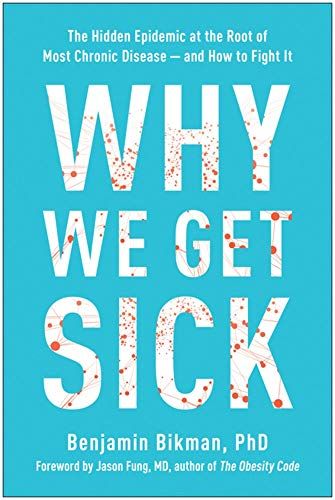
Nova: Precisely! Today, we're diving into the world of quantified health, a world where we stop guessing and start measuring. Our guides for this journey are two groundbreaking books: 'Why We Get Sick' by metabolic scientist Benjamin Bikman, and 'The Obesity Code' by the renowned nephrologist Jason Fung. These aren't just diet books; they're deep dives into the fundamental mechanics of our bodies, written by brilliant minds who challenge the status quo with hard data and robust clinical evidence.
Atlas: That sounds like exactly the kind of systematic optimization our listeners, who love data and building solutions, are looking for. It's about getting to the root cause, not just managing symptoms. So, what's the first secret this whispering hormone is telling us?
Nova: It's telling us about a silent epidemic, Atlas: insulin resistance. Bikman, with his extensive research as a metabolic scientist, argues that insulin resistance is not just a precursor to diabetes, but a central player—a primary driver, in fact—behind a staggering number of chronic diseases we face today.
Atlas: Wait, so you're saying it's not just about sugar directly, but how our body to sugar that's the real problem? That feels like a fundamental engineering flaw we've been overlooking in our approach to health. It's like focusing on the fuel tank without understanding the engine's combustion process.
Nova: Exactly. Imagine your body is a meticulously designed machine, and insulin is the key that unlocks cells to let glucose in for energy. When you're insulin sensitive, that key works perfectly. But with insulin resistance, it's like the lock is gummed up. Your pancreas has to pump out more and more insulin just to get the same amount of glucose into cells. This continuous high level of insulin, called hyperinsulinemia, is where the trouble truly begins.
Atlas: That makes me wonder, if insulin is constantly elevated, what are the downstream effects? Because in any complex system, if one component is constantly overworked, it usually creates a cascade of issues.
Nova: Oh, the cascade is profound. High insulin levels don't just affect glucose metabolism. They promote inflammation, they tell your body to store fat rather than burn it, they interfere with hormone balance, and they even impact brain function. Bikman meticulously connects this to conditions like heart disease, Alzheimer's, certain cancers, and polycystic ovary syndrome. It’s a unified theory of chronic disease, all stemming from this single metabolic dysfunction.
Atlas: So basically, you're saying that for years, we've been treating the symptoms—the high blood pressure, the elevated cholesterol, the excess weight—without addressing the underlying hormonal imbalance that's causing them? That's a huge strategic misstep if you're trying to optimize long-term health.
Nova: It's a paradigm shift, isn't it? Bikman's work really encourages us to look past the superficial and understand the deep, interconnected systems at play. He provides compelling data showing that many seemingly disparate conditions share this common metabolic thread. For example, he illustrates how even conditions like acne and male pattern baldness, often seen as purely dermatological, can have roots in insulin signaling.
Atlas: That's incredible. It’s like discovering that all the different warning lights on a dashboard are actually triggered by the same faulty sensor. But how does this theory apply to someone who's diligently trying to manage their health, maybe even exercising regularly and eating what they is a healthy diet, yet still struggling with stubborn issues? It sounds like they're optimizing the wrong metrics if they're not looking at insulin.
Nova: Precisely. Many people are doing what they've been told is right, but if their insulin signaling is dysfunctional, they're fighting an uphill battle. It's why two people can eat the same meal, and their bodies respond entirely differently. It’s not just about what you eat, but how your body processes it, and insulin is the master regulator of that process.
Beyond Calories: Hormonal Regulation of Metabolism
SECTION
Nova: And that naturally leads us to the second key idea, which often acts as a powerful counterpoint to the simplistic advice we've all heard for decades: the hormonal regulation of metabolism, championed by Dr. Jason Fung.
Atlas: Oh, the 'calories in, calories out' dogma. Is he really saying that's not the whole picture? Because for anyone trying to build a predictable system, that's been the go-to equation, even if it often fails in practice. We've all seen people meticulously track calories and still not get results.
Nova: Fung, as a nephrologist, observes chronic disease, particularly type 2 diabetes and obesity, from a clinical perspective. He argues that the calorie model is profoundly flawed because it treats the body like a simple combustion engine. He says, and I'm paraphrasing, "If obesity was simply about calories, then a calorie of arsenic would be the same as a calorie of broccoli." He insists that weight gain and loss are primarily hormonal issues, not just caloric ones.
Atlas: That makes perfect sense! It’s like saying a computer's performance is only about the amount of data it processes, ignoring the operating system and hardware. So, what's the operating system in this analogy? What hormone is he highlighting as the key regulator?
Nova: Again, it's insulin. Fung explains that insulin is the primary hormone that tells your body to store energy as fat. When insulin levels are consistently high—due to frequent eating, especially of refined carbohydrates and sugars—your body is perpetually in fat-storage mode. It's like trying to drain a bathtub with the faucet constantly running.
Atlas: So basically, you're saying our body isn't a simple furnace; it's a complex regulatory system where hormones decide where the fuel goes and what gets burned. That's a huge shift in strategy for anyone trying to optimize their health, moving from a simple input/output model to a nuanced feedback loop.
Nova: Exactly. Fung’s work provides robust clinical evidence, often from his own patients, demonstrating that by managing insulin through dietary strategies, particularly intermittent fasting, people can reverse type 2 diabetes and achieve sustainable weight loss, even when traditional calorie-restricted diets have failed. He doesn't just theorize; he shows it in practice.
Atlas: That's a great way to put it. It’s not about deprivation, but about timing and signaling. It’s about giving your body a chance to lower insulin, access fat stores, and heal. For listeners who approach problems like an engineer, that's incredibly compelling – identifying the control mechanism and learning to operate it effectively.
Nova: He frames it beautifully, showing that if you understand the hormonal signals, you can work your body's natural systems rather than constantly fighting against them with willpower alone. It’s an empowering message, especially for those who've felt frustrated by conventional advice that didn't yield results.
Atlas: I can see how that would be for many. It's like being given a complex piece of machinery and only being told to push one button, when there's an entire control panel. This understanding opens up so many new levers for optimization. How can listeners, especially those who thrive on data and precise measurements, start to apply this without getting overwhelmed? What's a tiny step to get started with this new understanding?
Nova: Well, the beauty of both Bikman and Fung's work is that they emphasize understanding your own body's metrics. They advocate for a data-driven approach, which I know our analytical listeners will appreciate. The tiny step we're recommending today is directly from that playbook.
Synthesis & Takeaways
SECTION
Nova: So, bringing it all together, Atlas. We've talked about Benjamin Bikman showing us that insulin resistance is a central, systemic problem, a root cause for so many chronic health issues. And then Jason Fung illuminates insulin dictates our metabolism, challenging the very foundation of how we've been taught to manage weight and health.
Atlas: It really boils down to having the right data points to understand the system, doesn't it? Like trying to engineer a bridge or design an urban plan without stress tests or traffic flow analysis. You're just guessing, and hoping for the best.
Nova: Exactly. Your body is a complex system, and without the right metrics, optimizing your health like engineering in the dark. Understanding the root causes of metabolic dysfunction, especially through the lens of insulin, is crucial for real, lasting wellness, particularly when you value systematic approaches.
Atlas: That’s actually really inspiring. It’s a tangible first step towards taking control with data. For all our listeners who are driven by impact and want to improve their own systems, this is where you start. It's about empowering yourself with knowledge.
Nova: Indeed. And the tiny step from our guide today is profound: track your fasting blood glucose and insulin for one week. It’s a simple, measurable action to establish your metabolic baseline. It gives you real data, not just assumptions, about where your body truly stands.
Atlas: I love that. It’s actionable, it’s measurable, and it gives you a starting point for optimization. It's about getting real-time feedback from your own system.
Nova: It’s about moving from a reactive, symptom-management game to a proactive, systemic optimization challenge. We've just scratched the surface of a systematic approach to health optimization, and we want to hear from you. Share your insights, challenges, or even your fasting glucose numbers – we love data and community!
Nova: This is Aibrary. Congratulations on your growth!